Connect with us

Fashion

Halara launches in UK, plans pop-ups this year

Published

on


Singapore-based apparel brand, Halara, is expanding into the UK market “after rapidly gaining traction in the global athleisure space”.

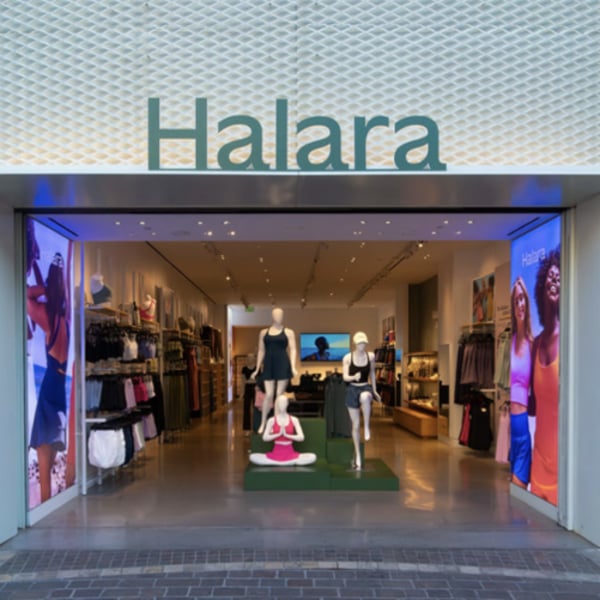
Pop-ups, like this recent one in LA, are key for the brand as it reaches out to consumers globally – Halara

It recently opened in Britain online and now has plans to introduce a UK pop-up experience later in 2025, bringing its digital-first, community-driven model into physical retail space, to work alongside its app and online platform.

It’s a model it has used in other markets and pop-ups continue to be a major focus for the firm.

The brand, which was founded in 2020 by Joyce Zhang, has built a reputation for fashion-focused, affordable womenswear made from performance-driven fabrics. It offers both everyday clothing and active/leisure pieces and the ongoing popularity of athleisure in the UK means it could be a lucrative market for the business. 

Halara’s rapid rise has been fuelled by its strong presence on TikTok, where it has “built a community through high-volume creator partnerships and relatable, story-led content”. And it uses feedback from that community to drive product development.

Jessica Thompson, global brand president at the business, said that “since its launch, Halara has experienced strong, consistent growth, doubling revenue year on year. This momentum is driven by innovation, not just in our product range, but in how we operate. 

“We were early to platforms like TikTok, embraced AI-powered tools, and adopted flexible production models that keep us ahead of trends and allow us to move quickly in response to consumer demand.

“TikTok has been a powerful engine for engagement and brand storytelling, sparking conversations through ads, creators, and organic word of mouth from our real customers. This traction has helped build a vibrant community and fuelled sales growth. 

“We’re also excited to bring our product to life through offline activations, giving UK customers the chance to touch, try, and experience Halara in person through impactful brand moments.”

Copyright © 2025 FashionNetwork.com All rights reserved.


Source link

Continue Reading

Fashion

Álké Ball launches as a new institution to secure recognition for African fashion

Published

on


Published


December 15, 2025

“Africa is not here to be discovered; Africa is here to be recognised.” With that assertion, Lulu Shabell, founder and CEO of the Lulubell Group, launches Álké Ball, an institution dedicated to securing global recognition for African fashion.

The institution’s work is underpinned by the Álké Fund – The Álké Ball

Grounded in art, heritage, knowledge, and enterprise, the Álké project seeks to catalyse a decisive shift: from sporadic visibility to an intentional, structured, unified and globally influential African authority. Its name is drawn from the word “Álkébulan,” regarded by some as among the oldest known names for the African continent.

“Before the modern vocabulary of luxury, there was Africa”

Drawing on her experience across more than 20 African countries, Lulu Shabell has supported designers, helped to expand the African fashion industry, and forged international connections through the Lulubell Group. Under her leadership at Álké Ball, a pan-African collective of designers, archivists, curators, researchers, and creative strategists has taken shape.

Together, they advance a shared thesis: that long before silk, cotton, and the modern vocabulary of luxury, there was Africa- a place where pattern was a language, textiles a code, and clothing a philosophy. In Africa, fashion has never been purely decorative; it was, and remains, a testament to lineage, mastery, and thought.

Taking action through a fund

At the heart of Álké’s mission is the Álké Fund, a permanent, continent-wide financing structure designed to ensure the long-term stability, independence, and global competitiveness of Africa’s creative industries. The Álké Fund will invest strategically in four interconnected pillars that support Africa’s creative sovereignty.

Álké Ball is the brainchild of entrepreneur Lulu Shabell
Álké Ball is the brainchild of entrepreneur Lulu Shabell – Lulubell Group

To advance education and skills, Álké will create pathways for the next generation of creators, artisans, and entrepreneurs, ensuring that intergenerational knowledge is actively passed on rather than lost (which is also the mission of 54 Faces, an association co-led by Judy Sanderson). The institution will also focus on manufacturing and production capacity, strengthening local value chains, and accelerating innovation across both artisanal and industrial systems.

A first edition in Cape Town

Álké Ball will mobilise around archives, the preservation of craft expertise, and research: safeguarding African textile histories, indigenous knowledge systems, and craft techniques through documentation, conservation, and active use. Finally, the collective will work to develop African brands by promoting sustainable commercial growth, operational stability, and long-term international expansion.

According to Lulu Shabell and the pan-African collective, the fund is not merely a financial instrument. It is also a concrete response to decades of underinvestment in Africa’s creative and cultural industries. Its inaugural edition will take place in Cape Town, with subsequent editions rotating among Africa’s cultural capitals.

This article is an automatic translation.
Click here to read the original article.

Copyright © 2025 FashionNetwork.com All rights reserved.


Source link

Continue Reading

Fashion

Lewis Hamilton and new Lululemon CEO mark special Edit launch with Regent St appearance

Published

on


Published


December 15, 2025

Lululemon was making headlines last week as its CEO exited but it had more upbeat news on Sunday as Lewis Hamilton made a personal appearance at the Regent Street, London, flagship store to to celebrate the launch of The Lewis Hamilton Edit, a curated 36-piece capsule personally selected by the champion racing driver.

André Maestrini and Lewis Hamilton – Lululemon

Importantly too, joining Hamilton in-store for photos was Lululemon’s new interim CEO, André Maestrini, marking his first public appearance in the role and highlighting the company’s focus on innovation, as well as stressing that there’s no vacuum at the top of the company’s leadership tree.

Hamilton became a Lululemon ambassador earlier this year and made an unannounced appearance in the store.

Available exclusively at the Regent Street location and on the brand’s UK webstore, the Edit brings together Hamilton’s favourite menswear and womenswear pieces from the brand’s Winter 2025 collection — “each style chosen for its high performance and elevated aesthetic, all filtered through the distinctive personal style he’s renowned for”.

The appearance may have been unannounced but there were plenty of fans gathered outside to see him in a full look from the Edit as he greeted the crowd, signed autographs, and posed for photos. 

The first 100 people in the queue also received Lululemon products signed by Hamilton and he was also helping staff style looks and wrap gifts behind the tills.

Such appearances are hugely important for stores at this time of year as they compete to attract customers. 

Copyright © 2025 FashionNetwork.com All rights reserved.


Source link

Continue Reading

Fashion

Microplastics: study highlights the drawbacks of recycled polyester

Published

on


Published


December 15, 2025

In a report of around 40 pages, the Dutch NGO Changing Markets casts doubt on polyester’s virtuous image, suggesting it releases far more microplastics than virgin polyester, according to research conducted at Çukurova University in Turkey.

Shutterstock

The university carried out tests on 51 “representative” garments from the product ranges of the brands Adidas, H&M, Nike, Shein, and Zara. The document, reviewed by FashionNetwork, indicates that recycled polyester sheds 54.8% more microplastic particles. The NGO believes this figure may even be an underestimate.

Changing Markets argues that the polyester presented as recycled by Shein is not actually recycled. This appears to be borne out by the platform itself, as the word “recycled” has disappeared from the product pages of certain items. According to the study, this “polyester fraud” is commonplace in the textile industry, with the study noting evidence of similar practices at H&M and Nike.

When Shein products are excluded from the analysis, the volume of microfibres released is 72% higher than for virgin polyester. The document also notes that microfibres from recycled polyester are 20% smaller than those released by virgin polyester.

Use of bottles under scrutiny

Why the disparity? The study offers little explanation, simply noting that recycling processes, whether chemical or mechanical, weaken polymer chains, creating shorter, more imperfect molecular structures.

However, this is not the study’s main focus, which primarily targets the conversion of plastic bottles into polyester, with 98% of recycled polyester not coming from recycled textiles and clothing. Changing Markets likens this to a form of greenwashing, and argues that the practice misleads consumers about the supposed environmental virtue of these products.

The study was unable to compare shedding due to the lack of virgin polyester at Zara and of uniform materials at Adidas. The material marketed by Shein is suspected of not actually being recycled.
The study was unable to compare shedding due to the lack of virgin polyester at Zara and of uniform materials at Adidas. The material marketed by Shein is suspected of not actually being recycled. – Changing Markets

“Recycled polyester has become a practical solution for the industry, allowing brands to claim progress in reducing their reliance on virgin plastic while increasing overall synthetic fibre production,” reads the study. “Textile Exchange data makes this clear: although recycled polyester volumes increased last year, its overall market share fell from 12.5% to 12%, as virgin polyester grew even faster.”

Disputed findings

Nike proved the most polluting (for both virgin and recycled fabrics), ahead of Adidas: Nike’s recycled polyester shed over 30,000 fibres per gram of garment on average, nearly four times more than H&M and seven times more than Zara.

Adidas maintains that it sees “an environmental benefit in using recycled polyester,” a spokesperson told AFP, because “no crude oil needs to be processed and plastic waste is reused.”

“Compared with virgin polyester, it generates far fewer greenhouse gas emissions,” continued the German sportswear company, citing other scientific studies, such as that by the NGO Microfibre Consortium, which find no significant differences between recycled and virgin fibres when it comes to microfibre shedding.

“The H&M Group shares concerns about the environmental impact of fibre fragments,” the Swedish brand told AFP, pointing out that polyester accounts for only 22% of its production and saying it is working in particular on “research into production processes that reduce the release of particles.”

For now, Nike, Shein, and Zara have not responded to AFP’s requests regarding the study’s findings.

FashionNetwork.com with AFP

This article is an automatic translation.
Click here to read the original article.

Copyright © 2025 FashionNetwork.com All rights reserved.


Source link

Continue Reading

Trending

Copyright © Miami Select.