Connect with us

Fashion

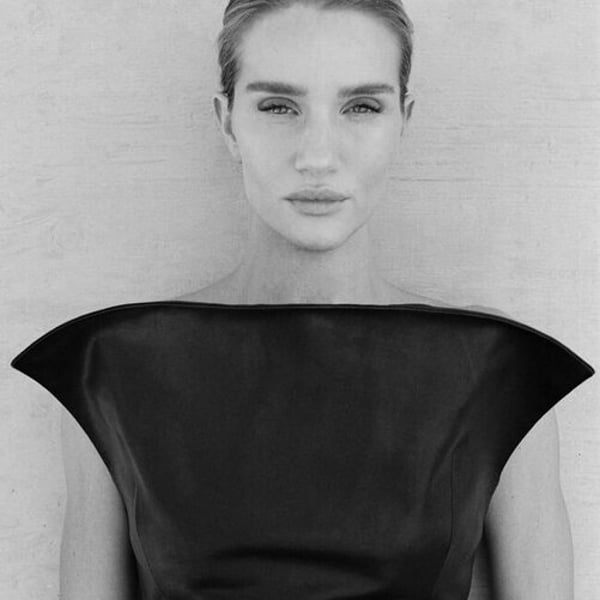
Fwrd names Rosie Huntington-Whiteley as fashion director

Published

on


Published


December 9, 2025

Global luxury fashion retailer Fwrd has appointed Rosie Huntington-Whiteley as fashion director as the Revolve Group-owned platform continues to gain market share. 

Fwrd names Rosie Huntington-Whiteley as fashion director. – Fwrd

In this role, Huntington-Whiteley will oversee fashion curation, merchandising, and seasonal strategy, while bringing her global profile and personal aesthetic to the role.

“As fashion director at Fwrd, my role is about defining the brand’s fashion point of view through a modern, timeless, and refined lens,” said Huntington-Whiteley. 

“I believe in the power of storytelling through clothing, building a wardrobe that balances both sophistication and ease that truly resonates with the Fwrd customer’s lifestyle.”

The company most recently reported a 37% year-over-year increase in gross profit dollars in the third quarter of 2025. Fwrd’s personal shopping program has been a key contributor, delivering more than 100% year-over-year sales growth in the first nine months of 2025. 

Fwrd has also expanded its luxury portfolio through recent brand launches including Phoebe Philo, Dries Van Noten, and Skims x Roberto Cavalli. It continues to strategically invest in owned brands, physical retail, merchandising, and client experiences. 

“Fwrd’s strong performance in today’s evolving luxury market underscores the significant opportunity ahead as we continue to scale. With visionary creative leadership guiding the brand forward, we’re continuing to elevate Fwrd’s global presence and strengthen its position in the luxury space,” added Michael Mente, co-founder & co-CEO Revolve Group, Inc.

“As we invest in initiatives like our personal shopping program and expand our physical footprint, we’re deepening client engagement and driving long-term growth to ensure Fwrd remains the destination for modern, curated luxury fashion.”

Copyright © 2025 FashionNetwork.com All rights reserved.


Source link

Continue Reading

Fashion

Hybrid retail takes over Christmas as most shoppers go for in-store/online mix – CACI report

Published

on


Published


December 11, 2025

Omnichannel rules! Expect hybrid shopping “to define Christmas spending this year” as 87% of UK consumers plan to shop both online and in-store for gifts this year.

Image: CACI

That’s according to data specialists CACI, who flip the data to show that just 7% intend to shop exclusively in-store, and only 6% plan to do all their shopping online.

Generational and gender differences, of course, come into play, revealing further nuances with 19% of male Gen Zers saying they intend to shop entirely online, compared with just 1% of females in the same age group.

At the other end of the spectrum, 13% of male and 7% of female Baby Boomers expect to purchase all their gifts in-store, “showing that physical retail remains more prominent among older shoppers”, although not in the numbers we might expect.

The report highlights that last year’s retail performance “further supports the advantage of having a strong multichannel presence” as brands that enabled both physical and digital buying behaviour, with seamless integration, personalisation, and strong app and online experiences, “had some of the biggest gains”.

CACI took Korean beauty retailer PureSeoul as an example: “Known for combining digital reach with selective in-person experiences, the… brand more than doubled its sales in December 2024 compared with the same month the year before (up 118%)”.

Meanwhile clothing/lifestyle giant Uniqlo reported a 22% year-on-year omnichannel increase in December 2024 sales.

Alex McCulloch, Director at CACI, said: “If we look at the data from last Christmas, and what we’re hearing from consumers now, it’s clear that the brands set to win this season are the ones that recognise the need for a true multichannel approach.

“Not just because it’s practical, but because physical stores help build loyalty that carries over to online. That loyalty is being reinforced even earlier, as more retailers turn their stores into experiential spaces – some operating almost like ‘clubhouses’ that create connection and community long before a purchase is made.”


Copyright © 2025 FashionNetwork.com All rights reserved.


Source link

Continue Reading

Fashion

Disney invests $1 billion in OpenAI

Published

on


Published


December 11, 2025

OpenAI and Disney announced on Thursday that they have entered into a three-year licensing agreement that will enable the use of Disney’s characters on Sora, a platform for videos created with generative artificial intelligence (AI), a strong signal for the AI content ecosystem.

Disney and OpenAI announced their agreement on Thursday – Sora

Under the partnership, Disney will take a $1 billion equity stake in OpenAI and receive warrants enabling it to acquire additional shares in the company behind ChatGPT at a later date.

Launched at the end of September, Sora positions itself as a social network where only AI-generated videos can be published. The platform runs on OpenAI’s generative video model, Sora 2, successor to the original Sora model, whose generic name has been adopted for the app.

From the outset, Sora featured unauthorised content using brands, the likenesses of public figures, and visual worlds inspired by existing programmes, cartoons, films, and series. Many videos included characters directly inspired by those of Pixar, a Disney subsidiary, as well as several cartoons owned by the entertainment giant, such as ‘Family Guy.’

A few days later, Sam Altman indicated that OpenAI intended to offer rights holders greater control over the use of materials that are theoretically protected by intellectual property rights.

Characters from Disney, Marvel, Pixar, and Star Wars

Under the collaboration unveiled on Thursday, Sora users will now be able to create videos drawing on a catalogue of more than 200 characters from the Disney, Marvel, Pixar, and Star Wars universes, according to a joint press release. However, these are limited to animated characters, masked characters or creatures, and do not include real human actors.

“Technological innovation has continually shaped the evolution of entertainment, bringing with it new ways to create and share great stories with the world,” said Robert A. Iger, CEO of The Walt Disney Company, in the release. “Rapid advances in artificial intelligence mark an important moment for our industry, and through this collaboration with OpenAI, we will thoughtfully and responsibly extend the reach of our stories through generative AI, while respecting and protecting creators and their works.”

The tie-up between the two groups goes beyond Sora, as Disney will become a “major customer” of OpenAI. The Burbank, California-based company will give its employees access to ChatGPT and use OpenAI’s models to “create new products, tools and experiences.”

For Sam Altman, also quoted in the press release, this agreement “shows that AI companies and content publishers can work together responsibly to promote innovation.” Sora and ChatGPT Images are expected to begin producing fan-inspired videos featuring Disney’s multi-brand licensed characters in early 2026.

With AFP

This article is an automatic translation.
Click here to read the original article.

Copyright © 2025 FashionNetwork.com All rights reserved.


Source link

Continue Reading

Fashion

Sophie Kinsella, the Shopaholic series’ bestselling author, dies aged 55

Published

on


By

Ansa

Translated by

Nicola Mira

Published


December 11, 2025

Sophie Kinsella, the highly popular British author whose bestselling novels have been translated the world over, notably the Shopaholic series, died just before her 56th birthday from a brain tumour she had been diagnosed with in late 2022.

Sophie Kinsella

Kinsella faced her condition with great courage, and described her experience in her last book, published in 2024, poignantly entitled What Does It Feel Like?

“We are heartbroken to announce the death this morning of our beloved Sophie (alias Maddy, alias Mummy),” posted Kinsella’s family, her husband Henry Wickham and their five children, as they gave the news of the author’s passing. “Despite her illness, which she endured with unimaginable courage, Sophie considered herself very fortunate to have such a wonderful family and friends, and to have had an extraordinarily successful writing career. She took nothing for granted and has always been grateful for the love she received,” the family added.

Kinsella, whose real name was Madeleine Sophie Townley, would have turned 56 in two days’ time and, as her family pointed out, she and her loved ones tried to make the most of their final days together. Kinsella, whose books sold 50 million copies and have defined chick lit as a genre, revealed her health problems to her many readers last year. She was diagnosed with glioblastoma, an aggressive form of brain cancer, and underwent surgery as well as several rounds of radiotherapy and chemotherapy.

“I didn’t reveal this earlier because I wanted to make sure my children were able to hear and process the news privately, adapting to our new normal,” she told her community of fans. Many of them, upon learning of the author’s death, paid tribute to her on social media.

The search for positive meaning despite a traumatic illness was at the heart of Kinsella’s last novel, in which the protagonist, a famous writer called Eve, begins to gather the memories of what really matters to her: long walks holding her husband’s hand, evenings spent playing parlour games with her family, and the treat of buying a dress she likes. The novel is made up of short chapters, each attempting to answer the most difficult issues shared by those navigating the labyrinth of pain. The book was also a way of staying close to those dealing with cancer, as Kinsella herself did in some of her statements after she revealed her illness.

Kinsella was born in the London suburb of Wandsworth on December 12, 1970. She graduated in PPE at Oxford University and briefly worked as a finance journalist before starting to write romance novels aged 24. She gained global fame – after publishing a few well-liked novels under her real name – with The Secret Dreamworld of a Shopaholic, published in 2000 as Sophie Kinsella, soon followed by Shopaholic Abroad. Then came another eight titles in the Shopaholic series and 13 standalone novels, from Can You Keep a Secret? (2003) to The Burnout (2023) and What Does It Feel Like? (2024), as well as a handful of young adult novels. The first two Shopaholic books were adapted into the film Confessions of a Shopaholic, released in February 2009 with Isla Fisher in the title role.

In 1991, Kinsella married Henry Wickham, whom she had met at Oxford. Together they had five children, and lived between Dorset and London, where she was treated.

Copyright © 2025 ANSA. All rights reserved.


Source link

Continue Reading

Trending

Copyright © Miami Select.