
Business
From Latin America’s richest country 100 years ago to a founding member of OPEC, the long history of Venezuela’s oil and U.S. ties, explained

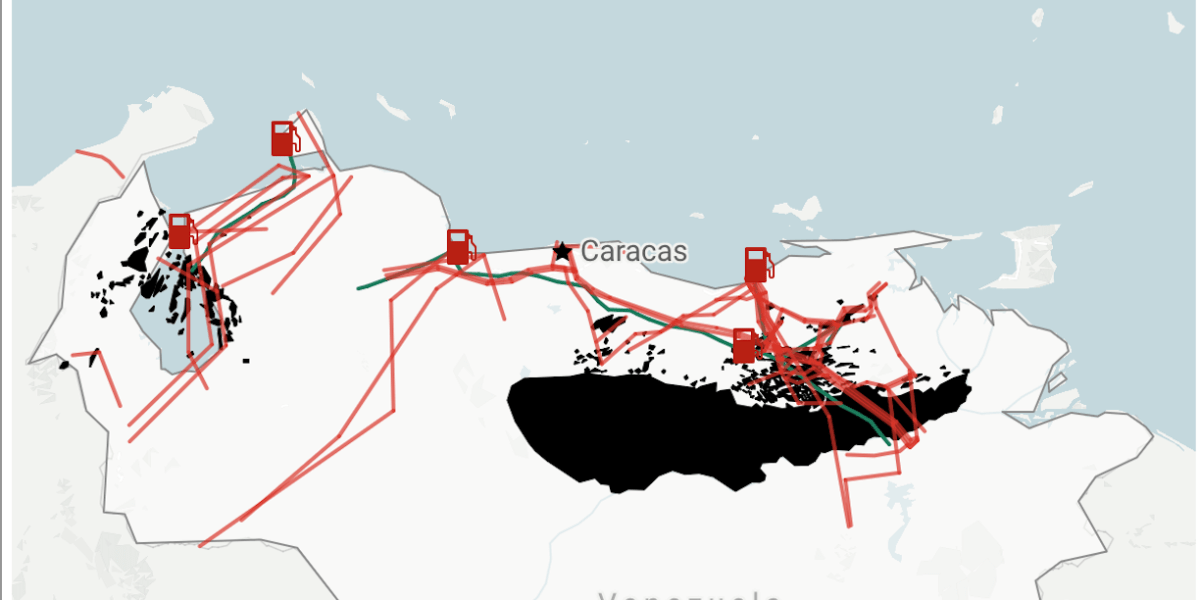
After US special forces swooped into Caracas to seize Venezuelan President Nicolás Maduro and topple his government, US President Donald Trump said the United States will now “run” Venezuela, including its abundant oil resources.
US companies were poised to invest billions to upgrade Venezuela’s crumbling oil infrastructure, he said, and “start making money for the country”. Venezuela has the world’s largest oil reserves – outpacing Saudi Arabia with 303 billion barrels, or about 20% of global reserves.
If this does eventuate – and that’s a very big “if” – it would mark the end of an adversarial relationship that began nearly 30 years ago.
Yes, the Trump administration’s military action in Venezuela was in many ways unprecedented. But it was not surprising given Venezuela’s vast oil wealth and the historic relations between the US and Venezuela under former President Hugo Chávez and Maduro.
A long history of US investment
Venezuela is a republic of around 30 million people on the northern coast of South America, about twice the size of California. During much of the early 20th century, it was considered the wealthiest country in South America due to its oil reserves.
Foreign companies, including those from the US, invested heavily in the growth of Venezuelan oil and played a heavy hand in its politics. In the face of US opposition, however, Venezuelan leaders began asserting more control over their main export resource. Venezuela was a key figure in the formation of the Organisation of Petroleum Exporting Countries (OPEC) in 1960, and it nationalised much of its oil industry in 1976.
This negatively impacted US companies like ExxonMobil and has fuelled the recent claims by the Trump administration that Venezuela “stole” US oil.
Economic prosperity, however, did not follow for most Venezuelans. The mismanagement of the oil industry led to a debt crisis and International Monetary Fund (IMF) intervention in 1988. Caracas erupted in protests in February 1989 and the government sent the military to crush the uprising. An estimated 300 people were killed, according to official totals, but the real figure could be 10 times higher.
In the aftermath, Venezuelan society became further split between the wealthy, who wanted to work with the US, and the working class, who sought autonomy from the US. This division has defined Venezuelan politics ever since.
Chávez’s rise to power
Hugo Chávez began his career as a military officer. In the early 1980s, he formed the socialist “Revolutionary Bolivarian Movement-200” within the army and began giving rousing lectures against the government.
Then, after the 1989 riots, Chávez’s recruitment efforts increased dramatically and he began planning the overthrow of Venezuela’s government. In February 1992, he staged a failed coup against the pro-US president, Carlos Andrés Pérez. While he was imprisoned, his group staged another coup attempt later in the year that also failed. Chavez was jailed for two years, but emerged as the leading presidential candidate in 1998 on a socialist revolutionary platform.
Chávez became a giant of both Venezuelan and Latin American politics. His revolution evoked the memory of Simón Bolívar, the great liberator of South America from Spanish colonialism. Not only was Chávez broadly popular in Venezuela for his use of oil revenue to subsidise government programs for food, health and education, he was well-regarded in like-minded regimes in the region due to his generosity.
Most notably, Chávez provided Cuba with billions of dollars worth of oil in exchange for tens of thousands of Cuban doctors working in Venezuelan health clinics.
He also set a precedent of standing up to the US and to the IMF at global forums, famously calling then-US President George W Bush “the devil” at the UN General Assembly in 2006.
US accused of fomenting a coup
Unsurprisingly, the US was no fan of Chávez.
After hundreds of thousands of opposition protesters took to the streets in April 2002, Chavez was briefly ousted in a coup by dissident military officers and opposition figures, who installed a new president, businessman Pedro Carmona. Chávez was arrested, the Bush administration promptly recognised Carmona as president, and the The New York Times editorial page celebrated the fall of a “would-be dictator”.
Chavez swept back into power just two days later, however, on the backs of legions of supporters filling the streets. And the Bush administration immediately faced intense scrutiny for its possible role in the aborted coup.
While the US denied involvement, questions lingered for years about whether the government had advance knowledge of the coup and tacitly backed his ouster. In 2004, newly classified documents showed the CIA was aware of the plot, but it was unclear how much advance warning US officials gave Chavez himself.
US pressure continues on Maduro
Maduro, a trade unionist, was elected to the National Assembly in 2000 and quickly joined Chávez’s inner circle. He rose to the office of vice president in 2012 and, following Chávez’s death the following year, won his first election by a razor-thin margin.
But Maduro is not Chávez. He did not have the same level of support among the working class, the military or across the region. Venezuela’s economic conditions worsened and inflation skyrocketed.
And successive US administrations continued to put pressure on Maduro. Venezuela was hit with sanctions in both the Obama and first Trump presidency, and the US and its allies refused to recognise Maduro’s win in the 2018 election and again in 2024.
Isolated from much of the world, Maduro’s government became dependent on selling oil to China as its sole economic outlet. Maduro also claims to have thwarted several coup and assassination attempts allegedly involving the US and domestic opposition, most notably in April 2019 and May 2020 during Trump’s first term.
US officials have denied involvement in any coup plots; reporting also found no evidence of US involvement in the 2020 failed coup.
Now, Trump has successfully removed Maduro in a much more brazen operation, with no attempts at deniability. It remains to be seen how Venezuelans and other Latin American nations will respond to the US actions, but one thing is certain: US involvement in Venezuelan politics will continue, as long as it has financial stakes in the country.
James Trapani, Associate Lecturer of History and International Relations, Western Sydney University
This article is republished from The Conversation under a Creative Commons license. Read the original article.

This story was originally featured on Fortune.com
Business
‘We don’t want to be Americans, we don’t want to be Danes, we want to be Greenlanders’: Local politicians reject Trump
Business
From Merrill Lynch to wok station: the daughter of San Francisco’s Chinese food dynasty who defied her parents—by working alongside them
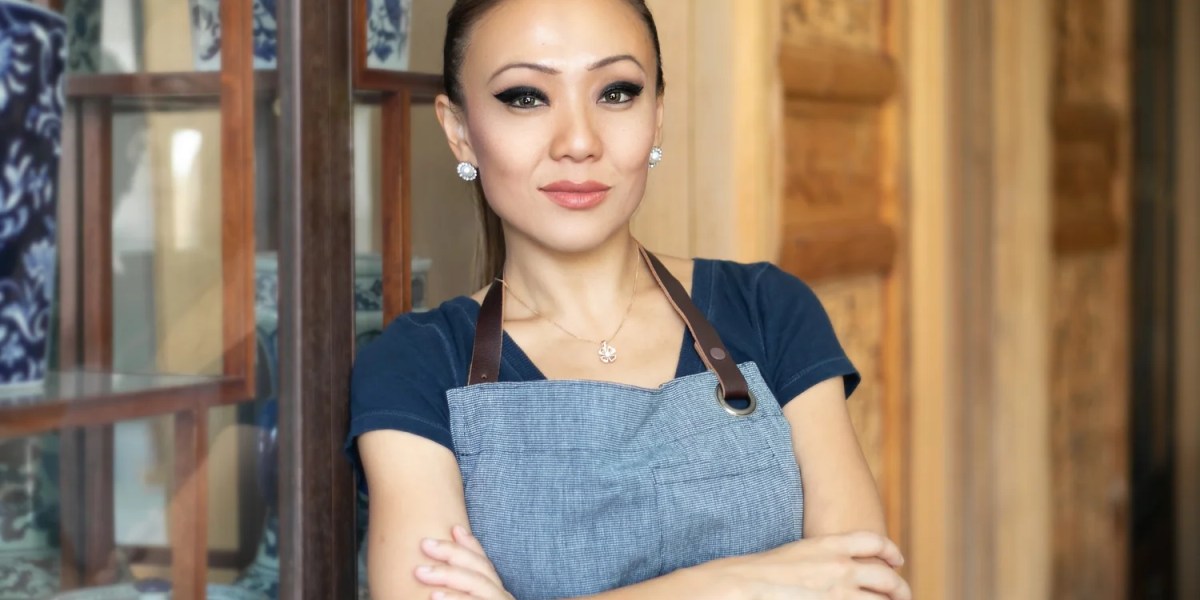
For decades, the crowds outside House of Nanking have been a fixture of San Francisco’s Chinatown, with lines frequently wrapping around the block to get a seat in the cramped, high-energy dining room, under the iconic, multicolored sign that crowns Kearny Street. But for Kathy Fang, the restaurant’s heir apparent, her presence in that kitchen represents a sharp deviation from the “American Dream” her parents envisioned for her—a deviation that initially caused them deep dismay.
Peter Fang, the restaurant’s legendary patriarch, and his wife did not build House of Nanking so their daughter could inherit it, Kathy Fang told Fortune in a recent interview. To them, cooking was a necessity born of survival, not a career choice for the educated. “For my parents being very traditional, they also didn’t want me to do it,” she explained. “In fact, we have a saying that, you know, if you don’t cut it in school, you can always go be a cook because it’s considered manual labor. You don’t need to have a proper education to go work in a kitchen.”
Her parents don’t know about “foodie” culture, she explained, and don’t even know how famous they’ve become. Speaking to Fortune as she releases the first-ever cookbook dedicated to her family’s restaurant, she said even that was a struggle.
“It took me decades,” she said about convincing her father to go along with it. “He thought that if he shared his recipes, people would just make it at home and not come to the restaurant anymore.” He didn’t understand his restaurant is a San Francisco institution, frequented by the likes of Francis Ford Coppola and Keanu Reeves, celebrities that her father wouldn’t—and didn’t—recognize anyway.
Michael Robinson Chavez/Los Angeles Times via Getty Images
Fang, who recently turned 40, shared Reeves was her favorite actor since high school, and the first time he visited her family’s restaurant, she begged her father not to make him wait in the queue stretching around the block, as it does every night. His response was that “everybody waits in line,” until she promised to get straight A’s, and he relented. What happened next summed everything up.
“[My dad] walks up to him and says something to him. Then looks at me and goes, ‘Kathy, come over, take a picture with him. It’s Sean Connery.’ And I’m like, ‘Oh, my God. My dad doesn’t know anybody, but he’s heard of Sean Connery.” Reeves, who is famously polite and good-hearted, told the Fangs that he was “really flattered.”
“We took a picture that day and that picture sits on the wall at the restaurant,” Fang said, happily. “But the story is that nobody there knows any of the famous people who go in.” As a born and raised Californian, she would know all the celebrities, she added, but she’s always busy, running her own restaurant, Fang, in the SoMa business district, which is about a 20-minute walk away. Fang and Reeves recreated the photo 29 years later, as shown by the House of Nanking’s Instagram.
Kathy Fang is a busy businesswoman. Besides running her Fang restaurant and releasing a cookbook, she is a Food Network star as a two-time Chopped champion and a cast member of “Chef Dynasty: House of Fang.” San Francisco Magazine even crowned her as a “culinary queen,” and she’s the mother of two children with her husband who, she notes, doesn’t even like Chinese food. She talked to Fortune about how she disappointed her parents by failing to become a doctor or lawyer—and finally found out how proud they were of her through her reality TV side hustle.
A calling to a crowded kitchen
Like many immigrants to the U.S. (the Fangs moved to San Francisco from the Shanghai area), the Fangs pushed Kathy toward a stable, prestigious future.
“They wanted me to be a doctor or a lawyer [or] go into the corporate world,” she said. She dutifully followed this path to the University of Southern California as a pre-med student, only to discover that, while she had no fear of cooking oil in a giant wok, she had no stomach for medicine.
“I realized I was terrified of needles, like irked by hospitals,” she said. “That would be a problem. Yeah, I still to this day cannot see a needle go into an arm.”
She subsequently landed in the corporate world, working at Fortune 100 company Johnson & Johnson and Wall Street stalwart Merrill Lynch. But the corporate environment left her feeling uninspired. When she finally called her father to announce she was quitting her job to return to the family restaurant, he was befuddled and upset. “He’s like, ‘Why, did you get fired or something?’” Kathy recalled, and she responded: “No, I just really don’t like what I’m doing and I love food, I love cooking and I like miss that kind of environment.”
The environment she missed is one of organized chaos and high-pressure efficiency. While she declined to disclose financials, and acknowledged Fang had struggled more during the pandemic (as many restaurants did), she acknowledged her family’s restaurant is a “cash cow” that has served an estimated 5 million to 6 million people over its 38 years in business, quite a feat considering the tiny footprint.
“That’s tough when you think about how big the restaurant was when they first got started,” she said, noting it could only seat 30 to 40 people for its first decade in business. “And the kitchen can only fit about two to three people.” It’s since doubled the size of its dining room, but “the kitchen hasn’t changed at all. It’s just kind of wild.”
A business career to be proud of
Kathy’s return marked a turning point for the brand. While Peter Fang had built the restaurant’s reputation through culinary ingenuity, the family was media-shy, unlike their telegenic, media-savvy daughter. She said she was approached to try food television, and she sees it as something that allowed her to share her family’s story.
“I felt like I was kind of helping build this brand that my parents already built,” she said. “Everybody knows House of Nanking, but they’d never done anything with it. They’d never done any marketing, never done any PR around it.”
Her involvement proved to her father the business could be multigenerational, easing his fears the restaurant would die when he could no longer work.
“My dad now knows that this is something that can continue down generations,” Kathy notes, adding he even looks at his 8-year-old granddaughter as a potential future successor.
Fang said strangers and customers at the restaurant have come up to her and said, “your dad’s so proud of you,” and about three years ago, she recalled, during filming for the Chef Dynasty show, her dad said during a green-room recap interview, “I’m just very proud.” But she’s never heard it directly from him. “My dad will never tell me, and that’s a very Chinese thing, they just, they’ll never compliment you to your face.”
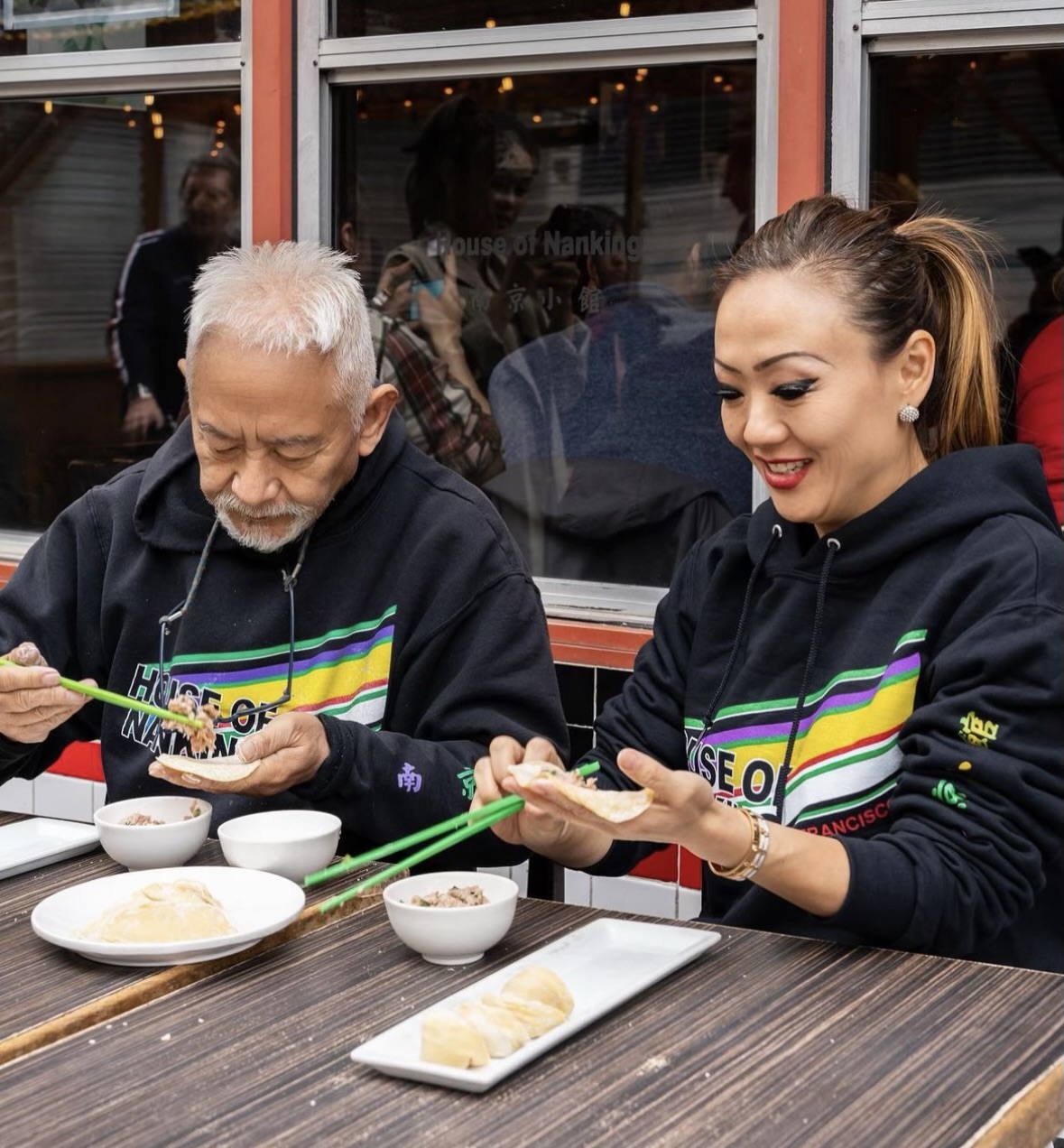
The restaurateur shared that one of her big jobs now is managing her parents’ workload. Now in their mid-70s, they still both work the lunch and dinner shifts every single day. The thing is, Fang noted, the 18-month hiatus during the pandemic revealed that retirement might not be an option; during the lockdown, Kathy’s mother, restaurant co-founder Lily, developed health issues from no longer being on her feet all day, and her father actually went totally silent.
“My dad lost his voice because he was using it every day that the vocal cords became weak,” Kathy said. “It’s like wild… As soon as he got back to work and started using his voice again, it came back.”
She said there’s no plan for them to slow down anytime soon. “They like the routine. Staying at home is not good for them. They also, because they work every day, have never developed any hobbies or made any friends,” she said with a laugh.
There aren’t plans to further expand, either. Kathy said she respects her father’s wish to keep the business small and Chinatown-bound, waving off talk of any kind of nationwide expansion.
“I’m not going to do it if my dad doesn’t want to,” she said. “It would kind of lose that essence and soul to it.”


Florida man who grabbed Nancy Pelosi’s podium during Capitol riot runs for county office

Eva Rankin’s Hot Shots to Kick Off Her 25th Birthday!

Lawsuits by Trump allies could shape how the 2030 census is done and who will be counted
-

 Politics8 years ago
Congress rolls out ‘Better Deal,’ new economic agenda
-
Entertainment8 years ago
New Season 8 Walking Dead trailer flashes forward in time
-
Politics8 years ago
Poll: Virginia governor’s race in dead heat
-
Entertainment8 years ago
The final 6 ‘Game of Thrones’ episodes might feel like a full season
-
Politics8 years ago
Illinois’ financial crisis could bring the state to a halt
-
Entertainment8 years ago
Meet Superman’s grandfather in new trailer for Krypton
-
Business8 years ago
6 Stunning new co-working spaces around the globe
-
Tech8 years ago
Hulu hires Google marketing veteran Kelly Campbell as CMO