
Politics
Florida utility providers discuss how technology impacts both supply and demand for power grid
Some of Florida’s biggest utility providers say solar has been a solid investment. But as energy advances, all say they need a diversity of energy resources to power Florida in a cost-efficient way.
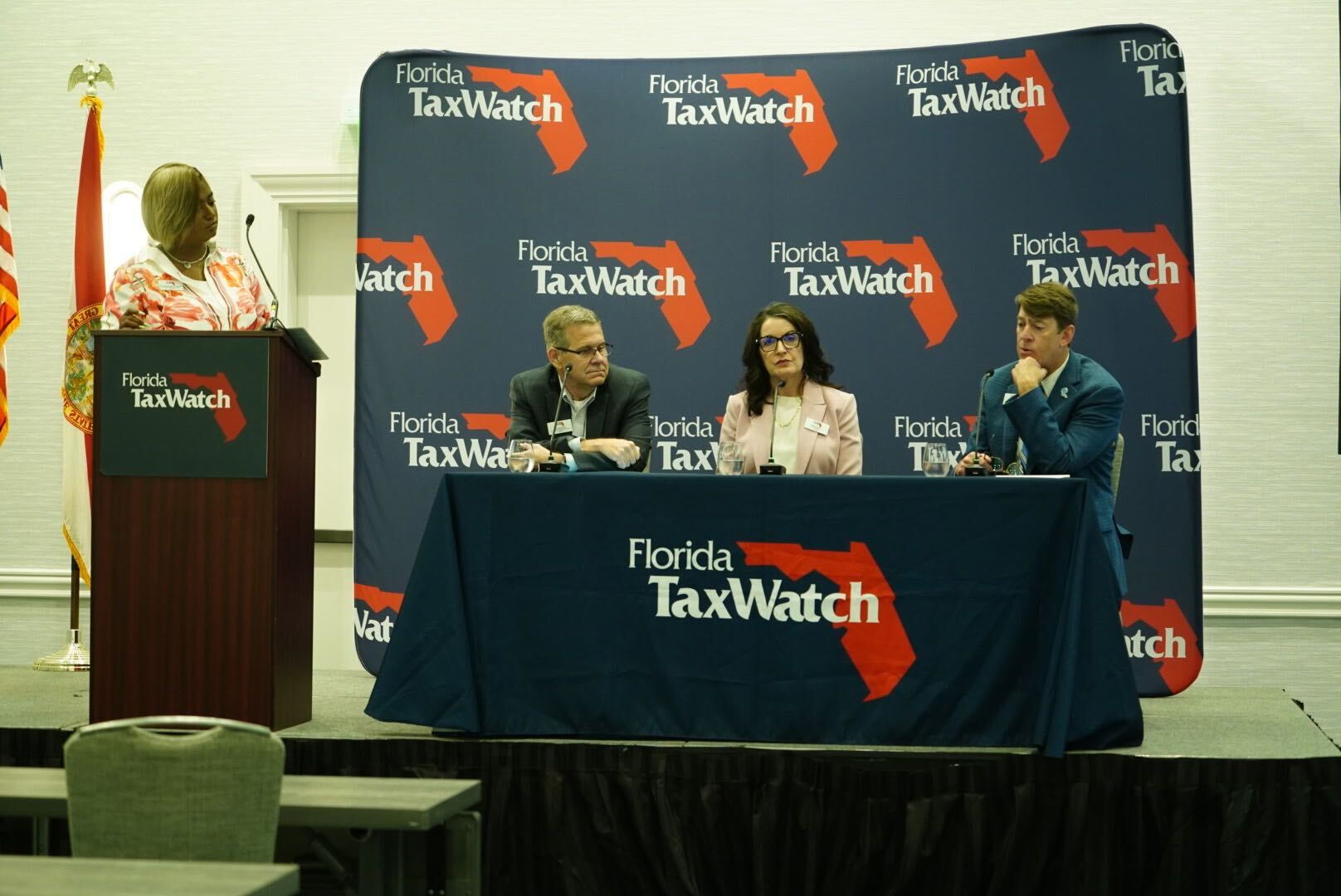
Executives from Duke Energy, TECO Energy and Florida Power & Light convened on a panel at Florida TaxWatch, where they discussed how changing technology impacts both the supply and demand for the state power grid.
Sonya Montgomery, Chair and CEO of The Desoto Group, moderated the panel and noted that Florida still gets about 75% of its total electrical power from natural gas, while only 10% comes from renewables. Solar is 9% of the nation’s power. She asked the major utility providers if that can change.
Melissa Seixas, Florida state President for Duke Energy, said her company has steadily increased its solar division.
“Those investments are being made,” she said. “Duke Energy Florida is putting online three to four solar units a year. They’re about 75 megawatts a piece. You can think about a megawatt as serving like 800 to 1,000 homes. The reality is, it’s still intermittent, right? It’s not producing energy at night. I think that’s why you will start to hear us talk more about battery storage as well.”
David Nicholson, Vice President of Legal, General Counsel, Chief Ethics and Compliance Officer for TECO, said about 40% of power at that utility now comes from solar. But the move to sunshine has been driven less by environmentalism than by a desire to utilize a cheap resource for consumers.
“There’s no fuel cost for that, and so that results in savings to our customers and acts as a natural hedge against natural gas prices,” he said.
But Nicholson also said the source has its challenges, and the most important goal for utilities is to get a diversity of power sources online.
Don Kiselewski, Executive Director of External Affairs for FPL, agreed. He noted that FPL has 116 solar facilities operating in the state. But he also sees batteries as the next great investment in the state energy sector.
“We can start curbing those peaks, so we can use those solar power batteries to manage the grid,” he said.

Of course, new technologies have also impacted critical emergency work done by power companies in Florida. Kiselewski noted that the use of drones has rapidly sped up the process of getting power back online after storms, as the self-powered units can find severed points before linemen can safely enter certain areas.
Tech brings challenges to energy as well. Seixas said data centers fueling artificial intelligence are placing greater demands on grids than any past industrial advances. She noted a steel factory a few years ago that opened in the state and demanded another 40 megawatts of power, a modest increase on the grid.
“These data centers want to start at like 250 megawatts, and ramp up fairly from a technology standpoint,” she said.
But she said policymakers, utilities and even the data centers themselves want to make sure the demand can be addressed without rocketing power rates upward.
“None of us want to put that on our customers. And I even think those large customers don’t want to see that happen either, because they, I believe, want to be part of whatever community that they go into.”