Connect with us

Politics

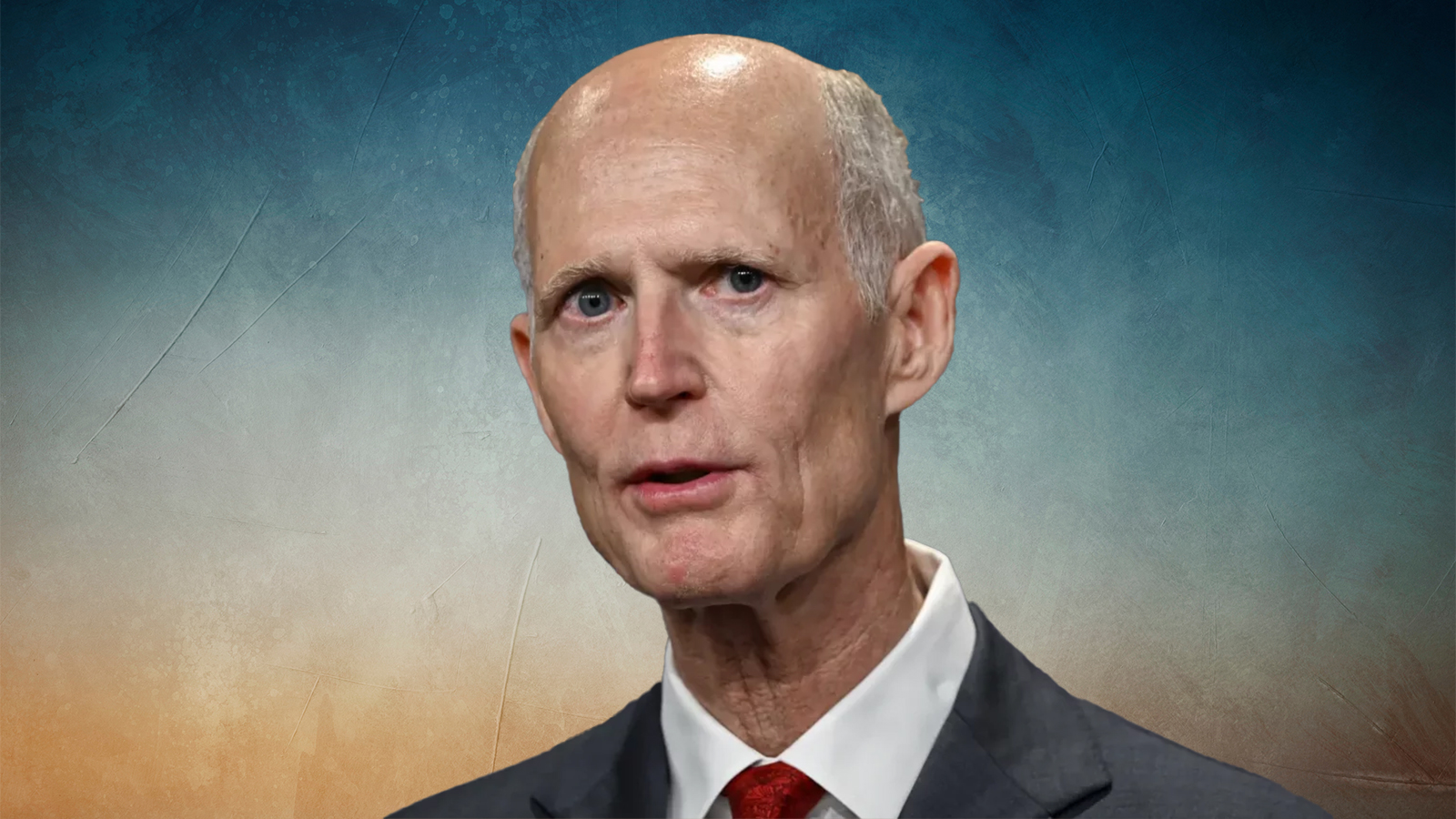
Florida Politics’ Honorable Mention for 2025 Politician of the Year: Rick Scott
Published

on


When U.S. Sen. Rick Scott won his Senate seat in 2018, it appeared at times like a rocky transition. But the Naples Republican arrived in Washington this year fresh off a successful re-election campaign with full GOP control of Washington for the first time in his career.

As a new era of Republican power took hold, Scott headlined the Rescuing the American Dream summit in Washington gathering conservative allies together. He knew then that power often proves fleeting, and that the opportunity to lead could be short.

“Don’t squander it, right?” he told Florida Politics at the time.

Immediately after his largest election win ever in 2024, Scott made an ill-fated run for Minority Leader. But unlike the frosty relationship he had endured with former Senate Republican Leader Mitch McConnell, he built bridges quickly with new Senate Majority Leader John Thune of South Dakota. The Republican even spoke at Scott’s summit a few months after that caucus vote.

Meanwhile, Scott also endeared himself with the conservative wing of the GOP caucus. At a second Rescuing Summit of the year, House Freedom Caucus leaders characterized Florida’s senior Senator as a critical conduit in Congress’ upper chamber.

“We’ve had no better partner ever than Senator Rick Scott,” said U.S. Rep. Andy Harris, House Freedom Caucus Chair. “I’ll just tell you our leadership on both sides tries to hide the ball from us. ‘Well,’ we say, ‘what’s the Senate going to do?’ And they tell us what they perceive the Senate is going to do, or what they think they want the Senate to do. But now we have our own inside line to what the Senate’s going to do.”

That led directly to many policies ultimately becoming part of the “Big Beautiful Bill” signed and championed by President Donald Trump.

Meanwhile, Scott, once an anti-establishment disruptor who upended Florida’s political establishment, exerted more influence over state politics than arguably any Republican Governor in state history.

He endorsed fellow Neapolitan Byron Donalds in the Governor’s race, and offered public support into oversight inquiries of Gov. Ron DeSantis’ administration. Scott also threw his endorsement to DeSantis-appointed U.S. Sen. Ashley Moody, effectively ending chatter that Trump might pick a MAGA alternative to challenge the Plant City Republican.

His next policy goal? Remaking America’s health care system.

Scott’s first major entry into the political arena came as a critic of Democratic President Bill Clinton’s health care proposals in the 1990s. Now, he wants Congress to pass his More Affordable Care Act and reform Democratic President Barack Obama’s signature health care policy.

Scott wants to rework insurance subsidies by instead depositing money in health savings accounts and empowering consumers to spend that on insurance rather than having the federal government fund carriers directly.

“My new bill makes simple fixes to Obamacare that will make a world of difference to American families by making Americans the consumer, not the government, while giving them options and transparency,” Scott announced. “Healthcare.gov and state exchanges continue, protections for pre-existing conditions remain in place, and families who need a safety net have one that works for them.”

Senate Republicans remain torn between multiple health care proposals, but a companion bill supported by U.S. Rep. Aaron Bean, a Fernandina Beach Republican, has gained steam in the House. Should it pass, that could create a healthy legacy for the Governor-turned-lawmaker, maybe in time for the 2028 Presidential Primary cycle.


Source link

Continue Reading

Politics

Gov. DeSantis pushes back on effort to build AI data centers in Florida

Published

on


While President Donald Trump is pushing for rapid development of data centers to help the nation dominate AI technology, Gov. Ron DeSantis is taking a cautious approach as concerns rise about the effect the massive centers have on communities.

There are few who doubt the massive data centers have become a necessity along the lines of electricity and gasoline, but at what cost? The topic is sure to be a priority during Session as the industry eyes Florida as a prime spot for data centers and policymakers try to balance community concerns.

“A lot of people have a lot of concerns about some of the things that are on the horizon,” DeSantis said during a roundtable discussion on AI.

While Trump is trying to make it easier for technology companies to create new data centers, DeSantis said he is thinking about Floridians first — not the nation’s most powerful technology companies.

“We want to approach this in the state of Florida in a very intelligent way,” DeSantis said. “Ultimately, we’ve got to care about the well-being of our people, not worry about the profits of the Magnificent Seven. They’re doing just fine and they will do just fine.”

The centers store massive amounts of digital information, from banking records to social media data to the information AI taps to create its products. Industry supporters tout not just the need for the centers, but say they provide high-paying jobs and property taxes for communities that welcome them.

Loudoun County, Virginia, is a data center hub, with nearly 50 million square feet of centers built or in development, according to the Loudoun County Economic Development’s website.

The county receives about $1.2 billion in revenue from data centers, said Buddy Rizer, Executive Director of Loudoun Economic Development. He said the county’s property tax revenue split has gone from 19% commercial and 81% residential to about an even split.

Data centers make up 39% of the county’s revenue, but only take up 3% of the county’s land.

“We’ve been able to lower the tax rate 48 cents on the dollar,” Rizer said. “That’s a pretty awesome statistic.”

Rizer, University of Georgia engineering professor David Gattie and Jacksonville-based lobbyist Kevin Doyle were recently in Tallahassee to meet with policymakers to promote data centers.

They also talked with Florida Politics about what a typical center would look like in Florida. An average facility would be about 250,000 square feet — the equivalent to nearly 7 acres or five football fields. It would have a professional looking front office and the remainder of the facility would look like a giant warehouse. It would require 300 megawatts of electricity, or roughly the same amount needed to keep the entire city of Tallahassee powered.

The power supply would have to be at a constant level, 24 hours a day, instead of peaks and dips that come with normal business and residential demands. It would also employ 570 people once construction is completed, with most being paid more than $100,000, including electricians and cooling and heating technicians.

But watchdogs say the enormous amount of power and water needed to keep the facility cool could harm the environment and communities, especially if residents share a burden of the cost to generate more power. They also aren’t the most scenic of facilities, and while some people agree the nation needs them, they don’t want them in their backyards.

“These centers are incredibly unpopular right now, and the concerns are valid,” said Democratic Rep. Anna Eskamani. “It’s one of those rare areas of agreement when it comes to Gov. DeSantis.”

DeSantis is proposing a consumer “bill of rights” regarding AI and data centers, saying communities should be able to say no if they don’t want them. He also wants guarantees that data centers won’t drive up electricity costs for residents and that major data companies won’t be given tax incentives to build.

At his roundtable discussion, DeSantis downplayed the economic boom promised by data centers.

“The thing about the data centers, there’s not really a big economic impact” after their initial construction, DeSantis said. “Once it’s done, it employs like a half-dozen people, and these tech companies will likely bring in foreigners to that on some visa. They’re not going to hire from your local community. That’s just not what they do.”

He said regardless of political party, more and more people are opposing them.

“Is this something that’s going to benefit the community?” he said. “By and large, and this is across party lines, I think people are saying no dice on that.”


Source link

Continue Reading

Politics

Here is the top political story from Citrus County in 2025

Published

on


Citrus County’s top 2025 story is still in the making.

County Commissioners came close to approving ballot language for a November local-option sales tax referendum, but held off while still determining whether voters will back it or not.

Citrus is the only county in Florida to never have a voter-approved penny sales tax. Collier County sunset its local sales tax after reaching a predetermined financial goal.

While Citrus County officials, community leaders and citizens have bantered about the sales tax the past several years, an early January call to action by the blogger Just Wright Citrus started the conversation moving in earnest.

Officials estimate a 1-cent sales tax would generate about $25 million annually, with one-quarter of that coming from tourism spending.

Wanting to start the process while at the same time removing themselves from it, Commissioners tasked the Citrus County Chamber of Commerce with gathering citizen input to test the waters for a referendum.

The Chamber created a steering committee for town hall meetings and opened up a website for public input. In all, over 700 people participated in the survey, which showed 57% support for a referendum.

As for how the money should be spent, survey participants overwhelmingly chose road resurfacing and repair as the top priority.

The steering committee recommended Commissioners approve a 1% sales tax referendum with all the money collected for road improvements.

County Commissioners in October reached consensus to do just that. They supported Commissioner Jeff Kinnard’s idea to set the tax at four years, giving the county time to establish a track record of projects, then asking voters later to extend the tax.

Commissioner Holly Davis, however, had a different idea that caught traction in December. Commissioners delayed a vote on setting the referendum to allow time for the North Florida Land Trust to conduct a “greenprinting” survey of Citrus County.

Davis said the survey, aimed at targeting land for conservation, is unrelated to the sales tax. North Florida Land Trust will be paid $43,000 from private donors for the survey, which is expected to the county by March 31.

Simultaneously, the Trust for Public Land is polling to determine what uses voters would support for a sales tax.

Commissioner Janet Barek said she doesn’t know why the county wants to ask voters their views on the sales tax when the chamber survey showed support for road resurfacing.

“I can’t see supporting something that will take us down a rabbit hole,” she said.

Davis disagreed.

“We need to know what the voters want,” she said.

Road repair and capacity is among the county’s biggest challenges. A consultant’s report said the county has $714 million in unfunded road needs. It now spends about $16 million annually on roads.


Source link

Continue Reading

Politics

Florida Politics’ runner-up for 2025 Politician of the Year: Byron Donalds

Published

on


At the start of 2025, a looming race for Governor spurred speculation about who would run. But heading into 2026, nobody appears as well-positioned as U.S. Rep. Byron Donalds.

With an endorsement from President Donald Trump in his pocket and upward of $40 million deposited in the bank, the Naples Republican may be better positioned for a run than any candidate for Governor — certainly any Republican — ever. Political consultant Ryan Smith boasted in an end-of-year campaign memo called Donalds “the most dominant gubernatorial candidate in Florida history.”

Donalds sounded strong as he launched his campaign in March from a restaurant in Bonita Springs.

“My plan for Florida is bold and clear,” Donalds told the crowd. “Fix the insurance prices, build new roads, finish restoring the Everglades. Make Florida the financial capital of the world, and ensure our kids master math, reading, writing and reasoning.”

That doesn’t mean he scared off any competition. House Speaker Paul Renner, who served alongside Donalds in the Florida House, threw his hat in the ring in September. Azoria CEO James Fishback also made a splash online as he openly courted groypers and the far right. Meanwhile, Orange County Mayor Jerry Demings and former U.S. Rep. David Jolly both filed to compete for the Democratic nomination.

But in a state that leans far more Republican than when Gov. Ron DeSantis first won office by a recount margin, the GOP Primary feels like the race to watch — assuming it’s not already over.

“Byron isn’t just leading the Florida Governor’s race, he is dominating it in unprecedented fashion,” said Matt Hurley, a Naples-based political consultant. “President Trump is behind him completely and totally. His financial war chest is growing at a rate few can truly fathom (wait until you see what he raises in 2026).”

Other political developments also served Donalds. DeSantis appointed former Attorney General Ashley Moody, the top vote-getter in Florida in 2018 and 2022, to the U.S. Senate. Former Chief Financial Officer Jimmy Patronis, meanwhile, won a Special Election for Congress. That leaves the only statewide candidates who boasted victories in 2018 and 2022, besides term-limited DeSantis, focused on new jobs in Washington. Though once rumored as gubernatorial hopefuls, both now appear content on the Hill.

Other potential contenders, such as Lt. Gov. Jay Collins and Agriculture Commissioner Wilton Simpson, would have a higher hill to climb with late entries into the race. While not insurmountable, most now expect Simpson to seek re-election, and more are suggesting Collins look for his own route to Congress (though he denies interest). First Lady Casey DeSantis, the only contender whom polls have shown as competitive with Donalds, has only shown decreasing interest in a run herself

Meanwhile, Donalds has a distinct “been there, done that” aura regarding Washington. In fewer than three terms, he managed to build a strong relationship with Trump, earn the trust of leadership and even court significant support for bids for Speakertwice.

Lawmakers from Southwest Florida feel confident the Naples wealth manager will soon move into the Governor’s mansion.

“He’s done a great job as a State Representative and as a Congressman, and he’ll do a great job as our Governor,” said state Rep. Adam Botana, a Bonita Springs Republican. “He needs to keep working, and I look forward to seeing him in the Governor’s Mansion.”

That doesn’t mean he lacks detractors or skeptics. An association with U.S. Rep. Cory Mills, a New Smyrna Beach Republican who spoke at Donalds’ campaign launch before a series of scandals surrounded him, led to Donalds recently distancing himself from a onetime ally. DeSantis has yet to weigh in on who he wants to succeed him in office, but many of the Governor’s online supporters have heavily critiqued Donalds for shifting positions.

But with ties in Washington and Tallahassee, support from establishment and MAGA leaders, and made-for-cable news charisma, Donalds appears on track to win Florida’s biggest race next year and become Florida’s first Black Governor.

“He maintains an insurmountable polling dominance in the primary, and massive leads in every single hypothetical general election matchup. Regardless of how you feel about him personally, he maintains an unbreakable stronghold on the future of Florida politics,” Hurley said.

“The ‘competition’ is scrambling in his rearview while he’s charging toward the Governor’s mansion. He is simply in an unstoppable position as 2025 comes to a close. It will take an act of God to stop his momentum.”


Source link

Continue Reading

Trending

Copyright © Miami Select.