Connect with us

Politics

Fires its top lawyer; hires Ron DeSantis-linked firm; Manny Diaz seeks school presidency
Published

on


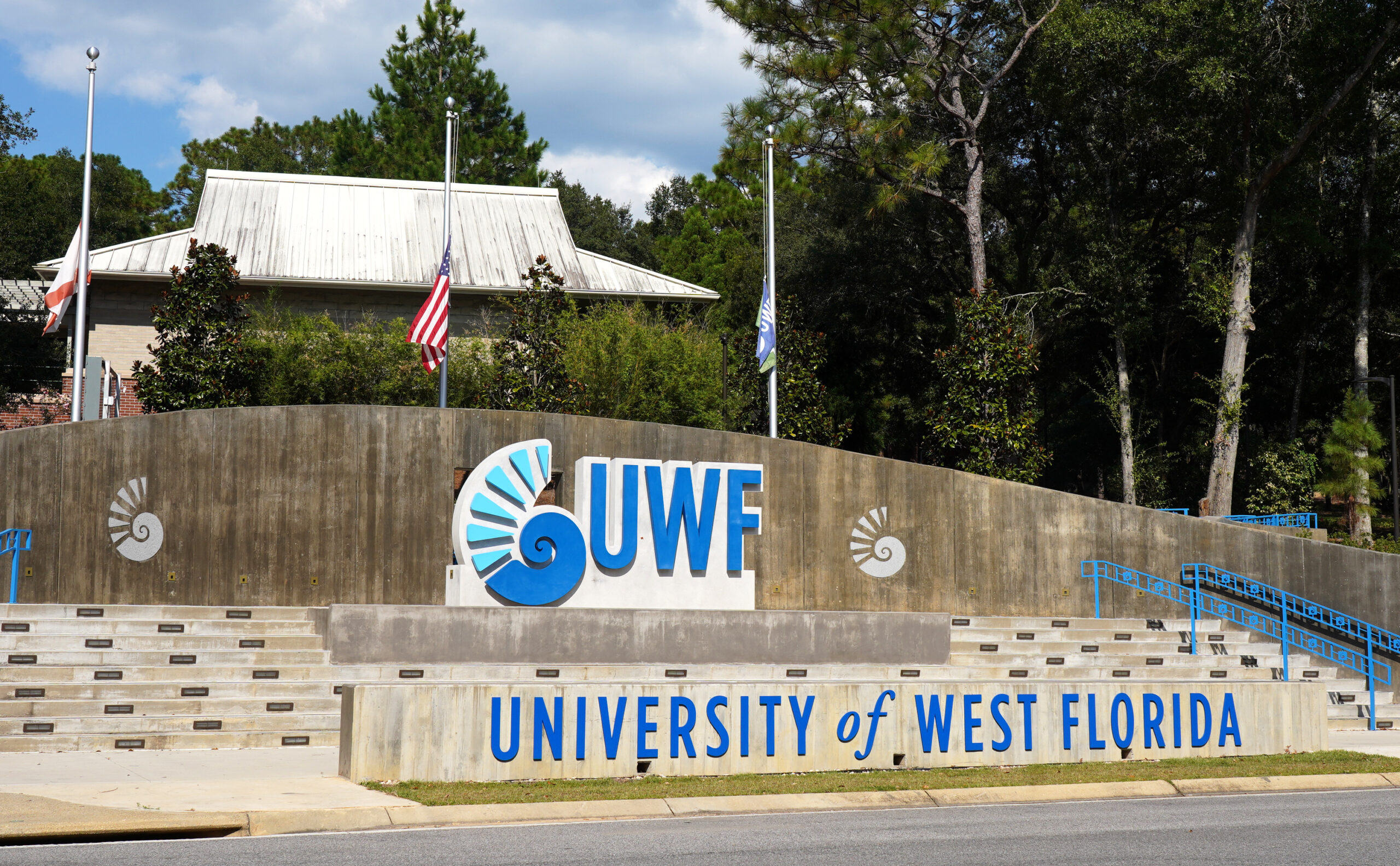
Less than three weeks after taking over University of West Florida in Pensacola as interim president, Manny Diaz Jr. abruptly dismissed the school’s top legal officer after she objected to hiring one of his longtime allies: a politically connected law firm that earned millions in contracts when Diaz ran the Education Department under Gov. Ron DeSantis.

The same Tallahassee-based firm, Lawson Huck Gonzalez, is now helping steer that university’s search for a permanent President — a post Diaz has said he intends to pursue. Trustees last week approved an annual compensation range for the next President between $800,000 and $1.2 million.

The university quietly awarded the firm a contract capped at $100,000 in August, despite objections from its then-General Counsel, Susan Woolf. Woolf warned Trustees the firm lacked experience with higher education searches and that cheaper, more specialized alternatives were available, according to internal records. Hours after she put her concerns in writing to the board, Diaz fired her, according to internal emails and contract documents newly released under Florida’s public records law.

The records offer one of the clearest looks yet at the political forces reshaping the university’s leadership since DeSantis installed a slate of new Trustees earlier this year, mirroring his overhauls at other campuses across Florida.

The move closely resembles the Republican Governor’s makeover in 2023 at New College of Florida, where trustees swiftly replaced the school’s sitting President with Richard Corcoran, a former GOP House Speaker and Education Commissioner.

The leadership shake-ups are part of a broader push by DeSantis and the Republican-led Legislature to steer Florida’s 12 public universities in a more conservative direction, alongside new laws banning diversity spending and restricting how race and gender can be taught. The Governor in April charged UWF with harboring “Marxist professors” and “some of the most liberal programs in the state,” warning the university to “buckle up” for significant changes.

Critics counter that such rhetoric is a pretext for an unnecessary and overtly partisan power grab at a university better known for training military officers and cybersecurity experts than awarding gender studies degrees. Home to more than 15,000 students, UWF is in the state’s reliably Republican Panhandle region with nearby U.S. Navy and Air Force bases and one of the largest concentrations of veterans in the U.S.

“I’ve never seen communists hiding during walks around that campus,” said Jeanne Godwin, a former Trustee and vocal opponent of DeSantis’ new appointees. A registered Republican first appointed to the board in 2006 by then-Gov. Jeb Bush, Godwin said in an interview, “It’s hard to tell what their goal is, whether it is to completely dismantle public education in Florida or whether it’s just an ideological holy war to make everything far more conservative than they think it has been.”

The university’s reshaped Board has pushed for academic reforms favored by conservatives and are now shoring up the administration — with Diaz, a former state Education Commissioner under DeSantis, now steering the university as interim President.

A former Republican state lawmaker and public school teacher from Miami-Dade County, Diaz championed many of the academic reforms that helped cement DeSantis’ culture warrior reputation. After the Governor picked him as the state’s top education official in 2022, Diaz helped engineer new accreditation laws giving Tallahassee more sway over state universities and pushed to eliminate sociology as a core course for college students, saying the subject had been “hijacked by left-wing activists.”

To many in Pensacola, Diaz’ sudden arrival as interim President on a $744,000 contract — after longtime President Martha Saunders resigned in May under scrutiny from the DeSantis administration — seemed less like a caretaker role and more like a setup for a permanent appointment. Those suspicions intensified shortly after Diaz’ arrival in July, when he announced Woolf’s dismissal without providing a public explanation.

The records show that Lawson Huck Gonzalez’s hiring sparked a behind-the-scenes clash between Woolf and Rebecca Matthews, Chair of the Board of Trustees and a recent DeSantis appointee. In late July, Matthews was pressing Woolf to hire Jason Gonzalez, the firm’s co-founder and a well-connected Republican lawyer, to serve as outside counsel for the presidential search.

Woolf pushed back, warning Matthews in a July 29 email that while Gonzalez is “very experienced in litigation work and has many political connections,” he had limited expertise in presidential searches and higher education law. Woolf relayed her concerns to the full Board of Trustees in a letter the following day, stressing that the search “will be closely watched and potentially audited” and recommending two other, specialized firms as alternatives.

At least one of the alternative firms’ billing rate was half as expensive as Gonzalez’s.

“Matthews has identified another attorney and his firm that she wants hired against my advice,” Woolf wrote, without identifying Gonzalez or his firm by name. The Board “of course has the authority to disagree with my advice,” she added, noting that “no individual trustee has the authority to make that decision for the board.”

Five hours later, on July 30, a university vice president informed Trustees that on behalf of Diaz Woolf had been fired “effective immediately.” Diaz has offered no public explanation for the decision, only that it came “after careful consideration and in the best interest of the university.”

Woolf declined to be interviewed. Before stepping in as the university’s General Counsel in 2021, she had served in a similar position for the Pensacola Police Department and was a former Pensacola City Attorney.

The circumstances and timing of her ouster were striking: Records show Diaz had already told administrators he intended to apply for the permanent presidency, raising questions about whether the search process was being engineered to benefit him.

Domani Turner-Ward, a longtime student activist on campus and part of the “Save UWF” movement, said the firing fit into a broader pattern. “It was inappropriate for the general counsel to have been fired for a simple recommendation to the board, and that seems like what it was,” they said. “Many believe that Manny Diaz will be the permanent president of UWF, and I’ve heard some people complain that this whole presidential search is just a show and a waste of money.”

Diaz and Matthews did not respond to calls and emails requesting comment.

The university formally launched the search last month and expects to announce finalists as early as January. Despite Woolf’s warnings that presidential searches at other universities typically don’t require outside counsel, Matthews moved ahead with Gonzalez. The university finalized its $100,000 agreement with his firm Aug. 11, backdated to Aug. 1 — the same day Matthews met with Gonzalez and two lawyers from his firm to “discuss the search and next steps,” according to emails.

Godwin, the former Trustee, said she raised concerns to Matthews about the university incurring unnecessary costs for the search. “My verbiage was,” Godwin recalled, “‘I have a problem with the appearance of hiring a special firm when we all know that Diaz is going to be the president.’” According to Godwin, Matthews “never challenged that assumption. She said, ‘I have a problem with it looking like the committee made the choice.’”

Turner-Ward echoed those concerns, adding that students feel disconnected from the process and worried about its outcome. “Many students don’t seem to be particularly aware of these changes, but those who are are very concerned. There is a pretty significant sense of impending doom, almost. I’ve heard people saying, ‘Well, at least I graduate this semester.’”

The internal records do not explain Matthews’ rationale for hiring outside counsel for the search, or why she insisted on Gonzalez’ firm over more specialized alternatives.

Founded in 2023, Lawson Huck Gonzalez has quickly built a lucrative roster of state contracts, collecting $10.5 million in just over two years — including $2.5 million from the Education Department under Diaz. The firm is currently defending Diaz and the state in a pending American Civil Liberties Union lawsuit challenging the 2023 state law banning diversity spending and restricting college curriculum. The Education Department paid a flat $600,000 legal fee to Lawson Huck Gonzalez for that case.

Gonzalez did not respond to phone calls requesting comment. His contract strictly prohibits his firm from speaking to the media about the university without prior authorization from a university administrator, and it directs all inquiries to be referred to the school.

Gonzalez, a former two-term General Counsel to the Republican Party of Florida and legal adviser to ex-GOP Gov. Charlie Crist, has represented major political and corporate clients. His firm’s website touts his work as lead counsel for the oil company Transocean Ltd. after the 2010 Deepwater Horizon disaster, where he successfully fought to have dozens of lawsuits dismissed in the Panhandle.

Although his firm’s website does not list higher education law as one of its specialties, Gonzalez’s contract letter cites his firm’s role in the Miami Dade College presidential search, as well as stints representing the University of Florida, University of Wisconsin, Broward College and Florida Atlantic University.

Per the contract, Gonzalez and his attorneys must attend all committee meetings, present on Florida’s Sunshine Laws and “(ensure) all non-disclosure agreements are executed.” University presidential searches are highly confidential under a 2022 state law, which shields the names of candidates until finalists are announced.

At the search committee’s first public meeting last month, Gonzalez offered a brief introduction, while another lawyer from his firm gave a three-minute overview of state confidentiality laws. Earlier in the meeting, the school’s human resources chief spent 13 minutes delivering a more detailed presentation on the same content.

Turner-Ward, who previously was an intern with the university’s Office of Campus Culture and Access before it was closed by the new administration, said administrative shakeups signal a troubling shift. “That office organized important community events,” they said. “I’m not talking about politically controversial events either — I’m talking about Holocaust remembrance. These are events that bring our community together, and I don’t know if we will be able to have them anymore now that that office is closed.”

“Our community is absolutely in jeopardy,” Turner-Ward said. “Our connections to the Pensacola community at large are in jeopardy, because a lot of what makes UWF community is its connections and entanglement with things outside of it. Students are well integrated into Pensacola. There are many partnerships, and I think those are being jeopardized by these trustees and what is being done here.”

The worst-case scenario, Turner-Ward said, “is that this community becomes unsafe for people who don’t subscribe to a particular ideology. That would create a situation where the university begins to teach students what to think, not how to think.”

___

This story was produced by Fresh Take Florida, a news service of the University of Florida College of Journalism and Communications. The reporter can be reached at [email protected]. You can donate to support our students here.


Post Views: 0


Source link

Continue Reading

Politics

U.S. Sugar locomotive rolls holiday cheer across the Glades

Published

on


U.S. Sugar’s century-old steam locomotive, the Sugar Express, returned this year to roll across the Glades on its annual holiday mission.

Rebranded as the “Santa Express,” the 1920s engine made festive stops in Belle Glade, Clewiston, Moore Haven and Sebring, where thousands of toys — donated by U.S. Sugar and its employees — waited for families lined up along the tracks. Santa, Mrs. Claus and members of the U.S. Marine Corps helped hand out gifts at each stop, continuing a partnership with Toys for Tots that has become a staple of the company’s end-of-year outreach.

This year marked the fifth time U.S. Sugar teamed up with the organization to deliver presents to children in need across the region. Families who attended had the opportunity to meet Santa and take home a wrapped gift at no cost.

“We worked diligently as a team to coordinate this effort and deliver some cheer this holiday season,” said Brannan Thomas, Director of Community Relations at U.S. Sugar. “If there’s a family in need across Glades, Hendry, Highlands, Martin and Palm Beach counties, we’re here to help. That’s just who we are.”

The company says employees contributed significantly, donating toys in addition to those purchased directly by U.S. Sugar, ensuring thousands of kids received something special.

When it’s not serving as a rolling holiday workshop, the Santa Express doubles as a tourist draw — giving families a chance to ride Florida’s only operating steam locomotive on a seasonal excursion through sugar country.

The trip is getting wider notice, too: Thrillist recently named the experience among the nation’s most festive holiday train rides, noting its lights, decorations, carols, Christmas cookies and a mid-route visit from Santa.

U.S. Sugar purchased the train in 1952. It was initially launched in 1920 to travel on the Florida East Coast Railway and was used in 2020 — 100 years later — to bring a harvest to a U.S. Sugar mill. The company partnered with FMW Solutions LLC to restore the train in 2020.


Source link

Continue Reading

Politics

Good defense — ACA — Coast Guard — rocking out — Machado

Published

on


Defense & division

A $900 billion spending package cleared the House this week with bipartisan support. Florida’s congressional delegation said this year’s National Defense Authorization Act (NDAA) (S 1071) includes numerous policy wins and important projects benefiting the Sunshine State. However, a few members said they could not support specific provisions in the bill.

The House passed the package on a 312-112 vote. In Florida, 15 House Republicans and seven Democrats all backed the legislation.

Brian Mast praises bipartisan NDAA passage, saying the defense package rebuilds foreign policy and strengthens security.

“This bill delivers exactly what America has needed — bombs and bullets from America, for America,” said Rep. Brian Mast, a Stuart Republican who chairs the House Foreign Affairs Committee. “It also does something very important — it rebuilds American foreign policy.”

He pointed toward provisions to modernize diplomacy to deal with foreign propaganda and misinformation, while also praising investment in countries that can boost U.S. national security priorities regarding critical minerals, undersea cables and energy.

Rep. Vern Buchanan, a Longboat Key Republican who co-chairs Florida’s congressional delegation, saw four bills included in the House-passed NDAA, including protections for animals used in live-fire training, restrictions on the release of U.S. surveillance to stop it from reaching Chinese adversaries, transparency on detection of any unmanned aircraft systems, and a listing of Defense Department needs requiring foreign materials.

“I’m proud that several of my proposals, each focused on readiness, accountability and supporting our service members, were included in the final package,” Buchanan said. “Together, these measures strengthen our forces and reaffirm our commitment to the men and women in uniform.”

But it wasn’t just Republicans who scored wins in the bill. Rep. Debbie Wasserman Schultz, a Weston Democrat and the delegation’s other co-chair, saw her PROTECT Our Children Act, authorizing law enforcement support through the Internet Crimes Against Children (ICAC) Task Force, included in the NDAA.

“Our lives are increasingly intertwined with the internet, and those who would commit crimes against our children know that all too well,” Wasserman Schultz said. “With the PROTECT Our Children Act, the ICAC Task Force Program will get predators offline and help make the internet a safe space for all children.”

As for regional wins, Rep. Kathy Castor, a Tampa Democrat, said $74 million in construction funding for KC-46 aircraft hangars and maintenance facilities at MacDill Air Force Base was included in the bill.

“I am particularly proud to have championed parts of the defense bill that benefit the service members and families at MacDill Air Force Base, including pay raises and critical improvements to on-base housing and infrastructure, health care and child care,” she said.

But not everyone was happy with the final product. Republicans Reps. Byron Donalds, Anna Paulina Luna and Greg Steube all voted down on the NDAA, as did Democratic Rep. Maxwell Frost. Steube, a Sarasota Republican, said he was optimistic about a version of the NDAA passed by the House earlier this year. Still, the Senate watered it down in back-and-forth negotiations.

“As a veteran, I will not support a bill shaped to satisfy the left instead of advancing our priorities. And it is telling that 115 Democrats voted for it,” Steube posted. “Under Republican rule, in the U.S. Defense bill, we are sending billions overseas: $800 million to Ukraine’s endless war, $130 million to Syria, $1 billion to Taiwan, $15 million to Lebanon. That money should be going to our troops and the American people.”

Regardless, the House added some changes from Senate-passed language, so the bill will return to the upper chamber before it heads to President Donald Trump’s desk.

ACA alternative

The Republican majority in the Senate, meanwhile, has spent this week grappling with health care. Both of Florida’s Senators, Sens. Ashley Moody and Rick Scott, voted down on considering an extension of health care subsidies set to expire at year’s end. But an internal fight simultaneously played out as conservatives sought an alternative to, or an evolution of, the Affordable Care Act, the signature legislation signed by Democratic President Barack Obama more than a decade ago.

Ashley Moody and Rick Scott oppose extending health care subsidies as the GOP debates post-Obamacare alternatives.

Scott, a longtime Obamacare critic, released one of the top GOP proposals under consideration. The Naples Republican promoted his More Affordable Care Act at the Rescuing The American Dream summit held last week in D.C., and has continued to rally support around the proposal.

“American families see clearly that Obamacare has failed to deliver on its promises – instead, it created a broken system that screwed over the American people with higher costs and fewer options,” Scott said. “Families are left paying higher premiums and higher deductibles for health care plans that don’t even fit their needs. We can fix that: we just have to let Americans be the consumer so they can get care that truly fits their needs and drive competition to lower costs.”

Scott’s plan would establish Health Savings Accounts controlled by consumers, which he said would be more beneficial than directing federal funds directly to insurance companies.

“We can make Obamacare actually work for families by giving them options, allowing them to shop across state lines, increasing transparency in health care, and giving any financial support to them directly through HSA-style Trump Health Freedom Accounts so families can choose the care that fits their needs,” Scott said. “With more competition, clearer pricing, and allowing Americans, not government, to be the consumer, we can transform Obamacare into a system that gives Americans the freedom to get the care they need.”

He picked up co-sponsors in the Senate, while Rep. Aaron Bean, a Fernandina Beach Republican, co-introduced a companion bill in the House with Rep. August Pfluger, a Texas Republican.

“We’re putting patients — not bureaucrats or insurance companies — back in charge of their health care,” Bean said. “With Trump Health Freedom Accounts, competition across state lines, expanded access to employer-sponsored health insurance, and price transparency, this legislation empowers Americans to make informed health care decisions, increases choice and competition, and lowers health care costs. This is America First health care, and under House Republican leadership, we’re fixing the broken system.”

Coast Guard boost

The Sunshine State is certainly not short of Coast Guard activity, but in a letter to the Department of Homeland Security, Moody is calling for a new Coast Guard training facility in Florida.

Moody said the new Coast Guard training base would add to the already formidable military presence in Florida and strengthen national security, as the federal government issued requests for information to states about a possible new Coast Guard training facility. Homeland Security called for requests last month.

Ashley Moody urges Kristi Noem to consider Florida for new Coast Guard training facility site.

Moody drafted a letter to Secretary of Homeland Security Kristi Noem outlining the benefits of adding a Coast Guard training facility in Florida. She noted that adding a Coast Guard training facility would be a natural next step.

“Florida already plays a substantial role in securing our country — we’re the proud home of 21 military installations and three combatant commands,” Moody said. “It just makes sense that our nation’s next U.S. Coast Guard training facility join these bases here in the Sunshine State, where we have a proven military infrastructure, available capacity, and strong interagency partnerships.”

There are already about a combined 50 Coast Guard offices, units and installations in Florida. Moody said in her letter to Noem that the state is a good fit for a training base, though she did not specify where such a facility would be located.

Spending crackdown

The House Oversight Committee passed legislation that could put a sunset date on all federal programs that Congress doesn’t specifically reauthorize.

Rep. Kat Cammack, a Gainesville Republican, said her Unauthorized Spending Accountability (USA) Act (HR 143) would restore the rightful role of Congress when it comes to reining in government.

Kat Cammack advances bill to sunset unauthorized federal programs, forcing Congress to reauthorize spending regularly.

“For too long, Washington has allowed billions of taxpayer dollars to flow to programs that haven’t been reviewed or reauthorized in years — sometimes decades. The USA Act restores accountability by forcing Congress to do its job: examine these programs every three years, determine whether they are effective, and ensure that federal funds are being used responsibly. This is a common sense, necessary step to rein in wasteful spending and return real oversight to the American people.”

As written, the bill requires a sunset after three years for any program not authorized by Congress and requires that any new programs include such a clause from the beginning.

The Congressional Budget Office, in its latest report, identified nearly 1,300 programs that expired before the end of the 2024 fiscal year but continue to operate, with another 251 programs set to expire this fiscal year. The same report spotlighted $516 billion in spending tied to 491 expired authorizations.

Rocking the vote

Rep. Maxwell Frost hosted a second MadSoul Music & Arts Festival over the weekend, a concert and political gathering that attracted nearly 5,000 people to the Central Florida Fairgrounds.

The event put nationally prominent Democratic Reps. Ayanna Pressley of Massachusetts and Delia Ramirez of Illinois onstage alongside music acts like Aly & AJ and Magdalena Bay.

Maxwell Frost hosts MadSoul festival blending music, activism, and youth turnout at Central Florida Fairgrounds.

“History has shown us that the arts, music, and culture is not just a form of self-expression but tools of powerful dissent,” said Frost, an Orlando Democrat.

“And in a moment of rising authoritarianism in our state and nationwide, this year, MadSoul gave our community a place to reclaim joy as a form of resistance. Nearly 5,000 people – mostly young people who aren’t often given a seat at the table in politics – showed up, enjoyed music, and felt seen in a way that inspired them to take action, whether that was registering to vote or getting plugged in with organizations doing real work. Our campaign is committed to building a movement rooted in joy as we work to build the future we all deserve.”

More than 30 grassroots political groups also had a presence at the event, making the concert into a networking event for activists involved in reproductive freedom, climate justice and global human rights.

Preventing HPV

Bipartisan legislation supporting vaccination against a sexually transmitted virus will be championed this year by a Florida lawmaker. Castor filed the Promoting Resources to Expand Vaccination, Education and New Treatments for (PREVENT) HPV Cancers Act, along with Republican Rep. Don Bacon of Nebraska and Democratic Rep. Kim Schrier of Washington.

The bill would fund awareness of the Human Papillomavirus (HPV) vaccine among health care providers and families.

Kathy Castor leads a bipartisan bill promoting HPV vaccination awareness to prevent cancers nationwide through education.

“HPV immunization can prevent six types of cancer, and boosting immunization rates and raising public awareness can save tens of thousands of lives from preventable cancer deaths each year,” Castor said.

“I’m proud to reintroduce the bipartisan PREVENT HPV Cancers Act with Reps. Bacon and Schrier to ensure Americans across the country have the information and access they need to protect themselves from HPV and HPV-associated cancers through immunizations and cancer screenings. I’m grateful to my friends back home at the Moffitt Cancer Center for bringing health experts and advocates together around the shared goal of eliminating HPV-associated cancers once and for all.”

Numerous health care organizations endorsed the legislation, including the American Academy of Pediatrics and American Association for Cancer Research.

Stinky minks

The pandemic proved that raising minks for fur isn’t just cruel but a high-fashion risk to public health, according to Rep. Vern Buchanan.

The Animal Protection Caucus co-chair introduced legislation this week to discourage the transport of minks. He filed the Minks In Narrowly Kept Spaces (MINKS) are Superspreaders Act (HR 7670) with Rep. Rosa DeLauro, a Connecticut Democrat.

Vern Buchanan introduces bipartisan bill phasing out mink farms, citing animal cruelty and health risks.

“Mink farms are inhumane, unsafe and unnecessary,” Buchanan said. “These operations fueled dangerous disease transmission during the COVID-19 pandemic and continue to pose a major risk to families and front-line workers. With safer and more affordable alternatives available, it’s time to end this abusive practice, protect Americans’ health and help farmers transition responsibly.”

The legislation, in an attempt to phase out mink farms entirely, would prohibit the transport, sale, breeding and possession of captive mink for pelt production. It would also offer buyouts to mink farms to exit the fur-raising industry.

Animal rights groups cheered the bill.

“There is a very good reason that mink farming has been in decline for decades: consumers are embracing fashion choices that do not involve factory farming of wild animals and killing them for their pelts,” said Wayne Pacelle, president of Animal Wellness Action and the Center for a Humane Economy.

“Add in that mink farms are incubators of dangerous diseases, and it makes very good sense for Congressman Rep. Buchanan again to lead a legislative effort to wind down an animal-killing enterprise that has outlived its usefulness.”

Tax transparency

If the IRS contacts groups to obtain information about taxpayers, Steube said those citizens deserve to know about it. The House Ways & Means Committee this week advanced legislation from the Sarasota Republican that may soon require that.

Steube’s Taxpayer Notification and Privacy Act (HR 6495) cleared the influential Committee on a 41-0 vote.

Greg Steube advances bill requiring IRS to notify taxpayers when third parties are contacted.

“This legislation is about building a healthier relationship between taxpayers and their government, one that respects privacy and due process while still ensuring the IRS can do its job,” Steube said in the Committee. “For law-abiding Americans, compliance is already complicated enough. The least we can do is ensure that when the IRS intends to go outside the taxpayer to gather information, the taxpayer can provide, the taxpayer gets clarity — what exactly is being sought — and a fair chance to respond.”

The bill requires that, when the IRS contacts third parties such as banks, agents must provide notice to the relevant individuals and explain the nature of the request.

SWAP efficiency

A plan backed by the Florida Fish and Wildlife Commission to protect nongame animal species in need of conservation just cleared the House.

A bill sponsored by Reps. Byron Donalds, a Naples Republican, and Jared Moskowitz, a Parkland Democrat, would fast-track approval of State Wildlife Action Plans (SWAPs). If the Make SWAPs Efficient Act becomes law, it would require the federal government to decide on proposals within 180 days, whereas the process typically takes 18 months.

Byron Donalds, Jared Moskowitz push bipartisan bill expediting federal approval of state wildlife conservation plans.

“As we continue to peel back the labyrinth of federal bureaucracy that has paralyzed the basic functions of our federal government, we must turn to the Department of the Interior,” Donalds said.

“Currently, it’s taking over a year and a half to approve basic state wildlife protection plans to ensure nongame species do not become threatened or endangered. This is unacceptable, and this is why I sponsored HR 1676 to expedite this timeline to just 180 days. We are making our government efficient again, whether bureaucrats in Washington like it or not, and I look forward to the swift passage of this important legislation in the United States Senate.”

The bill was endorsed by the Florida state agency, as well as All Florida, Ducks Unlimited and the Florida Commercial Watermen’s Conservation.

Sighted in Oslo

Two members of the delegation were in Norway to represent the U.S. and greet Venezuelan opposition leader María Corina Machado as she accepted the Nobel Peace Prize.

Reps. Carlos Giménez and María Elvira Salazar, Miami-Dade Republicans who represent high concentrations of Venezuelan Americans, both cheered the international figure’s arrival in Oslo.

“Being in Norway to recognize María Corina Machado is a powerful reminder of what true courage looks like,” Giménez said. “María Corina Machado is one of the world’s bravest freedom fighters. She is standing up to the murderous Maduro regime, defeating Venezuela’s dictator Nicolás Maduro at the ballot box, and working with leaders around the world to restore freedom to her homeland. María Corina’s courage inspires us all and represents the hope of a free and democratic Venezuela. It is the honor to celebrate this historic occasion in Oslo, surrounded by her family and fellow freedom fighters.”

Carlos Giménez and María Elvira Salazar attend the Nobel ceremony honoring Venezuelan opposition leader María Corina Machado.

Salazar said it was inspiring to watch the international community unite behind Machado. She said celebrations ran into the evening as Machado traveled — in disguise and sometimes in fear of U.S. strikes on Venezuelan boats, according to the Wall Street Journal — to emerge from political exile and accept the award.

“It’s 2 in the morning in Oslo,” Salazar posted with video from the scene, “and the Venezuelan people who came all the way here finally got to see and embrace María Corina Machado, shouting ¡LIBERTAD!”

Machado’s daughter accepted the award at an official ceremony before the dissident leader arrived in Norway. But Machado later gave her own speech to an international crowd. She also suggests, as the Trump administration considers military action, that sitting President Nicolás Maduro was the true enemy of the people in the nation.

“Some people talk about invasion in Venezuela and the threat of an invasion in Venezuela, and I answered Venezuela has already been invaded,” Machado said, as reported by ABC News.

On this day

Dec. 12. 2000 — “George W. Bush prevails; By single vote, justices end recount, blocking Al Gore after 5-week struggle” via The New York Times — The Supreme Court effectively handed the presidential election to Bush, overturning the Florida Supreme Court and ruling 5-4 there could be no further counting of Florida’s disputed presidential votes. The ruling came after a long and tense day of waiting at 10 p.m., just two hours before the Dec. 12 “safe harbor” for immunizing a state’s electors from challenge in Congress was to come to an end. The unsigned majority opinion said the immediacy of this deadline made it impossible to devise a method for counting the votes.

Dec. 12, 2018 — “National Enquirer owner admits to ‘catch and kill’ payment to ex-Playmate” via The Guardian — The publisher of National Enquirer has said it coordinated with Trump’s presidential campaign to pay a Playboy model $150,000 in hush money, placing the President and his inner circle in further legal peril. American Media Inc. told prosecutors it worked “in concert” with Trump’s campaign when it bought Karen McDougal’s story of a sexual affair with Trump, which it suppressed “to prevent it from influencing the election.” The publisher revealed details of the so-called “catch and kill” deal for McDougal’s story in an agreement with federal authorities that means the company will not face charges, prosecutors in Manhattan announced.

___

Peter Schorsch publishes Delegation, compiled by Jacob Ogles, edited and assembled by Phil Ammann and Ryan Nicol, with contributions by Drew Dixon.


Source link

Continue Reading

Politics

Laurel Lee wants judges granted more discretion on setting probation supervision terms

Published

on


Empowering judges with more discretion in probation terms will free up the justice system to focus on true repeat offenders. That’s the hope of federal legislation championed by U.S. Rep. Laurel Lee.

The former Florida Circuit Court Judge introduced the Safer Supervision Act (HR 5883), a bipartisan bill that seeks to refocus the federal supervised release program.

“I have seen our criminal justice system from all sides and recognize its strengths and its areas for improvement,” the Thonotosassa Republican said. “I have long been interested in issues around good, data-driven policy and also successful reentry. We are well served, and our communities are safer, when we consider how we can help individuals who are returning home from incarceration succeed, and this bill is designed to do exactly that.”

Lee filed the bipartisan bill with Democratic U.S. Reps. Deborah Ross of North Carolina and Lucy McBath of Georgia, as well as Republican U.S. Rep. Mark Harris of North Carolina, are hoping to advance the legislation through the House Judiciary Committee, on which she serves. A Senate companion bill has been filed by U.S. Sens. Mike Lee, a Utah Republican, and Chris Coons, a Delaware Democrat.

“I know I always love having an opportunity to work on something that is bicameral and bipartisan, and this is just such a bill,” Lee said. “It is something that people in our community support. It’s a good bill for Florida and a good bill for America.”

If passed, the legislation would reinstate individualized decision-making for judges, allowing them to set probation terms based on the risk of recidivism for each individual prosecuted for a crime. She stressed that the intent isn’t to lighten sentences but to deploy public safety resources more effectively and efficiently.

“We cannot just release dangerous criminals, violent recidivists. That’s not what we do here at all. It’s quite the opposite,” Lee said.

“It focuses those criminal justice resources so that those people who are a threat are getting that attention and are getting that supervision, but those who have actually put their lives back together and are ready to be supported aren’t going to be stopped by unnecessary barriers and administrative tasks.”

The bill has backing from the REFORM Alliance, which has promoted conservative messaging around the legislation. That group commissioned a poll that found broad support among nearly 79% of Americans for the bill’s policies.

That poll also showed a large number of Americans who have seen the effects of harsh sentencing guidelines firsthand or in their families. That’s no shock to Lee, who, before serving in Congress and as Florida’s Secretary of State, worked in criminal law as a public defender, prosecutor and judge.

“So many people have seen the impacts of the barriers to rebuilding a life after an involvement with the criminal justice system,” she said. “To me, I was not surprised. I have seen the families that are affected. But I do think that it would be surprising to many people to see just how common it is.”

She also sees this reform as different from other changes proposed in past years that ultimately became unpopular, such as replacing cash bail. Lee is confident that any changes to the bill will yield measurable benefits within the justice system.

“The cash bail policies that we’ve seen implemented in various parts of the country were reckless from the start. And tragic outcomes when judges are not permitted to actually assess potential danger to the community and are instead forced to release back out on bail people who are violent criminals with a long history of coming in and out of the criminal justice system, these results were predictable,” Lee said.

“What we are talking about in the Safer Supervision Act is nothing like those policies. It’s the opposite. This is something that is built on data that is carefully targeted to ensure that we’re giving those opportunities to people who do not pose a threat to their communities. Of course, if this is signed into law, we will continue to track its implementation to ensure that it’s operating the way it was intended.”


Source link

Continue Reading

Trending

Copyright © Miami Select.