Connect with us

Business

Daylight savings time: This week the U.S. and Europe are out of sync

Published

on


For a week every October, people organizing international catch-ups and meetings on both sides of the Atlantic may be briefly confused: Did I just miss that conference call? Why is my grandmother calling me so early?

Most people quickly remember: It’s that strange time each fall when Europe and the United States are out of sync as they switch from daylight saving time to standard time.

Most countries do not observe daylight saving time. And for those that do — mostly in Europe and North America — the date of the clock change varies, partly because of how time-related laws were developed in difference places.

In countries that observe the practice, clocks are set forward one hour from standard time in March to make the most of increased summer daylight hours in the northern hemisphere.

Clocks “fall back” again in the autumn to standard time.

In the U.K. and Europe, this takes place at 2 a.m. on the last Sunday in October.

But in the U.S. and Canada, clocks go back one hour at 2 a.m on the first Sunday in November.

That in-between week means that the time difference between the two sides of the Atlantic — for example between London and New York — is one hour shorter than usual, potentially causing chaos for coordinating Zoom calls or other meetings.

The idea of daylight saving time had been floated for several hundred years, but didn’t become a standardized common practice written into law in many countries until the early 20th century.

Europe first adopted it during World War I as a wartime measure to conserve energy. Germany and Austria began moving their clocks by an hour in the summer of 1916. The U.K. and other countries involved in the war followed soon after, as did the United States and Canada.

Efforts were made over the years to coordinate time settings in Europe, and from 2002 all European Union member states adjusted their clocks twice yearly on the same days in March and October.

However, there has been no success in coordinating the time change more widely.

In the U.S., a 1966 law mandated a uniform daylight saving time nationwide, though the dates marking the twice yearly transitions have changed over the years. In 2022 the Senate unanimously approved a measure that would make daylight saving time permanent across the United States, but it did not advance.

The current dates were established by Congress in 2005.

Many do not agree on the benefits of the seasonal time changes, and lawmakers in the U.S. and Europe have previously proposed getting rid of the time change altogether. So far no changes have been finalized.

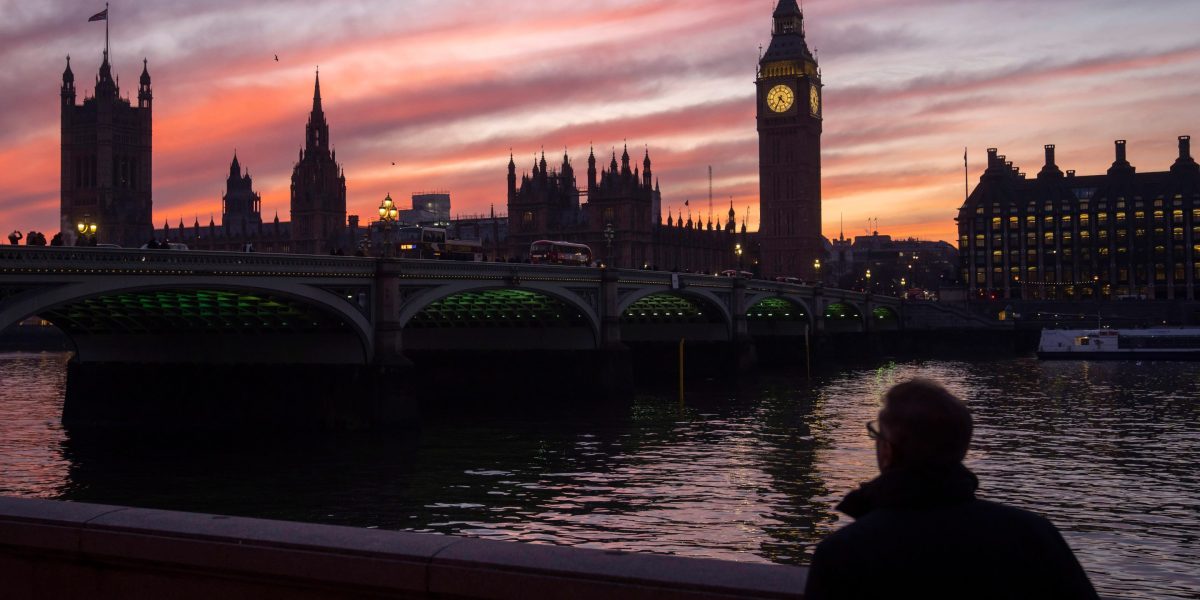

Source link

Continue Reading

Business

Trump’s postal chief says cuts have gone too far: ‘we cannot cost-cut our way to prosperity’

Published

on


Steiner said the 150-year-old agency needs to expand its revenue base to restore prominence in the nation’s delivery network. It also should capitalize on its long-standing legal obligation to deliver to every address.

One way it can do that, Steiner said during the Postal Board of Governors meeting in Washington, is by working with more customers to provide final or “last mile” delivery to individual home and businesses, the most expensive and labor-intensive part of delivery.

“I’ve taken to saying that we cannot cost-cut our way to prosperity,” Steiner said. “We have to grow.”

Steiner said the postal service, which has faced an uncertain future since President Donald Trump’s election to a second term, is currently negotiating deals with private parcel delivery service UPS and similar companies to expand its last-mile service for the final leg of delivery. He said USPS also wants to open up that program to large and small retailers, offering same-day and next-day delivery.

“We’ve begun discussions with a number of retailers and the desire for fast, reliable and affordable delivery is certainly strong among all retailers,” he said. “Our value resides in going to every address six and often seven days a week while offering a remarkable retail and processing footprint.”

Steiner, who began as postmaster general in July, was previously a board member of the FedEx delivery service.

Postal service faces major financial challenges

While a new financial report released Friday showed operating revenue of $80.5 billion, an increase of $916 million from last fiscal year, the postal service suffered net losses totaling $9 billion. It marks a slight improvement from the previous fiscal year, when the net loss was $9.5 billion.

Amber McReynolds, who was re-elected chair of the Postal Board of Governors on Friday, said “long-standing and unnecessary restrictions” are weighing down USPS’s bottom line and “highlight the urgent need for executive and legislative action” so the postal service can be financially sustainable for the long-term. USPS is an independent and mostly self-supporting federal agency.

She said the postal service is currently required to pay a “disproportionate share” into its retiree system compared to other federal agencies. It’s also only allowed to invest postal retirement funds in treasury securities, losing out on hundreds of billions of dollars that could be invested in a diversified portfolio, she added.

McReynolds also called for congressional updates to USPS’s pricing system, its workers’ compensation program and its borrowing limits, which haven’t been changed since 1991.

“This is urgent and it is time for action,” she said.

Steiner warned Friday there’s also a need to cut costs at the post office, be more efficient and use innovative methods, including bringing artificial intelligence into the USPS logistics network.

“To do all of this, we need capital and the ability to leverage our assets,” he said. “We should be able to borrow like our competitors, who are not limited by statute.”

Sticking with modernization plans

Steiner, who said he has visited more than 20 postal facilities and spoken with thousands of postal workers and stakeholders during his first 100 days on the job, made it clear Friday he plans to mostly stay the course with the $40 billion, 10-year modernization and financial stabilization plan launched by his predecessor, Louis DeJoy.

He said the progress made so far has empowered the USPS to “reach new levels,” noting on-time mail delivery has been steadily improving and most customers can expect delivery of their mail and packages in less than three days on average. However, he said more improvements are still needed.

With the busy holiday season looming, Steiner said the postal service is ready, noting $20 billion has been spent over the past four years on mail processing and logistics modernization. Also, due to a “stabilized workforce,” only a “modest” number of seasonal employees of roughly 14,000 people will need to be hired.

While multiple members of the public on Friday voiced concerns about the postal service possibly being privatized, an idea raised by President Donald Trump and his former adviser, Elon Musk, McReynolds tried to quash the notion.

“There are no proposals or plans to privatize the postal service,” she said. “The new postmaster general has talked at length about that in his public comments and the board certainly has shared that sentiment as well.”


Source link

Continue Reading

Business

The day the crosswalk music died: Iconic Buddy Holly Glasses to be lifted from hometown crosswalk on Trump directive

Published

on


Fans of the Buddy Holly crosswalk in his hometown of Lubbock, Texas, with a painted depiction of the rock and roll legend’s iconic glasses, will soon have to say goodbye to it. That’ll be a day that will possibly make them cry.

Lubbock City Council members said this week they have no choice but to remove it, to comply with a directive from the Trump administration and Republicans to rid the public roadways of any political messages or artwork.

Laredo, in South Texas, removed a mural in October that protested the border wall along the southern border with Mexico. In August, Florida officials removed a rainbow-colored crosswalk outside the Pulse nightclub where 49 people were gunned down.

Lubbock’s crosswalk was first installed in 2020 and is near the Buddy Holly Center, a downtown museum with exhibits honoring Lubbock’s most famous native son.

“It’s such a tasteful cross section and people like it. But what do you do?” said City Council Member Christy Martinez-Garcia, who was among those questioning why it had to go.

Lubbock received a letter from the Texas Department of Transportation with “some harsh wording” that threatened the possible loss of state or federal funding for road projects if such artwork was not removed, David Bragg, Lubbock’s interim division director of public works, told council members on Tuesday.

“This was very broad letter. I don’t think it was intended to go after, say, the Buddy Holly glasses. Unfortunately it did,” Bragg said.

Mayor Mark McBrayer said the city had no choice but to comply.

“Probably everybody here got some communication from people wanting that not to be the case,” McBrayer said. “But I don’t really feel like we have the wherewithal to do anything about that without trying to litigate it and I don’t think there’s any appetite here anyway.” Bragg said the removal will happen during normal maintenance next year.

On Oct. 8, Abbott directed the department to ensure that all Texas cities and counties are in compliance with federal and state guidelines on roadway safety and that symbols, flags and other markings conveying social or political messages are prohibited, as well as any signage and signals that don’t directly support traffic control or safety.

“Texans expect their taxpayer dollars to be used wisely, not advance political agendas on Texas roadways,” Abbott said in a statement.

Abbott’s office did not immediately respond to an email seeking comment on Friday.

Abbott’s directive came after Trump’s Transportation Secretary Sean P. Duffy sent letters to all U.S. governors in July saying that intersections and crosswalks must be kept free from distractions.

“Roads are for safety, not political messages or artwork,” Duffy’s statement said.

Holly was born and raised in Lubbock, located in northwest Texas. He decided to play rock and roll music after seeing Elvis Presley perform in 1955. His best known songs include “That’ll Be the Day,” ’’Rave On” and “ Peggy Sue.”

Holly was only 22 when he died in a Feb. 3, 1959, plane crash near Clear Lake, Iowa, that also killed Ritchie Valens and J.P. “Big Bopper” Richardson. The three rockers’ deaths were immortalized in Don McLean’s 1971 song “American Pie,” and became known as “the day the music died.”


Source link

Continue Reading

Business

Despite AI bubble fears, Warren Buffett’s Berkshire Hathaway buys shares of hyperscaler Alphabet

Published

on


Wall Street has been consumed for months with fears that the artificial intelligence boom is actually a bubble about to pop, but that didn’t stop Berkshire Hathaway from buying shares of a top AI hyperscaler.

Warren Buffett’s conglomerate revealed in a regulatory filing late Friday that it purchased 17.8 million shares of Google parent Alphabet during the third quarter. The stock jumped 4% in after-hours trading yesterday.

It was the biggest stock addition last quarter and was worth about $4.3 billion at the end of September. Berkshire also bought shares of Chubb, Domino’s Pizza, Sirius XM and Lennar.

Meanwhile, Berkshire maintained its position in Amazon, another AI hyperscaler, in the third quarter.

The addition of Alphabet comes amid a massive rally. Even after the most recent AI-fueled stock market selloff, Alphabet shares are still up 46% this year.

To be sure, Alphabet has been on Berkshire’s radar in the past. In 2019, Buffett’s right-hand man at the time, the late Charlie Munger, admitted that he felt “like a horse’s ass for not identifying Google better. I think Warren feels the same way.”

Back then, Google’s dominance in search piqued Berkshire’s interest. But today, the company is among the tech giants leading the charge into AI.

Alphabet, Amazon, Meta Platforms and Microsoft alone are spending hundreds of billions of dollars a year with no signs of a slowdown.

Morgan Stanley has estimated AI hyperscalers plan to spend about $3 trillion on data centers and other infrastructure through 2028.

The relentless capital expenditures, much of which is coming via debt, have made Wall Street nervous about whether AI companies will be able to translate all those outlays into sustainable revenue and profits.

With Buffett due to step down as Berkshire’s CEO by year’s end, it’s not immediately clear whether he, successor Greg Abel, or another top executive made the call to buy Alphabet stock.

And investors may not hear directly from the “Oracle of Omaha” on the matter. In a letter published Monday, Buffett said he’ll be “going quiet,” and will no longer write Berkshire’s annual report, nor talk “endlessly” at the annual meeting.

Leading up to Buffett’s departure, Berkshire has been taking a cautious stance on the stock market as well as company acquisitions, sending its cash pile to record highs.

Buffett’s closely followed stock portfolio continued to shrink overall, as last quarter marked three straight years of net selling. The most recent round of selling included more shares of Apple, which Berkshire has been steadily offloading for more than a year.


Source link

Continue Reading

Trending

Copyright © Miami Select.