
Politics
Daniel Perez leads House on ‘historic’ vote to eliminate most homestead property taxes
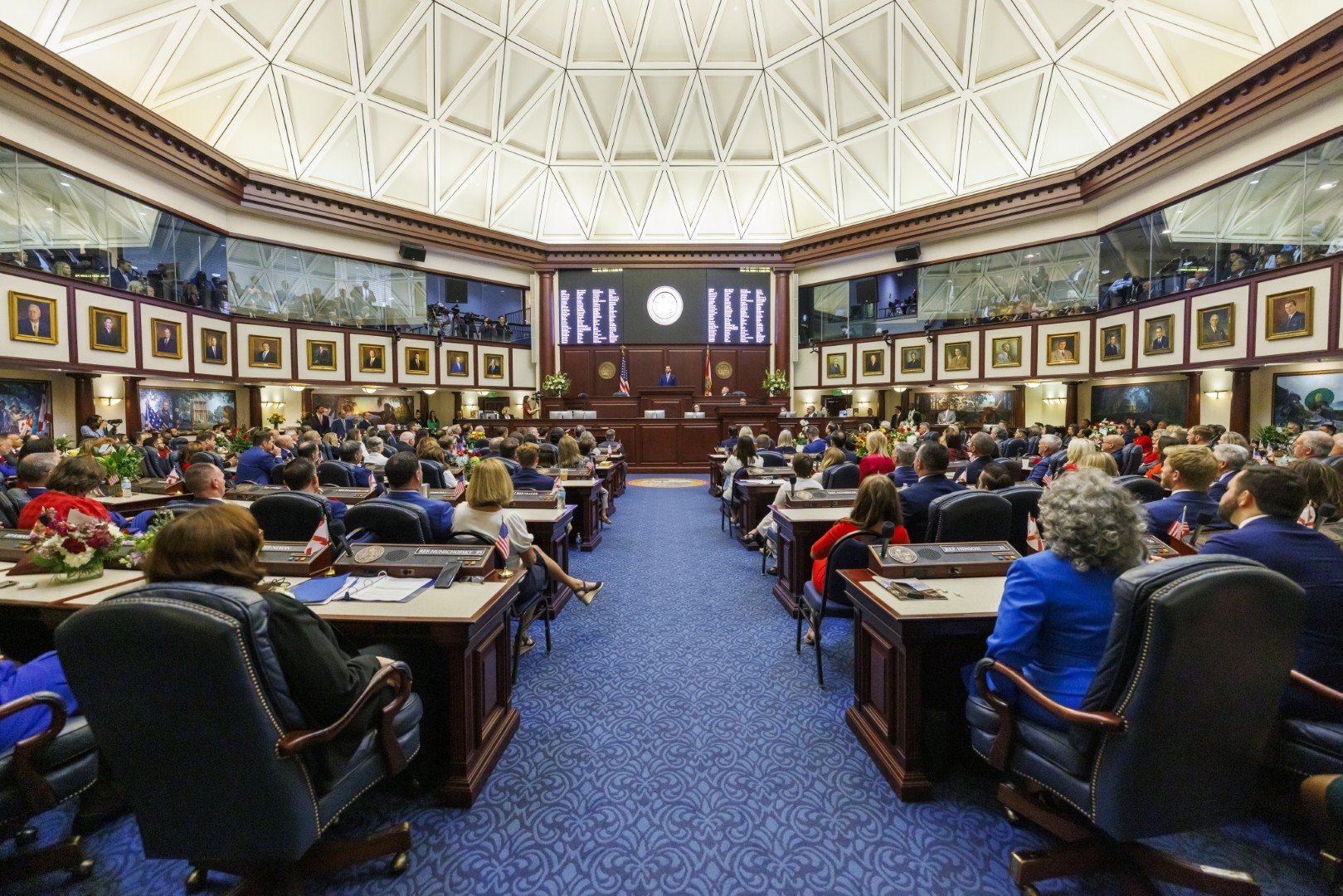
The House has approved a resolution proposing a constitutional amendment that would eliminate most property taxes on homesteaded properties.
The move would send the question to voters in 2026, marking what House leaders described as one of the most aggressive tax reform proposals in state history.
In an 80-30 vote, Representatives passed HJR 203 after adopting one floor amendment and rejecting several others. The measure would exempt homestead property from all ad valorem taxes other than School District levies beginning January 2027, and would prohibit local governments from reducing total funding for law enforcement, firefighters and other first responders below their 2025-26 or 2026-27 funding level — whichever amount is higher.
House Speaker Daniel Perez framed the vote as a defining moment in the 2026 Session, calling it “the most aggressive legislation ever passed by a legislative chamber on property taxes in the history of the United States.” He also criticized the Senate for slow-playing property tax talks, stating the House has yet to see a formal proposal from the chamber, which has so far resisted the changes the House just approved.
“Today we have arrived at the turning point of our Session; where this road we have been traveling together narrows, and our choices ever more sharply shape our future,” Perez said in prepared remarks.
“What happens in the days ahead will decide if we will be here another three weeks or another three months. Last night, I read about the possibility of a Senate property tax plan that we have been waiting weeks — months — to see. I have tried very hard never to doubt the sincerity of the Senate’s words. The House, on the other hand, prefers actions.”
It remains to be seen whether the Senate will take action this Session or wait until a Special Session floated by Gov. Ron DeSantis.
Perez credited the work for the Select Committee on Property Taxes over the past year and DeSantis’ push to elevate the issue.
Debate was split along party lines. Republicans framed the resolution as a direct response to voter demands for relief, while several Democrats argued the resolution raises significant unanswered questions about how local governments would replace billions in lost revenue.
“We are here today because the citizens of Florida, our constituents, our customers, they beseeched us to take this issue up, they begged us by supermajorities,” Jacksonville Republican Rep. Dean Black said. “I hear the debate from the other side about how the voters need to be listened to. I agree, that’s what we’re doing today. Less government, more freedom, lower taxes. That’s what the people want.”

Black pushed back on Democratic warnings about potential impacts to public safety budgets, emphasizing the bill prohibits reductions in funding to first responders.
“The HJR specifically protects police funding. It’s spelled out as obvious as the sun rising in the east,” he said.
Palm Bay Republican Rep. Monique Miller, who sponsored the bill, closed debate by urging members to trust voters to decide the issue.
“I am so proud to be a member of the Florida House,” Miller said. “In this body we tackle big issues. We don’t talk about them, we do them. We are the state body that’s closest to the people. Floridians asked us to come up here and spend less money, to reduce the size of state budgets, and I’m so proud that for the second year in a row we have proposed to do just that.”
Orlando Democratic Rep. Anna Eskamani, identifying herself as one of the few renters in the chamber, argued the measure would not deliver any relief to renters.
“In fact, what it’s likely going to do is shift the burden of taxation to renters, who arguably are struggling to achieve the American dream of home ownership,” Eskamani said.
Miami Gardens Democratic Rep. Felicia Robinson described the proposal as “a wolf in sheep’s clothing.”
“We recognize that property insurance covers our schools, our police, our safety,” Robinson said, adding that it also does things like “trash pickup, things you may not think about now, but when your trash starts building up what’s going to happen?”
Robinson and other Democrats have repeatedly called for property insurance reform, rather than property tax cuts, to address housing affordability concerns.
“Most people understand the reason for property tax, their issue has been property insurance,” Robinson said.
“We did some studying ourselves and we looked at mortgage bills, and when you look at property insurance it’s about 10% of your mortgage, and property tax is about 10% of your mortgage. But the property tax, they can see where that goes — it goes to their schools, their police, it goes to the hospitals, it goes to things that the community actually needs.”
Supporters, however, maintained that local property tax collections have grown rapidly and are unsustainable.
“We’ve seen that local government property taxes have gone up by $18 billion just in the last three years,” Stuart Republican Rep. Toby Overdorf said. “We have seen property tax ad valorem collection rise and rise and rise. This is not sustainable. This year alone that $60 billion will be collected in ad valorem taxes — $60 billion. We run our state on roughly a $113.5 billion proposed for this year.”
If approved by the full Legislature and signed into law, HJR 203 would go before voters in 2026 and require at least 60% approval to take effect.