Connect with us

Business

CEOs who are also board chairs are the problem not the solution, says top governance expert

Published

on


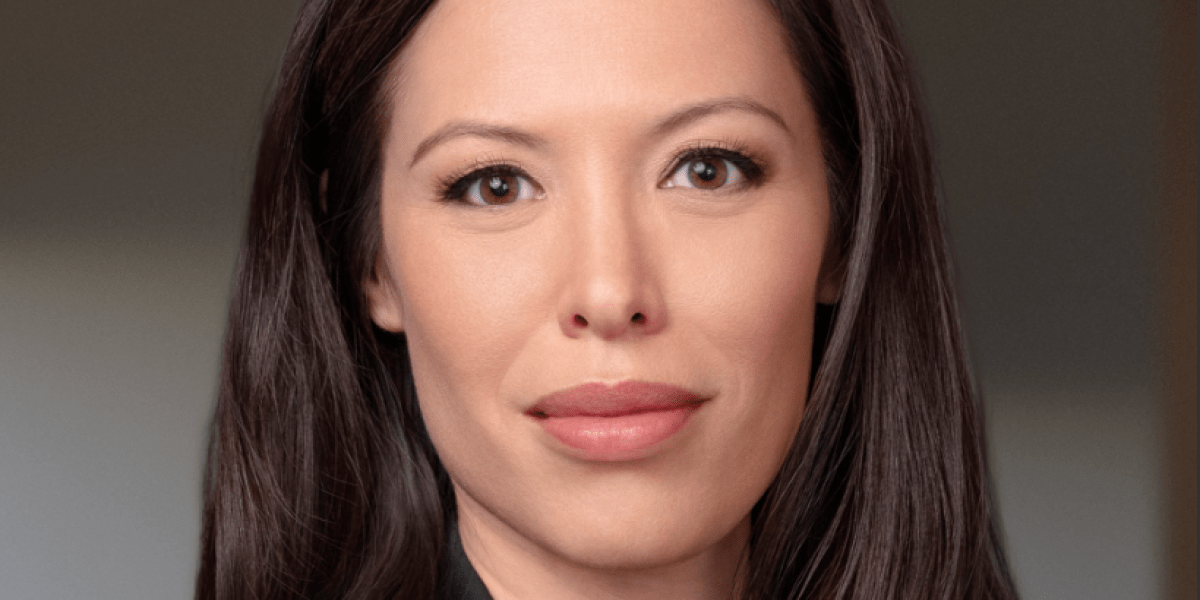
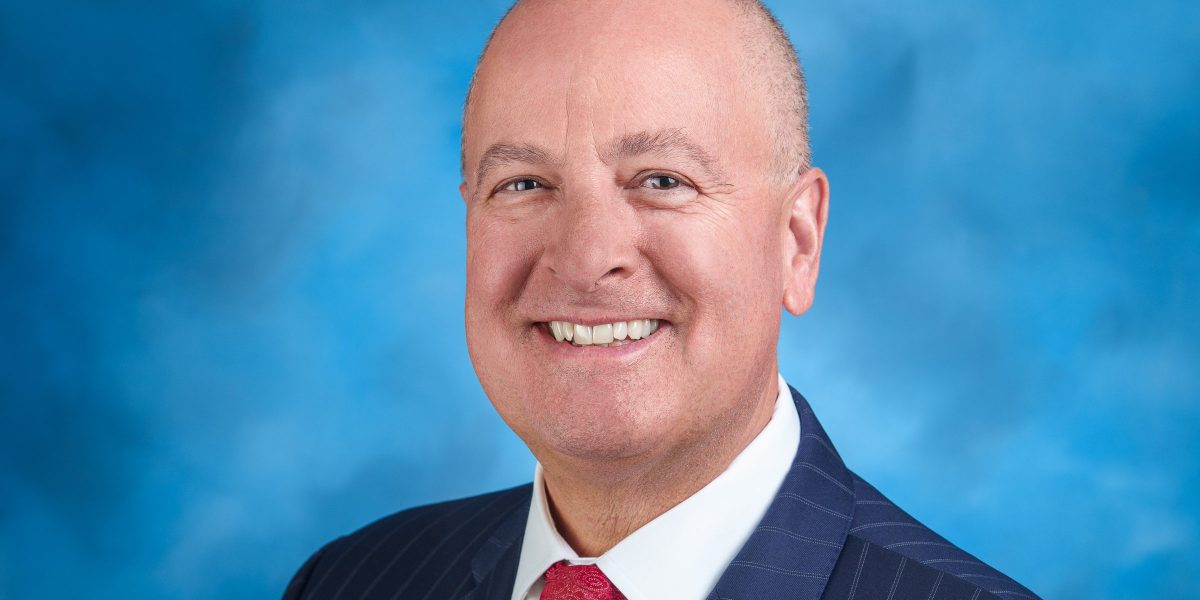
When Citigroup last week gave CEO Jane Fraser the additional role of board of directors’ chair, the event was a widely covered ho-hum. CEOs are often board chairs as well, and the move merely gave her the same positions held by JPMorgan Chase’s Jamie Dimon and Goldman Sachs’s David Solomon. But the news isn’t quite as ho-hum as it seems.

“They were wrong to do that,” says Charles Elson, founding director of the John L. Weinberg Center for Corporate Governance at the University of Delaware and a director on several boards over his career. “The CEO is being overseen by the board, and it doesn’t make sense for the person being monitored to chair the group that’s monitoring them.” 

Asked for comment, Citi responds, “The lead independent director has the responsibility for organizing and leading sessions with the independent directors (without management present) to evaluate CEO performance, including strategy execution and leadership.”

The logic of separating CEOs from board chairs may seem obvious, but it was flouted for decades when individual investors owned most corporate shares and mostly voted the way the company wanted, if they voted at all. “There was no shareholder large enough to demand a seat on the board,” Elson says. In that environment, CEOs in 1990 were also board chairs at more than 90% of traded companies. 

It could be a cushy life for CEOs. I well recall the CEO and board chair of a manufacturing company (which I won’t name) telling me smugly he had just bought a corporate airplane for his directors to use. He said he didn’t expect much trouble from them after that.

Then power shifted. Institutional investors like pension funds began accumulating significant amounts of shares in the 1990s and started voting to separate CEOs from board chairs. The financial crisis of 2008-2009 was a turning point: Citigroup, Bank of America, and AIG, badly damaged and under pressure from shareholders and regulators, separated their CEOs from their board chairs. Now, with Fraser’s new title, all three companies have reverted to CEOs who are also board chairs.

Nonetheless, the big picture shows a dramatic shift to board chairs separate from the CEO over the past 35 years. Only 40% of the Fortune 500 have CEO board chairs. But on the rise is a different title with the same effect: “executive chair.” That’s a board chair, often a recently retired CEO remaining on the board, who oversees the company’s day-to-day workings (thus the word “executive”). Operationally, the executive chair is the real CEO without the title. It’s another way for that real CEO to be board chair too.Elson’s view: “Those who forget the mistakes of history are doomed to repeat them. Sad but classic.” —Geoff Colvin

Contact CEO Daily via Diane Brady at diane.brady@fortune.com

Top news

$1 trillion OpenAI IPO likely in 2027

After CEO Sam Altman said that going public is the “most likely” option to get the capital he needs to complete his AI behemoth, Reuters reported an IPO could be filed late next year, valuing the company at $1 trillion. It is currently valued at $500 billion. First day of public trading would be in 2027.

Goldman Sachs survey casts doubt on AI-induced job-cutting

Goldman Sachs recently surveyed more than 100 of their investment bankers and found that only 11% of their clients are cutting jobs because of AI. Nearly half said they were instead using the technology to increase productivity and revenue.  

In U.S.-China trade talks, Xi had upper hand

President Trump was proud of his latest trade deal with China but as this Bloomberg analysis shows, China’s Xi Jinping had the upper hand and Trump had to give him everything he wanted. 

New Epstein data dump from JPMorgan

A federal court unsealed thousands of suspicious activity reports identifying transactions totalling more than $1 billion filed by JPMorgan about its former client Jeffrey Epstein. The reports cite Epstein’s transfers to Russian banks and cover “his relationships with two U.S. presidents.” Other names are named.

King Charles evicts Andrew from mansion, strips him of “prince” title

In an extraordinary move designed to separate the royal family from the scandal surrounding Epstein, Charles has removed his brother’s “prince” title and will evict him from the 30-room Royal Lodge, where he has lived for years under a generous tenancy agreement. The ex-Duke of York will now be known only as Andrew Mountbatten Windsor.

Trump sets refugee limit at just 7,500

Only a few thousand refugees will be allowed into the U.S. in 2026 and the policy will favor white South Africans, Axios reports

How crypto founders can get rich quick

Crypto founders are enjoying soaring valuations as the market catches fire by utilizing secondary sales, which allow investors to purchase shares of a company from the founder itself. Sources who spoke to Fortune point to three founders in specific who are cashing out from the practice.

No Buffett, no premium

Since Warren Buffett announced his retirement from Berkshire Hathaway its stock has declined 11% in a period when the S&P 500 rose 20%.

The markets

S&P 500 futures were up 0.72% this morning. The last session closed down 0.99%. STOXX Europe 600 was down 0.24% in early trading. The U.K.’s FTSE 100 was down 0.42% in early trading. Japan’s Nikkei 225 was up 2.12%. China’s CSI 300 was down 1.47%. The South Korea KOSPI was up 0.5%. India’s NIFTY 50 was down 0.5%. Bitcoin was flat at $110K.

Around the watercooler

AIG to partner with specialty insurer Convex and asset manager Onex in $5 billion deal by Lily Mae Lazarus

Reddit founder Alexis Ohanian kept receipts from trolls who mocked his bet on women’s sports: ‘I tag them and thank them for the motivation’ by Orianna Rosa Royle

Microsoft CEO Satya Nadella says Bill Gates told him his big bet on OpenAI would be a flop: ‘Yeah, you’re going to burn this billion dollars’ by Marco Quiroz-Gutierrez

Jerome Powell says the AI hiring apocalypse is real: ‘Job creation is pretty close to zero’ by Eva Roytburg

CEO Daily is compiled and edited by Joey Abrams and Jim Edwards.

This is the web version of CEO Daily, a newsletter of must-read global insights from CEOs and industry leaders. Sign up to get it delivered free to your inbox.


Source link

Continue Reading

Business

Stock market today: Dow futures tumble 400 points on Trump’s tariffs over Greenland, Nobel prize

Published

on


U.S. stock futures dropped late Monday after global equities sold off as President Donald Trump launches a trade war against NATO allies over his Greenland ambitions.

Futures tied to the Dow Jones industrial average sank 401 points, or 0.81%. S&P 500 futures were down 0.91%, and Nasdaq futures sank 1.13%. 

Markets in the U.S. were closed in observance of the Martin Luther King Jr. Day holiday. Earlier, the dollar dropped as the safe haven status of U.S. assets was in doubt, while stocks in Europe and Asia largely retreated.

On Saturday, Trump said Denmark, Norway, Sweden, France, Germany, the United Kingdom, the Netherlands, and Finland will be hit with a 10% tariff starting on Feb. 1 that will rise to 25% on June 1, until a “Deal is reached for the Complete and Total purchase of Greenland.”

The announcement came after those countries sent troops to Greenland last week, ostensibly for training purposes, at the request of Denmark. But late Sunday, a message from Trump to European officials emerged that linked his insistence on taking over Greenland to his failure to be award the Nobel Peace Prize.

The geopolitical impact of Trump’s new tariffs against Europe could jeopardize the trans-Atlantic alliance and threaten Ukraine’s defense against Russia.

But Wall Street analysts were more optimistic on the near-term risk to financial markets, seeing Trump’s move as a negotiating tactic meant to extract concessions.

Michael Brown, senior research strategist at Pepperstone, described the gambit as “escalate to de-escalate” and pointed out that the timing of his tariff announcement ahead of his appearance at the Davos World Economic Forum this week is likely not a coincidence.

“I’ll leave others to question the merits of that approach, and potential longer-run geopolitical fallout from it, but for markets such a scenario likely means some near-term choppiness as headline noise becomes deafening, before a relief rally in due course when another ‘TACO’ moment arrives,” he said in a note on Monday, referring to the “Trump always chickens out” trade.

Similarly, Jonas Goltermann, deputy chief markets economist at Capital Economics, also said “cooler heads will prevail” and downplayed the odds that markets are headed for a repeat of last year’s tariff chaos.

In a note Monday, he said investors have learned to be skeptical about all of Trump’s threats, adding that the U.S. economy remains healthy and markets retain key risk buffers.

“Given their deep economic and financial ties, both the US and Europe have the ability to impose significant pain on each other, but only at great cost to themselves,” Goltermann added. “As such, the more likely outcome, in our view, is that both sides recognize that a major escalation would be a lose-lose proposition, and that compromise eventually prevails. That would be in line with the pattern around most previous Trump-driven diplomatic dramas.”


Source link

Continue Reading

Business

Goldman investment banking co-head Kim Posnett on the year ahead, from an IPO ‘mega-cycle’ to another big year for M&A to AI’s ‘horizontal disruption’

Published

on


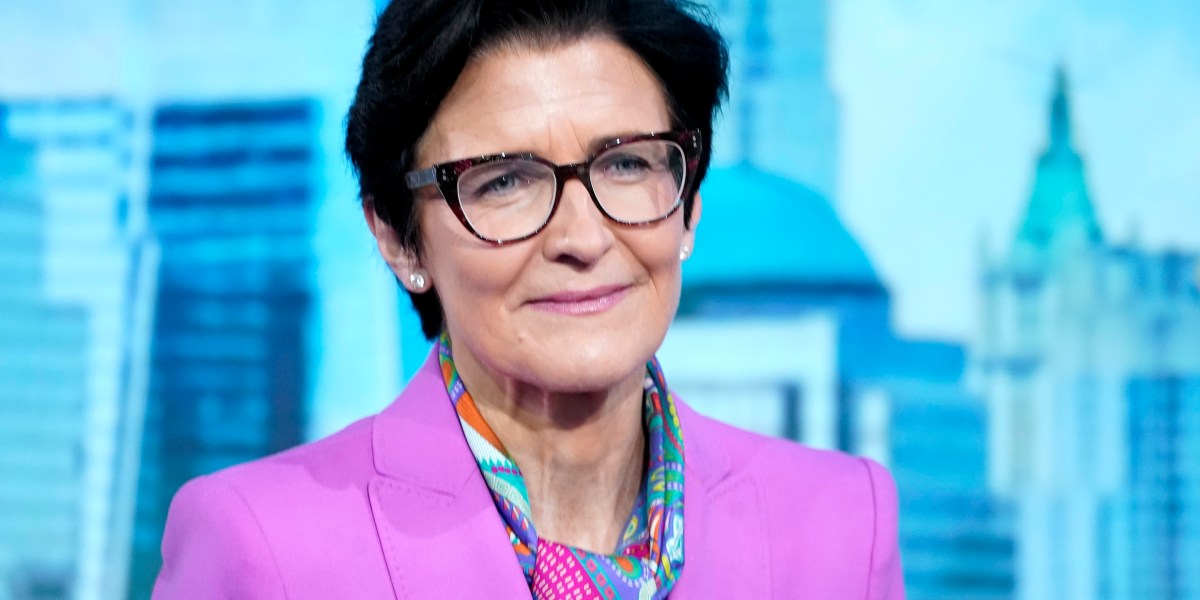
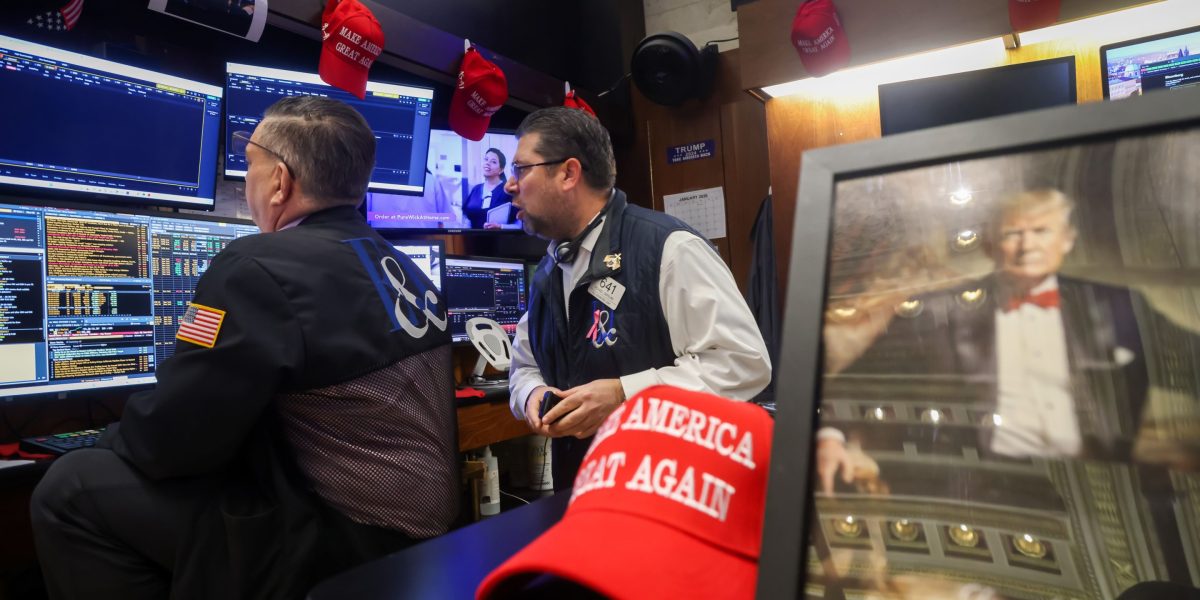
Ahead of the World Economic Forum‘s Annual Meeting in Davos, Switzerland, Fortune connected with Goldman Sachs’ global co-head of investment banking, Kim Posnett, for her outlook on the most urgent issues in business as 2026 gathers steam.

A Fortune Most Powerful Woman, Posnett is one of the bank’s top dealmakers, also serving as vice chair of the Firmwide Client Franchise Committee and is a member of the Management Committee. She was previously the global head of the Technology, Media and Telecommunications, among several other executive roles, including Head of Investment Banking Services and OneGS. She talked to Fortune about how she sees the current business environment and the most significant developments in 2026, in terms of AI, the IPO market and M&A activity. Goldman has been the No. 1 M&A advisory globally for the last 20 years, including in 2025 — and Posnett has been one of the star contributors, advising companies including Amazon, Uber, eBay, Etsy, and X.

  • Heading into Davos, how would you describe the current environment?  

As the global business community converges at Davos, we are seeing powerful catalysts driving M&A and capital markets activity. The foundational drivers that accelerated business activity in the second half of 2025 have continued to improve and remain strong heading into 2026. A constructive macro backdrop — including AI serving as a growth catalyst across sectors and geographies — is fueling CEO and board confidence, and our clients are looking to drive strategic and financing activity focused on scale, growth and innovation. As AI moves from theoretical catalyst to an industrial driver, it is creating a new set of priorities for the boardroom that are top of mind for every client we serve heading into 2026.

  • What were the most significant AI developments in 2025, and what should we expect in 2026?

2025 was a breakout year for AI where we exited the era of AI experimentation and entered the era of AI industrialization. We witnessed major technical and structural breakthroughs across models, agents, infrastructure and governance. It was only a year ago, in January 2025, when DeepSeek launched its DeepSeek-R1 reasoning model challenging the “moats” of closed-source models by proving that world-class reasoning could be achieved with fully open-source models and radical cost efficiency. That same month, Stargate – a historic $500 billion public-private joint venture including OpenAI, SoftBank and Oracle – signaled the start of the “gigawatt era” of AI infrastructure. Just two months later in March 2025, xAI’s acquisition of X signaled a new strategy where social platforms could function as massive real-time data engines for model training. By year end, we saw massive, near-simultaneous escalation in model capabilities with the launches of OpenAI’s GPT-5.1 Pro, Google’s Gemini 3, and Anthropic’s Claude 4.5, all improving deep thinking and reasoning, pushing the boundaries of multimodality, and setting the standard for autonomous agentic workflows. 

In the enterprise, the conversation has matured from “What is AI?” just a few years ago to “How fast can we deploy?” We have moved past the pilot phase into a period of deep structural transformation. For companies around the world, AI is fundamentally reshaping how work gets done. AI is no longer just a feature; it is the foundation of a new kind of productivity and operating leverage. Forward-leaning companies are no longer just using AI for automation; they are building agentic workflows that act as a force multiplier for their most valuable asset: human capital. We are starting to see the first real, measurable returns on investment as firms move from ‘AI-assisted’ tasks to ‘AI-led’ processes, fundamentally shifting the cost and speed of execution across organizations. 

Of course, all this progress is not without regulatory and policy complexities. As AI reaches consumer, enterprise and sovereign scale, we are seeing a divergence in global policy that boards must navigate with care. In the United States, recent Executive Orders — such as the January 2025 ‘Removing Barriers’ order and the subsequent ‘Genesis Mission’ — have signaled a decisive shift toward prioritizing American AI dominance by rolling back prior reporting requirements and accelerating infrastructure buildouts. Contrast this with the European Union, where the EU AI Act is now in full effect, imposing strict guardrails on ‘high-risk’ systems and general-purpose models. Meanwhile, the UK has adopted a “pro-innovation” hybrid model: on the one hand, promoting “safety as a service”, while also investing billions into national compute and ‘AI Growth Zones’ to bridge the gap between innovation and public trust. For our clients, the challenge is no longer just regulatory compliance; it is strategic planning and arbitrage – deciding where to build, where to deploy, who to partner with, what to buy and how to maintain a global edge across a fragmented regulatory landscape.

As we enter 2026, the pace of innovation isn’t just accelerating; it is forcing a total rethink of business processes and capital allocation for every global enterprise. 

  • Given the expectation and anticipation for IPOs this year, what is your outlook for the market and how will it be characterized?

We are entering an IPO “mega-cycle” that we expect will be defined by unprecedented deal volume and IPO sizes. Unlike the dot-com wave of the late 1990s, which saw hundreds of small-cap listings, or even the 2020-2021 surge driven by a significant number of billion-dollar IPOs, this next IPO cycle will have greater volume and the largest deals the market has ever seen. It will be characterized by the public debut of institutionally mature titans, as well as totally disruptive, fast moving and capital consumptive innovators. Over the last decade, some companies have stayed private longer and raised unprecedented amounts of private capital, allowing a cohort of businesses to reach valuations and operational scale previously unseen in the private markets. We are no longer talking about “unicorns” — we are talking about global companies with the gravity and scale of Fortune 500 incumbents at the time they go public.  For investors, the reopening of the IPO window will enable an opportunity to invest in the most transformative and fastest growing companies in the world and a generational re-weighting of the public indices. 

In 2018, the five largest public tech companies were collectively valued at $3.3 trillion, led by Apple at ~$1 trillion. Today, the five largest public tech companies are valued at $18.3 trillion, more than five and half times larger.  Even more significant, the 10 largest private tech companies in 2018 were valued at $300 billion. Today, the 10 largest private tech companies are valued at $3 trillion, more than 10 times larger. These are iconic, generational companies with unprecedented private market caps some of which have unprecedented capital needs which should lead to an unprecedented IPO market. 

Each of these companies will have their own objectives on IPO timing, size and structure which will influence if, how and when they come to the market, but the potential across the board is significant. During the last IPO wave, Goldman Sachs was at the center of IPO innovation by leading the first direct listings and auction IPOs, and we expect more innovation with this upcoming wave. The current confluence of a constructive macro backdrop and groundbreaking technological advancements is doing more than just reopening the window; it is creating a generational opportunity for investors to participate in the companies that will define the next century of global business.

  • M&A activity exploded in 2025, are the markers there for another boom year?

As we enter 2026, the global M&A market has transitioned from a year of recovery ($5.1 trillion of M&A volume in 2025, up 44% YoY) to one that is bold and strategic. While the second half of 2025 was defined by a “thawing” — driven by a constructive regulatory environment, fed easing cycle and normalizing valuations — the year ahead will be defined by ambition. 

We have entered an era of broad, bold and ambitious strategic dealmaking: transformative, high-conviction transactions where industry leaders are no longer just consolidating for scale, but also moving aggressively to acquire the strategic assets, AI capabilities and digital infrastructure that will define the next decade. CEO and board confidence have reached a multi-year high, underpinned by the realization that in an AI-industrialized economy, standing still is the greatest risk of all. The quality and pace of strategic discussions that we are having with our clients signals that the world’s most influential companies — across sectors and regions — are ready to deploy their balance sheets and public currencies to redraw the competitive map. 

AI is no longer an isolated tech trend; it is a horizontal disrupter, broadening the appetite for strategic M&A across every sector of the economy. While the dialogue in boardrooms has moved from theoretical ‘AI pilots’ to large-scale capital deployment, the speed of technology is currently outpacing traditional governance frameworks. Boards and management teams are being asked to make multi-billion dollar, high-stakes decisions in a landscape where historical benchmarks often no longer apply. In this environment, M&A has become a tool for strategic leapfrogging — allowing companies to move both defensively to protect their core and offensively to secure the critical infrastructure and talent needed for non-linear growth. Success in 2026 will be defined by strategic conviction: the ability to turn this unprecedented complexity into a clear, actionable strategy and competitive advantage.

As AI continues to reshape corporate M&A strategy, we are also seeing financial sponsors return to the center of the M&A stage. Sponsor M&A activity accelerated sharply in 2025 — with M&A volumes surging over 50% as the bid-ask spread between buyers and sellers started to narrow, financing markets became more constructive and innovative deal structures enabled private equity firms to pursue larger, more complex transactions. With $1 trillion of global sponsor dry powder and over $4 trillion of unmonetized sponsor portfolio companies, the pressure for capital return to LPs has continued to escalate. Financial sponsors are entering 2026 with a dual-focus: executing take-privates and strategic carveouts to deploy fresh capital, while simultaneously utilizing reopened monetization paths – from IPOs to secondary sales to strategic sales — to satisfy demand for liquidity. With monetization paths reopening and valuation gaps narrowing, sponsors are entering 2026 with greater flexibility, reinforced by a healthier macroeconomic backdrop and improving liquidity conditions. 

This Q&A is based on an email conversation with Kim Posnett. This piece has been edited for length and clarity.


Source link

Continue Reading

Business

Half of veterans leave their first post-military jobs in less than a year—This CEO aims to fix that

Published

on


Taking a career leap can be daunting, but all professionals inevitably have to face the music; most will change jobs or industries at some point, whether they want to or not. But for U.S. veterans exiting service and heading into civilian life, the transition has been especially difficult—and it’s an issue that’s intensifying their unemployment. That’s why financial services titan USAA is putting its money where its mouth is with a $500 million initiative to get members back on their feet. 

“What we created here since I took over as CEO is a completely revamped way of hiring our veterans and military spouses,” the company’s CEO, Juan C. Andrade, tells Fortune. “This is not just for the benefit of USAA—this is for the benefit of the military community.”

USAA launched its “Honor Through Action” program in 2025, committing half a billion dollars over the next five years to improve the careers, financial security, and well-being of its customers—many of whom are active military, veterans, or related to them. It’s the brainchild of Andrade, who stepped into the company’s top role in April last year. As someone who also left a longstanding career in the federal government, he understands the growing pains that come with an intimidating career pivot. And for thousands of USAA members, the situation is dire. 

Around half of veterans ditch their initial post-military jobs within the first year, according to the Department of Defense’s Transition Assistance Program, and USAA’s CEO believes a lack of thoughtful transition services is largely to blame. When colonels, generals, and sergeants leave behind their high-powered jobs, Andrade says some struggle to adapt both emotionally and skills-wise.

While businesses are required to re-employ former employees who return from military duty per U.S. federal law, those stepping into civilian roles for the first time often need a helping hand. And even before they exit the military, the careers of their partners tend to suffer. 

The jobless rate of military spouses has hovered around 22% over the past decade, according to Hiring Our Heroes. That’s more than four times higher than the 4.6% nationwide unemployment rate. When their partners need to relocate for a new duty assignment, spouses are 136% more likely to be unemployed within six months, according to a 2024 Defense Department survey.

This trend of low job retention among veterans and spouse joblessness can be detrimental to the financial and professional livelihoods of American military families. So Andrade is leading the charge to get them on payroll. Corporations like JPMorgan have ramped up ex-military resources, and services like Armed Forces YMCA have long been assisting veterans; But USAA’s CEO says the issue needs a more targeted approach.

“While there’s a lot of organizations that are very well-meaning and do some very good work, the approach has been fragmented,” Andrade explains. “The problem with private sector companies is [if they] have not had that experience of service, or if they don’t have a large population of employees that serve, it’s very difficult to understand the fact that they’ve lost their tribe. The fact that, in a lot of ways, they’ve lost their sense of belonging to something greater than self.”

USAA’s $500 million plan and new fellowship pathways

USAA already has several veteran employment initiatives on the docket this year. This March, the company tells Fortune it will host a nationwide U.S. Chamber of Commerce Foundation program, Hiring our Heroes, in San Antonio to connect on the issue. And in the coming months, USAA will host events with nonprofit and HR association SHRM to brainstorm the best ways to improve military hiring in the U.S.

In stride with Honor Through Action, USAA also launched two 18-month fellowship programs designed to transition military personnel into full-time company positions: Summit and Signal. In three six-month rotations, participants cycle through different parts of the financial services giant to find the best fit. The future leadership track, Summit, rotates fellows through departments including business strategy, operational planning, and product ownership. Starting anew can be isolating, so USAA is ensuring that military personnel are not walking these career paths alone—veterans are connected to mentors every step of the way.

“Those 18 months are incredibly important, because it goes to show you: What is it that you can do? How does a private company actually work? What is it that you do on a daily basis?” Andrade says. “They get one-on-one mentorship and support every step of the way with people that have already walked in their shoes and been successful, so all of that helps.”

And just like what other companies are looking for in white-collar talent, USAA places a special emphasis on AI-savvy workers. That’s where the Signal fellowship comes into play: the pathway targets applicants with tech know-how, cycling them between assignments including technical solutions and data processing. The CEO notes that the military community is teeming with tech skills, and some already come with prior training from U.S. Cyber Command roles. Aside from getting ex-military members back into work, Signal is also proving to be extremely beneficial for the business itself. 

“We’re always looking for people who have the expertise and skill sets in data science or data engineering,” Andrade continues. “As they retire from the Air Force, the Army, the Navy, we bring them into a specialized program focused on their skills and how they can help us from technology experience.”

Serving an overlooked population: veteran spouses struggling with joblessness

Even when they’re not deployed, U.S. military personnel are battling wars at home—depression, financial insecurity, and homelessness. But one group is often ignored in the fight: their spouses. The husbands and wives of military personnel face sky-high unemployment rates and long-term instability due to the nature of their partners’ jobs. But Andrade recognizes them as an overlooked and underutilized pool of professionals.

“Military spouses are an incredible source of talent—they’re literally the CFO and the CEO of their home,” USAA’s CEO says. “When their spouses are deployed, when there’s a permanent change of station for their spouse, they have to leave their job. And if they don’t have that flexibility, then you know that’s why the unemployment rate is so high.”

USAA is funneling its resources to get to the root of the issue; as part of the Honor Through Action initiative, the company tells Fortune it will host Military Spouse Advisory Councils in San Antonio this March. The mission is to help shape policy, programs, and resources to better serve the unique needs of military families. That same month, the business also plans to work with other organizations in funding Blue Star Families’ release of Military Spouse Employment Research with the aim of pinpointing actionable solutions to their raging unemployment. And reflecting internally, Andrade reports that USAA will continue to lead by example. 

“We can offer a lot of flexibility… Having that level of empathy and understanding becomes very critical,” he says. “This is where we hope—with Honor Through Action—to be able to help companies understand the value that [military spouses] have, but also why you need to treat them a little bit differently given their personal situation.”


Source link

Continue Reading

Trending

Copyright © Miami Select.