
Business
Apple CEO Tim Cook is stepping down. No one is shocked.
Oil is at $95 per barrel—pretty much where it was yesterday. S&P 500 futures ticked up 0.18% this morning prior to the open in New York. The index closed down 0.24% yesterday, at 7,109. Asian markets closed solidly up and Europe was flat in early trading.
The S&P is up nearly 4% year-to-date, despite the war, and remains a smidge below its all-time high. Why?
- Because companies keep beating expectations. In the first week of Q1 earnings calls, 49 companies reported results and 76% of them beat earnings estimates, according to Bank of America’s Savita Subramanian.
- Because the U.S. economy is isolated from downside risk. “We respect the ‘wisdom of the crowd’ and appreciate that last year, markets ultimately rose more than 16% on 12% earnings growth. In fact, with the U.S. economy no longer as sensitive to oil prices, consumer sentiment and the level of rates, 2026 could be a repeat,” Morgan Stanley’s Lisa Shalett told clients in a note seen by Fortune.
ONE BIG THING
Tim Cook is stepping down. His critics owe him an apology.
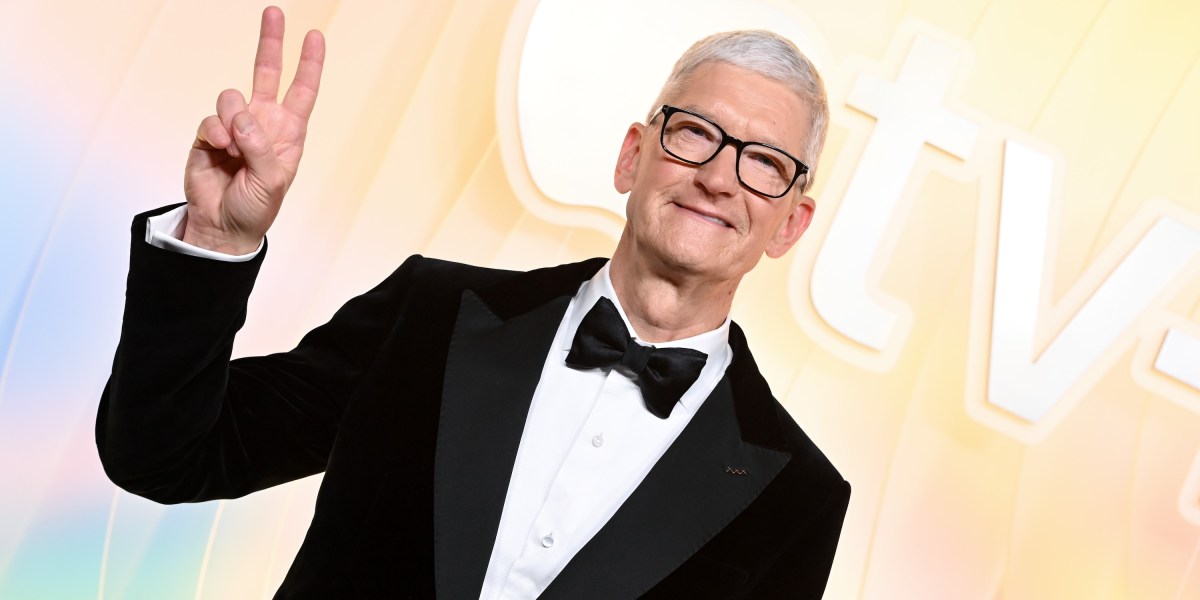
So long, and thanks for all the phones. Apple disclosed that Tim Cook will step down as CEO in September in favor of John Ternus, the company’s 51-year-old senior vice president of hardware engineering. Literally no one was surprised by this move and Apple’s stock barely budged on the news. The company has, shall we say, been failing to deny that Ternus was Cook’s heir since last year.
- This is exactly what you want a good CEO succession to look like: A smooth delivery into a safe pair of hands.
The incrementalist. Cook was long dogged by unfair comparisons to Apple’s founder, Steve Jobs. Jobs was the visionary who gave us the iPhone, the iPod, and the iPad. Cook was dismissed as “the operations guy,” an incrementalist who failed to introduce a revolutionary new hardware product. (Although he did launch the Apple Watch and AirPods.)
Shareholders have precisely nothing to complain about. The above view is a complete misunderstanding of Cook’s achievements. When he took over from the late Jobs, Apple’s market cap was just $349 billion. It is $4 trillion today. In 2011, Apple’s “services” revenue (music, content, apps, etc.) was roughly $2.8 billion per quarter. In the most recent quarter, it was $30 billion—a sum that would make that segment of Apple’s business one of the biggest standalone software companies on the planet. With $109 billion in annual services revenue, Apple’s services segment generates more revenue in a single quarter than OpenAI generates in an entire year.
And let’s not forget that the iPhone now holds a majority market share in the U.S.—a position that, at the beginning of Cook’s reign, was regarded as unthinkable, given iPhone’s higher price compared with its then-ubiquitous Android competitors.
Incrementalism is underrated, in other words. “The operations guy” took Apple from a minority market position in devices to dominate consumer computing today. Are you reading this on a ThinkPad? Almost certainly not. Few who use a MacBook ever return to Windows. And the reason for that is precisely because Apple’s products go through revolutions only rarely. You are reading this on your iPhone or MacBook because those devices are solid, reliable, and they just work.
That was Cook’s whole vibe. Low drama, incremental improvement. You can list “Tim Cook controversies” on the fingers of one hand. No one’s workday was ever overturned by a spicy Cook tweet.
KEVIN WARSH
Warsh walks the tightrope: Independent Fed hawk or Trump’s rate-cutter?
Kevin Warsh will appear in front of the Senate today at 10 a.m. local time to answer questions about how politically independent he is willing to be from President Trump, who wants him to lower interest rates. He is likely to insist that he will not be swayed by the White House, according to Fortune’s Eleanor Pringle.
Warsh has telegraphed that he wants to reduce the Fed’s balance sheet by selling off the $7 trillion in bonds it holds. That is likely to steepen the yield curve (meaning that short-term interest rates could be relatively lower while long-term rates would be higher), according to ING’s Chris Turner:
- “The consensus view in markets is that Warsh will be dovish on the policy rate and hawkish on the Fed’s balance sheet. The balance sheet discussion could get a bit technical in the form of the choice of reduction (roll-offs or active sales), which securities (Treasuries or Mortgage Backed Securities) and whether the resulting decline in surplus liquidity could trigger another 2019-like crisis in the repo market. Investors expect a steeper curve from all this.”
IRAN
Trump hints Iran conflict could last longer than previously estimated
Vice President JD Vance arrived in Islamabad for peace talks but it is still not clear whether Iran will even participate, per the BBC. The ceasefire is due to expire on Wednesday and President Trump has not indicated he is willing to extend it, Bloomberg says.
Trump said the U.S. will keep its blockade of the Strait of Hormuz in place “until there is a ‘DEAL.’”
The president also acknowledged that the negotiation process may take longer than the roughly six-week time horizon Trump had previously given for the Iran operation: “They like to say that I promised 6 weeks to defeat Iran, and actually, from the Military standpoint, it was far faster than that, but I’m not going to let them rush the United States into making a Deal that is not as good as it could have been. I read the Fake News saying that I am under “pressure” to make a Deal. THIS IS NOT TRUE! I am under no pressure whatsoever, although, it will all happen, relatively quickly!”
- Context: The U.S.’s previous deal with Iran, the JCPOA negotiated by President Obama, took 20 months to seal.
MORE FROM FORTUNE
White House-backed USA Rare Earth makes $3 billion acquisition in South America to combat Chinese dominance – Jordan Blum
Rick Perry’s AI power startup Fermi already has a $16 billion market cap—and zero revenue – Jordan Blum
Meet Blackstone’s ‘accidental influencer’ who made LinkedIn jogs Wall Street’s must‑watch content – Rachel Ventresca
Nike’s ‘Walkers Tolerated’ sign at the Boston Marathon was meant to fire up runners. Instead, it insulted them – Phil Wahba
Jeff Bezos once gave Eva Longoria and the admiral behind Osama bin Laden’s capture $100 million—but she says you don’t need wealth to give back – Orianna Rosa Royle
CHART OF THE DAY
Quantum computing won’t save (or break) the world anytime soon
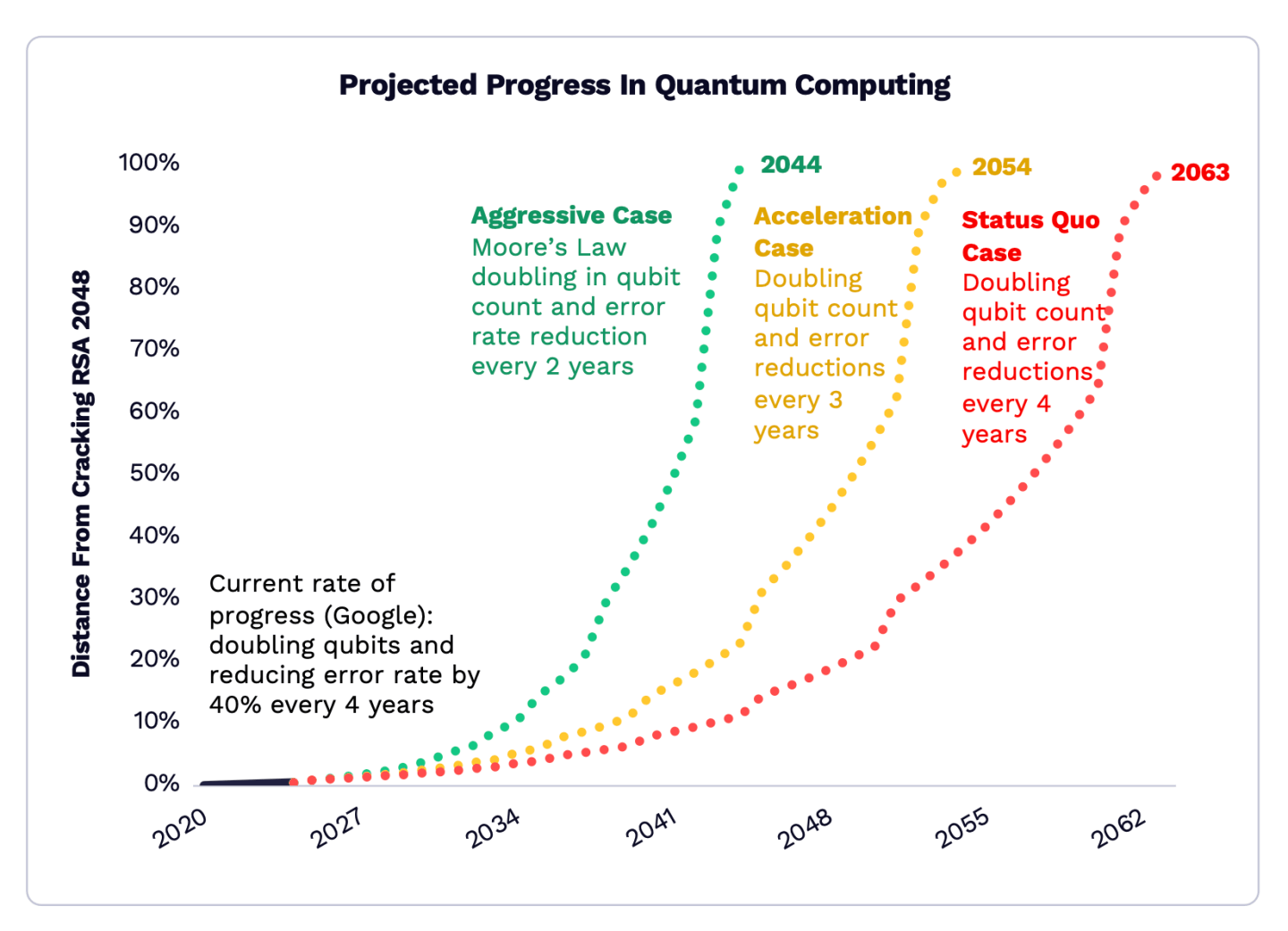
Ark Invest’s latest “Big Ideas” deck takes a counterintuitive line on quantum computing. While many in the industry argue that meaningful commercial adoption of quantum could show up as early as 2030, Ark thinks development is actually moving at a snail’s pace. “Even if its performance and costs were to improve markedly, achieving Moore’s Law’s pace, quantum computing would not be useful for cryptographic decryption until the 2040s,” the asset manager said.
NUMBER OF THE DAY
$9.8 billion
Projected total box-office receipts in North America for 2026, an increase of 13% from last year, according to an estimate by Wedbush analyst Alicia Reese and her team. Reese argues the number would be higher if Disney had not scheduled the new Marvel flick Avengers: Doomsday at the same time as Warner Bros’ Dune 3 release in December.
THE FRONT PAGES TODAY
Jeff Bezos’s AI lab nears $38bn valuation in funding deal – FT
SpaceX tries to woo Wall Street with three-day analyst meeting this week, sources say – CNBC
Warsh Embarks on High-Wire Act of Convincing Investors Without Angering Trump – WSJ
F.B.I. Director Sues The Atlantic Over Article Claiming Excessive Drinking – NYT
Nancy Mace introduces resolution to expel Cory Mills from Congress: ‘Protected for far too long’ – NY Post
ONE MORE THING
Countries of the world ranked by “hopefulness”
The most “hopeful” country on Earth is Indonesia, according to the Global Flourishing Survey, which asks more than 200,000 people in 22 countries to rate their response to one specific question on a scale of 1 to 10: “Despite challenges, I always remain hopeful about the future.” Here is the ranking, from least-hopeful to most:
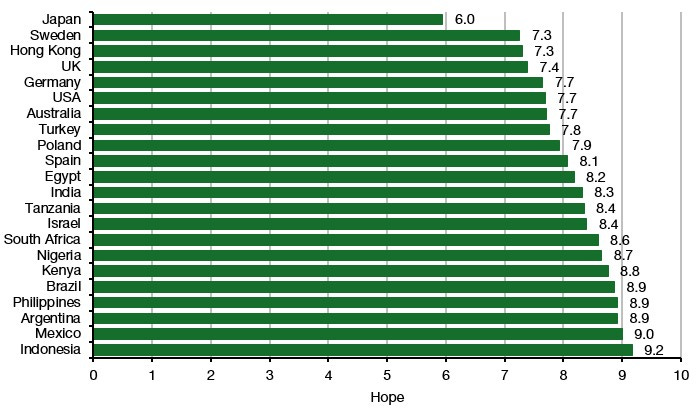
Japan is the pessimistic outlier as the least-hopeful country on the planet. The U.K. and the U.S. also did poorly. Panmure Liberum analyst Joachim Klement attempted to figure out why Western and European nations fared so badly, and concluded that it correlates with income inequality and religiosity. If you live in a country with low inequality and low enthusiasm for religion, you get low levels of hope. High inequality and high faith-based fervor somehow make people more hopeful.