
Politics
A farewell to David Smith, the unassuming lawmaker who left a big impact
David Smith was never the flashiest or the loudest in the Florida House.
You wouldn’t hear the Winter Springs Republican delivering fiery speeches on the House floor. He wasn’t known for chasing headlines or picking fights with Democrats over culture wars.
“What matters is your vote. So shut up, sit down and let’s vote,” Smith said. “I’m just not one for show. I haven’t spent eight years in Tallahassee to be the thought leader on anything. I was there to make a difference and move legislation that would help my constituents.”
Smith was term-limited out of the Legislature this year, leaving behind a legacy that includes juvenile justice reform, Seminole’s rural boundary protections and mental health services, his supporters said.
“He’s just a consummate gentleman and someone that may fly under the radar a bit because he’s not bombastic on Twitter,” said former Rep. Will Robinson. “He was maybe one of the hardest working members in the Legislature.”
Known as “the Colonel,” Smith developed a reputation as a tireless worker, a prolific fundraiser and someone who rarely took credit for his accomplishments.
“He was absolutely relentless. There’s no doubt about it,” said former Rep. Toby Overdorf. “He always seems to emerge as one of the top people in the Legislature in getting funds back to his constituents.”
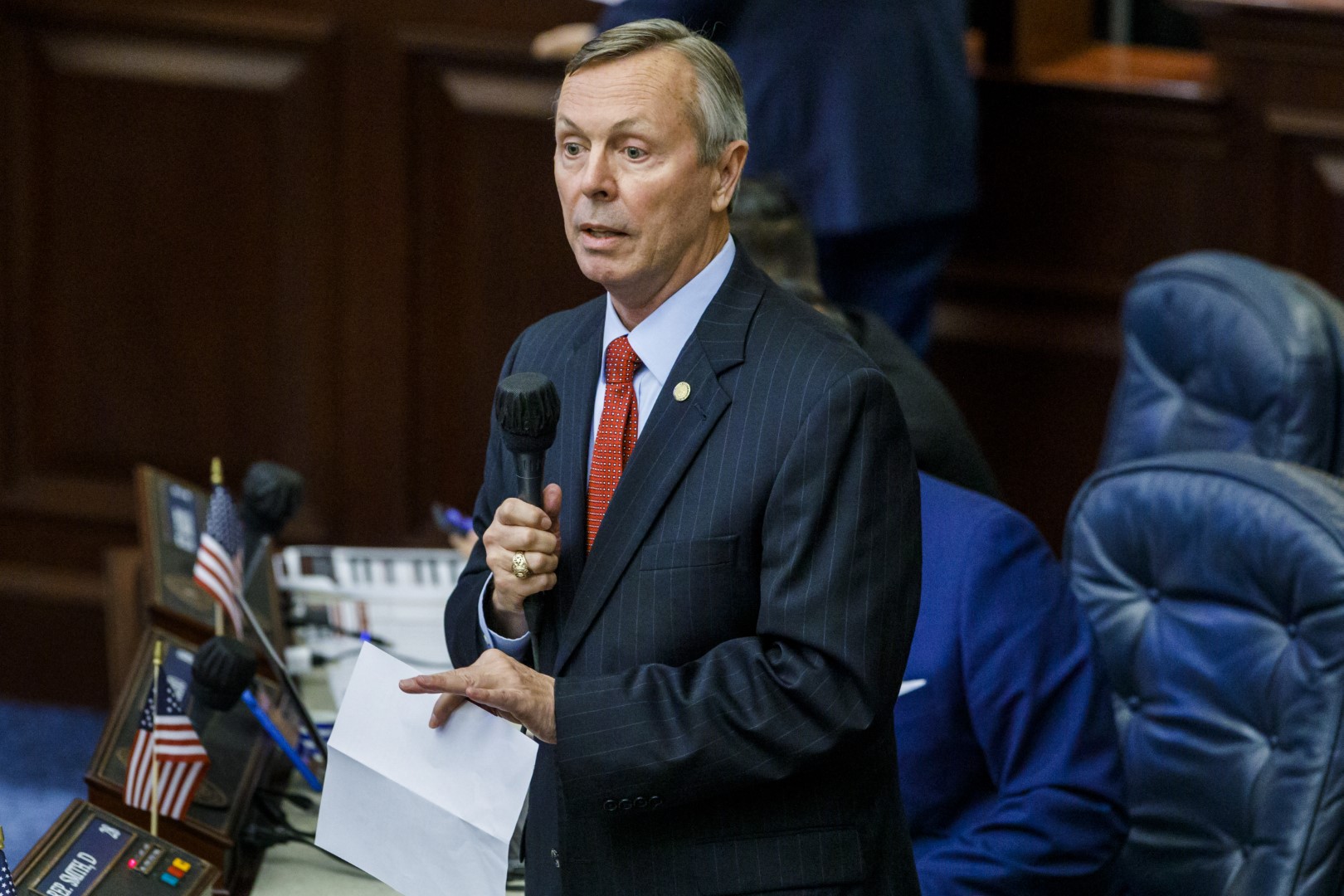
Smith said that in eight years, he passed 33 policy bills that were signed into law and secured 68 appropriation projects worth more than $72 million.
Among the most meaningful, Smith said, was the $4 million he brought back for UCF Restores over his tenure. That money helped the organization provide free mental health therapy to 1,874 veterans and first responders from 45 different counties in Florida.
Some of the veterans were returning from war or experienced sexual assault in the military. First responders were on duty during some of Florida’s biggest tragedies in modern-day history, like the Pulse nightclub shooting, the Marjory Stoneman Douglas High School shooting and the Surfside condominium collapse.
“Because of the funding we’ve received, we’ve been able to set up an intensive outpatient program where we treat people every day, five days a week, for three weeks, if they have post-traumatic stress disorder,” said Deborah Beidel, the Director of UCF Restores. “Part of the funding has also allowed us to give them housing near our clinic at UCF, so it allows people from the Panhandle, from Jacksonville, from down in the Miami area, Naples, wherever, to come and stay in Central Florida for two to three weeks and take part in a very intensive treatment program that has a really high success rate.”
Beidel, who said her program has saved lives, credited Smith for his unwavering support.
“People know that this program is supported by the Legislature, but they don’t always know that it’s been David Smith,” she said.
Another part of Smith’s legislative impact was sponsoring and passing House Bill 195, which allows eligible minors who complete an approved diversion program to have arrest records expunged.
Florida law already let minors clear an arrest record after finishing a diversion program, but only for a first-time misdemeanor. Smith’s bill extended that to felonies, except forcible felonies such as murder, rape and kidnapping, and to arrests beyond a first offense. Smith said at the time the change would help 26,000 kids.
The law gives young people a second chance, said Christian Minor, Smith’s close friend and Executive Director of the Florida Juvenile Justice Association, who worked with him on the bill.
Before the reform, young people who got in trouble for drugs or theft could complete a post-arrest diversionary program approved by the state attorney’s office to avoid jail time and get the criminal charges dismissed. Even though they were never convicted of a crime, their arrest records haunted them when they applied for college or tried to join the military, Minor said.
Before the law changed, those records stayed on file until the young person turned 21. For someone whose frontal cortex was still developing, a “bone-headed mistake” could jeopardize opportunities for an education or a fresh start, Minor said.
“Once they’ve completed a post-arrest diversionary program … they should have the right to go live a life of success,” Minor said about HB 195. “This is truly workforce and job creation. … It’s fiscally conservative, good policy that makes sure that kids are becoming productive taxpayers.”
Smith’s bill took two years to pass because Gov. Ron DeSantis vetoed an earlier version. Smith kept working lawmakers and whipping up support until the legislation passed in 2022.
“The ultimate testament to David’s legacy as a legislator will be kids that will never know his name. They’ll never know that he was the reason that happened, that their records were expunged,” Minor said.

Robinson recalled Smith frequently meeting face-to-face with Committee Chairs and legislative staff to work through bills. Smith preferred personal conversations over text messages and made a point of working with Republicans and Democrats alike.
Smith said he learned as a rookie lawmaker how important it was to fight for the issues he believed in.
“I tell people all the time, Tallahassee is the place where good ideas go to die,” Smith said. “The best ideas will never move. There is no natural inertia in Tallahassee. You have to have an advocate for even the best idea. And most people don’t know that.”
Smith also took pride in helping constituents navigate problems that rarely make headlines.
During the pandemic, for example, Seminole County residents turned to him for help when they became stuck in the state’s unemployment system.
That endeared him to residents who voted for him even though he was a four-term representative in a purple District, Robinson said.
“That’s why David was so incredibly successful and, like we say, ‘He was undefeated,’” Robinson said.
House District 38 includes about 42,000 Republicans, 41,900 Democrats and 35,700 No Party Affiliated voters.
“He realized what kind of an area he came from and realized that he couldn’t always vote as some of the other Republicans … David was more centrist but certainly conservative,” Overdorf said. “He didn’t always go with the flow per se. … He would sometimes go his own way.”
In 2026, Smith broke with the GOP majority to oppose a land-use bill because he was concerned the state was overstepping its authority. The bill passed anyway.
With Smith unable to run for re-election this year, Democrats quickly flipped the seat, and Nik Dean was elected in November.
Smith viewed himself as a straight shooter in Seminole County, which has had plenty of scandals in recent years.

At 66, Smith might surprise you.
“As much as I want to tell you to ‘go f— yourself,’ I won’t,” Smith wrote in an email to a Casselberry resident complaining about the state’s controversial redistricting. Smith’s response got publicized in the Orlando Sentinel earlier this year.
Smith said the resident called him a traitor, which incensed him as a military veteran.
Smith likes to skydive. Since his calendar is no longer consumed by the Legislature, he said he is excited to have more time to jump in Volusia County. He has completed more than 500 jumps.
“I like to do the formation skydiving where you’re jumping with other skydivers and you’re maneuvering around the air,” Smith said. “It’s a team sport. People don’t really think of it that way because they think you’re jumping out of the airplane by yourself. But friends don’t let friends jump solo.”
He is an avid bike rider. He rides down the Cady Way Trail and then celebrates with a cigar, Minor said.
With a humble nature and a dry wit, Smith earned a spot in the unofficial Bourbon Caucus. The bipartisan group of House and Senate lawmakers sipped a good drink in Rep. Dan Daley’s office to decompress after a heated day of Session.
Smith’s military career — marked by discipline, hard work, and respect for rank — also defined him as a state lawmaker.
Smith was born into a military family with deep patriotism. His paternal grandfather fought in World War I, while his maternal grandfather fought in World War II.

Smith’s mother, whom he remembered as the “belle of the ball in the officers’ wives’ club,” died when Smith was only 6 years old. His mother, 29, was diagnosed with breast cancer and died within 10 weeks.
Suddenly, Smith had to grow up, become independent and more self-reliant.
Smith’s father later remarried, and Smith’s stepmother helped take care of him and his four siblings.
Smith was 9 when his dad left to fight in the Vietnam War.
Smith spoke matter-of-factly about that time.
“My friends’ fathers were going over or coming back. So it was just a part of life,” Smith said. “We would watch Walter Cronkite in the evening news and they reported how many people were killed every day, but that was just what duty demanded.”
Both Smith’s uncle and father fought in the Vietnam War at the same time, getting special permission from their family to do that since brothers were not allowed to serve together in a combat zone.
Smith, an Army brat who lived around the world with his family in Germany, Taiwan and Florida, said: “I always wanted to be a pilot from early on and that’s what I set my sights on.”
Smith spent 30 years in the U.S. Marine Corps and volunteered for 52 combat missions, working his way up to Colonel.
“I’m a footnote to history,” Smith said of April 2003. “I was the first Marine helicopter into Baghdad.”
On missions, he flew the battalion commander to observe the action from above, transported supplies or people, conducted armed reconnaissance or picked up wounded Marines. Other times, he dropped leaflets telling the Iraqis to surrender, a form of psychological warfare.
He flew a Bell UH-1N Huey helicopter.

“I was one of the most experienced UH-1N pilots in the Marine Corps at that time,” Smith said. “My whole mindset of volunteering to fly was if not me, who?”
Highly trained and focused, Smith concentrated on the job, flying at low altitude and watching for enemy fire, power lines, and other dangers.
“It sounds crazy or sounds braggadocious, but I can tell you I was never scared of flying combat missions in Iraq because we just did the job,” Smith said.
“What scared the crap out of me was landing in the desert because what people don’t realize is the sand over in Iraq, it’s not sand like we think of it down on the beach. It’s like baby powder. So when you’re landing a helicopter, and that rotor wash, as we call it, kicks up all that sand and dust around you, you lose sight of your landing spot, and you can drift, and that’s where a lot of people do crash and roll over.
“But actually just flying around and having people shoot at you and that kind of stuff never bothered me a bit.”
Smith said he hopes to have another act in his career, post-military and post-Legislature.
“What do you do with a guy with 30 years in the Marine Corps, combat experience, eight years in the Legislature? I know the budget process. I know the people in Tallahassee. Some people believe — myself included — that I might be the right person to lead the Florida Department of Veterans Affairs. However, that decision is solely Governor-elect Byron Donalds’,” Smith said. “I think I have more to give … I’m not done yet. So is that an elected office? Is that a Board or something like that? I don’t know, but I can’t just skydive all day.”
The post A farewell to David Smith, the unassuming lawmaker who left a big impact appeared first on Florida Politics – Campaigns & Elections. Lobbying & Government..