
Fashion
WOW expands Spain’s retail scene with Dimas Gimeno’s “phygital” vision

Translated by
Nazia BIBI KEENOO
Published
October 31, 2025
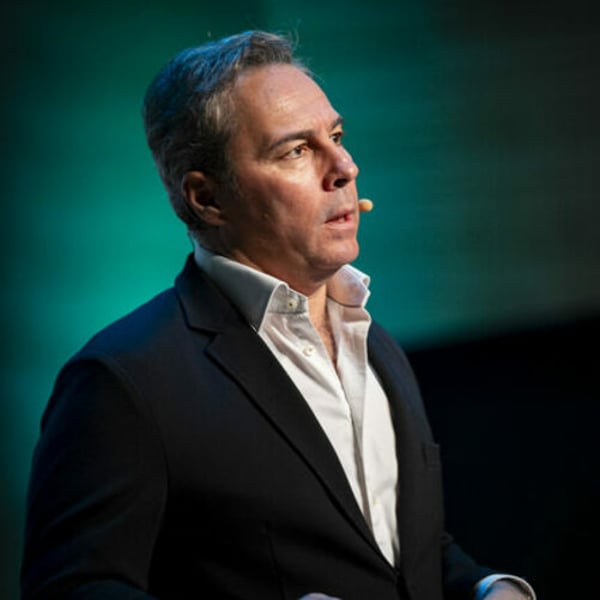
WOW opened its doors on Madrid’s Gran Vía in 2022, introducing a new department store concept to the heart of the Spanish capital. In 2023, it launched a second location on Calle Serrano and, by 2025, the company aims to reach €30 million ($32 million) in sales, with long-awaited profitability expected between 2026 and early 2027. Its founder, Dimas Gimeno—former president of El Corte Inglés—spoke on Oct. 30 at the 4th Aragonese Congress on Commerce and Innovation, held in Zaragoza and organized by the Government of Aragon. FashionNetwork.com spoke with Gimeno about his vision for the retail sector, the key challenges it faces, and the evolution of the WOW platform.
FashionNetwork.com: You mentioned at the beginning of your talk that retail defines a city’s identity. How can that identity be maintained in a world where commerce is increasingly uniform?
Dimas Gimeno: By focusing on the local. It’s essential to recognize that a city—and its retail scene—should showcase local products. Spain is particularly privileged because it offers extraordinary craftsmanship and gastronomy. We are also manufacturers and home to thriving brands—that’s what tourists are looking for.
FNW: You maintain that omnichannel hasn’t worked, despite being the major focus of many brands, and that we must move toward the “phygital” model. Why?
D. G.: Omnichannel was a logical idea at the time, but poorly executed. The mistake was trying to digitize the physical world instead of starting from a fully digital mindset. Businesses attempted to adapt new tools to an old model rather than redesigning their approach entirely. It’s not about digitizing the physical—it’s about thinking 100% digitally and, from there, building the physical presence. Some call this “unified commerce”; I call it “phygital.”
The key is understanding that channels no longer exist. We must stop separating “physical” and “digital.” Today’s customer moves fluidly, interacting with your brand across multiple touchpoints.
FNW: Do customers no longer make that distinction between channels?
D. G.: If you ask them, they likely don’t care. A customer might discover a brand on social media, purchase through e-commerce, and then visit the physical store. The store is where loyalty forms and brand relationships deepen—conversion rates are also higher as a result.
Think of the online shopping cart: the ideal would be for the same cart to be accessible both online and in-store. Omnichannel fails when it simply digitizes a physical process. The first step toward true unification is making your entire range available online—a goal many brands still struggle with.
FNW: How can small businesses face this challenge, given that they define cities’ identities?
D. G.: By staying authentic and unique. Small businesses excel in this area because they offer a unique personality, a sense of legacy, and genuine relationships with customers. Their main obstacle is technology: they often can’t invest in digital tools. The solution lies in collaborative platforms that bring small retailers together to create shared online marketplaces. Public funding should help support the development of these initiatives.

FNW: Why do you believe physical stores represent the future of retail?
D. G.: Because I’m a shopkeeper at heart—and a former salesperson. I’ve seen firsthand how a well-executed store can inspire customers to buy everything. That’s something digital alone can’t achieve. Add a distinctive product range and motivated, well-trained sales staff equipped with the right tools, and you create something unbeatable. That’s how you compete with major platforms—by offering what they can’t.
FNW: Customer experience has been a buzzword in recent years. What does it really mean for retailers?
D. G.: The experience is everything. You can have a beautiful store, but if the salesperson doesn’t treat the customer well, it fails. It’s about creating an environment that feels welcoming, where staff connect with shoppers on a personal level. When a customer plans to buy one thing and ends up buying seven, that’s customer experience. It’s about knowing your customer, anticipating their needs, and giving them reasons to return.
FNW: You emphasize sales staff. Is it difficult to find those profiles in retail today, as in hospitality?
D. G.: It is. The service industry is often not viewed as a prestigious career path, which makes hiring challenging. At WOW, we attract talented young salespeople by providing solid training, motivation, and clear career growth opportunities. If companies hire people for a year and then replace them without offering opportunities for advancement, no one will stay. Retail needs to value sales as a long-term profession.
FNW: Speaking of WOW, what’s the company’s current status?
D. G.: We’ve been operating for three and a half years. Our vision hasn’t changed, but we’ve learned how to translate innovation into profitability. You can have an original concept, but you also need a business model that works. We’re not profitable yet, but we can see it on the horizon—expected by next year or early the following year.
Our growth strategy centers on physical retail. Barcelona is the next obvious step, but our digital channel is our biggest opportunity. Online expansion enables us to reach new markets faster and with reduced risk. Ultimately, growth only matters if it’s profitable.
FNW: What share does online currently represent in your sales?
D. G.: Less than a year ago, we migrated our e-commerce operations to Shopify, which meant resetting the digital system. Online sales are now growing fast, and by 2026, we expect them to account for over 15% of total business—and eventually, much more.
FNW: Is your platform available outside Spain?
D. G.: Yes, though for now we only ship within the European Union. By 2026, we plan to expand into new markets.
FNW: Which store performs better—Gran Vía or Serrano?
D. G.: Serrano performs better overall because it’s larger and more consistent, but Gran Vía continues to surprise us. It’s visually striking and benefits from Madrid’s bustling retail corridor. Serrano attracts repeat customers, while Gran Vía gains strong visibility from tourists.
FNW: You talk about curating the assortment. What does that mean?
D. G.: Curation was WOW’s starting point—it’s about building a distinctive product selection. But we’re not just a showcase of brands; we’re a commercial platform. We initially carried high-end luxury and semi-luxury labels but shifted toward a more profitable model. It’s not about expensive versus affordable—it’s about offering originality and innovation. We aim to feature brands that are not typically found in most physical stores. That’s the essence of WOW’s value proposition.
This article is an automatic translation.
Click here to read the original article.
Copyright © 2025 FashionNetwork.com All rights reserved.

Published
January 20, 2026
The Who’s Next trade show, held in Hall 7 of the Parc des Expositions (Paris XV) from January 17 to 19, put accessory brands centre stage. Eyewear, jewellery of every kind, bags, mittens, and headwear – buyers were spoilt for choice. Among these brands, a few caught the eye of FashionNetwork.com.
Italian Okkia and its affordable eyewear
Founded in 2016, Okkia is an Italian brand offering affordable eyewear, from prescription frames to sunglasses. It is exhibiting at Who’s Next for the first time, with ambitious international plans. Its attractive pricing — €25 for prescription glasses, €27 for sunglasses and €40 for both — helped it sell one million units in 2025. Already widely distributed across Europe, the brand is also present in the United States, several Latin American countries, Turkey and the Maldives. It now aims to establish itself in countries such as Australia, where it is not yet present, and to strengthen its global footprint. This year will see the launch of two new lines for Okkia, as well as a collaboration with Italian designer Seletti.
Lumielle Aurora 1896 umbrellas and Tokyo Hat caps

Japanese premium umbrella brand Lumielle Aurora 1896 marked its second appearance at the show, having made its debut last September. The brand is seeking a foothold in European stores — a strategy only recently set in motion — but is, for now, hampered by its pricing. Made in Japan from textiles produced in-house in the Niigata region, these umbrellas, with wooden or bamboo handles, have so far found limited traction in Europe. Lumielle Aurora 1896 has, therefore, developed a more affordable line, presented at the show alongside parasols for hot weather. Aurora has also owned Tokyo Hat since 2007, a brand of caps and other headwear featured across several stands. With a more contemporary offer, Tokyo Hat hopes to win over retailers with a younger clientele and a taste for creative fashion.
The timeless Le Béret Français and Le Bonnet Français

Le Béret Français and its recently acquired subsidiary, Le Bonnet Français, were also in attendance this January. Le Béret Français, which holds the Entreprise du Patrimoine Vivant (EPV) label, aims to maintain its positive growth trajectory, particularly buoyed in recent years by the Rugby World Cup in France and the Paris 2024 Olympic and Paralympic Games. With €1 million in annual sales, the company nevertheless faces strong competition from other brands, whose product quality is not always on a par with its own, made in Bayonne from French wool. Even so, Le Béret Français can boast sales to a wide range of partners, including department stores, milliners and even museums, whose end consumers are very diverse.
Who’s Next also boasted a broad line-up of exhibitors, including Naked Wolfe and its colourful shoes, Zen Collective and its Buddhist bracelets, and Hinterveld and its thick mohair scarves.
This article is an automatic translation.
Copyright © 2026 FashionNetwork.com All rights reserved.

Published
January 20, 2026
Against the prevailing mood in the United States he so loves, Kinji Teramoto refuses to turn inward. Hence, the man who refers to himself as the “archivenist” — a term he coined — and who has revived the iconic American labels Big Yank and Rocky Mountain Featherbed, is bringing them with him to 30 Galerie Vivienne, in Paris’s 2nd arrondissement. Open from January 20 to 28, the pop-up will primarily showcase RMFC and its down-filled garments, better suited to the current season, with Big Yank shirts taking a back seat.
On arriving in Paris, Teramoto hopes to blend Tokyo’s gentle spirit with the cool elegance of the French capital. This trip from Japan follows the arrival in 2025 of the European branch of 35IVE Summers, the brands’ parent company, in Paris. Accordingly, the success of this pop-up store will determine whether the two labels secure a lasting presence on Parisian streets, a long-standing project for Teramoto and his teams.
A Paris outpost in the pipeline?
Paris represents a particular opportunity for the “archivenist”, not least because his partner at Anatomica, Pierre Fournier, is based there. The City of Light is also an ideal place to raise the profile of RMFC and Big Yank. The two American brands, founded in the late 1960s and in 1919, respectively, were acquired by 35IVE Summers in 2005 and 2012. Based on a series of pieces acquired by Teramoto, both labels have been relaunched with products that marry heritage and modern, Japan-based manufacturing. Should a permanent presence be established, 35IVE Summers would even look to produce locally the pieces sold in Europe, embracing a local production-and-distribution model.

All of this is underpinned by a highly unusual development cycle. “Garments made in one or two months are incomplete,” Teramoto explained. “We create patterns and produce samples at least three times, then personally try the finished items and wear them for at least six months to observe how they age. This process is our 18-month commitment,” he continued.
Passing on to future generations
The “archivenist”, who rejects the label of collector, believes that every vintage piece carries meaning, having endured through time.
“I only collect what I can truly bring back to life. […] My aim is for the next generation to wear these pieces and in turn pass them on to the next,” he added.
What’s more, RMFC and Big Yank pieces, which revisit designs several decades old, feed the vintage market and will once again be unearthed by new generations.

Teramoto’s wish to preserve the aesthetics of archival pieces springs from his passion for the labels he has brought back to life: “What these two brands created was truly iconic. What I felt at the time became my business, beyond mere commercial viability,” he confides. “At the time, I could never have imagined that the pieces I created from these archives would be embraced by the global market.”
RMFC and Big Yank have not only been reborn; they are thriving. Rocky Mountain Featherbed closes 2025 with significant growth in Europe and the Americas, with sales in Japan also on the rise.
Big Yank, meanwhile, is seeing its sales climb in Japan, according to Teramoto. In 2025, the brand appointed BerBer Jin’s Yutaka Fujihara as creative director, a move that “is currently attracting strong interest, at least in Japan.”
He is expected at the Paris pop-up store “to increase brand awareness in Europe and the Americas.”
This article is an automatic translation.
Click here to read the original article.
Copyright © 2026 FashionNetwork.com All rights reserved.


Okkia, Le Béret Français, Aurora: spotlight on accessory brands at Who’s Next

Axel Arigato appoints former Adidas executive as chief executive

Kinji Teramoto brings RMFC and Big Yank to Paris for pop-up
-

 Politics8 years ago
Congress rolls out ‘Better Deal,’ new economic agenda
-
Entertainment9 years ago
New Season 8 Walking Dead trailer flashes forward in time
-
Politics9 years ago
Poll: Virginia governor’s race in dead heat
-
Politics8 years ago
Illinois’ financial crisis could bring the state to a halt
-
Entertainment8 years ago
The final 6 ‘Game of Thrones’ episodes might feel like a full season
-
Entertainment9 years ago
Meet Superman’s grandfather in new trailer for Krypton
-
Business9 years ago
6 Stunning new co-working spaces around the globe
-
Tech8 years ago
Hulu hires Google marketing veteran Kelly Campbell as CMO