Connect with us

Business

Volkswagen seeks audience with Trump, dangling more than $10 billion in U.S. investments in exchange for tariff exemptions

Published

on


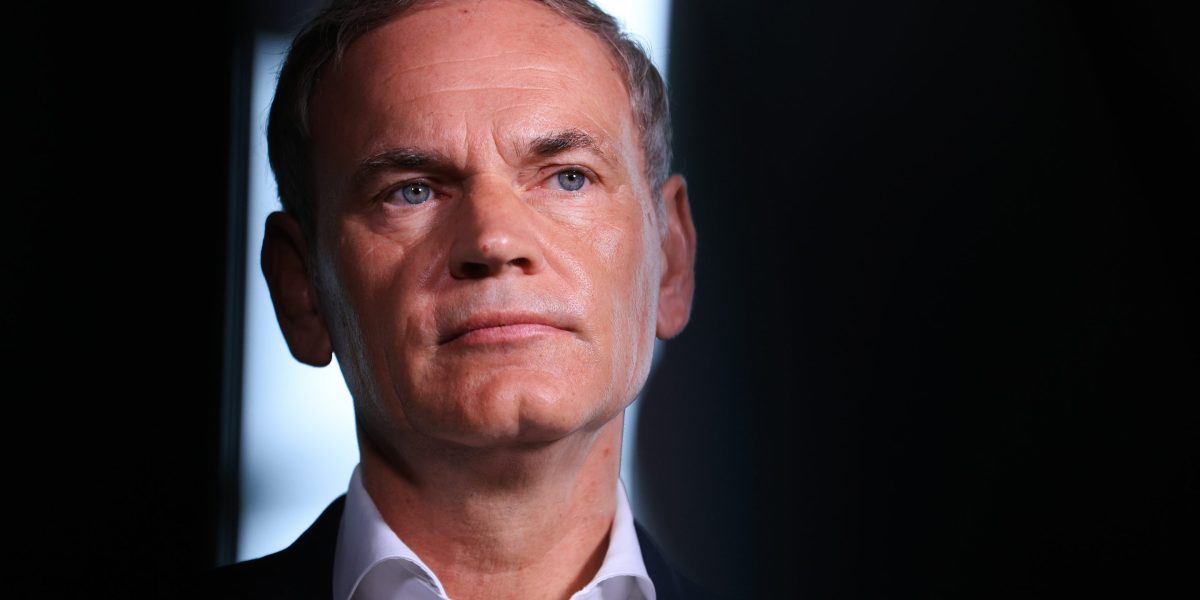
Oliver Blume wants to make a deal. The CEO of Volkswagen Group, the world’s second-largest carmaker, is prepared to put a minimum of $10 billion on the table in exchange for lower tariffs levied by the Trump administration.

Under the proposal, for every dollar that Volkswagen invests, it would like to receive in return an equal amount offset against its tariff bill. The VW boss is only waiting on the European Commission to reach a deal on behalf of the entire EU so he then knows what precise rates he can expect on goods exported to the U.S. market.

“Every company has got a special situation in the U.S., and therefor I think it should be possible to add a specific deal on company level,” Blume said on Friday, after revealing his company just paid $1.4 billion to the U.S. customs authorities. “We can offer huge investments.”

Volkswagen already operates a U.S. assembly plant in Chattanooga, Tennessee, where it builds the Atlas SUV and ID.4 electric crossover. It is currently investing $2 billion in a new site in Blythewood, South Carolina, where it plans a new family of electrified vehicles under the resurrected Scout brand first launched by defunct manufacturer International Harvester. VW could not confirm whether this figure was included in the $10 billion.

Typically, trade policy falls under the responsibility of Congress. But the White House capitalized on a legal loophole to seize control over tariff rates by declaring the import of foreign-built passenger cars to pose a demonstrable risk to national security. His administration argues the U.S. must rebuild a domestic manufacturing base gutted by the offshoring of jobs abroad that can ward off potential military threats 

Bilateral deals could prove costly in the long run

A special quid-pro-quo exemption or carve-out negotiated bilaterally between a corporation and a federal government is not typical under the rules governing World Trade Organization members like the United States.

Thanks to the two previous U.S. administrations, the WTO’s ability to settle and enforce trade disputes has been neutralized when its highest court—known as the Appellate Body—was effectively dismantled. At the end of 2019, Trump blocked appointments needed to achieve a quorum in a tactic that was later adopted by President Biden as well.

Irrespective of the legal issue, the idea that corporations could sidestep their national governments by lining up, one after the other, to each strike their own special deal with the White House has experts concerned that the rules of trade could end up becoming permanently chaotic.

“This is a new development that is anything but positive, since it introduces unpredictability. In the long run it could prove very expensive when it comes to overall prosperity,” says Julian Hinz, a director of the Trade Research Center at Germany’s Kiel Institute for the World Economy (IfW).

The White House could not be reached immediately by Fortune for comment.

Guidance cut

“The great thing about the rules-based system is that they were valid for everyone—you didn’t have to negotiate with every conceivable economic actor,” the global trade economist told Fortune. “It might offer a temporary advantage over your competitors, but it’s extremely myopic.” 

Earlier on Friday the company behind VW, Audi, and Porsche slashed its 2025 guidance across the board, reducing expectations for everything from its annual sales revenue and it operating margin through to even how much cash it has at year-end. 

And the chief culprit, according to Volkswagen Group, is the 27.5% duty levied by the president on all vehicles and car parts entering the United States. The gross sum from tariffs is estimated to wipe a full two percentage points off its operating margin should they remain at current levels.

Once planned mitigation efforts are factored in this would result in a 4% operating profit margin. In a more optimistic scenario based on tariffs of just 10%, it expects that number to hit 5%. Previously it had guided for a range of 5.5% to 6.5% versus 5.9% in 2024.

Its tariff bill to the U.S. Customs and Border Patrol ballooned from €100 million ($117 million) in the first three months of this year to €1.2 billion in the second quarter alone. That means the $1.4 billion in equivalent U.S. currency it paid exceeds the $1.1 billion that Detroit rival General Motors paid during the past three months.


Source link

Continue Reading

Business

Maine is getting Loony again as population of beloved bird doubles since 1983

Published

on


Loons are on the mend in Maine, filling more of the state’s lakes and ponds with their haunting calls, although conservationists say the birds aren’t out of the woods yet.

Maine is home to a few thousand of the distinctive black-and-white waterbirds — the East Coast’s largest loon population — and conservationists said efforts to protect them from threats helped grow the population. An annual count of common loons found more adults and chicks this year than last, Maine Audubon said this week.

The group said it estimated a population for the southern half of Maine of 3,174 adult loons and 568 chicks. Audubon bases its count on the southern portion of Maine because there are enough bird counters to get a reliable number. The count is more than twice the number when they started counting in 1983, and the count of adults has increased 13% from 10 years ago.

“We’re cautiously optimistic after seeing two years of growing chick numbers,” said Maine Audubon wildlife ecologist Tracy Hart. “But it will take several more years before we know if that is a real upward trend, or just two really good years.”

Maine lawmakers have attempted to grow the population of the loons with bans on lead fishing tackle that the birds sometimes accidentally swallow. Laws that limit boat speeds have also helped because they prevent boat wakes from washing out nests, conservation groups say.

It’s still too early to know if Maine’s loons are on a sustainable path to recovery, and the success of the state’s breeding loons is critical to the population at large, Hart said. Maine has thousands more loons than the other New England states, with the other five states combining for about 1,000 adults. The state is home to one of the largest populations of loons in the U.S., which has about 27,000 breeding adults in total.

Minnesota has the most loons in the lower 48 states, with a fairly stable population of about 12,000 adults, but they are in decline in some parts of their range.

While loons are not listed under the U.S. Endangered Species Act, they are considered threatened by some states, including New Hampshire and Michigan. The U.S. Forest Service also considers the common loon a sensitive species.

The birds migrate to the ocean in late fall and need a long runway to take off, meaning winter can be a treacherous time for the birds because they get trapped by ice in the lakes and ponds where they breed, said Barb Haney, executive director of Avian Haven, a wildlife rehabilitation center in Freedom, Maine.

“We’re getting a lot of calls about loons that are iced in,” Haney said, adding that the center was tending to one such patient this week.


Source link

Continue Reading

Business

Trump says Thailand, Cambodia ‘agreed to CEASE all shooting,’ but the sound of gunfire disagrees

Published

on


President Donald Trump said Friday that Thai and Cambodian leaders had agreed to renew a truce after days of deadly clashes, even as Thai and Cambodian officials suggested there is still work to do to get the ceasefire that the U.S. administration had helped broker earlier this year back on track.

Trump announced the agreement to restart the ceasefire in a social media posting following calls with Thai Prime Minister Anutin Charnvirakul and Cambodian Prime Minister Hun Manet.

“They have agreed to CEASE all shooting effective this evening, and go back to the original Peace Accord made with me, and them, with the help of the Great Prime Minister of Malaysia, Anwar Ibrahim,” Trump said in his Truth Social post.

The Thai Ministry of Foreign Affairs on Saturday disputed Trump’s assertion that a ceasefire was agreed to without providing any details, and Thai defense ministry spokesperson Surasant Kongsiri said clashes were still ongoing. Cambodia’s defense ministry reported that Thailand continued to carry out strikes early Saturday. Those strikes could not be independently verified.

Thai prime minister differs with Trump

After speaking with Trump on Friday but before the U.S. president’s social media posting, Anutin said he reiterated to Trump that Thailand’s position was to keep fighting until Cambodia no longer posed a threat to its sovereignty.

“I told him that he had better talk to our friend. Don’t just say that we have to stop fighting,” Anutin said. “You should announce to the world that Cambodia will stop firing, will withdraw their forces, will clear all land mines. Please show us the actions.”

Trump wrote in his Friday social media post, “The roadside bomb that originally killed and wounded numerous Thai Soldiers was an accident, but Thailand nevertheless retaliated very strongly.”

The comment was an apparent reference to recent land mine explosions along the border that triggered tensions between the two countries.

The Thai army reported multiple injuries from the explosions but no deaths and Anutin on Saturday refuted Trump’s characterization.

“It’s definitely not a roadside accident,” Anutin said Saturday morning on his Facebook account. “Thailand will continue to perform military actions until we feel no more harm and threats to our land and people. I want to make it clear. Our actions this morning already spoke.”

Trump, a Republican, said Malaysia’s prime minister had played an important role in helping him push Thailand and Cambodia to once again agree to “resolving what could have evolved into a major War between two otherwise wonderful and prosperous Countries!”

The original ceasefire in July was brokered by Malaysia and pushed through by pressure from Trump, who threatened to withhold trade privileges unless Thailand and Cambodia agreed. It was formalized in more detail in October at a regional meeting in Malaysia that Trump attended.

Despite the deal, the two countries carried on a bitter propaganda war and minor cross-border violence continued.

Conflict has a long history

The roots of the Thai-Cambodian border conflict lie in a history of enmity over competing territorial claims. These claims largely stem from a 1907 map created while Cambodia was under French colonial rule, which Thailand maintains is inaccurate. Tensions were exacerbated by a 1962 International Court of Justice ruling that awarded sovereignty to Cambodia, which still riles many Thais.

Thailand has deployed jet fighters to carry out airstrikes on what it says are military targets. Cambodia has deployed BM-21 rocket launchers with a range of 30-40 kilometers (19-25 miles).

According to data collected by public broadcaster ThaiPBS, at least six of the Thai soldiers who were killed were hit by rocket shrapnel.

The Thai army’s northeastern regional command said Thursday that some residential areas and homes near the border were damaged by BM-21 rocket launchers from Cambodian forces.

The Thai army also said it destroyed a tall crane atop a hill held by Cambodia where the centuries-old Preah Vihear temple is located, because it allegedly held electronic and optical devices used for military command and control purposes.

Trump has repeatedly made the exaggerated claim that he has helped solve eight conflicts, including the one between Thailand and Cambodia, since returning to office in January, as evidence of his negotiating prowess. And he’s not been shy about his desire to be recognized with a Nobel Peace Prize.

In an exchange with reporters later Friday, Trump credited his administration with doing a “a very good job” with its push to stem the renewed fighting.

“And we got it, I think, straightened out today,” Trump said at an unrelated event in the Oval Office. “So Thailand and Cambodia is in good shape.”

African and Middle East agreements also under strain

Another ceasefire that Trump takes credit for working out, between the Democratic Republic of Congo and Rwanda, is also under strain, just after the leaders of the African nations traveled to Washington to sign a peace deal.

A joint statement released by the International Contact Group for the Great Lakes expressed “profound concern” over the situation in Congo’s South Kivu region, where new deadly violence blamed on the Rwandan-backed M23 militia group has exploded in recent days.

The Great Lakes contact group — which includes Belgium, Britain, Denmark, France, Germany, the Netherlands, Sweden, Switzerland, the United States and the European Union — has urged all sides “to uphold their commitments” under the deal signed last week and “immediately de-escalate the situation.”

And Trump’s internationally endorsed plan to end the Israel-Hamas war in Gaza is still not finalized and in limbo, with sporadic fighting continuing while a critical second phase remains a work in progress.

___

AP writer Jintamas Saksornchai reported from Surin, Thailand. Grant Peck in Bangkok and Matthew Lee contributed reporting.


Source link

Continue Reading

Business

‘People are struggling’: Running on affordability, Democrat Doug Jones declares race for Alabama governor

Published

on


Former U.S. Sen. Doug Jones, the last Democrat to hold statewide office in Alabama, kicked off his campaign for governor Friday, saying voters deserve a choice and a leader who will put aside divisions to address the state’s pressing needs.

“With your help we can finish what we began. We can build the Alabama we’ve always deserved,” Jones told a packed crowd at a Birmingham campaign rally featuring musician Jason Isbell.

He said the state has urgent economic, health care and educational issues that are not being addressed by those in public office.

The campaign kickoff came on the eighth anniversary of Jones’ stunning 2017 win over Republican Roy Moore, and Jones said Alabama proved back then that it can defy “simplified labels of red and blue.”

“You stood up and you said something simple but powerful. We can do better,” Jones said. “You said with your votes that our values, Alabama values, are more important than any political party, any personality, any prepackaged ideology.”

His entry into the race sets up a possible rematch with Republican Sen. Tommy Tuberville, who defeated Jones by 20 points in 2020 and is also now running for governor. Both will have party primaries in May before the November election.

Before running for office, Jones, a lawyer and former U.S. attorney, was best known for prosecuting two Ku Klux Klansmen responsible for Birmingham’s infamous 1963 church bombing.

In an interview with The Associated Press, Jones said families are having a hard time with things like health care, energy bills and simply making ends meet.

“People are struggling,” he said. “They are hurting.”

Jones used part of his speech to describe his agenda if elected governor. He said it is time for Alabama to join most states in establishing a state lottery and expanding Medicaid. Expanding Medicaid, he said, will protect rural hospitals from closure and provide health care coverage to working families and others who need it.

He criticized Tuberville’s opposition to extending Affordable Care Act subsidies. Jones said many Alabama families depend on those subsides to buy health insurance “to keep their families healthy.”

Alabama has not elected a Democratic governor since Don Siegelman in 1998. In 2020, Tuberville held Jones to about 40% of the vote, which has been the ceiling for Alabama Democrats in recent statewide races.

Retired political science professor Jess Brown said Jones lost in 2020 despite being a well-funded incumbent, and that’s a sign that he faces an uphill battle in 2026.

“Based on what I know today, at this juncture of the campaign, I would say that Doug Jones, who’s a very talented and bright man, is politically the walking dead,” Brown said.

Jones acknowledged being the underdog and said his decision to run stemmed in part from a desire for Tuberville not to coast into office unchallenged.

Jones pointed to recent Democratic victories in Georgia, Mississippi and other locations as cause for optimism.

Tuberville, who previously headed up the football program at Auburn University, had “no record except as a football coach” when he first ran, Jones said. And “now there are five years of being a United States senator. There are five years of embarrassing the state.”

Jones continued to question Tuberville’s residency, saying he “doesn’t even live in Alabama, and if he does, then prove me wrong.” Tuberville has a beach house in Walton County, Florida, but has repeatedly said Auburn is his home.

Tuberville’s campaign did not immediately respond to a request for comment but has previously noted that he defeated Jones handily in 2020. Tuberville spent part of Friday with Defense Secretary Pete Hegseth in Huntsville to mark the official relocation of U.S. Space Command from Colorado to Alabama.

Jones’ 2017 victory renewed the hopes, at least temporarily, of Democratic voters in the Deep South state. Those gathered to hear him Friday cheered his return to the political stage.

“I’m just glad that there’s somebody sensible getting in the race,” Angela Hornbuckle said. “He proved that he could do it as a senator.”


Source link

Continue Reading

Trending

Copyright © Miami Select.