
Business
Booz Allen Hamilton may have been a DOGE target—but its CEO is still bullish on his biggest client
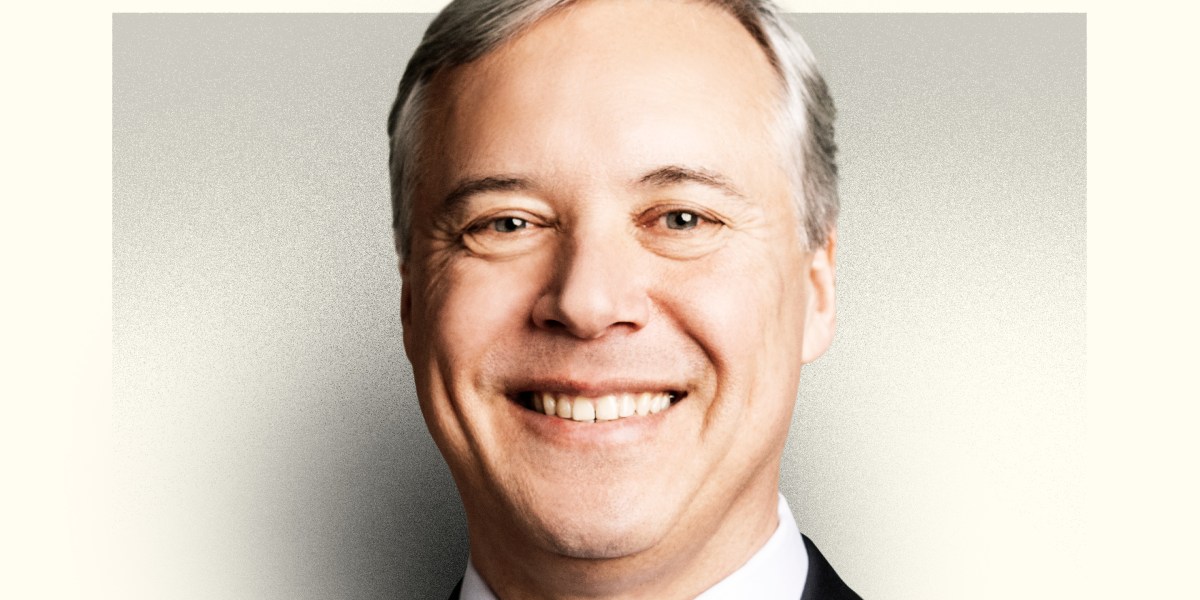
Booz Allen Hamilton CEO Horacio Rozanski is in an unprecedented position. Not only is he the first CEO to lead the storied consulting firm as a public company, but last year his firm derived 98% of its $12 billion in revenue from the U.S. government. That put him in the crosshairs as DOGE came to town, spooking investors and forcing him to lay off 7% of the company’s staff. Rozanski spoke to Fortune recently, in a wide-ranging conversation covering everything from Iran to national security spending to what exactly Booz Allen Hamilton does.
The following has been condensed and lightly edited for clarity.
Fortune: Where are we on the DOGE continuum right now?
Rozanski: It’s a dynamic environment. The discussion has moved away from a central DOGE conversation to an agency-by-agency efficiency discussion. We had to do a significant cut in our workforce to match where we see the demand in our civil business, which is obviously painful, because we have a great workforce. We took advantage of that to restructure how we run our entire civil business. The conversation on the national security side is different, because funding there is likely to go up if the reconciliation bill goes through in some form. I continue to be very optimistic about that given the value that we bring to the nation.
Let’s go back to that Peter Drucker question, then. What business are you in?
We’re in the business of making our nation stronger and better through technology, and we do that by working with the federal government on what we believe are the most important, most enduring missions, and by bringing technology that we create, that commercial companies create, and putting it together in a way that it addresses real mission needs. Our staff works from the seabed to space.
There must be times when it’s better to be in stealth mode, where people don’t know what you do.
I’m the first CEO of Booz Allen to really run a public company. We went public in 2010, so my predecessor took us public, and I was part of the IPO team. But Carlyle owned the majority of this stock. I found myself having to almost reimagine what the CEO of Booz Allen does, to have a more public conversation. We could do a lot of our work before without necessarily having to share with the people that lead that mission or lead the command or lead an agency much about ourselves. They knew we existed, but now we need them to know who we are and what we do, and we need to make sure that what we’re doing is aligned to the policy priorities. And that’s a different job than what we’ve had in the past.
Ronald Reagan said that line about the nine scariest words being, “I’m from the government, and I’m here to help.” We like to write off government as stodgy, slow, behind the times. What’s changed?
You have effectiveness, and you have efficiency. Our nation is very effective. We have the mightiest fighting force in the history of the world. Things happen that need to happen. And the federal government has been ahead of the private sector on the intelligence front, in areas around cybersecurity and so forth.
Efficiency in the federal government is very, very hard. In large measure, it’s structural. It’s not the Center for Disease Control but the Centers for Disease Control, each one funded individually and independently by Congress with different priorities and different requirements. So the CDC has a hard time operating as one entity. Could it be more efficient? Absolutely. We can quibble about the how, but the fact that we’re talking about it is a good thing.
How are you feeling about the ratio right now?
I think we’re at the point in this transformation where the government can afford to be more precise in the way it cuts. The initial big moves were made. Some people think that’s great. Some people don’t.
You’re very diplomatic.
I think we are now at the point where you know that what needs to be done next has to be much more targeted and precise. That’s my hope for the continuing efficiency push. I would not love a world that says, “Okay, we’re done with efficiency.” Because as a taxpayer and as somebody who lives in the system, I think there’s opportunity for efficiency. I think more precise, even if it’s a little slower, is better.
If the U.S. is heading toward more engagement with Iran, the question of readiness comes to mind.
I think the commanders and the nation are ready. The investments that the country has made in defense technology, not just the next generation, but the current generation, give the president, the leaders of this country options that, frankly, no other country on earth has. That is a tremendous source of strength.
This technology—some of which we helped build, some of which we had nothing to do with—gives us all of these options for whether to engage and how to engage. There’s an entire ecosystem: First and foremost, you have these men and women in uniform that volunteer to do it, who put their lives at risk on behalf of the rest of us, and that is amazing. Second, we have an economic engine that allows us as a country to fund the defense of the country in a way that most countries can’t. Third, we have an entire ecosystem that cuts across public and private that has generated tech dominance. I’d rather live in a world where the U.S. is leading the way and has options, even if the option is to do nothing. In most countries, doing nothing is the only option they have.
“I’d rather live in a world where the U.S. is leading the way and has options, even if the option is to do nothing. In most countries, doing nothing is the only option they have.”Horacio Rozanski, CEO, Booz Allen Hamilton
That’s an incredible position we find ourselves in, and one that we need to invest in because you don’t want to be second. You don’t want to be second in AI. You don’t want to be second in quantum. You don’t want to be second in autonomy, and you don’t want to be second in nuclear. In space, you just can’t afford it. If you fall to second, the dynamics of our options change dramatically. A year ago, I was already talking about speed and moving faster than China, how companies needed to engage and compete differently, how the government needs to engage the private sector differently.
Are we at risk of falling to number two right now?
The challenge with all this is to try and figure out what number one means. What does number two mean? What is the metric for success? China has made the first launch in putting a significant compute constellation up in space. We should not let them have that while we’re still thinking about it; we need to get there first. Why? Because if you can have compute in space—and there’s a lot of ifs in what they’re postulating they’re going to do, and I’m not entirely sure that they can do it—if they can have really significant compute capacity in space with very, very low latency down to the ground, they can essentially embed AI into much cheaper, much simpler systems.
Take quantum. If the threat of breaking encryption through quantum is as real as many of us believe it is, you don’t want China to be able to break all of our encryption, and us not being able to break theirs. The price for that is tremendous. It would limit our options. They’re making significant investments, and they’re accelerating; I believe in most of these areas, we’re still ahead.
When you start talking about compute power in space, I wonder to what extent the field of battle will shift to there?
I think we’re already talking about five war-fighting domains. You have sea, ground, air, cyber, and space, and all five of those interact, so I think the risk is real. I could certainly argue that it’s a bad thing to militarize anything, but to unilaterally disarm is worse. The reality is these capabilities in space have commercial applications and feed economic growth. China in particular understands the strategic value of space—and they’re going to look for dominance. We need to accelerate ourselves. It’s the same thing with AI. The question is not, Can we slow them down? The question is, Can we move faster than they can?
Has the conversation been shifting in the direction it needs to?
I think it has. There’s now a much greater interest on the part of the private sector to engage in these discussions. Back in 2017, I had the experience of being personally sanctioned by Iran. We didn’t know what it meant. For a while, my kids were not allowed to ride the school bus, and they had security details and all of that because you just don’t know. But the point is, if Iran did that, it’s because they understood the role we played in these critical missions. That was the time where most of Silicon Valley and tech companies were saying, Government is not for us. You know, our stuff cannot be used in the national defense and all of that. I am really happy that that conversation has shifted.
Tech companies want to engage, and government is understanding that they need to work differently with the private sector to enable that. Government should behave as an early adopter of these technologies. If you look at the experience with cloud, by the time the government got into cloud, the private sector was already there. And the downside of that is these clouds were not architected to meet the exacting security needs that the government has—even to this day. Because the core architecture did not have this in the initial requirements, they’re playing catch up.
It would have been a lot better if the government had moved together with the private sector and said, “We want to adopt this technology. We are going to be a big customer, and this is what we need.” When you get to autonomy, robotics, physical AI, quantum, I would want the government to again be at the table saying, “We want to be, we’re going to use a lot of this, and this is what we need to be able to use it. We want it to be responsible and safe and have a set of safeguards, and we want you to build those into the code on day one, as opposed to trying to apply it 10 years from now, when we get around to buying it.”
What do you think business leaders need to know right now about Iran?
Geopolitics are increasingly interconnected. When I traveled to Taiwan—which was in the early days of post October 7, and Ukraine was well underway—I was really surprised by the level of scrutiny that Taiwan had over everything that’s happening. It was shaping their policy. I assume it was shaping Chinese policy as well. What’s happening in Iran will probably shape the policies of China, of Russia, and of other actors, including our own—given the understanding that these things are so interconnected.
In what way?
Will Iran accelerate their cyberattacks? Will their proxies in the region accelerate in some way? Will other state actors, say North Korea, take advantage of the fact that so many resources are going towards Iran to do something? The place that we all need to be most concerned about is cyberspace, because it’s faster acting.
A lot of CEOs are spending more time in Washington now. Any advice?
The most important thing is to engage. I will talk to anybody who will talk to me. I learn everything from every conversation. And sometimes I learn more from their questions than I learn from my answers. But it also is an opportunity to ask questions. So I think consistent, persistent engagement, very broad engagement. Who’s relevant today, who’s relevant tomorrow, the political process will dictate that, so you can’t get narrowly focused.
Is there any question you don’t get asked enough, or one you wish you were asked more often?
I love the question: “What do you guys actually do?” There’s real value in giving people a full understanding of what it is that any company does. When it comes to policymakers, a lot of the time, they just don’t have enough visibility into what’s out there. The more the private sector engages, the more they can do their jobs, and then the more you have an opportunity to express a point of view.
If you were to say, “Here’s what we do that so few others are able to replicate,” what would it be?
I’ll give you some examples. Our work with the VA has helped decrease plane processing time by an order of magnitude. Our work on fraud prevention across the federal government has helped reduce fraud by billions of dollars. Our work in defense has helped accelerate capabilities that keep our soldiers safer on the field. Our work in innovation has made commercial companies that weren’t able to serve the federal government become extremely successful at doing that to the benefit of the federal government. I’m most proud of the fact that our workforce has 10,000 veterans. I know we are making a difference. We secure the vast majority of the dot-gov domain. We have helped advance the country’s cyber capabilities to current levels from scratch, from the very beginning, in a way nobody else has. Now, the thing for us has always been, and the line I still want to walk is, people in the federal government are the ones that deserve the majority of the credit, not us, because at the end of the day, they are the decision-makers. People in uniform are the ones that are putting their lives at risk, not us.