
Politics
Gus Bilirakis advances bills to boost access and research for leukemia, lymphoma, ALS
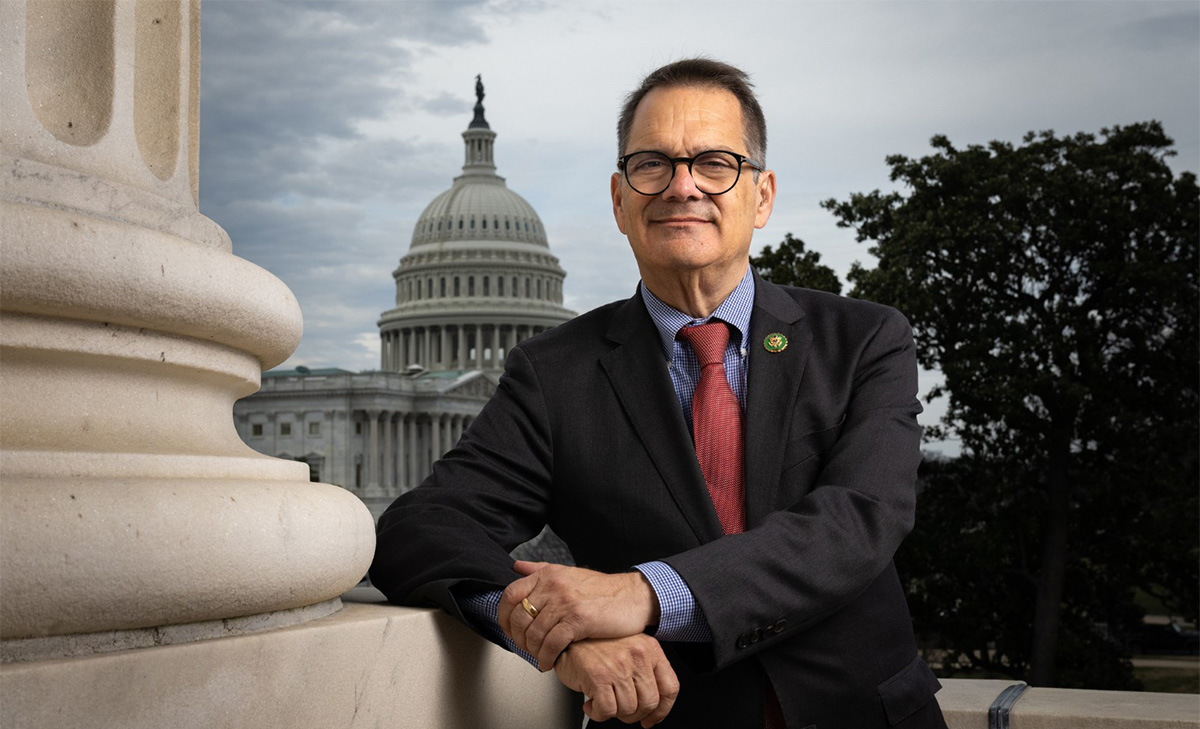
Two bills on medical research carried by U.S. Rep. Gus Bilirakis sailed through the House Energy & Commerce’s Health Subcommittee.
“While there is still much work ahead, continuing to support research innovation and access to promising therapies offers hope to patients and families confronting these devastating diseases every day,” the Palm Harbor Republican said in Committee.
Both the Stem Cell Therapeutic and Research Reauthorization Act (HR 5160) and Accelerating Access to Critical Therapies for ALS Reauthorization Act (HR 8205) cleared the Committee unanimously.
The stem cell bill will move forward as part of reauthorization of the CW Bill Young Cell Transplantation Program, legislation named for longtime U.S. Rep. C.W. “Bill” Young, a Tampa Bay Republican who died in 2013. That bill was led by Bilirakis with GOP U.S. Reps. Chris Smith of New Jersey and Claudia Tenney of New York, along with Democratic U.S. Reps. Doris Matsui of California, Chellie Pingree of Maine and Kweisi Mfume of Maryland.
“Every year, thousands of Americans are diagnosed with devastating diseases such as leukemia, lymphoma, sickle cell disease and other inherited immune system disorders,” Bilirakis said.
“For many of these patients, a bone marrow or cord blood transplant can provide a critical treatment option and, in some cases, a path towards long recovery. Finding a compatible donor, however, is often incredibly difficult, particularly for those who do not have a matching donor within their own family.”
The bill reauthorizes more than $280 million over five years for national cord blood and bone marrow transplant programs.
The ALS bill addresses the needs of those with Lou Gehrig’s Disease.
“ALS is a devastating disease that gradually takes away a person’s ability to move, speak, eat and breathe, and today, there is still no cure,” Bilirakis said.
“For many families, time is the greatest challenge. Patients living with ALS cannot afford to wait through years of again, slow research and regulatory timelines. Congress recognized the reality when it passed ACT for ALS in 2021. The goal was to accelerate research, improve coordination and expand access to promising investigational therapies. Since then, the program has helped strengthen collaboration between researchers, regulators, manufacturers and patient advocates working to better understand and treat ALS.”

He said the bill would ensure critical research and access efforts continue without interruption, while also bolstering oversight on the spending by requiring action plans from the Food and Drug Administration and review of drug and treatment trials.