
Politics
Scott Singer floods CD 23 race with cash, lapping incumbent Jared Moskowitz in Q1 fundraising
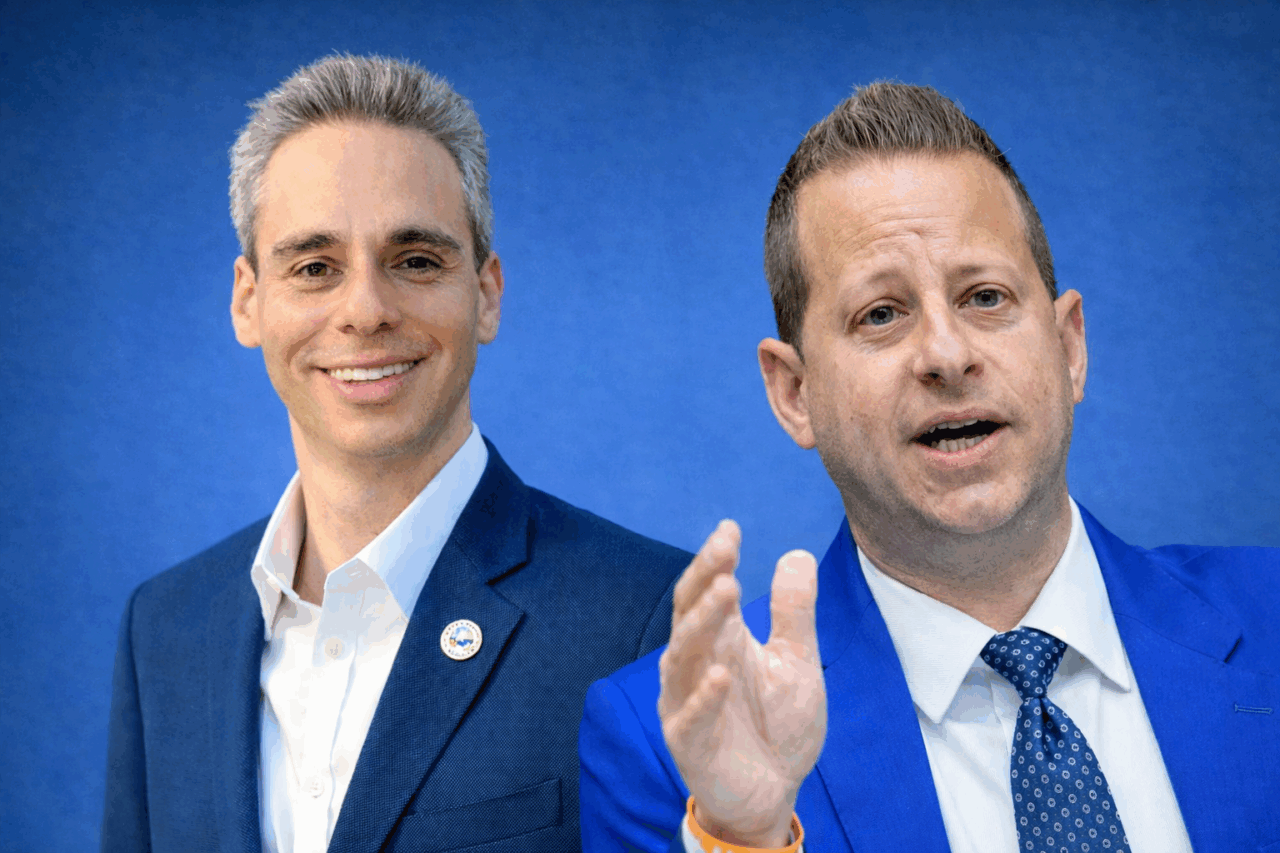
U.S. Rep. Jared Moskowitz once again led fundraising in the Democratic Primary for Florida’s 23rd Congressional District last quarter, but his $429,200 haul amounted to less than a third of what Republican challenger Scott Singer raised over the same period.
Singer stacked $1.3 million between Jan. 1 and March 31, dwarfing his Primary opponents and signaling that the GOP contest could be flush with cash as the race further takes shape.
CD 23 covers Boca Raton and West Boca in Palm Beach County, and northwest Broward County and coastal Broward south to Fort Lauderdale.
Moskowitz, elected in 2022, won re-election in 2024 with 53% of the vote against counterterrorism expert Joe Kaufman, who has raised significantly more this cycle than last but still trails multiple Primary foes in funding.
Moskowitz’s seat is one of more than two dozen that the National Republican Congressional Committee is targeting for flips this cycle.
Democratic Primary
Moskowitz, a Parkland resident, continued to dominate fundraising on his side of the aisle in the first quarter of 2026, bringing his total gains this cycle to $1.72 million, counting $300,000 in self-loans.
He entered April with $1.21 million on hand after spending $215,400 last quarter.
A significant portion of his quarterly haul — $83,300 — came through a transfer from his joint fundraising committee, Moskowitz Victory Fund. He also drew a mix of individual donations and institutional support.
Several contributions of $7,000 — the maximum allowable through personal donations, representing $3,500 apiece for the Primary and General Elections, which count as separate races — came from donors tied to AshBritt, a Florida-based emergency management contractor where Moskowitz worked for more than a decade before Gov. Ron DeSantis tapped him to lead Florida’s Division of Emergency Management.

Those donors included CEO Brittany Castillo and her husband, Gerardo; and Saily Perkins, widow of AshBritt founder Randy Perkins, along with other family-linked contributors.
Other top individual donors giving at the maximum level included Andres Fanjul of Palm Beach, President of Fanjul Capital and a shareholder of sugar giant Fanjul Corp.; Luis Javier Fernandez, who works in finance at Florida Crystals, one of several Fanjul family companies; former KEITH Engineering CEO Adolphine Lazowick; and County Waste CEO Jason Santiago.
Out-of-state max donors included Virginia tech executive Bekim Veseli and Texas health care executive Carlos Zaffirini.
Many of Moskowitz’s contributions were bundled through the American Israel Public Affairs Committee (AIPAC).
Political committees also played a sizable role. Moskowitz received $10,000 from a SpaceX PAC; $7,500 from Nike; $6,000 from Florida Power & Light parent NextEra Energy; and $5,000 apiece from groups tied to the National Automobile Dealers Association, UBS Americas, HMS Scrap Metal, ADT Security, SEAL PAC and Democratic U.S. Rep. Josh Gottheimer of New Jersey.
Additional PAC contributions ranged from $3,500 from the Sheet Metal, Air, Rail and Transport Workers union to $2,500 donations from several trade and industry groups, along with smaller contributions from companies like UPS, Chevron and Duke Energy.
Roughly 65% of Moskowitz’s donors listed Florida addresses.
On the spending side, Moskowitz’s campaign leaned heavily into digital outreach and fundraising infrastructure. Nearly $60,000 went toward text messaging, with tens of thousands more spent on consulting and credit card processing tied to fundraising operations.
Payroll and travel costs were steady but secondary, while additional expenditures covered polling, advertising and political donations.
Moskowitz’s lone challenger in the Democratic Primary, progressive organizer and first-time candidate Oliver Larkin, raised $199,800 last quarter, bringing his total gains to $327,500 this cycle.
He also spent $62,500 last quarter, adding to prior spending of about $82,300.
By April 1, he had $182,700 left.
Larkin’s donor base leaned more small-dollar and grassroots, though he did secure a notable, maxed-out $7,000 contribution from Los Angeles-based political commentator Hasan Piker.
He also drew support from California tech and legal circles, including $3,500 donations from GitHub co-founder Tom Preston-Werner and his wife, Theresa, and lawyer Eric Alan Isaacson.
More than 80% of Larkin’s contributions came from Florida donors. He reported taking no corporate or PAC money.
Larkin’s spending focused more on infrastructure than outreach. He spent about $31,000, roughly half his Q1 total, on payroll and staffing. Another $12,000 covered fundraising and processing costs, and roughly $9,000 went to consulting.
He also spent $7,600 on email, texting and constituent relationship management (CRM) platforms, while modest sums were directed to advertising, printed materials and travel.
Republican Primary
Singer, a former Boca Raton Mayor who formally launched his campaign in January after announcing in mid-December, entered the GOP fray with a bang: $1.3 million in Q1 fundraising — inclusive of $424,000 in self-loans.
Even excluding those loans, his early fundraising placed him at the top of the GOP field, moneywise.
After healthy spending, Singer ended March with $1.23 million on hand.
His donor list featured a heavy concentration of wealthy individuals and finance-sector figures, many contributing the $7,000 maximum.
Among them: Dallas billionaire Harlan Crow and his wife, Kathy; hedge fund CEO James Litinsky and his wife, Danielle; New York hedge fund executives Lee Sussman and Scott Friedman and their spouses; and finance professional Cliff Asness and his wife, Laurel.
Other topped-out contributors included private equity executive Eric Mandelblatt, Kansas-based beef packing executive Adam Beren and his wife, Ellen, and a range of South Florida lawyers and business owners.
Palm Beach County donors made up a significant share of his support base, alongside contributors from across the country.
Overall, about 65% of Singer’s donors listed Florida addresses.
Singer also received $7,000 from Tampa-based Seagar Enterprises LLC. True North, a leadership PAC affiliated with Alaska U.S. Rep. Dan Sullivan gave $5,000. Texas congressional candidate Jessica Steinmann contributed $2,000 through her campaign account and another $1,500 through her associated leadership PAC, Just Elect Super Stars.
Singer’s campaign also reported more than $12,000 in in-kind support for event-related expenses.
His spending largely covered fundraising overhead. Of the $116,000 that went out, nearly $69,000 went toward fundraising fees and merchant processing. Another $10,000 paid for data and software services.
The same sum went to direct mail and printed materials. Close to $4,000 paid for media and print advertising.
Former state Rep. George Moraitis, a Fort Lauderdale lawyer, reported raising $125,500 in the first quarter, bringing his cycle total to $698,300, including $110,000 in self-loans.
He also spent $89,100 last quarter, bringing his total spending to $214,400 overall, and ended Q1 with $214,400 left in cash and $111,100 in debt.
Moraitis overwhelmingly leaned on personal checks over corporate contributions last quarter, and about 80% of his donors last quarter listed Florida addresses.
He received $3,500 apiece from Lighthouse Point restaurateur Grant Galuppi, Boca Raton real estate pro Larry Silver and his wife, Deborah, and Fort Lauderdale construction executive Brian MacClugage and his wife, Lisa.
Coral Springs retiree John Schechter gave $3,000. Connecticut bookkeeping executive James Czapiga, Fort Lauderdale insurance executive Jeffrey Roschman and local lawyer Mark Allsworth gave $2,500 apiece.
Hoteliers Lee Banks and Charles Russell, construction executive Michael Fee, and insurance agent Theodore Hess — all South Floridians — each chipped in $2,000.
Moraitis also notched a $1,500 donation from the National Utility Contractors Association.
His spending last quarter focused heavily on compliance and financial management. More than $41,000 went to Tallahassee-based PAC Financial Management for accounting and reporting.
He also paid Virginia-based HSP Direct for direct mail services and paid thousands more in processing fees to fundraising platforms WinRed and Anedot.
Another $7,500 covered finance consulting, while $4,150 went to advertising through a Fort Lauderdale media firm.
The rest covered digital services, data subscriptions and payroll.
Other Republican candidates posted more modest fundraising totals.
Raven Harrison, a conservative businesswoman, activist and author, raised $85,300 last quarter and spent $115,500.
As of March 31, her cycle totals were more than $701,000 raised and $269,300 spent. A huge share of her gains — $542,000 — came through self-loans.
Kaufman brought in $73,800 last quarter and has raised $482,000 this cycle while spending $74,500.
He reported $470,200 on hand but is carrying $89,800 in debt.
Lawyer and businessman Jared Gurfein reported no new fundraising activity during the quarter, raising $0 while spending $62.
His cycle totals stood at $27,900 raised and $16,000 spent, with $11,700 cash on hand.
Candidates faced an April 15 deadline to report all campaign finance activity through March 31.
The Primary is Aug. 18, followed by the General Election on Nov. 3.