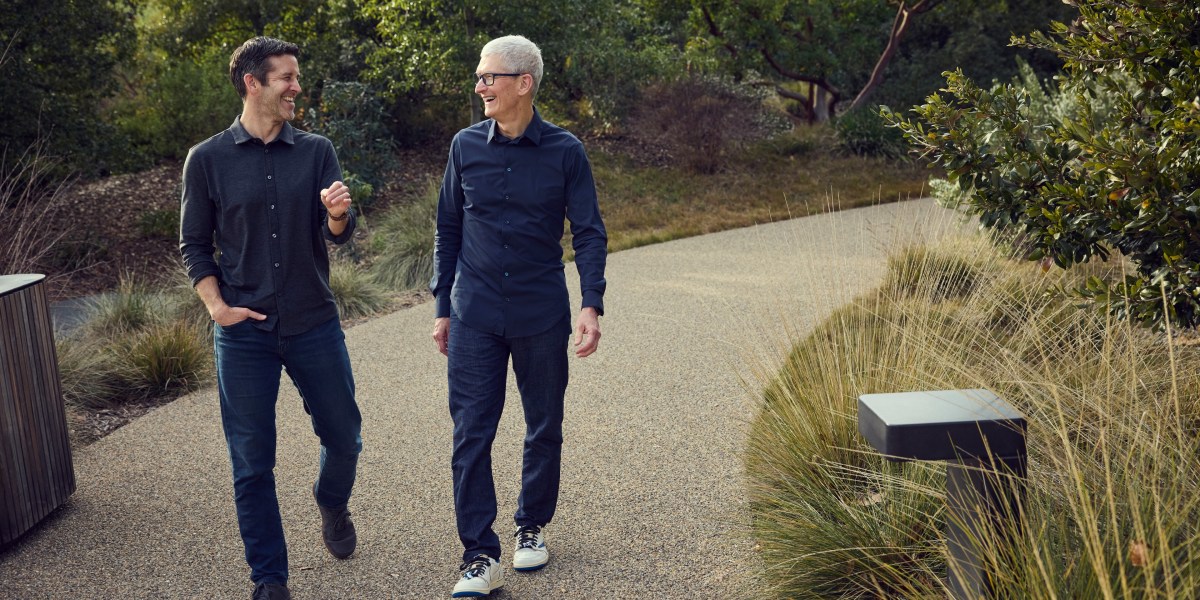
The stock fell nearly 1% to around $270 after Tuesday’s open on news Ternus would succeed Cook on Sept. 1, with Cook transitioning to executive chairman after 15 years as CEO.
Wedbush, Evercore, Citi, and BofA all kept buy ratings with price targets between $315 and $350. Some of the wariness tracked with Bloomberg Intelligence analyst Anurag Rana’s read the move signaled “continuity rather than strategic change,” an awkward message at a moment when Apple needs to make a real pivot into AI.
Wedbush Securities’ Dan Ives called the transition a “shocker,” noting investors had expected more clarity on a forward outlook before any handoff.
“This will put even more pressure on Apple to produce success and its product roadmap at WWDC with AI front and center,” he wrote, referring to the Worldwide Developers Conference Apple hosts in June. Still, Ives kept his outperform rating and $350 target.
Wall Street has been here before. When Steve Jobs handed the company to Cook in August 2011, Apple stock dragged for months before ripping 57% over the following year, according to a Morgan Stanley note from analyst Erik Woodring. Woodring, who rates Apple overweight with a $315 target, argues it’s a similar setup now.
“Apple’s CEO change is unlikely to alter Apple’s core strategy/vision across hardware, software, capital returns, or vertical integration,” he wrote, but a CEO transition can unlock renewed optimism and a potential shift in the overarching Apple narrative.
Cook’s run is generational. When he took over, Apple was valued at around $350 billion; he’s handing it off at $4.01 trillion. Annual revenue has quadrupled from $108 billion to $416 billion, according to Janus Henderson technology analyst Shaon Baqui.
But Baqui argues the innovation engine at Apple has stalled: Vision Pro flopped, the car program burned billions in cash, and Apple ceded the home assistant market to Google and Amazon.
Wall Street’s bull case, then, rests on Ternus, 51, being the right mix of traditional hardware guru and decisive innovator. He oversaw the recent development of the M-series silicon chip, widely successful, and championed the MacBook Neo—the colorful, smaller, $599 laptop aimed at a younger crowd that has sold out and become nearly impossible to find since launching last month.
And in a moment when many say Apple is behind on AI, some on Wall Street see a sharper angle. BofA’s Wamsi Mohan, who has a $325 price target on the stock, argues Apple’s M5 silicon, launched last October, is the foundation for “edge AI”—where inference runs locally on the device rather than in a cloud data center. That could mean better response times, privacy, and lower infrastructure costs. Ternus, who ran the M-series, could be the best CEO to pitch that story to investors.
Ternus will be Apple’s third CEO since 1997. Both of the prior transitions worked out well for shareholders. The third is a similar bet for Wall Street, that Apple is building for the AI era, not chasing it.