
Politics
Less than half of Floridians want to vote for GOP congressional candidates
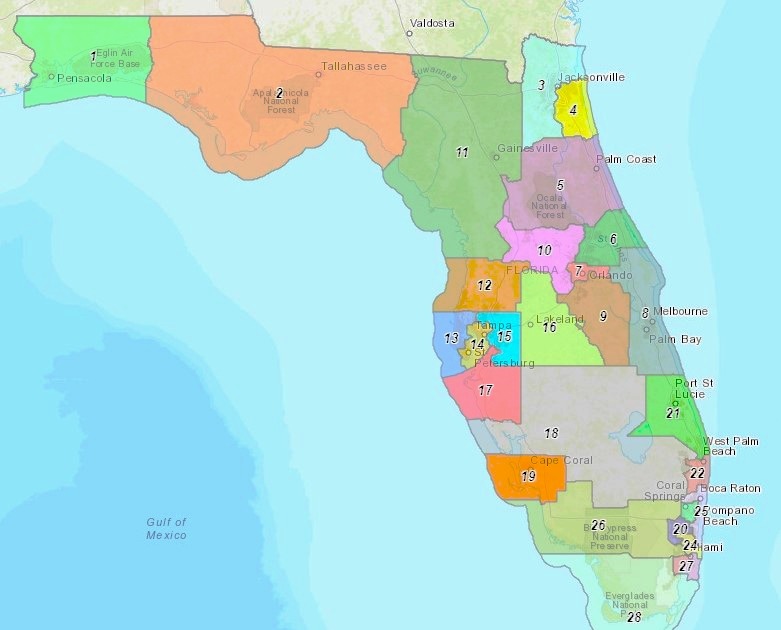
With a congressional redistricting Special Session slated for next week, evidence continues to show that Gov. Ron DeSantis’ gambit to make a more GOP-friendly map comes with some risks.
The Republican Party of Florida justifiably has been proud of continuing to expand the registration advantage over Democrats in the state. Yet despite there being nearly 1.5 million more GOP voters in the state and a 41% to 30% registration advantage for the party in power, a new survey shows congressional preference is basically even between the two parties.
The poll of 406 Florida voters, conducted by Echelon Insights, shows 49% of voters say they intend to vote for the Republican candidate while 46% say they want to vote Democrat.
Yet that’s not the worst news for Republicans in this survey.
When it comes to voters who definitely intend to show up in November, Democrats outperform Republicans, with 37% of respondents intent on voting blue while just 36% are ready and raring to vote red.
DeSantis had previously pinned the need for a Special Session on an impending SCOTUS ruling in Louisiana v. Callais, which DeSantis believes will invalidate minority-access districts and necessitate a new map affecting the 2026 cycle.
He wants to add more Republican seats to the current congressional map that already has a 20-8 GOP advantage, remedying what he has called a “malapportioned” setup.
If this ruling proceeds as the Governor hopes, the Voting Rights Act of 1965 could be scuttled, and targets could include seats held by South Florida Democratic U.S. Reps. Sheila Cherfilus-McCormick and Frederica Wilson in Florida’s 20th and 24th Congressional Districts, respectively.
In 2022, DeSantis’ Office drew Florida’s congressional map, one approved by lawmakers after DeSantis vetoed a map produced by the Legislature during the Regular Session. With just a week before they are slated to consider the revision, though, lawmakers still await the proposal.
Some speculate that a new map could hurt Republicans more than it could help them, including current incumbent U.S. Reps. Mario Díaz-Balart, Carlos Giménez, Greg Steube and Daniel Webster, who fear that their safe seats could be in play.

Republican consultant Alex Alvarado wrote in an analysis for the Civic Data and Research Institute that, according to modeling, aggressive redistricting would raise the number of competitive seats from four to seven but wouldn’t give Republicans any net gain.