Connect with us

Fashion

Mulberry hails Q3 strength, shows turnaround plan is working

Published

on


Published


January 14, 2026

With a brand that’s as loved as Mulberry has been for years in the UK, it’s been painful to watch it going into decline in recent years. Each new trading update can bring disappointment. But recent ones have held out some hope. So what did the latest update on Wednesday tell us? Well, there was not only hope but some tangible good news, showing that the turnaround plan put in place around a year ago is paying off. 

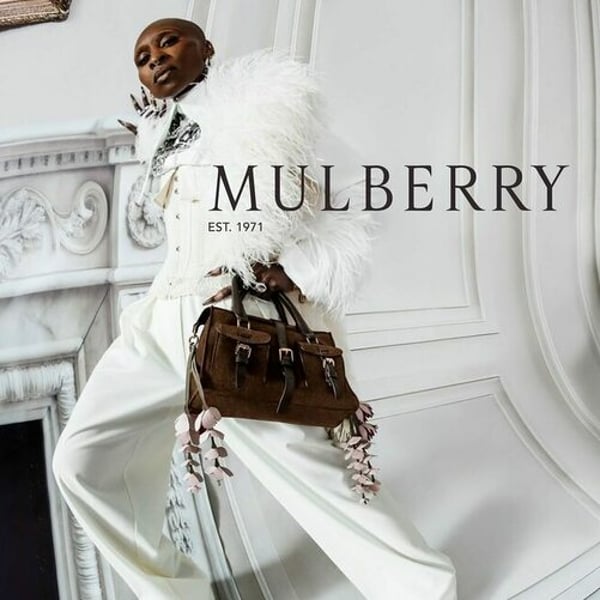
Mulberry

The company said it saw a “strong festive trading period” underpinned by its full-price sales mix and newness. And there was “positive customer response” to its “right product, at the right price” strategy. You may remember that in November 2024, its still-new CEO Andrea Baldo said it was aiming to sell most of its luxury handbags for less than £1,095 (that is, less than the price of the star Bayswater) to broaden the brand’s appeal and boost sales.

For Q3 (the 13 weeks to 27 December) that translated into total group sales (that is, physical retail, e-tail and wholesale) rising 5.3% with retail and digital sales rising 11% on a like-for-like basis.

In the UK, those two figures were a positive 3.5% and 6.5%, respectively, while in the US they were an even bigger 12.7% and 12.6%. In Europe excluding the UK, the rises were 14.9% and an impressive 27.2%. In Asia Pacific, the total sales rise was just 0.8% (due to the continued right-sizing of its store estate as part of its simplification strategy) but on a like-for-like basis, sales rose 12.1%.

During the period, the group delivered revenue growth across all markets, with “a successful focus on full-price sales in the lead up to and during the festive period, against a highly promotional wider retail market”. This resulted in the previously mentioned group like-for-like sales rise in digital and e-commerce of 11%, with retail full-price sales up 19%.

The company said that the “strength of this performance reflects the group’s ongoing delivery of its new strategy – focused on simplifying the business, refreshing the brand, and more fully leveraging customer insights”.

Success at home and abroad

Part of its new strategy had been about refocusing on the UK market and customer, and this appeared to have been successful as sales in its home market rose. Full-price was the lynchpin, and it also delivered a larger proportion of the sales mix online than the prior year, “amid a backdrop of more challenging growth in the broader retail market”. This tells it that “the product is resonating positively with the UK consumer”. 

As for the rest of the world, those figures for the US, Europe and Asia Pacific show that the strategy is working elsewhere too. The strength of the Apac like-for-like rise was a reflection of strong trading during the Double 11 shopping festival in November 2025.

The company added that it’s seen customers responding enthusiastically to its “differentiated product range, at a time when we have been realigning Mulberry’s identity as a British lifestyle brand, and reinvigorating its cultural relevance. Mulberry has successfully re-engaged their existing customer base as well engaging new shoppers across both retail and digital, reinforcing the core offering and signalling the Back to the Mulberry Spirit strategy is working”.

It’s something that’s also being seen at larger peer Burberry and in the case of both companies is a sign that focusing on Britishness and brand heritage doesn’t have to mean products and campaigns that are traditional, even boring. 

In fact, both firms have been adding new products and reworking existing ones, using heritage materials, and promoting them via campaigns where creativity is to the fore.

CEO Andrea Baldo said that “there remains plenty more to be done” but the early results are “encouraging” and the business is also maintaining “disciplined cost control, while at the same time growing full-price sales by having products that resonate at the right price”.

He also said the response to its Christmas campaign “has been in line with expectation, with particularly strong demand for the Roxanne, the Hackney and the continued resurgence of the Bayswater”.

Copyright © 2026 FashionNetwork.com All rights reserved.


Source link

Continue Reading

Fashion

Louis Vuitton unveils architectural and culinary landmark in Beijing

Published

on


Published


January 14, 2026

LVMH is doubling down on China, having opened several major flagships in the country in December. Encouraged by early indicators of a luxury sales rebound, the group is weighing further expansion to capitalise on China’s economic recovery.

The new Louis Vuitton store’s façade is treated as an elegant, sparkling, and translucent “garment” rather than a mere shell – Louis Vuitton

Following the success of its ship-shaped flagship in Shanghai opened mid-2025, the key LVMH brand has pivoted its strategic focus toward ‘hyper-physical’ immersive retail environments, deep-rooted cultural synergy, and the scaling of high-impact regional flagships. With the opening of its new emblematic building in the vibrant heart of Sanlitun, Beijing, Louis Vuitton has set another global benchmark for luxury retail and architecture. 
 
Architecture and fashion dialogue

As Louis Vuitton’s long-standing architectural partner, Jun Aoki envisioned a space that harmoniously balances local cultural heritage with a sense of global openness. The initial inspiration for the façade was the Taihu Stone, which is central to traditional Chinese garden design. 
 
“Beijing is a city of ‘transplanted’ nature, where the mountain’s spirit lives within the scholar’s rock,” architect Aoki Jun told FashionNetwork.com. “We envisioned this store as a stone found in such a garden, shaped by the four ancient principles of traditional Chinese scholar’s rock appreciation: the slenderness of Shòu(瘦) establishing the store’s upright and poised character; the rhythmic wrinkles of Zhòu(皱)imbuing the walls with a rugged, rock-like texture; the hollowed depth of Lòu(漏)creating intriguing pathways and framed vistas; and the luminous transparency of Tòu(透)ensuring the essential light and openness for a commercial space. It is more than a structure; it is a condensed landscape.”
 
The design also takes its inspiration from a Nicolas Ghesquière dress presented during a Louis Vuitton spring/ summer show in 2016, illustrating the fertile dialogue between architecture and fashion at the maison. The façade is treated as an elegant, sparkling, and translucent “garment” rather than a mere shell.
 
An immersive experience with gastronomy
 
The excellence of the building continues inside, where the retail space extends over four levels. It offers the entirety of the Louis Vuitton universe, including men’s and women’s leather goods, ready-to-wear, jewellery, shoes, perfumes, beauty, accessories, and the new Maison collection. Four private lounges are dedicated to the exclusive experience of Very Important Clients.  

The LV Café embodies the maison's desire to offer guests a complete and immersive lifestyle experience, intertwining design, culture, and gastronomy
The LV Café embodies the maison’s desire to offer guests a complete and immersive lifestyle experience, intertwining design, culture, and gastronomy – Louis Vuitton

The interior architecture, conceived by the maison’s Architecture Studio, focused on sequencing spaces and creating superimposed voids to generate surprising vertical perspectives and total immersion in natural light. The customer’s journey is thus a constant mix of viewing the brand’s extensive product offer and contemplating the façade’s delicate lace.
 
Summiting the building is the very first Louis Vuitton Café in Beijing. This space, set to become a new urban meeting point and a place of openness to the city, is completed with a private dining room and a remarkable 250 square metres of outdoor spaces, including a rooftop event bar. The Café embodies the maison’s desire to offer guests a complete and immersive lifestyle experience, intertwining design, culture, and gastronomy. 
 
Pivot to emotional retail
 
The era of pure acquisition has been superseded by a new focus in modern luxury, according to Bain & Company senior partner Bruno Lannes. He states that intangible experiences and deep emotional connections now hold the primary power to drive growth. As a result, physical retail requires a fundamental transformation: brands must concentrate resources on fewer, grander flagships that serve as sanctuaries for delivering powerful emotion, sensory immersion, and tailored personal engagement, rather than just being points of sale.
 
This philosophy is powerfully manifested in the architecture of Louis Vuitton’s new Beijing building. “Beijing represents a fascinating ‘centrality’- it accepts the world’s influences yet organises them into a logic that is purely its own,” said Aoki Jun. “As brands like Louis Vuitton move toward a holistic lifestyle offering, they must protect the ‘vibration’ of the destinations they inhabit.”
 
Betting on a market resurgence, Louis Vuitton is preparing for a bold new chapter in 2026. This vision was reinforced by LVMH CEO Bernard Arnault’s frequent presence in China in 2025, where he championed a strategy of cultural synergy. By scouting local craftsmanship and integrating Chinese heritage into its design DNA, the brand has transformed its flagships into emotive landscapes that offer more than just products-they offer a deep, immersive connection to the local soul. 
 
Moving beyond its role as a traditional luxury supplier, Louis Vuitton is emerging as a pioneer of a comprehensive lifestyle offering. By weaving its heritage of travel into the realms of dining and cultural dialogue, the brand is embarking on a transformative second chapter in China.
 
By Sissi Chu
 

Copyright © 2026 FashionNetwork.com All rights reserved.


Source link

Continue Reading

Fashion

Pitti Uomo: Rag & Bone renaissance with Swaim Hutson

Published

on


Published


January 14, 2026

One brand, and designer, enjoying a renaissance at Pitti Uomo is Rag & Bone, where newly installed creative director Swaim Hutson showed his debut collection for the house. 

Swaim Hutson – Courtesy

 
After several years where the brand seemed to stand still, there was plenty of fresh momentum at its stand inside Pitti. From fabric choices and color, to proportion and attitude.
 
“I don’t want to obviously steer away from the DNA of what Rag & Bone has stood for over the years and what Marcus and David started. It’s about keeping the DNA – starting with workwear, denim obviously and then tailoring,” said Hutson, referring to the brand’s two UK founders and cohort, Marcus Wainright and David Neville. 

So, Hutson took those three categories “and just put them in a blender and mashed them up,” for fall 2026. 
 
“That’s the way the modern man dresses, and definitely the way guys in New York are dressing now,” underlined Hutson, pointing to a smart blazer worn with rugby jersey and track pants. 

Rag & Bone fall/winter 2026
Rag & Bone fall/winter 2026 – Courtesy

Much of Rag & Bone’s suiting is made in Portugal, like an increasing number of brands. Hutson comes from a more tailoring background, but was “determined not to be stuffy,” so he mixes lots of suiting separates with sportswear. 
 
Asked what brief did he get when you got the job, he deadpans: “What did Mr. Andrew Rosen tell me? He told me a lot. Nothing major, just more of the history of the brand and that there were no restrictions,” said Swain referring to the famed New York fashion entrepreneur and brand’s de facto CEO.
 
Rag & Bone began life back in 2002 with a pair of raw denim jeans, and Hutson has gone back to a rawer denim aesthetic, with R&B Raw, proprietary to the brand. A new treatment where you wash jeans 20 times without destroying the raw aesthetic, while keeping the fabric soft and supple.
 
“So, it doesn’t feel like wearing sandpaper. It’s raw denim, but modernized for today’s work,” said Hutson.

Rag & Bone fall/winter 2026
Rag & Bone fall/winter 2026 – Courtesy

 
Swaim brings nearly two decades of experience in international menswear to the role. He first won attention by founding Obedient Sons in New York- going on to become a CFDA/Vogue Fashion Fund finalist. He then held creative director roles at 3.1 Phillip Lim, Club Monaco, and Generra. Before later launching The Academy New York, a label that has established itself within the fashion, art, and music communities.
 
His plan for mixing suiting, denim and outerwear at Rag & Bone led to pairing a denim shirt under a suit jacket, as opposed to wearing an Oxford shirt. The subtle change of style comes as Rag & Bone is upping its efforts in Europe. Today, Rag & Bone is controlled by the WHP Global group, which also includes Vera Wang, Isaac Mizrahi, G-Star and Joseph Abboud.
 
Hutson was born in North Carolina, making him, as they say, a Tarheeler, but now resides in the Brooklyn Navy Yard district.
 
This year, the brand will open a new boutique in Dubai, following on from a fresh store in Amsterdam, adding to one in Germany, and two in London, for a chain of some 30 boutiques. The brand remains primarily a wholesale business though, with over 700 doors and annual revenues hover around $300 million.
 

Rag & Bone fall/winter 2026 collection
Rag & Bone fall/winter 2026 collection – Courtesy

Rag & Bone originally began as men’s brand, but today women’s wear accounts for 60% revenues, with menswear at 40%.
 
The brand’s other big focus is a project called “Miramar”, a fresh denim aesthetic that is very soft, almost like terry cloth, with lots of looks ideal for travel. 
 
“We’ve opened a couple of small Miramar stores. One is about 600 square-foot inside Moynihan Train Hall, opposite Penn Station which is beautiful. And it’s done tremendous business,” he enthuses about the new Manhattan retail hub.
 
In Pitti, Hutson also showed some strong new colors with bold reds and plaids. Plus, he impressed with more probable proportions – from short, plaid shirt jackets to some really cool faded blue chalk stripe looks. Seen in deconstructed jackets and a natty urban redingote, finished with neat RB logo buttons.
 
Next up, one suspects is a return to the catwalk for Rag & Bone after a hiatus of several years. 
 
“We’re talking about it. It wouldn’t hurt. It’s just about the leadership being confident in what designs we put out. I would love to do a show. I think New York deserves it, and we’re a New York brand, you know,” he concludes.

Copyright © 2026 FashionNetwork.com All rights reserved.


Source link

Continue Reading

Fashion

Ron Dorff moves UK flagship from Seven Dials to Soho

Published

on


Published


January 14, 2026

London’s Soho continues to be a magnet for international brands and major landlord Shaftesbury Capital has just announced that Ron Dorff, the French-Swedish menswear label, is to launch a new UK flagship store there at 32 Berwick Street. 

Ron Dorff

It covers a 600 sq ft space offering the label’s menswear and accessories, including sportswear, loungewear, underwear, and swimwear. 

The 11-year-old brand focuses on “upgrading iconic menswear staples” and the area is a strong one for menswear generally. It’s just around the corner from Regent Street where consumers can find menswear from Gant, Hackett, Reiss, COS, Boss, Levi’s, Tommy Hilfiger, Paul&Shark and more.

Meanwhile, on Berwick Street itself and other nearby streets there’s Ben Sherman, Wax London, &Sons, END., Wolf & Badger, Sunspel, and Farah, among others.

That all gives Ron Dorff a guaranteed amount of visitor traffic.

The relationship between Ron Dorff and Shaftesbury Capital began 10 years ago, when the latter supported the brand into physical retail with a first-ever UK store, on Earlham Street in Seven Dials. In relocating to Berwick Street, Ron Dorff now sits opposite fellow Scandinavian-inspired retailers Sandqvist and Nudie Jeans.

William Oliver, Director of Retail & Restaurant Leasing at Shaftesbury Capital, said: “Our approach to leasing is thematic – we look at a space, and the location in which it sits, and think about what type of brand would be most successful there. Having worked with Ron Dorff for 10 years, we have a deep understanding of their operation, and customer base. When we looked at 32 Berwick Street, it was clear that a premium menswear brand of that calibre would suit the space perfectly, and it’s a success story for our West End portfolio that we’ve been able to relocate them, providing a fresh opportunity but ensuring they can continue to make the most of a high footfall, ever-popular shopping district.”

And Ron Dorff founder and CEO Claus Lindorff added that while the label is stocked in other stores, “having a standalone location is so important for our brand recognition and for our customers that love shopping pure Ron Dorff collections. When we were approached about moving to Berwick Street, seeing the other brands here and those that also relocated recently for new flagships, we could see the opportunity, and are delighted to be in this part of the West End”.

Copyright © 2026 FashionNetwork.com All rights reserved.


Source link

Continue Reading

Trending

Copyright © Miami Select.