Connect with us

Business

Google and Character.AI agree to settle lawsuits over teen suicides linked to AI chatbots

Published

on


Google and Character.AI have agreed to settle multiple lawsuits filed by families whose children died by suicide or experienced psychological harm allegedly linked to AI chatbots hosted on Character.AI’s platform, according to court filings. The two companies have agreed to a “settlement in principle,” but specific details have not been disclosed, and no admission of liability appears in the filings. 

The legal claims included negligence, wrongful death, deceptive trade practices, and product liability. The first case filed against the tech companies concerned a 14-year-old boy, Sewell Setzer III, who engaged in sexualized conversations with a Game of Thrones chatbot before he died by suicide. Another case involved a 17-year-old whose chatbot allegedly encouraged self-harm and suggested murdering parents was a reasonable way to retaliate against them for limiting screen time. The cases involve families from multiple states, including Colorado, Texas, and New York.

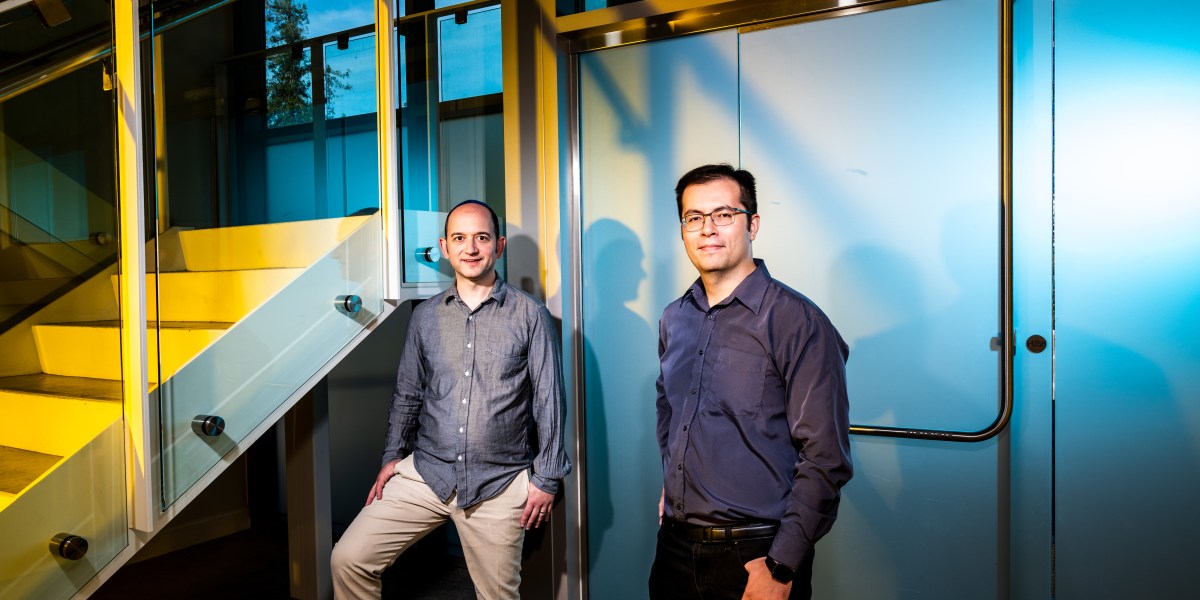
Founded in 2021 by former Google engineers Noam Shazeer and Daniel De Freitas, Character.AI enables users to create and interact with AI-powered chatbots based on real-life or fictional characters. In August 2024, Google re-hired both founders and licensed some of Character.AI’s technology as part of a $2.7 billion deal. Shazeer now serves as co-lead for Google’s flagship AI model Gemini, while De Freitas is a research scientist at Google DeepMind.

Lawyers have argued that Google bears responsibility for the technology that allegedly contributed to the death and psychological harm of the children involved in the cases. They claim Character.AI’s co-founders developed the underlying technology while working on Google’s conversational AI model, LaMDA, before leaving the company in 2021 after Google refused to release a chatbot they had developed.

Google did not immediately respond to a request for comment from Fortune concerning the settlement. Lawyers for the families and Character.AI declined to comment.

Similar cases are currently ongoing against OpenAI, including lawsuits involving a 16-year-old California boy whose family claims ChatGPT acted as a “suicide coach,” and a 23-year-old Texas graduate student who allegedly was goaded by the chatbot to ignore his family before dying by suicide. OpenAI has denied the company’s products were responsible for the death of the 16-year-old, Adam Raine, and previously said the company was continuing to work with mental health professionals to strengthen protections in its chatbot.

Character.AI bans minors

Character.AI has already modified its product in ways it says improve its safety, and which may also protect it from further legal action. In October 2025, amid mounting lawsuits, the company announced it would ban users under 18 from engaging in “open-ended” chats with its AI personas. The platform also introduced a new age-verification system to group users into appropriate age brackets.

The decision came amid increasing regulatory scrutiny, including an FTC probe into how chatbots affect children and teenagers.

The company said the move set “a precedent that prioritizes teen safety,” and goes further than competitors in protecting minors. However, lawyers representing families suing the company told Fortune at the time they had concerns about how the policy would be implemented and raised concerns about the psychological impact of suddenly cutting off access for young users who had developed emotional dependencies on the chatbots.

Growing reliance on AI companions

The settlements come at a time when there is a growing concern about young people’s reliance on AI chatbots for companionship and emotional support.

A July 2025 study by the U.S. nonprofit Common Sense Media found that 72% of American teens have experimented with AI companions, with over half using them regularly. Experts previously told Fortune that developing minds may be particularly vulnerable to the risks posed by these technologies, both because teens may struggle to understand the limitations of AI chatbots and because rates of mental health issues and isolation among young people have risen dramatically in recent years.

Some experts have also argued that the basic design features of AI chatbots—including their anthropomorphic nature, ability to hold long conversations, and tendency to remember personal information—encourage users to form emotional bonds with the software.


Source link

Continue Reading

Business

Facing 682% inflation, Venezuelans work three or more jobs and still can barely afford any food

Published

on


At the White House, President Donald Trump vows American intervention in Venezuela will pour billions of dollars into the country’s infrastructure, revive its once-thriving oil industry and eventually deliver a new age of prosperity to the Latin American nation.

Here at a sprawling street market in the capital, though, utility worker Ana Calderón simply wishes she could afford the ingredients to make a pot of soup.

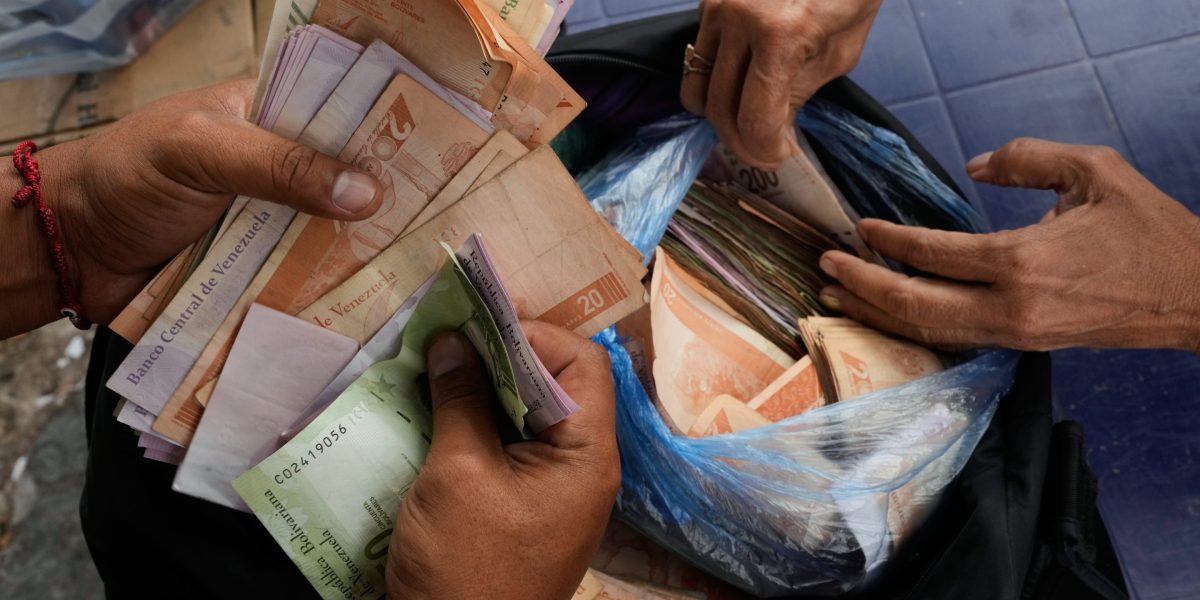
“Food is incredibly expensive,” says Calderón, noting rapidly rising prices that have celery selling for twice as much as just a few weeks ago and a kilogram (2 pounds) of meat going for more than $10, or 25 times the country’s monthly minimum wage. “Everything is so expensive.”

Venezuelans digesting news of the United States’ brazen capture of former President Nicolás Maduro are hearing grandiose promises of future economic prowess even as they live through the crippling economic realities of today.

“They know that the outlook has significantly changed but they don’t see it yet on the ground. What they’re seeing is repression. They’re seeing a lot of confusion,” says Luisa Palacios, a Venezuelan-born economist and former oil executive who is a research scholar at the Center on Global Energy Policy at Columbia University. “People are hopeful and expecting that things are going to change but that doesn’t mean that things are going to change right now.”

Whatever hope exists over the possibility of U.S. involvement improving Venezuela’s economy is paired with the crushing daily truths most here live. People typically work two, three or more jobs just to survive, and still cupboards and refrigerators are nearly bare. Children go to bed early to avoid the pang of hunger; parents choose between filling a prescription and buying groceries. An estimated eight in 10 people live in poverty.

It has led millions to flee the country for elsewhere.

Those who remain are concentrated in Venezuela’s cities, including its capital, Caracas, where the street market in the Catia neighborhood once was so busy that shoppers bumped into one another and dodged oncoming traffic. But as prices have climbed in recent days, locals have increasingly stayed away from the market stalls, reducing the chaos to a relative hush.

Neila Roa, carrying her 5-month-old baby, sells packs of cigarettes to passersby, having to monitor daily fluctuations in currency to adjust the price.

“Inflation and more inflation and devaluation,” Roa says. “It’s out of control.”

Roa could not believe the news of Maduro’s capture. Now, she wonders what will come of it. She thinks it would take “a miracle” to fix Venezuela’s economy.

“What we don’t know is whether the change is for better or for worse,” she says. “We’re in a state of uncertainty. We have to see how good it can be, and how much it can contribute to our lives.”

Trump has said the U.S. will distribute some of the proceeds from the sale of Venezuelan oil back to its population. But that commitment so far largely appears to be focused on America’s interests in extracting more oil from Venezuela, selling more U.S.-made goods to the country and repairing the electricity grid.

The White House is hosting a meeting Friday with U.S. oil company executives to discuss Venezuela, which the Trump administration has been pressuring to open its vast-but-struggling oil industry more widely to American investment and know-how. In an interview with The New York Times, Trump acknowledged that reviving the country’s oil industry would take years.

“The oil will take a while,” he said.

Venezuela has the world’s largest proven oil reserves. The country’s economy depends on them.

Maduro’s predecessor, the fiery Hugo Chávez, elected in 1998, expanded social services, including housing and education, thanks to the country’s oil bonanza, which generated revenues estimated at some $981 billion between 1999 and 2011 as crude prices soared. But corruption, a decline in oil production and economic policies led to a crisis that became evident in 2012.

Chávez appointed Maduro as his successor before dying of cancer in 2013. The country’s political, social and economic crisis, entangled with plummeting oil production and prices, marked the entirety of Maduro’s presidency. Millions were pushed into poverty. The middle class virtually disappeared. And more than 7.7 million people left their homeland.

Albert Williams, an economist at Nova Southeastern University, says returning the energy sector to its heyday would have a dramatic spillover effect in a country in which oil is the dominant industry, sparking the opening of restaurants, stores and other businesses. What’s unknown, he says, is whether such a revitalization happens, how long it would take and how a government built by Maduro will adjust to the change in power.

“That’s the billion-dollar question,” Williams says. “But if you improve the oil industry, you improve the country.”

The International Monetary Fund estimates Venezuela’s inflation rate is a staggering 682%, the highest of any country for which it has data. That has sent the cost of food beyond what many can afford.

Many public sector workers survive on roughly $160 per month, while the average private sector employee earned about $237 last year. Venezuela’s monthly minimum wage of 130 bolivars, or $0.40, has not increased since 2022, putting it well below the United Nations’ measure of extreme poverty of $2.15 a day.

The currency crisis led Maduro to declare an “economic emergency” in April.

Usha Haley, a Wichita State University economist who studies emerging markets, says for those hurting the most, there is no immediate sign of change.

“Short-term, most Venezuelans will probably not feel any economic relief,” she says. “A single oil sale will not fix the country’s rampant inflation and currency collapse. Jobs, prices, and exchange rates will probably not shift quickly.”

In a country that has seen as much strife as Venezuela has in recent years, locals are accustomed to doing what they have to in order to get through the day, so much so that many utter the same expression

“Resolver,” they say in Spanish, or “figure it out,” shorthand for the jury-rigged nature of life here, in which every transaction, from boarding a bus to buying a child’s medicine, involves a delicate calculation.

Here at the market, the smell of fish, fresh onions and car exhaust combine. Calderon, making her way through, faces freshly skyrocketing prices, saying “the difference is huge,” as the country’s official currency has rapidly declined against its unofficial one, the U.S. dollar.

Unable to afford all the ingredients for her soup, she left with a bunch of celery but no meat.


Source link

Continue Reading

Business

Minneapolis shooter revealed as Jonathan Ross, Iraq War veteran with nearly two decades of Border Patrol, Immigration experience

Published

on


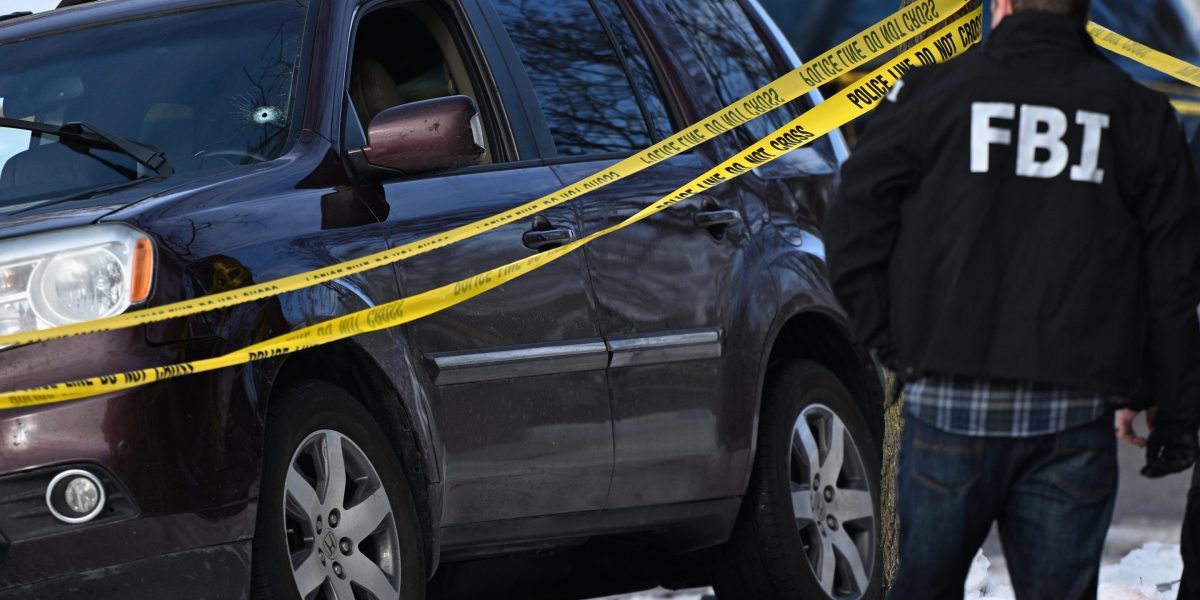
The federal agent who shot and killed a driver in Minneapolis is an Iraq War veteran who has served for nearly two decades in the Border Patrol and U.S. Immigration and Customs Enforcement, according to records obtained Thursday by The Associated Press.

Jonathan Ross, who shot Renee Good on Wednesday, has served as a deportation officer with ICE since 2015, records show. He was seriously injured last summer when he was dragged by the vehicle of a fleeing suspect whom he shot with a stun gun.

Federal officials have not named the officer who shot Good, a 37-year-old mother who was shot as she tried to drive away from federal agents. But Homeland Security Secretary Kristi Noem said the agent who shot Good had been dragged by a vehicle last June, and a department spokesperson confirmed Noem was referring to the Bloomington, Minnesota, case in which documents identified the injured officer as Ross.

Noem and other Trump administration officials have defended the agent as an experienced law enforcement professional who followed his training and shot Good after he believed she was trying to run him or other agents over with her vehicle. Video has raised questions about whether the shooting was in self-defense, and the FBI is investigating the deadly use of force. Some protesters are demanding that Ross face criminal charges, and Minnesota authorities also want to investigate.

Attempts to reach Ross, 43, at phone numbers and email addresses associated with him were not immediately successful.

Here are some things to know about him:

Experienced military and law enforcement officer

In courtroom testimony last month, Ross said he deployed to Iraq from 2004 to 2005 with the Indiana National Guard. Ross said he served as a machine-gunner on a gun truck as part of a combat patrol team.

He said he returned from Iraq in 2005, went to college and joined the Border Patrol in 2007 near El Paso, Texas. He worked there until 2015, serving as a field intelligence agent gathering and analyzing information on cartels and drug and human smuggling.

Ross said he has served as a deportation officer based in Minnesota since he joined ICE in 2015. He is assigned to fugitive operations, seeking to arrest “higher value targets” in the ICE region that includes Minneapolis, he testified last month. He said that he was also a team leader with the FBI’s Joint Terrorism Task Force.

“So I develop the targets, create a target package, surveillance, and then develop a plan to execute the arrest warrant,” he said.

Ross said that he was also a firearms instructor, an active shooter instructor, a field intelligence officer and member of the SWAT team. He said that he attended the Border Patrol’s academy in New Mexico, where he learned to speak Spanish.

Seriously injured last June

Ross was a leader of a team of agents who went to arrest a man who was in the U.S. illegally in the Minneapolis suburb of Bloomington on June 17. Agents had gathered outside the home of the man, Roberto Munoz-Guatemala, who left in his car, according to court records.

FBI agents activated emergency sirens and lights instructing him to pull over but he did not. Ross pulled his vehicle diagonally in front of Munoz-Guatemala to force him to stop.

Ross and an FBI agent identified themselves as police and pointed guns at Munoz-Guatemala, who raised his hands. Ross then approached Munoz-Guatemala’s vehicle and ordered him to put it in park.

Ross told the driver to lower his window all the way down and warned that he would break it if he did not. Ross used a device known as a “spring-loaded window punch” to break the rear driver’s side window and reached inside the car to unlock the driver’s door.

Munoz-Guatemala drove off while Ross’ arm was caught in the vehicle and accelerated, dragging Ross down the street. Ross fired his Taser, striking Munoz-Guatemala with prongs in the head, face and shoulder.

Munoz-Guatemala was not incapacitated by the Taser, prosecutors said, and kept driving, taking Ross the length of a football field in 12 seconds. Ross was knocked free from the vehicle by force after Munoz-Guatemala drove onto a curb for a second time and back to the street.

Ross’ right arm was bleeding, and an FBI agent applied a tourniquet. Eventually, he received dozens of stitches at a hospital. Prosecutors said he had “suffered multiple large cuts, and abrasions to his knee, elbow, and face.”

“It was pretty excruciating pain,” Ross testified.

Munoz-Guatemala was bleeding from his injuries and had a woman call 911, saying that he was assaulted and didn’t know whether the person trying to stop him was an officer. He was arrested and charged with assault on a federal officer with a dangerous or deadly weapon.

A jury found Munoz-Guatemala guilty at a trial last month, finding he “should reasonably have known that Jonathan Ross was a law enforcement officer and not a private citizen attempting to assault him.”

Federal officials defend the agent without identifying him

Vice President JD Vance praised the agent’s service to the country Thursday without naming him, saying the ICE officer “deserves a debt of gratitude.”

“This is a guy who’s actually done a very, very important job for the United States of America,” Vance said. “He’s been assaulted. He’s been attacked. He’s been injured because of it.”

DHS assistant Tricia McLaughlin declined to confirm the agent’s identity Thursday, saying doing so would be dangerous for the safety of him and his family. But she noted that he had been selected for ICE’s special response team, which includes a 30-hour tryout and additional training on specialized skills such as breaching techniques, perimeter control, hostage rescue and firearms.

“He acted according to his training,” she said. “This officer is a longtime ICE officer who has been serving his country his entire life.”

___

AP reporters Michael Biesecker and Jonathan J. Cooper contributed to this report.


Source link

Continue Reading

Business

Wife of Renee Good on fatal shooting: ‘we had whistles. They had guns’

Published

on


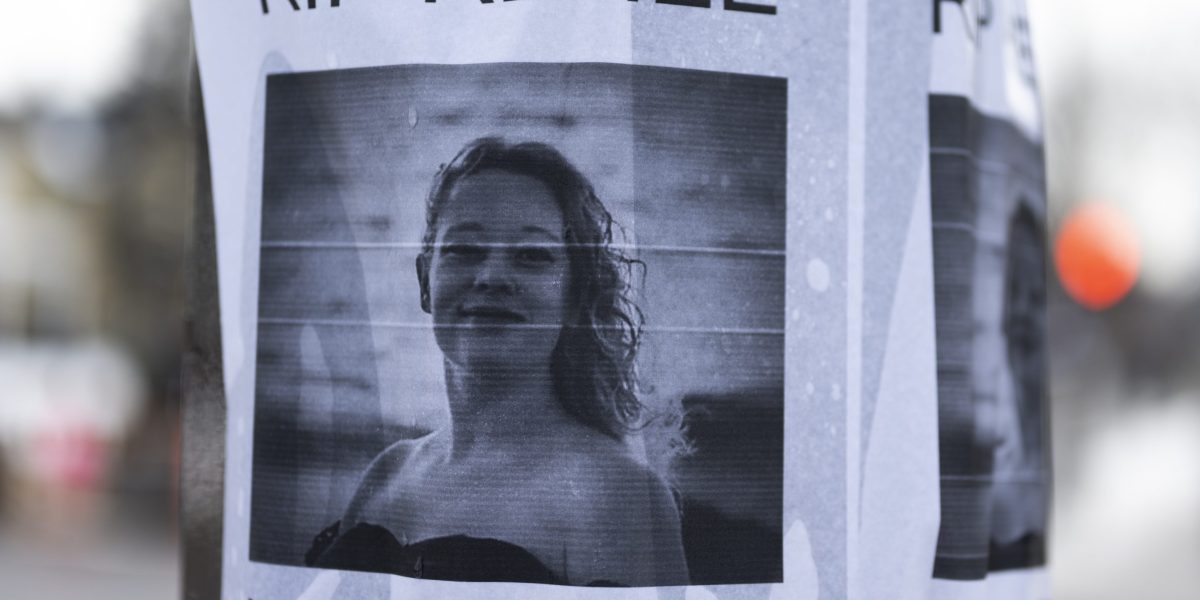
The wife of Renee Good, the woman shot and killed in her car by a federal immigration agent in Minneapolis, says the couple had stopped to support their neighbors on the day of the shooting and described the mother of three as leaving a legacy of kindness.

“We had whistles. They had guns,” Becca Good said in a written statement Friday that was provided to Minnesota Public Radio.

The statement was her first public comment about the death of Renee Good, 37, who was killed Wednesday after three Immigration and Customs Enforcement officers surrounded her Honda Pilot SUV on a snowy street a few blocks from the couple’s home. Video taken by bystanders show an officer approaching the SUV stopped across the middle of the road, demanding the driver open the door and grabbing the handle.

The vehicle begins to pull forward and a different ICE officer standing in front of it pulls his weapon and immediately fires at least two shots at close range, jumping back as the vehicle moves toward him.

Trump administration officials have painted Renee Good as a domestic terrorist who tried to run over an officer with her vehicle. State and local officials in Minneapolis, as well as protesters, have rejected that characterization.

Becca Good has not responded to calls and messages from The Associated Press. Her statement provided no further detail about the day of the shooting and instead focused on memorializing her wife.

The couple had only recently moved to Minneapolis and were raising Renee Good’s 6-year-old son from a previous marriage.

Becca said Renee was a Christian who “knew that all religions teach the same essential truth: we are here to love each other, care for each other, and keep each other safe and whole.”

She thanked the people all across America and the world who had reached out in support of their family.

“Renee sparkled. She literally sparkled,” Becca Good wrote. “I mean, she didn’t wear glitter but I swear she had sparkles coming out of her pores. All the time. You might think it was just my love talking but her family said the same thing. Renee was made of sunshine.”

Far from the worst-of-the-worst criminals President Donald Trump said his immigration crackdown would target, Good was a U.S. citizen born in Colorado who apparently was never charged with anything beyond a single traffic ticket.

In social media accounts, she described herself as a “poet and writer and wife and mom.” She said she was currently “experiencing Minneapolis,” displaying a pride emoji on her Instagram account. A profile picture posted to Pinterest shows her smiling and holding a young child against her cheek, along with posts about tattoos, hairstyles and home decorating.

Her ex-husband, who asked not to be named out of concern for the safety of the two now-teenage children he had with Renee Good while they were married, told the AP on Wednesday that he had never known her to participate in a protest of any kind.

Becca Good said the couple, who had previously lived in Kansas City, Missouri, had settled in Minneapolis after an “extended road trip.” She said people they encountered in the Twin Cities had provided a strong sense that “they were looking out for each other.”

“We were raising our son to believe that no matter where you come from or what you look like, all of us deserve compassion and kindness,” Becca wrote. “I am now left to raise our son and to continue teaching him, as Renee believed, that there are people building a better world for him. That the people who did this had fear and anger in their hearts, and we need to show them a better way.”


Source link

Continue Reading

Trending

Copyright © Miami Select.