Connect with us

Politics

Darryl Rouson, Mitch Rosenwald push bills to revise how hospitals discharge homeless patients

Published

on


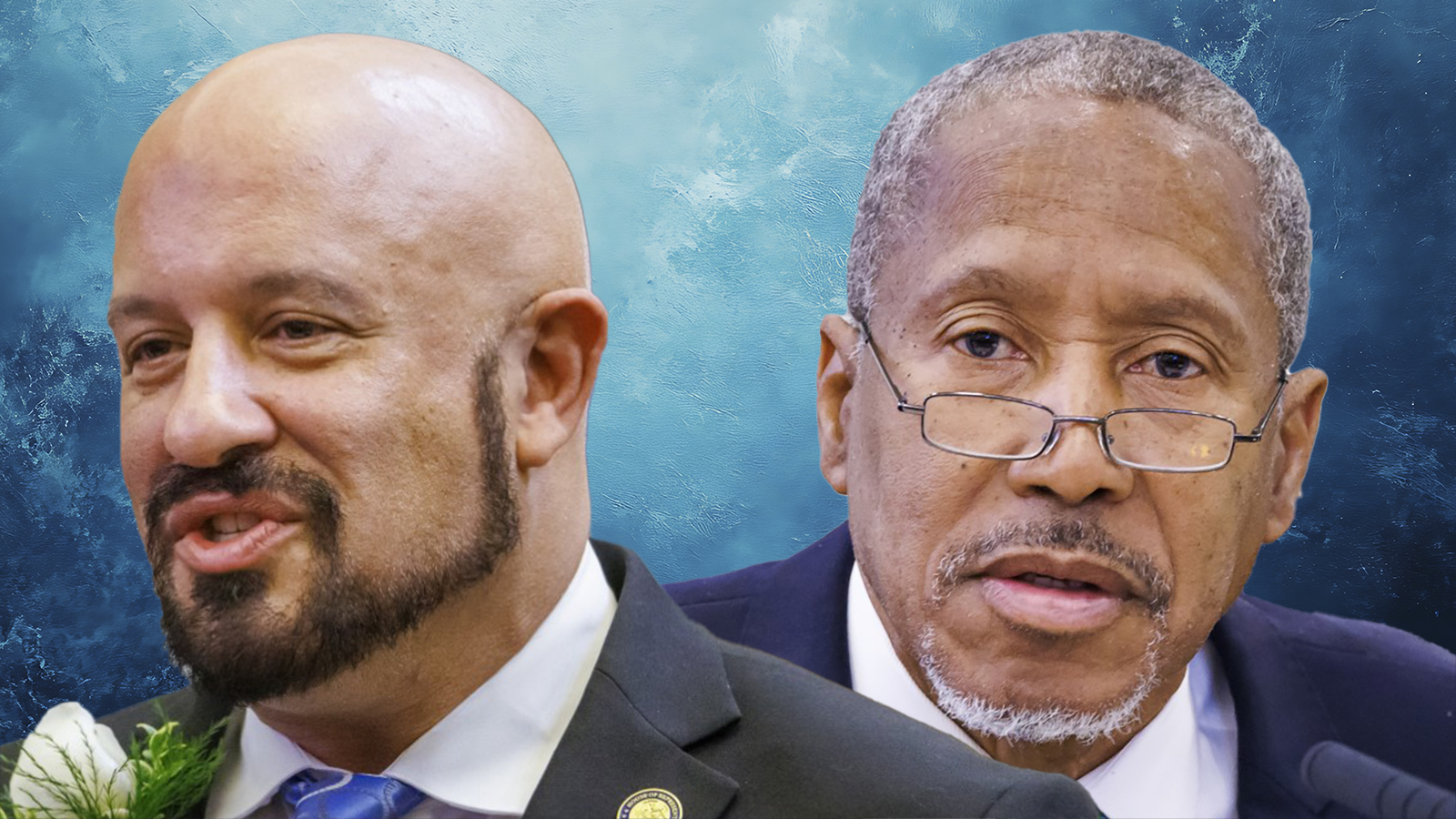
St. Petersburg Democratic Sen. Darryl Rouson and Oakland Park Democratic Rep. Mitch Rosenwald are sponsoring measures aimed at reducing the number of people discharged from hospitals directly into homelessness.

The legislation (SB 1132, HB 1033), collectively titled the Bridging Systems to Housing Act, would strengthen discharge procedures and coordination between health care providers and homelessness service networks. It outlines procedures for hospitals and treatment facilities to follow when patients are homeless or at risk of homelessness after leaving care.

“Too often, people are discharged from care only to be sent back to the streets, setting them up for deeper hardship and repeated crises,” Rouson said in a statement. “This legislation is about ensuring that when someone leaves a facility, there is a real plan in place to connect them to the services they need.”

Florida has made recent progress on efforts to reduce homelessness. According to the Council on Homelessness, 2025 data show a 9.13% decrease in overall homelessness statewide, with the total number of people experiencing homelessness dropping from 31,362 in 2024 to 28,498 in 2025. The figure represents a reversal from increases seen since 2021, demonstrating “the impact of targeted interventions, increased state funding, and continued implementation of evidence-based practices.”

If approved, the bills would direct the Department of Children and Families to conduct a pilot program in Broward, Duval, Hillsborough and Pinellas counties implementing revised discharge procedures to further advance homelessness efforts. Those procedures would include early screening to identify homeless patients and developing a discharge plan that connects patients to local Continuums of Care.

Rosenwald said the bills would disrupt a costly cycle that shuffles chronically homeless individuals from treatment at local emergency rooms to the street, and back, without support.

“The chronic homeless frequently cycle between healthcare facilities and the street without coordinated support,” Rosenwald said. “This legislation targets early and consistent data-sharing and coordination with the Homeless Continuum of Care. Homeless persons will receive shelter and other services more quickly in the community. This will help reduce emergency room recidivism and subsequent health care costs.”

If approved, the legislation would take effect July 1.


Source link

Continue Reading

Politics

Tucker Carlson takes Ron DeSantis to task for ‘foreign policy stuff’ and antisemitism legislation

Published

on


Just a few short years ago, Gov. Ron DeSantis often went on Tucker Carlson’s show on Fox News to make news.

But more recently, the politician and the commentator couldn’t be farther apart, as evidenced by Carlson’s recent interview with gubernatorial candidate James Fishback.

Carlson said he was “out” on the man who previously was a featured guest in the A-Block of his prime time show for his shifting positions on the Ukraine War and his signing of a bill that protected people, including Jews, from being harassed for wearing traditional clothes, from having images projected on their buildings, from having trash dumped on their property, and from being harassed at schools or while sitting Shiva.

“I always admired DeSantis certainly during COVID. I thought he was just a remarkable leader, interviewed him many times. I know him and his wife. And it was the foreign policy stuff that made me wonder, like, what is this and how controlled is he by Ken Griffin and the rest of his donors? And then he had this moment where he signed a hate speech law out of the country. He flew to a foreign country, Israel to sign a hate speech law for Florida. And I thought, well, this is obviously unconstitutional. It’s immoral, but it’s also part of an elaborate humiliation ritual where you have to go not just like enslave your own people with a hate speech law, which that is slavery.”

Carlson had previously said Griffin “told (DeSantis) to change his view on Ukraine from ‘It’s a regional conflict we shouldn’t get involved in’ to ‘It’s a super important thing. We should send more money.’”

DeSantis originally deemed the war a “territorial dispute” and not one of America’s “vital national interests” in a statement provided to Tucker Carlson, in a seeming effort to curry favor with the now-former Fox News host.

He soon enough walked that position back, telling Piers Morgan “it wasn’t that I thought Russia had a right to that, and so if I should have made that more clear, I could have done it.”

He would go on from there to call for a “settlement” in the war, before a spirited exchange in July with Carlson in Iowa at the Family Leadership Summit.

DeSantis took issue with Carlson saying he changed his position from telling Carlson that the Russian invasion was a simple “territorial dispute,” rejecting Carlson’s restatement of DeSantis’ position as changing his view “to describe Putin as a war criminal and say that it was central to America’s foreign policy.”

DeSantis has responded to Carlson’s “bizarre” attacks on him as a “pure puppet … totally a marionette of his donors,” calling him irrelevant and saying that when Carlson “lost the Fox show, (DeSantis) kind of lost track of what he was doing.”


Source link

Continue Reading

Politics

Cuba braces for aftershocks as US seizures of oil tankers linked to Venezuela surge

Published

on


As U.S. seizures of Venezuela-linked oil tankers surge, concerns grow in Cuba about whether the island’s government and economy will survive.

Experts warn that a sudden halt in Venezuelan oil shipments to Cuba could lead to widespread social unrest and mass migration following the stunning U.S. military raid that resulted in the capture of former President Nicolás Maduro.

“I’d be lying if I told you that I don’t want to leave the country,” said 16-year-old Cuban student Amanda Gómez. “We’re all thinking about leaving, from the youngest to the oldest.”

Long before the Jan. 3 attack, severe blackouts were sidelining life in Cuba, where people endured long lines at gas stations and supermarkets amid the island’s worst economic crisis in decades.

The lack of Venezuelan oil could push Cuba over the brink, experts say.

“This will take an already dire situation to new extremes,” said Michael Galant, senior research and outreach associate at the Center for Economic and Policy Research in Washington, D.C. “This is what a collapsing economy looks like.”

Galant said he believes that’s the goal of the Trump administration: “to cause such an indiscriminate suffering in the civilian population as to instigate some sort of uprising, regime change.”

“This sort of besiegement of Cuba is very intentional. Will it work from their perspective? I think that the Cuban people have experienced suffering for a very long time, and the Cuban government is very well versed in how to handle these situations,” Galant said. “I think it’s very difficult to predict what will and will not spark actual regime instability. From the perspective of (U.S. Secretary of State Marco ) Rubio, it’s a sort of wait them out. … There’s always a breaking point.”

From 2020 to 2024, Cuba saw its population drop by 1.4 million, which experts largely attribute to migration spurred by the worsening crisis.

Juan Carlos Albizu-Campos, a Cuban economist and demographics expert, noted that while Cubans with means have already left, migration will continue.

“Fuel is a factor that affects everything,” he said. “People are going to feel that they are in worse conditions, and people who hadn’t considered leaving will feel the need to do so.”

At the Spanish embassy in Havana on Friday, Ernesto Macías, a 53-year-old doctor, stood in line behind dozens of people to request a family member visa for his daughter, having already obtained his Spanish citizenship.

“I wouldn’t want Cuba to be invaded or anything like that. I hope it doesn’t happen, but I’m sure people will continue to emigrate because there is no other way,” he said.

Cuba’s gross domestic product has fallen 15% in the last six years, and President Miguel Díaz-Canel noted in December that there was a 4% decrease in 2025 alone.

Although the Cuban economy never fully recovered after the fall of the Soviet Union in the 1990s, it experienced relative prosperity between 2000 and 2019, fueled by a boom in tourism and exports of services, nickel, rum and tobacco.

Then the COVID-19 pandemic hit, and coupled with a radical increase in U.S. sanctions under Trump’s second administration to pressure for political change – stifling every imaginable sector – Cuba’s crisis erupted with force.

Through it all, Cuba remained dependent on Venezuela for oil, receiving an estimated 35,000 barrels a day from the South American country before the U.S. attacked, along with some 5,500 barrels daily from Mexico and roughly 7,500 from Russia, according to Jorge Piñón, of the Energy Institute at the University of Texas at Austin, who tracks shipments using oil tracking services and satellite technology.

Even with all those shipments, blackouts persisted, experts noted.

“An indefinite shutdown of the electrical system, which is no longer so impossible to imagine, can be envisioned under a total suspension of oil shipments from Venezuela, which seems to be the current strategy of the American government,” said Jorge Duany, with the Cuban Research Institute at Florida International University.

“It would lead us to imagine the possibility of mass protests,” he said.

Andy S. Gómez, retired dean of the School of International Studies and senior fellow in Cuban Studies at University of Miami, said that even if protests do occur, he doesn’t envision the downfall of Cuba while Raúl Castro is still alive and running the military.

“Are they concerned? You bet,” Gómez said. “They’re not well armed; their equipment is outdated.”

But Gómez noted that civilians aren’t armed, and that it’s unlikely one of the three factions of Cuba’s army would break with the ruling elite.

“At the end of the day, someone is going to have to take the big pill, and it’s either going to be Díaz-Canel or (Prime Minister) Manuel Marrero Cruz for not being able to solve the problems,” Gómez said.


____

Republished with permission of the Associated Press.


Source link

Continue Reading

Politics

Nick DiCeglie, Danny Alvarez file bill to require unified 911 call centers in every Florida county

Published

on


Sen. Nick DiCeglie and Rep. Danny Alvarez have filed legislation that would require Florida counties to consolidate emergency call handling into a single, unified 911 center per county.

If approved, SB 1586 and HB 1427 would require each county or region to transition to a single 911 center. More than 25 Florida counties  – including Pinellas, Pasco, Leon and St. Lucie counties  – already successfully operate some form of unified 911 and dispatch centers.

Counties would have until Jan. 1, 2027, to submit a plan outlining how their unified 911 center would operate under the legislation. Counties would be required to certify that all emergency calls are being dispatched through a single, fully unified system by 2029. If a county fails to meet the planning deadline, authority over 911 services would default to the local Sheriff’s office.

“When someone dials 911, they are most likely having the worst moment of their life,” Brevard County Sheriff Wayne Ivey said in a statement. “Representative Alvarez’s and Senator DiCeglie’s bill strengthens our emergency services, eliminates unnecessary delays, and ensures law enforcement and first responders have a seamless delivery of services that will no doubt enhance response times and ultimately save lives. This is exactly the kind of leadership and common sense Florida needs to keep our communities safe!”

Alvarez said Florida’s current system is fragmented and inefficient, arguing that consolidation can reduce costs and improve response times.

“Proven models in Pinellas, Pasco, Leon and St. Lucie counties show consolidation reduces response times, cuts costs, and provides peace of mind to people who need emergency services to answer the call,” Alvarez said. “This plan modernizes the way we respond to current threats like active shooters, terrorist attacks and other bad actors, in a way that maximizes first responder safety and response to citizens’ needs.”

DiCeglie said the bill is meant to ensure first responders have the tools they need to respond quickly when seconds matter.

“Updating Florida’s 911 system is long overdue, and it is incredibly important work,” DiCeglie said. “When someone calls 911, every second counts, and making that system faster and more reliable can truly mean the difference between life and death. This legislation helps ensure our first responders have what they need and that Floridians get help as quickly as possible when it matters most.”

Alvarez said the proposal should garner non-partisan support, as simplifying the 911 system should improve chances of saving lives because of less delay.

“Public safety is nonpartisan,” he said. “When Floridians call 911, they deserve a world-class system without delays or response-delaying transfers. Besides being important for intake of information and response within a county when a large-scale emergency takes place, unification is one of the recommendations of the Marjorie Stonemen Douglass committee. It is time to act. ”


Source link

Continue Reading

Trending

Copyright © Miami Select.