Connect with us

Business

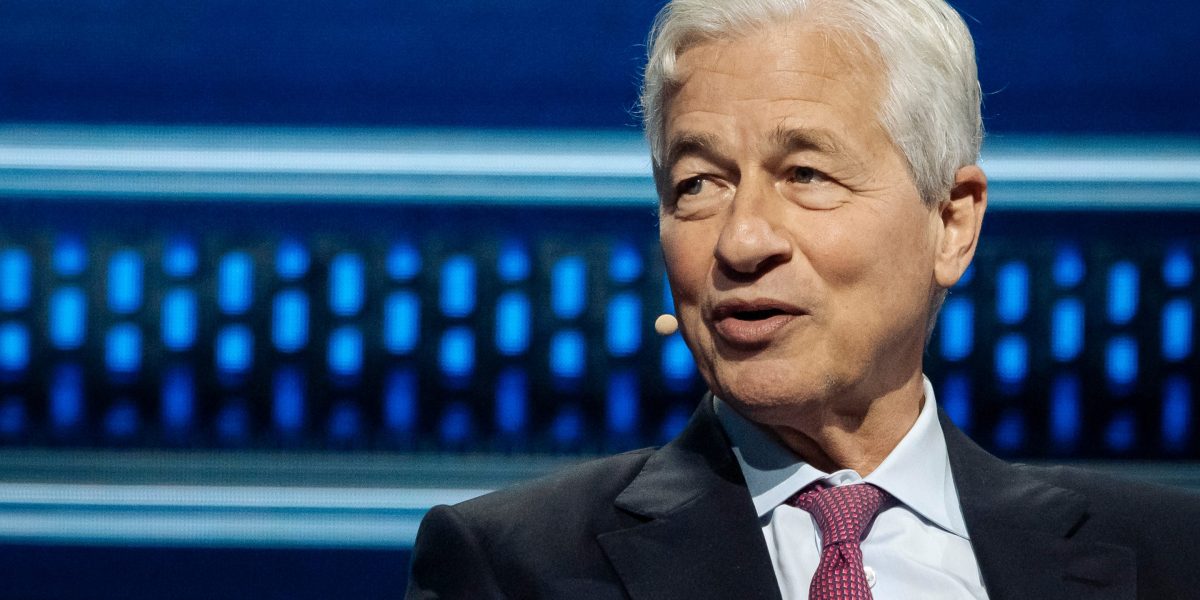
How JPMorgan CEO Jamie Dimon notched $770 million in gains for his work in 2025

Published

on


Last year was a roller coaster ride, but a market rebound has pushed mega banks’ stock growth nearly 30% and record compensation and bonuses are likely to follow. 

Leading the charge is JPMorgan Chase CEO and chairman Jamie Dimon, one of the last sitting Wall Street leaders to have navigated the 2008 financial crisis, the subsequent passage of the Dodd-Frank reform act, and now the AI boom. Dimon has spent the past 20 years atop JPMorgan and is know for rarely cashing in his stock. With that bent, he amassed an ownership stake in JPMorgan of nearly 8.5 million shares, and only began shaving off his holdings in a small handful of pre-planned sales in 2024, beginning with a sale valued at $150 million.  

Dimon started off 2025 with about 7.3 million shares. With a per-share price of $239.71, his stake was valued at roughly $1.8 billion. The stock price soared to $322.22 at the end of 2025, pushing the stock value of his stake up to about $2.4 billion, which meant Dimon saw about $605.6 million in appreciation plus another $40 million in dividends. This year, he’ll see a 1.5 million stock appreciation right grant vest due to a special one-time award the board gave him in 2021. All told, through stock value gains, dividends, and compensation, Dimon will see about $770 million for his work in 2025, according to reporting by the New York Times that was verified for Fortune by independent compensation firm Farient Advisors

“Jamie Dimon has been rewarded for his loyalty, tenure, and performance over the course of these years,” said Eric Hoffmann, vice president and chief data officer at Farient. Hoffmann noted Dimon has accumulated a lot of equity through his compensation plan, personal purchases, and via the 2021 special award designed to retain him while the board worked through succession planning.

“The stock’s appreciated by more than a third, and he’s a beneficiary of that like all the shareholders of JPMorgan are,” said Hoffmann. 

Dimon’s “compensation actually paid,” a regulator-required figure determined by a Securities and Exchange Commission rule, was calculated at roughly $227 million in 2024; $105 million in 2023; and $38 million in 2022, in comparison.

And JPMorgan’s C-suite isn’t the only place seeing gains. Financial services compensation consultancy Johnson Associates called 2025 a surprisingly positive year for financial firms, despite early concerns about tariffs and geopolitical instability that could have hit compensation. Johnson Assocites’ November 2025 report, “Unexpected 2025 Rebound in a Changing Industry,” found that compensation across financial sectors exceeded expectations, with increases from 5% to 25%, depending on role and business segment. 

Founder Alan Johnson told Fortune that 2025 was a year when traditional banks came “roaring back, absolutely” despite the early warning signs and uncertainties. As Johnson tells it, 2024 didn’t quite end up as strong as it could have been and people were hopeful about 2025. Cut to tariffs, which turned out not as bad as predicted while many were walked back, and the second half of the year saw more M&A, trading activity, and new highs in the stock market. 

“The second half of the year was a sprint to the finish line, and the first few days of this year continue to look really good,” said Johnson. 

However, there are looming challenges ahead, he warned. Headcount in financial services has increased 77% since the financial crisis, and it could decline by 10% to 20% during the next three to five years as AI transforms business operations. Johnson said most CEOs don’t like to talk about it directly, but there will be fewer jobs. His clients are already reducing their recruitment efforts to bring on fewer entry-level hires. How it will reshape traditional career trajectories is yet to be determined, he said. 

“These firms have had a hierarchy that goes back decades that’s pretty well established and understood and this turns it on its head,” said Johnson. “If you hire fewer people at the bottom, how do you then develop people for the middle or the top? There won’t be as many candidates and they won’t have had the same career experience.”

“I don’t think anyone has figured that out.”


Source link

Continue Reading

Business

Rumors are swirling about Venezuela holding $60 billion in Bitcoin—but crypto experts are skeptical

Published

on


Following the United States’ capture of Nicolás Maduro over the weekend, a report came out claiming that Venezuela had $60 billion stored in Bitcoin—leading to speculation that the U.S. could lay claim to cryptocurrency as well as oil. Despite numerous reports of the huge Venezuelan Bitcoin stash, however, a crypto forensic firm is skeptical of the claims. 

The news of Venezuela’s Bitcoin holding began to bubble up last Saturday, the same day that Maduro was ousted. The digital publication Project Brazen reported that his regime could control $60 billion in the original cryptocurrency—but offered little in the way of proof.

“The article does not mention any addresses as a starting point, making it difficult to verify any of these speculated claims,” said Aurelie Barthere, principal research analyst at Nansen, about Project Brazen’s report. 

Barthere is not the first person to express skepticism about the country’s purported crypto treasure trove. Mauricio di Bartolomeo, the Venezuelan co-founder of the financial services company Ledn, told Fortune on Wednesday that the level of the country’s corruption makes the figure hard to believe. He expanded his argument in an opinion piece he wrote for Coindesk

Estimates of Venezuela’s crypto holdings vary wildly. Bitcointreasuries.net estimates that the country has $22 million worth of Bitcoin. That figure would make Venezuela the government entity with the ninth-most money tied up in the original cryptocurrency, just behind North Korea. 

While the exact size of Venezuela’s Bitcoin wealth is unclear, the country has long been a player in crypto. Maduro introduced a token called the Petro in 2018, which was shuttered six years later. Its citizens have also turned to stablecoins as a way to fight their currency’s hyperinflation.

Trump has said that he will “run” Venezuela, and some have speculated that includes seizing the country’s Bitcoin holdings. Andrew Fierman, head of national security intelligence at Chainalysis, said he could not speak to the likelihood of such a seizure. He did, however, explain what gaining control of assets might look like. 

A freezing of assets could occur through centralized services, he says. These services would get a court order for an exchange or an issuer like Tether or Circle who could blacklist an address. The second method is through physical seizure. The U.S. could get control of wallets, devices, and keys through compelled cooperation. 

For now, there is unlikely to be a full and accurate account of Venezuela’s Bitcoin holdings until the political situation in the country becomes more stable.

Join us at the Fortune Workplace Innovation Summit May 19–20, 2026, in Atlanta. The next era of workplace innovation is here—and the old playbook is being rewritten. At this exclusive, high-energy event, the world’s most innovative leaders will convene to explore how AI, humanity, and strategy converge to redefine, again, the future of work. Register now.


Source link

Continue Reading

Business

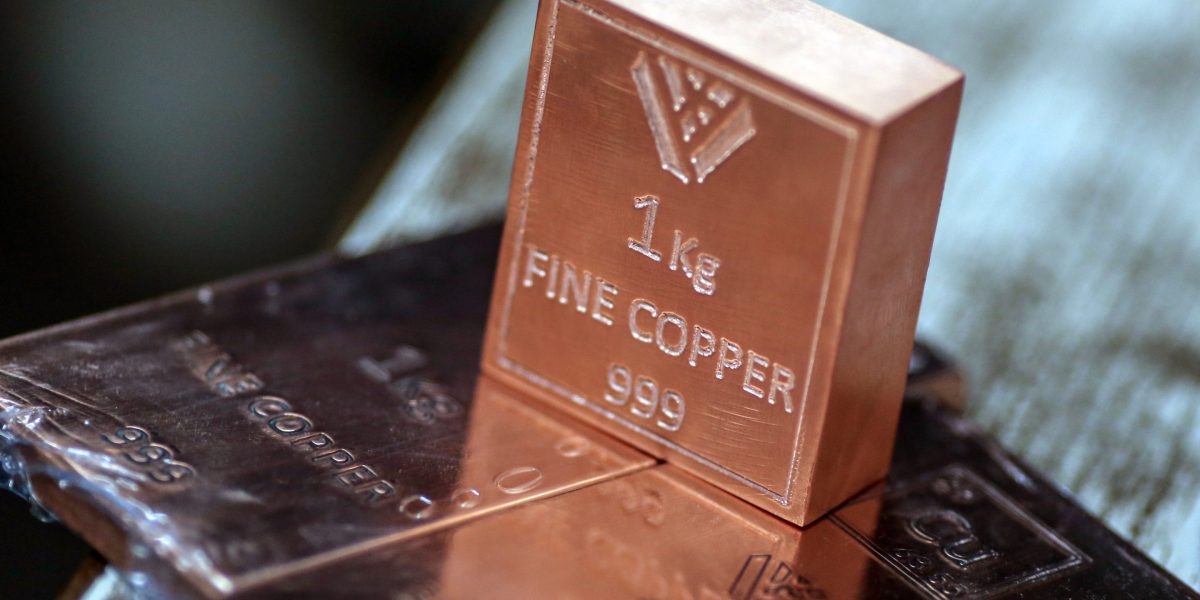
The future depends on copper, but a coming shortage makes it a ‘systemic risk’ to the economy
Published

on


Copper has long been an economic bellwether as the metal is widely used across industries, but soaring demand is making it a strategic bottleneck that threatens growth, according to S&P Global.

In a report published Thursday, researchers estimated demand for the metal will jump 50% from current levels to 42 million metric tons by 2040, while supply will shrink in the coming years.

The result will be a shortfall of 10 million tons that represents a “systemic risk for global industries, technological advancement and economic growth,” the report said.

Meanwhile, copper prices have surged to more than $13,000 per metric ton from just over $8,000 in April 2025, as President Donald Trump’s global tariffs and mining disruptions weighed on supplies. Prices for precious metals like gold, silver, palladium, and platinum, which also have industrial uses, have shot up in recently months as well.

The report highlights four key drivers of copper demand: core economic sectors, the transition to electrification, data centers powering the AI boom, and high-tech weapons.

A fifth potential driver is humanoid robots, S&P Global said, citing projections of 1 billion to 10 billion of them in operation by 2040.

“The future is not just copper-intensive, it is copper-enabled. Every new building, every line of digital code, every renewable megawatt, every new car, every advanced weapon system depends on the metal,” Aurian De La Noue, executive director for critical minerals and energy transition consulting at S&P Global Energy, said in a statement.

“Multilateral cooperation and regional diversification will be crucial to ensure a more resilient global copper system—one commensurate with copper’s role as the linchpin of electrification, digitalization, and security in the age of AI.”

Increased mining is necessary to alleviate the supply pressure, but it takes 17 years, on average, for a new mine to yield fresh copper after it’s first discovered. That’s as several headwinds weigh on production, including geology, engineering, logistics, regulatory, and environmental issues.

The concentration of copper mining and processing represent risks too, according to S&P Global. For example, just six countries account for roughly two-thirds of mining production, and China alone commands about 40% of global smelting capacity.

Beijing already leverages its dominance in rare earth minerals—which are also critical in a range of technologies—as a geopolitical tool in disputes with rivals like the U.S. and Japan.

The report warned copper’s reliance on a handful of countries makes global supplies and prices vulnerable to disruptions, policy shocks, and trade barriers.

“Several countries have deemed copper a ‘critical metal’ over the past half decade, including, in 2025, the United States. And with good reason,” said study co-chair Carlos Pascual, senior vice president at S&P Global Energy for geopolitics and international affairs

“Copper is the connective artery linking physical machinery, digital intelligence, mobility, infrastructure, communication, and security systems,” Pascual said. “The future availability of copper has become a matter of strategic importance.”


Source link

Continue Reading

Business

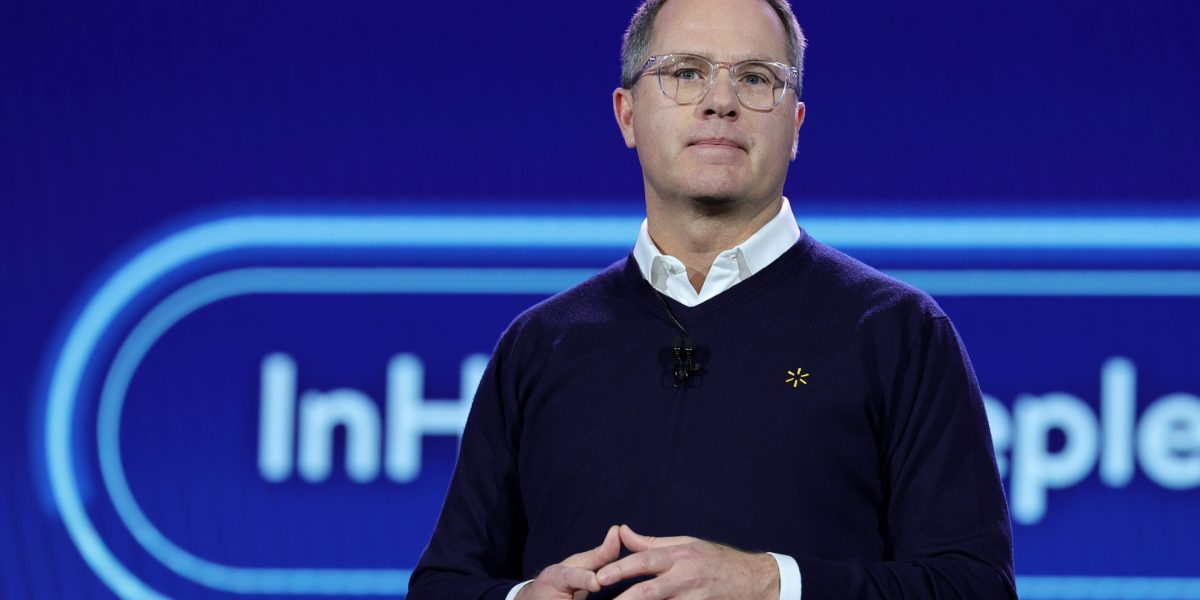
Walmart’s CEO Doug McMillon out-earns the average American’s salary in less than 20 hours—during a typical 30-minute commute, he’s already made $1,563

Published

on


McMillon, who has been leading the $905 billion grocery chain giant since 2011, enjoys around $27.5 million in total compensation. He’s set to retire at the end of this month, and is bowing out on a monetary high; in his final year as CEO, McMillon took home a $1.5 million salary, while also receiving $20.4 million in stock awards and $4.4 million in non-equity incentive plan compensation. 

It’s a far cry from the pay of his first Walmart job. The outgoing CEO started working in the business’ warehouses in the summer of 1984, unloading trailers for just $6.50 an hour. That’s 481 times lower than the average $3,127 he earns every hour of the day as CEO. Even within one minute he blows that figure out of the water, reeling in around $52 in 60 seconds. 

Now, it takes less than 20 hours for the Walmart CEO to outearn the average U.S. worker who takes home about $62,088 a year, according to 2025 first quarter wage data from the BLS. And while it could take decades for Americans to pool up savings for a house, McMillon can afford it within one workweek. It only takes 5.85 days for the chief executive to reel in $439,000, the median price of a U.S. home, according to a CEO salary tool from Resume.ai. And over the span of U.S. workers’ dreaded 30-minute commute to the office, McMillon is already $1,563 richer. Every second, the chief executive can watch his bank account inch up nearly $1.

Fortune reached out to Walmart for comment.

While CEOs are reaping record-breaking salaries, Americans are bunkering down

McMillon is just one face in a crowd of CEOs making headlines for their eyebrow-raising salaries. 

Late last year, the leader of Tesla and the world’s richest person, Elon Musk, secured a $1 trillion pay package at his EV company, spurring criticism of the growing wealth divide between the world’s wealthiest and poorest workers. 

And Tim Cook, the CEO of $3.8 trillion tech giant Apple, reaped $74.6 million in 2024, up 18% from $63.2 million the year before. In only about seven hours, Cook has already outearned the typical American worker, and in 2.15 days, can afford the average U.S. home. But he’s not even the highest-paid CEO leading a large, billion-dollar public U.S. company. Rick Smith, the chief executive of $45.5 billion defense-tech company Axon, took home a whopping $164.5 million, according to an analysis from Equilar. 

Meanwhile, America’s poorest aren’t enjoying the spoils of their employers’ success. The after-tax wages of U.S. workers in the lowest-income group grew just 1.3% year-over-year this July, down from 1.6% in the month before, according to the Bank of America Institute. In that same period, higher-income wages swelled to 3.2%—the third consecutive monthly increase. It marked the widest wealth divide between lower and upper-income households in four years.

“In some sense, we had an improvement in lower-income wage growth since the pandemic, and now that’s gone into reverse,” David Tinsley, senior economist for the Bank of America Institute, told Fortune this August. “There was a narrowing of wealth inequality, and now it’s widening.”

However, some companies are stepping up to ensure that their workers get a fair share of the success. Samsung rolled out a new three-year program last year, granting payouts to its employees based on the company’s stock price starting October 2025 to the same month in 2028, according to reporting from Bloomberg. The plan also gives workers the option to receive up to half of that payout in shares instead of cash. Prior to this monetary move, the only other instance Samsung workers were granted stock was when Samsung distributed 30 shares to staffers as part of a union deal.

And even billionaires are responding to the growing wealth divide between the haves and have-nots. In response to an Oxfam study’s findings that billionaire wealth increased by $33 trillion between 2015 and 2025, entrepreneur Mark Cuban pointed out that wealth has surged because “the stock market has gone straight up.” He called out that workers should get a slice of the pie. 

“You know who is funding the increase, particularly lately? Retail investors. 401ks,” Cuban wrote on X last year. “The better question is, why are we not giving incentives to companies to require them to give shares in their companies to all employees, at the same percentage of cash earnings as the CEO?”


Source link

Continue Reading

Trending

Copyright © Miami Select.