Connect with us

Business

Maduro is now in the U.S. to face criminal charges after deposed Venezuelan leader smiles while escorted by DEA agents

Published

on


Deposed Venezuelan leader Nicolás Maduro arrived in the United States to face criminal charges after being captured in an audacious nighttime military operation that President Donald Trump said would set the U.S. up to “run” the South American country and tap its vast oil reserves to sell to other nations.

Maduro landed late Saturday afternoon at a small airport in New York following the middle-of-the-night operation that extracted him and his wife, Cilia Flores, from their home in a military base in the capital, Caracas — an act that Maduro’s government called “imperialist.” The couple faces U.S. charges of participating in a narco-terrorism conspiracy.

The dramatic action capped an intensive Trump administration pressure campaign on Venezuela’s autocratic leader and months of secret planning, resulting in the most assertive American action to achieve regime change since the 2003 invasion of Iraq. Legal experts raised questions about the lawfulness of the operation, which was done without congressional approval. Venezuela’s vice president, Delcy Rodriguez, meanwhile, demanded that the United States free Maduro and called him the country’s rightful leader as her nation’s high court named her interim president.

Some Venezuelan civilians and members of the military were killed, said Rodríguez, who didn’t give a number. Trump said some U.S. forces were injured, but none was killed.

Speaking to reporters hours after Maduro’s capture, Trump revealed his plans to exploit the leadership void to “fix” the country’s oil infrastructure and sell “large amounts” of oil to other countries.

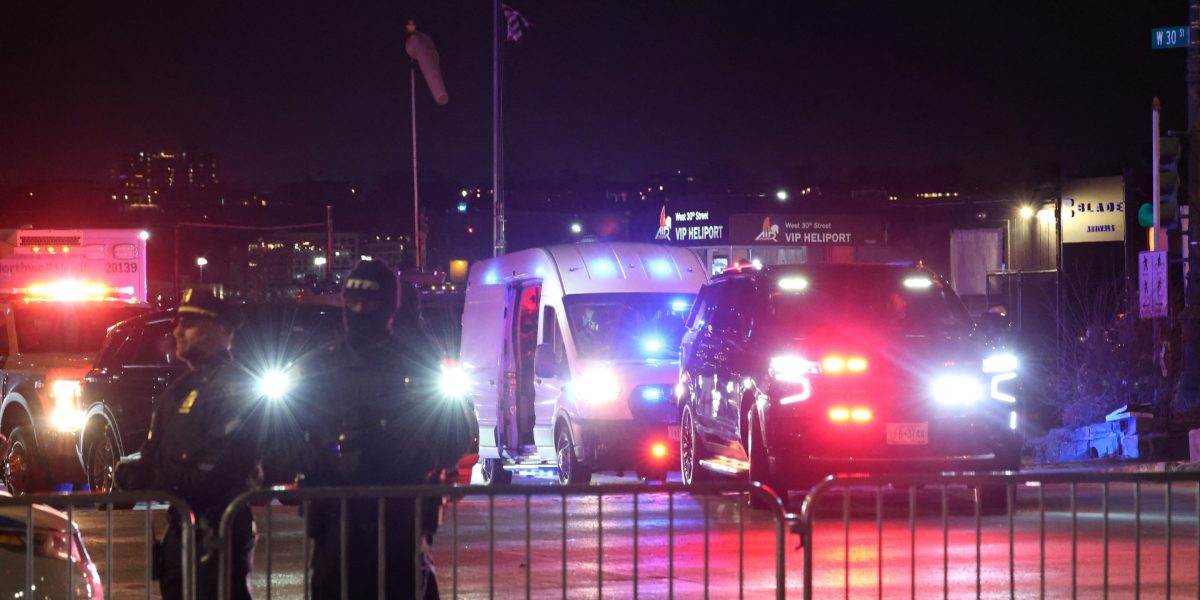
After arriving at a small airport in New York City’s northern suburbs, Maduro was flown by helicopter to Manhattan, where a convoy of law enforcement vehicles, including an armored car, was waiting to whisk him to a nearby U.S. Drug Enforcement Administration office.

A video posted on social media by a White House account showed Maduro, smiling, as he was escorted through that office by two DEA agents grasping his arms.

Trump says US will ‘run the country’

The Trump administration promoted the ouster as a step toward reducing the flow of dangerous drugs into the U.S. The president touted what he saw as other potential benefits, including a leadership stake in the country and greater control of oil.

Trump claimed the U.S. government would help lead the country and was already doing so, though there were no immediate visible signs of that. Venezuelan state TV aired pro-Maduro propaganda and broadcast live images of supporters taking to the streets in Caracas in protest.

“We’re going to run the country until such time as we can do a safe, proper and judicious transition,” Trump said at a Mar-a-Lago news conference. He boasted that this “extremely successful operation should serve as warning to anyone who would threaten American sovereignty or endanger American lives.”

Maduro and other Venezuelan officials were indicted in 2020 on narco-terrorism conspiracy charges, and the Justice Department released a new indictment Saturday of Maduro and his wife that painted his administration as a “corrupt, illegitimate government” fueled by a drug-trafficking operation that flooded the U.S with cocaine. The U.S. government does not recognize Maduro as the country’s leader.

The Trump administration spent months building up American forces in the region and carrying out attacks on boats in the Caribbean Sea and eastern Pacific Ocean for allegedly ferrying drugs. Last week, the CIA was behind a drone strike at a docking area believed to have been used by Venezuelan drug cartels — the first known direct operation on Venezuelan soil since the U.S. campaign began in September.

Early morning attack

Taking place 36 years to the day after the 1990 surrender and seizure of Panama leader Manuel Antonio Noriega following a U.S. invasion, the Venezuela operation unfolded under the cover of darkness early Saturday. Trump said the U.S. turned off “almost all of the lights” in Caracas while forces moved in to extract Maduro and his wife.

Gen. Dan Caine, chairman of the Joint Chiefs of Staff, said U.S. forces had rehearsed their maneuvers for months, learning everything about Maduro — where he was and what he ate, as well as details of his pets and his clothes.

“We think, we develop, we train, we rehearse, we debrief, we rehearse again and again,” Caine said. “Not to get it right, but to ensure we cannot get it wrong.”

Multiple explosions rang out that morning, and low-flying aircraft swept through Caracas. Maduro’s government accused the United States of hitting civilian and military installations, calling it an “imperialist attack” and urging citizens to take to the streets. The explosions — at least seven blasts — sent people rushing into the streets, while others took to social media to report what they saw and heard.

Restrictions imposed by the U.S. government on airspace around Venezuela and the Caribbean expired early Sunday, Transportation Secretary Sean Duffy said on X, an announcement that suggested any further immediate major U.S. military action was unlikely. “Airlines are informed, and will update their schedules quickly,” he posted.

Under Venezuelan law, Rodríguez would take over from Maduro. Rodríguez, however, stressed during a Saturday appearance on state television that she did not plan to assume power, before Venezuela’s high court ordered that she become interim president.

“There is only one president in Venezuela,” Rodriguez said, “and his name is Nicolás Maduro Moros.”

Some streets in Caracas fill up

Venezuela’s ruling party has held power since 1999, when Maduro’s predecessor, Hugo Chávez, took office, promising to uplift poor people and later to implement a self-described socialist revolution.

Maduro took over when Chávez died in 2013. His 2018 reelection was widely considered a sham because the main opposition parties were banned from participating. During the 2024 election, electoral authorities loyal to the ruling party declared him the winner hours after polls closed, but the opposition gathered overwhelming evidence that he lost by a more than 2-to-1 margin.

Venezuela’s capital remained unusually quiet Sunday with few vehicles moving around and convenience stores, gas stations and other businesses closed. A road typically filled with runners, cyclists and other fitness enthusiasts on Sundays only had a handful of people working out the day after Maduro was deposed.

The presidential palace was guarded by armed civilians and members of the military. At a nearby plaza, only a street sweeper and a soldier stood, and across the street, a church remained close for a second day in a row.

Caracas resident David Leal arrived to the lot where he parks vehicles for a living only to quickly realize that he would likely not see any clients for a second day.

“People are still shaken,” Leal, 77, said.

Questions of legality linger

Whether the United States violated any laws, international or otherwise, was still a question early Sunday. “There are a number of international legal concepts which the United States might have broken by capturing Maduro,” said Ilan Katz, an international law analyst.

Pope Leo XIV, who last month had expressed concern about growing U.S. threats of military intervention in Venezuela, raised alarms during his Sunday noon blessing and said the good of the Venezuelan people must prevail above everything else. History’s first U.S. pope demanded an end to violence and for Venezuela’s sovereignty to be guaranteed.

In New York, the U.N. Security Council, acting on an emergency request from Colombia, planned to hold a meeting on U.S. operations in Venezuela on Monday morning.

Lawmakers from both American political parties have raised reservations and flat-out objections to the U.S. attacks on boats suspected of drug smuggling. Congress has not approved an authorization for the use of military force for such operations in the region.

Connecticut Rep. Jim Himes, the top Democrat on the House Intelligence Committee, said he had seen no evidence that would justify Trump striking Venezuela without approval from Congress and demanded an immediate briefing by the administration on “its plan to ensure stability in the region and its legal justification for this decision.”

This story was originally featured on Fortune.com


Source link

Continue Reading

Business

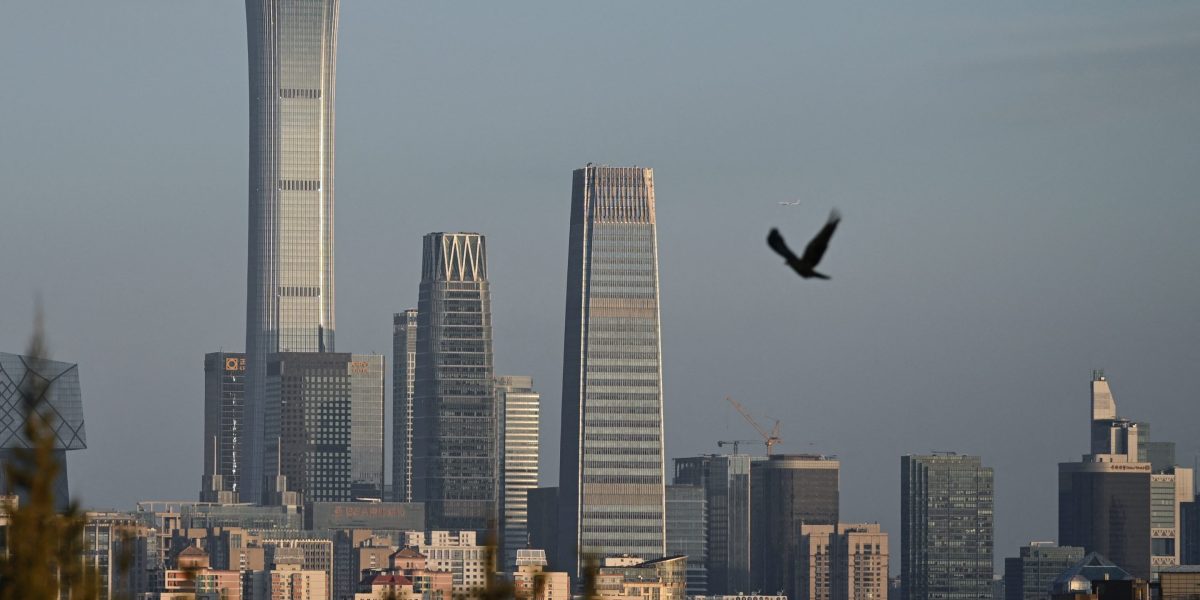
What global executives need to ask about China in 2026

Published

on


2025 was a turbulent year for China. The country began the year battling geopolitical headwinds and weak domestic demand. By April, new tariffs and trade frictions triggered some of the most significant trade actions in decades.

Yet by November, the story had changed. China’s annual trade surplus passed $1 trillion, a record high. GDP growth remained steady at around 5%. The country seems to have shrugged off concerns of “deglobalization.”

What does 2026, the Year of the Horse, pose for China? The headlines may focus on Trump tariffs or real estate woes, but there are more subtle trends happening that will define China’s economic trajectory. China presents new challenges for international business, particularly from confident local competitors, but there are still opportunities for disciplined global executives. Five key questions will matter as the world’s second-largest economy navigates a fast-changing global economy.

How will tariff uncertainty shape your China strategy?

China has long dominated global manufacturing, thanks to its cost competitiveness and integrated supply chains. That strength remains intact despite higher U.S. tariffs in 2025, which have now stabilized at around 50%. The tariffs barely dented China’s trade: The country’s share of global goods exports held steady at around 14%, four times greater than India and Vietnam combined.

The reason is that China has already broadened its trade partners. Goods exports to the U.S. represent just 2-3% of China’s GDP, and over half of China’s goods exports now go to Global South economies including ASEAN, Latin America, the Middle East, and Africa.

China also exports more knowledge-intensive goods, such as electronics and automobiles, and fewer labor-intensive goods, like furniture and toys.

Beijing’s bought itself some time, but 2026 will be the test of how resilient China’s export economy truly is. Trade patterns will continue to shift, with one analysis by the McKinsey Global Institute suggesting that as much as 30% of global trade could be shift corridors by 2035. The trade map is being redrawn in real time.

Multinational companies with a presence in China need supply chain flexibility, so that can rewire their operations as quickly as China’s companies can.

Where are Chinese consumers spending, and what does that mean for global brands?

Before the pandemic, Chinese consumers drove near-double-digit retail growth each year. Yet in 2025, consumer confidence hit historic lows, youth unemployment hovered around 15%, and real estate remained stagnant. Yet retail spending grew around 4-5% in the first three quarters of 2025 year-on-year.

Chinese consumers continue to spend—just on different things. Tourism spending rose 12% in the first three quarters of 2025, while box office revenue jumped 22%. Government subsidies supported double-digit growth in spending on electric vehicles and home appliances. Discretionary spending, however, struggled.

The opportunity for executives lies in tapping China’s sizable household savings. Consumers are waiting for something worth buying, and so the challenge will be to offer products and services that Chinese shoppers think are genuinely worth pursuing. Competing on price alone won’t work; only a compelling value proposition will unlock these locked savings.

Can your business survive and thrive in China’s hyper-competitive market?

China is struggling with deflationary pressure, even as the West fights inflation. 2025 accelerated what the Chinese call “involution”, an intense competition that erodes margins across the industry. Roughly 30% of large industrial firms reported losses, up from 20% before the pandemic.

But the period of “overcapacity” may be easing. Fixed asset investment slowed, and then shrank, reflecting weaker spending in some sectors. Rather than being a concern, lower investment may signal that companies are pulling back from excessive expansion, correcting years of overinvestment that flooded markets and destroyed pricing power. That adjustment, if reinforced by appropriate reforms, could eventually stabilize margins.

Companies must now differentiate through technology, branding and services, and not just price. Importantly, success in China will lead to a competitive advantage anywhere else in the world. Otherwise, competition with Chinese players can be brutally unforgiving—not just on their home turf, but increasingly overseas as well.

Are you ready to face Chinese competitors abroad?

China has attracted foreign capital for decades. But last year, China turned into growing source of investment. Foreign direct investment announcements into China between 2022 and 2025 fell by roughly two thirds, compared to between 2015 and 2019 on an annualized basis. Outbound Chinese FDI announcements held steady at around $100 billion annually, but it’s broadened beyond the traditional destination of emerging Asia to newer markets like Latin America, the Middle East and Europe.

Chinese companies are also becoming global cultural exporters. Pop Mart’s Labubu figurines, the blockbuster Black Myth: Wukong, and Chinese EV brands have all captured global audiences. This reflects a growing form of commercial “soft power,” as Chinese culture, lifestyle trends and consumer brands penetrate markets.

In 2026, expect to face Chinese competitors on your home turf. Global South markets, and their younger and increasingly affluent populations, are becoming more important to Chinese companies, but Western economies still present an opportunity for Chinese brands that are competitively priced and culturally relevant. It’s not a question of whether Chinese companies are coming; it’s whether you’re ready to match their speed, cost, and efficiency.

Will Chinese AI reshape productivity, in China and beyond?

Before 2025, Silicon Valley looked like it had an insurmountable lead over China in AI. Then came perhaps the biggest China story of the year: DeepSeek’s open-source AI model that rocked markets and intensified AI competition in China, the U.S., and around the world.

China is now an AI leader, even amid tough U.S. export controls and a moribund venture capital sector. Major tech firms like Alibaba rolled out models competing with the best from the U.S., while a swarm of “little dragons”—smaller, agile AI startups—released their own innovative models. Chinese AI now perform strongly on LLM leaderboards

China’s innovation engine—rapid iteration, cost-efficient scaling, substantial engineering talent, and collaborative open-source development—explains how the country was able to take the lead on AI.

But business impact is more important than technical performance. Will this AI capability translate into meaningful productivity gains?

McKinsey Global Institute analysis finds Chinese companies rank in the top ten in 16 of 18 sectors that can drive up to one-third of GDP growth by 2040, with AI playing an important enabling role across many of them.

More meaningful signals may emerge next year, as China continues to invest in AI use-cases across its manufacturing sector. A new “DeepSeek moment,” perhaps in industry, might be a sure bet for 2026.

Looking ahead

2026 begins with sharper risks for China: Geopolitical uncertainty, a struggling real estate sector, strained public finances, and elevated youth unemployment. Yet what draws companies to China—scale, innovation, and global influence— remain as compelling as ever.

The companies that will win in China next year won’t be those with the best macroeconomic forecasts, but rather those that can win on the ground: building resilient supply chains, differentiating themselves from the competition, and harnessing the country’s innovation.

For global businesses prepared to operate with this level of discipline, China can still be a lucrative market in the Year of the Horse.


Source link

Continue Reading

Business

Allegiant to acquire Sun Country in deal valued at $1.5 billion

Published

on


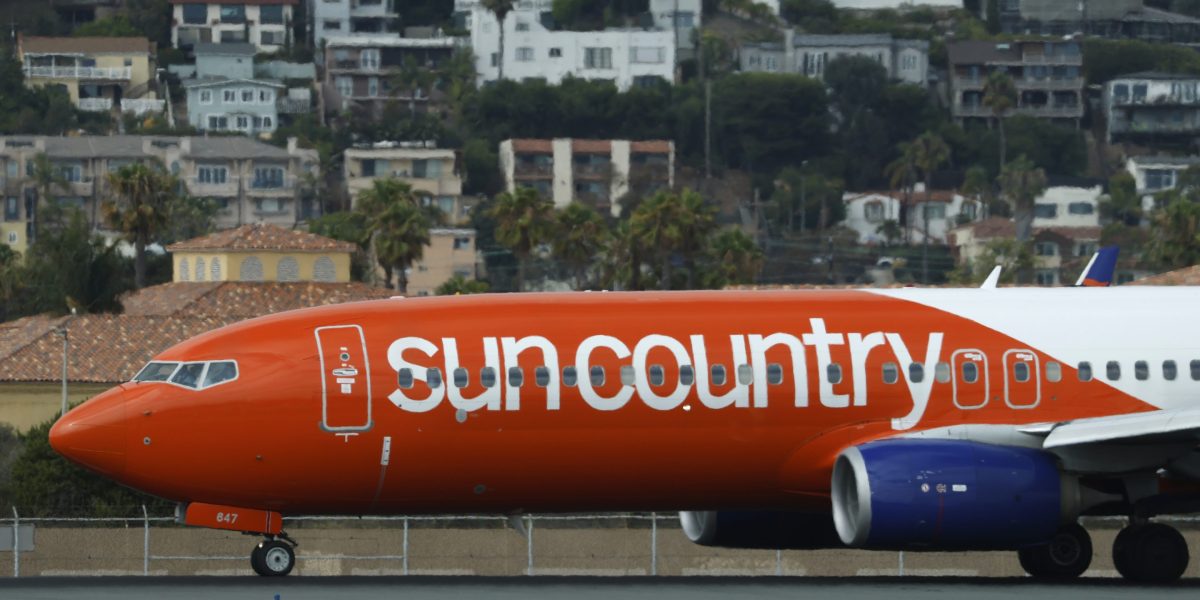
Allegiant Travel Co. will acquire Sun Country Airlines Holdings Inc. in a cash-and-stock deal valued at $1.5 billion including Sun Country’s debt, the two carriers said in a joint statement on Sunday. 

Sun Country’s shareholders will receive 0.1557 shares of Allegiant common stock and $4.10 in cash per Sun Country share, the companies said. The offer represents a premium of 19.8% over Sun Country’s closing share price on Friday, according to the statement.

The combined entity will provide more than 650 routes, including 18 international destinations in Mexico, Canada, the Caribbean and Central America, the companies said.  

“Together, our complementary networks will expand our reach to more vacation destinations including international locations,” said Allegiant Chief Executive Officer Gregory C. Anderson in a statement. 

Join us at the Fortune Workplace Innovation Summit May 19–20, 2026, in Atlanta. The next era of workplace innovation is here—and the old playbook is being rewritten. At this exclusive, high-energy event, the world’s most innovative leaders will convene to explore how AI, humanity, and strategy converge to redefine, again, the future of work. Register now.


Source link

Continue Reading

Business

Iran edges closer to a revolution that would reshape the world

Published

on


As protesters pour into the streets of Iran night after night, leaders across the region and around the world are grappling with the possibility that the Islamic Republic could be overthrown — a seminal event that would transform global geopolitics and energy markets.

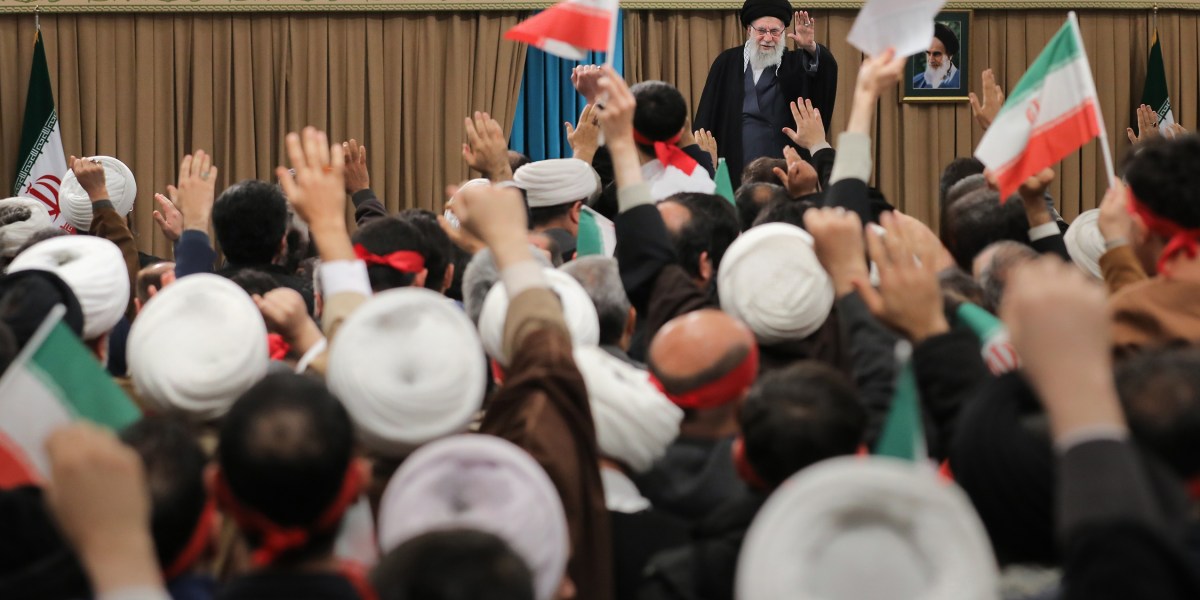
The regime of Supreme Leader Ayatollah Ali Khamenei has weathered bouts of protests many times, but demonstrations that began two weeks ago are spreading — by some accounts, hundreds of thousands of people defied authorities’ threats and a brutal crackdown to take to the streets over the weekend, from the capital Tehran to dozens of other cities across the nation of 90 million. They are being cheered on by President Donald Trump, fresh off the capture of Venezuela’s Nicolas Maduro, and the US leader has in recent days repeatedly threatened to strike Iran, suggesting that America is back in the regime change business.

World leaders and investors are watching closely. US commanders have briefed Trump on options for military strikes, according to a White House official. Brent crude surged more than 5% on Thursday and Friday to over $63 a barrel as investors priced in the possibility of supply disruptions in OPEC’s fourth-biggest producer.

“This is the biggest moment in Iran since 1979,” said William Usher, a former senior Middle East analyst at the Central Intelligence Agency, referring to the revolution that birthed the Islamic Republic, upended the balance of power in the region and led to decades of rancor between Tehran and the US and its allies. “The regime is in a very tough spot right now and the primary driver is the economy. I think they have a narrowing window to reassert control and a diminished toolset to do it.”

More than 500 protesters have been killed in the past two weeks, according to the AP, citing the US-based Human Rights Activists News Agency, and more than 10,000 have been arrested in demonstrations triggered by a currency crisis and economic collapse, but now also focused on the regime.

Authorities have tried to block the internet and telephone networks since Thursday, as they seek to quell Iranians’ growing outrage over government corruption, economic mismanagement and repression. Foreign airlines have canceled flights to the country.

Trump’s repeated warnings to Iran that the US will strike if it kills peaceful protesters come as the president escalates his assault on the post-World War II global order in a stunning assertion of American power that’s included claiming Venezuela’s oil after seizing Maduro, and threatening to take over Greenland from NATO ally Denmark.

Israel, which battered Iran during a US-assisted 12-day air war in June, is liaising closely with European governments about the situation on the ground, according to a senior European official, who asked not to be named discussing private talks. 

If the regime does fall, it would be a blow to Russian President Vladimir Putin, who would lose another foreign ally after Maduro this month and the overthrow of Syria’s Bashar al-Assad just over a year ago, the official added.

The stakes for oil traders are significant. But it’s unclear if Khuzestan, the main oil-pumping province, has seen unrest and so far there are no signs of reduced crude exports. On Saturday, Reza Pahlavi, the son of the former shah who’s exiled in the US and positioning himself as an opposition leader, urged petroleum workers to strike. Oil strikes in 1978 were one of the death knells of his father’s monarchy because of how they immediately hit the economy.

The market’s “focus has now shifted to Iran,” said Arne Lohmann Rasmussen, chief analyst at A/S Global Risk Management, which helps clients manage volatility in energy markets. “There is also growing concern in the market that the US, with Trump at the helm, could exploit the chaos to attempt to overthrow the regime, as we have seen in Venezuela.”

The White House is on a high after the tactical success of the operation against Maduro, as well as Trump’s decision to bomb Iranian nuclear facilities at the end of the 12-day war. American officials are also increasing pressure on Denmark to cede control of Greenland, signaling the administration has the appetite for more forays abroad.

Read More: Trump’s Ousting of Maduro Shows His New World Order Is Here

Trump may well be tempted, for all the risks, to try to topple a government that’s been an archenemy to the US and Israel for over 45 years. 

“The balance of power would change dramatically,” Mark Mobius, the veteran emerging markets investor, said of the downfall of the Islamic Republic. “The best outcome would be a complete change in the government. The worst outcome would be continued internal conflict and a continuing rule by the current regime.”

Trump at times ran against American adventurism in the region, where the ousting of longtime US enemy Saddam Hussein in Iraq unleashed a generation of chaos and terrorism, costing hundreds of thousands of lives and trillions of dollars.

It’s just that kind of potential power vacuum that’s worrying Arab leaders in the Gulf Cooperation Council, according to regional officials. While the group — which includes Saudi Arabia, the United Arab Emirates and Qatar — has often viewed Iran as an adversary, its members have sought to improve ties in recent years to ensure Tehran doesn’t lash out against any Israeli or US military action by attacking them. The specter of the Arab Spring, where dictators fell across the region only for chaos to follow, looms large.

Iran has warned that if it’s attacked, American assets in the region — where it has deep commercial ties and tens of thousands of troops stationed — and Israel will be “legitimate targets for us.”

Read More: How Sanctions and a Currency Crash Fueled Iran Unrest

The Islamic Republic has been severely weakened in the past two years, thanks to its stagnating economy, rampant inflation and Israel striking both it and its proxies. But it retains a large and sophisticated arsenal of ballistic missiles able to hit targets across the Middle East, from military bases to oil installations, and the regime still has the backing of the country’s myriad security forces, including the all-important Islamic Revolutionary Guard Corps.

For the GCC and the likes of Turkey and Pakistan, the worst outcome would be chaos in Iran, said Ellie Geranmayeh, deputy program director for the Middle East and North Africa at the European Council on Foreign Relations. It’s an eventuality made more possible by the sheer diversity of Iranian protesters, who include everyone from urban, secular elites to religious conservatives and lack a unifying leader.

“With the GCC reconciliation of the past few years with Tehran, there’s a sense of better the devil you know rather than complete chaos or an unknown power structure that is alien to them,” said Geranmayeh.

US and Israeli strikes might even strengthen the government and reduce the appeal of the protest movement. In June, there was a surge in nationalism as the Jewish state and Washington rained down bombs.

The Islamic Republic probably won’t survive in its current form by the end of 2026, according to Dina Esfandiary, a Middle East analyst at Bloomberg Economics. The most likely scenario, she said, is a leadership reshuffle that largely preserves the system or a coup by the IRGC, which could mean greater social freedom — the organization is run by generals rather than clerics — but less political liberty and a more militaristic foreign policy.

The chances of a revolution are still fairly low, she said.

“A collapse appears unlikely for now,” she said. “Iranians are frightened of chaos, having seen it wreak havoc in neighboring Iraq and Syria. More importantly, the government is cracking down hard.”

On Sunday, President Masoud Pezeshkian, a former heart surgeon and a moderate relative to others at the top of the Iranian government, struck a conciliatory note, offering condolences to families affected by the “tragic consequences.”

“Let’s sit down together, hand in hand, and solve the problems,” he said on state TV.

It’s unlikely many protesters will believe him. The supreme leader, a much more powerful figure, as well as members of the security forces, are increasingly bellicose, floating the death penalty and making clear they’re prepared to respond as they always have — with brutal force.

“I don’t think a collapse of the regime would be pretty,” said Usher, the former CIA analyst. “Short-term, I could imagine some fracturing of the country as ethnic minority groups and some provinces pursue autonomy from Tehran. The IRGC will fight vigorously to save the regime so I think there’d be strong possibility for large-scale violence.”


Source link

Continue Reading

Trending

Copyright © Miami Select.