Connect with us

Business

Down Arrow Button Icon

Published

on


The turn of a New Year can represent many things: A fresh outlook, healthier habits, and goals to work toward. But entering January also marks a threshold: The looming government shutdown is only a matter of weeks away.

In November, the U.S. government experienced its longest shutdown in history after Republicans and Democrats took 43 days to agree on new funding arrangements for the likes of SNAP food aid, the Department of Agriculture, Congress, and veterans affairs through September next year. Unfortunately, it didn’t get to the rest of government, where coffers will run dry come January 30.

When Congress broke for Christmas a fortnight ago, it had not come close to agreeing on a deal to fund the majority of its federal departments, as well as the imminent expiration of additional programs such as the National Flood Insurance Program Authorization and Medicare and health care extenders.

Optimists might argue that with four weeks to the day until the shutdown, a change of tone has already been observed. For example, Senate Minority Leader Chuck Schumer told reporters before the holidays that he and Senate Majority Leader John Thune were going to “work through the process and get the appropriations bills done.”

Thune echoed the message, though hinted that he’s making contingency plans if the best-case scenario doesn’t materialise. He told reporters: “There’s a lot of thought being given and just to make sure that we don’t end up in a … posture at the end of the month where we’re looking at staring at a shutdown again.” 

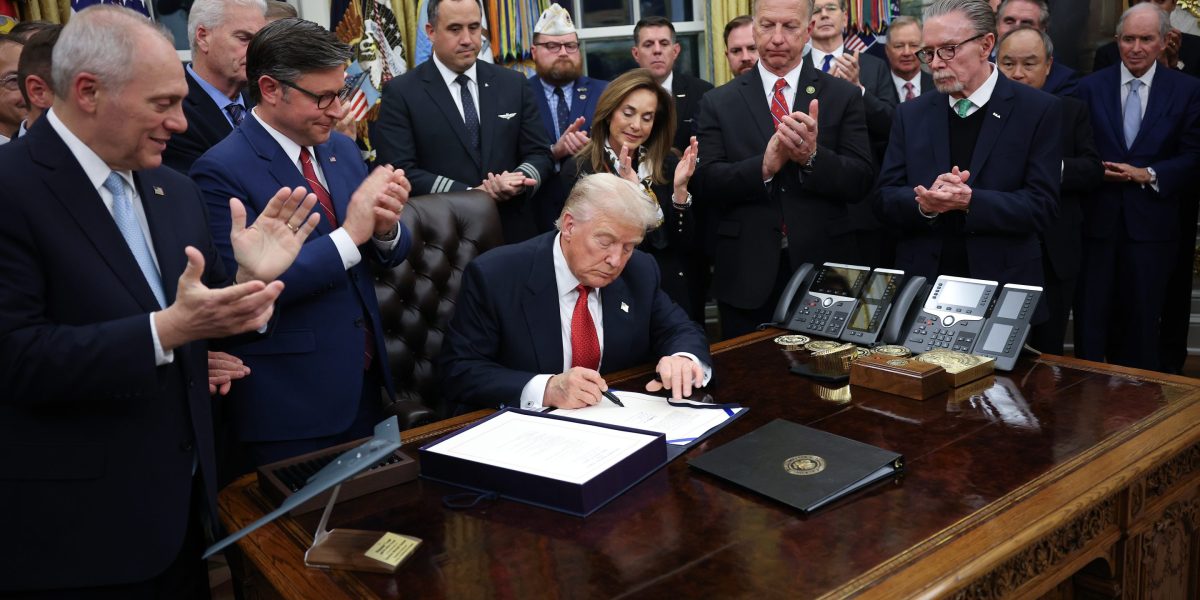
While the political will to avert another shutdown appears to be strong among some key figures, the question of compromise will become all the more important as a deadline approaches. Here, President Trump has been firm. When signing the funding deal back in November, Trump said: “We’re sending a clear message that we will never give in to extortion”—fighting talk indeed with another deadline around the corner.

Shutdown ramifications

If an economist were to cast their mind back to September last year, they’d recall that overall, the sentiment about a government shutdown wasn’t too ominous. Largely, the sentiment was that while growth or the markets might take a slight knock, they would bounce back without much trouble.

But as the shutdown dragged on, and as threats from the president over the future of federal workers’ careers intensified, that confidence quickly began to fade. For example. Moody’s chief economist Mark Zandi told Fortune late last year that roughly half the U.S. States were in a recession, including the District of Columbia, which had tipped into economic shrinkage because of federal layoffs, then exacerbated by a shutdown that saw remaining staff go weeks without pay. These issues also saw nearby states such as Maryland and Virginia also pulled toward contraction.

Headaches also emerged in the form of a void of data, with the Fed making highly scrutinised decisions about the future of interest rate policy without the federal data needed to help fully inform their decisions. Both labor market and inflation data from the Bureau of Labor Statistics were delayed and, in some cases, will never be released, meaning investors and policymakers couldn’t form a clear picture of a significant period of time.

Pressure also intensified given the sheer inconvenience the shutdown had caused. Delta Air Lines, for example, took a hit of $200 million due to long delays at major airports and historic flight cancellations at 40 of the country’s busiest airports, after unpaid air traffic controllers missed work, citing additional stress and the need to take on side jobs.

These facts will be a sharp reminder to Capitol Hill when staring down the next deadline that comes at the end of the month. With the full impact of last year’s shutdown still unknown, officials will be keen to avoid another diplomatic breakdown in such quick succession.

As RSM’s Chief Economist, Joe Brusuelas, pointed out in a note last week, the fallout from the most recent shutdown hasn’t yet been realised: The longest government shutdown in American history will most likely provide a drag of close to 1.5% on overall economic activity during the October to December period, which will set up for a soft growth estimate for the final quarter.”

That being said, the outlook for 2026 (notwithstanding another potential shutdown) is relatively rosy, he added: “The shape of things in 2026 are coalescing. Large tax cuts and the full expensing of capital investments will fuel growth well above the 1.8% long-term trend” which will result in month job creation of between 20,000 and 50,000 positions per month on average.

Join us at the Fortune Workplace Innovation Summit May 19–20, 2026, in Atlanta. The next era of workplace innovation is here—and the old playbook is being rewritten. At this exclusive, high-energy event, the world’s most innovative leaders will convene to explore how AI, humanity, and strategy converge to redefine, again, the future of work. Register now.


Source link

Continue Reading

Business

Iran threatens U.S. and Israel as protests enter third week

Published

on


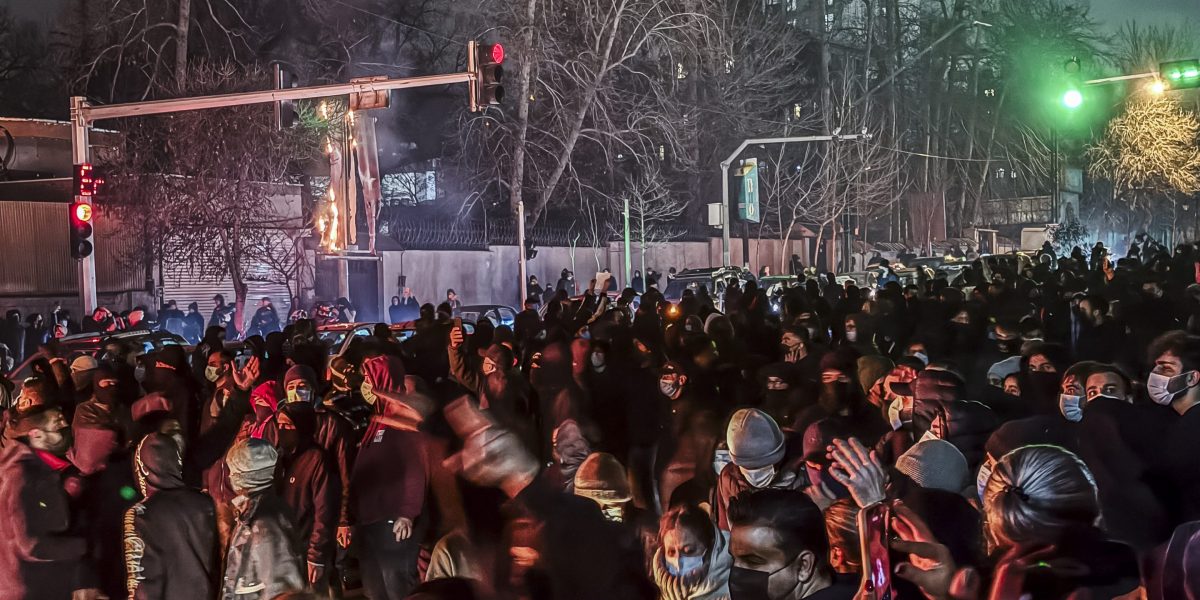
Tehran warned the US and Israel against any intervention over nationwide protests in Iran while it sought to placate its citizens, as demonstrations entered their third week and fatalities mounted. 

Saturday marked the third night of intensified nationwide demonstrations, following calls by Reza Pahlavi, the exiled son of Iran’s former shah, to seize city centers and stage strikes. Since the unrests first began on Dec. 28, Donald Trump has repeatedly warned the Iranian regime not to fire on demonstrators, with the US president receiving a briefing in recent days on new options for military strikes.

The Oslo-based Iran Human Rights group said on Sunday it had confirmed the deaths of at least 192 protesters, including nine individuals under 18. Separately, the US-based Human Rights Activists News Agency said deaths linked to the recent unrest had reached 116, with most killed by live ammunition or pellet gunfire. 

On Sunday, Iran’s President Masoud Pezeshkian struck a conciliatory tone in a state TV interview, offering condolences to families affected by the “tragic consequences” of the unrest.

“Your protests must be heard, and we must address your concerns. Let’s sit down together, hand in hand, and solve the problems,” he said, without offering details on how that would be done. “I promise the dear people, perhaps ninety percent of whom have concerns, that we will address their worries. We will get through this crisis.”

Still, Pezeshkian accused the US and Israel of bringing in “terrorists from abroad,” whom he claimed had set mosques and markets on fire, “beheaded some, and burned others alive.” Other officials took an even harder line. 

“In the event of a US military attack, both the occupied territories and US military and shipping centers will be legitimate targets for us,” Iran Parliament Speaker Mohammad Bagher Ghalibaf said in remarks broadcast on state television earlier on Sunday. 

He reiterated a warning that Iran could act preemptively against potential threats. “Within the framework of legitimate self-defense, we do not limit ourselves to responding only after an attack,” he said.

Trump has been briefed in recent days on a range of options for military strikes in Iran, including nonmilitary sites, a White House official said, confirming an earlier New York Times report. The US president is seriously considering authorizing an attack, according to the official.

Israel’s Army Radio reported Sunday that the country’s security establishment views it as unlikely that Iran will attack Israel at this stage. “No such immediate willingness is identified in Israel — but rather an Iranian focus on internal matters,” it said, citing unidentified defense officials. 

Footage from Iranian cities suggests that hundreds of thousands, including many elderly, are defying stern warnings from authorities to stay off the streets, despite a nationwide internet blackout and severe telecommunications restrictions that have blocked calls and text messages since Thursday.

The NetBlocks internet‑monitoring group said in a posting on X early Sunday that internet connectivity in Iran “continues to flatline around 1% of ordinary levels.”

Still, multiple social media videos, reportedly from a warehouse in southern Tehran, show people searching through dozens of corpses in body bags, lined up on the ground and on stretchers. Wailing can be heard as individuals bend over the bags, trying to identify their loved ones.

A video published later on Sunday by the state-run IRIB News appeared to show scenes from the same warehouse — one of the first glimpses by official media into the scale of the fatalities. In the video, a reporter described the site as a complex of the state forensic organization in Tehran, with dozens of bodies inside a large indoor facility. Outside, dozens of people are seen huddling around ambulances and the back of what appears to be a refrigerated truck, searching for their relatives.

Protests erupted last month among pockets of traders in Tehran over worsening economic and living conditions but have since grown into the largest anti-regime demonstrations to grip the country since 2022, when the death in custody of Mahsa Amini triggered nationwide anger and mass protests.

Read more: How Sanctions and a Currency Crash Fueled Iran Unrest: QuickTake

Other videos, reportedly from west of Tehran on Saturday night, show thousands of protesters packed into the streets, waving phone flashlights in the dark as city lights remain shut down, amid whistles and chants of “Death to the dictator.” A truck was seen on fire in Mashhad, while footage purportedly from Sunday shows a state tax administration building burned out overnight in eastern Tehran. Bloomberg couldn’t independently verify any of the footage. 

In an X post on Sunday, Pahlavi urged protesters to continue their demonstrations through the weekend. He described Trump as “the leader of the free world” who is observing the unrest and “is ready to help you.”

Late on Saturday, Iran’s Foreign Minister Abbas Araghchi accused the US and Israel of fueling violent unrest and warned against any action directed at Tehran.

“The only ‘delusional’ aspect of the current situation is the belief that arson does not ultimately burn the arsonists,” Araghchi said.

Alongside those killed, another 2,638 people had been detained, the Human Rights Activists organization said. Some of those killed included medical personnel, and seven of the victims were under 18, it added.

Iran’s prosecutor general warned on Saturday of swift trials and death penalty charges against detainees, a day after Supreme Leader Ayatollah Ali Khamenei said the security apparatus won’t tolerate “vandalism” or “people acting as mercenaries for foreign powers.”


Source link

Continue Reading

Business

Florida man who grabbed Nancy Pelosi’s podium during Capitol riot runs for county office

Published

on


A man who grabbed then-House Speaker Nancy Pelosi’s podium and posed with it for photographs during the U.S. Capitol riot is running for county office in Florida.

Adam Johnson filed to run as a Republican for an at-large seat on the Manatee County Commission on Tuesday. That was the fifth anniversary of the Jan. 6 riot, where he was photographed smiling and waving as he carried Pelosi’s podium after the pro-Trump mob’s attack on Jan. 6, 2021.

Johnson told WWSB-TV that it was “not a coincidence” that he filed for office on Jan. 6, saying “it’s definitely good for getting the buzz out there.” His campaign logo is an outline of the viral photograph of him carrying the podium.

He’s far from the first person implicated in the Jan. 6 riot to run for office. At least three ran unsuccessfully for Congress in 2024 as Republicans. And there are signs that the Republican Party is welcoming back more people who were convicted of Jan. 6 offenses after Trump pardoned them.

Jake Lang, who was charged with assaulting an officer, civil disorder and other crimes before he was pardoned, recently announced he is running for Secretary of State Marco Rubio’s vacant U.S. Senate seat in Florida.

Johnson placed the podium in the center of the Capitol Rotunda, posed for pictures and pretended to make a speech, prosecutors said. He pleaded guilty in 2021 of entering and remaining in a restricted building or ground, a misdemeanor that he equated to “jaywalking” in the interview.

“I think I exercised my First Amendment right to speak and protest,” Johnson said.

After driving home, Johnson bragged that he “broke the internet” and was “finally famous,” prosecutors said.

Johnson served 75 days in prison followed by one year of supervised release. The judge also ordered Johnson to pay a $5,000 fine and perform 200 hours of community service.

Johnson told U.S. District Judge Reggie Walton at sentencing that posing with Pelosi’s podium was a “very stupid idea” but now says he only regrets his action because of the prison sentence.

“I walked into a building, I took a picture with a piece of furniture, and I left,” he now says.

Four other Republicans have filed to run so far in the Aug. 18 primary in what’s a deeply Republican county. The incumbent isn’t seeking reelection.

In March 2025, Johnson filed a lawsuit against Manatee County and six of its commissioners, objecting to the county’s decision not to seek attorney’s fees from someone who sued the county and dropped the lawsuit. The county has called Johnson’s claims “completely meritless and unsupported by law.”

Johnson said he objects to high property taxes and overdevelopment in the county south of Tampa, claiming current county leaders are wasteful.

“I will be more heavily scrutinized than any other candidate who is running in this race,” Johnson said. “This is a positive and a good takeaway for every single citizen, because for once in our life, we will know our local politicians who are doing things.”


Source link

Continue Reading

Business

‘We don’t want to be Americans, we don’t want to be Danes, we want to be Greenlanders’: Local politicians reject Trump

Published

on


Greenland’s party leaders have rejected President Donald Trump’s repeated calls for the U.S. to take control of the island, saying that Greenland’s future must be decided by its people.

“We don’t want to be Americans, we don’t want to be Danes, we want to be Greenlanders,” Greenland Prime Minister Jens-Frederik Nielsen and four party leaders said in a statement Friday night.

Trump said again on Friday that he would like to make a deal to acquire Greenland, a semiautonomous region that’s part of NATO ally Denmark, “the easy way.” He said that if the U.S. doesn’t own it, then Russia or China will take it over, and the U.S. does not want them as neighbors.

“If we don’t do it the easy way, we’re going to do it the hard way,” Trump said, without explaining what that entailed. The White House said it is considering a range of options, including using military force, to acquire the island.

Greenland’s party leaders reiterated that “Greenland’s future must be decided by the Greenlandic people.”

“As Greenlandic party leaders, we would like to emphasize once again our wish that the United States’ contempt for our country ends,” the statement said.

Officials from Denmark, Greenland and the United States met Thursday in Washington and will meet again next week to discuss the renewed push by the White House for the control of the island.

Danish Prime Minister Mette Frederiksen has warned that an American takeover of Greenland would mark the end of NATO.

The party leaders’ statement said that “the work on Greenland’s future takes place in dialogue with the Greenlandic people and is prepared on the basis of international laws.”

“No other country can interfere in this,” they said. “We must decide the future of our country ourselves, without pressure for quick decision, delay or interference from other countries.”

The statement was signed by Nielsen, Pele Broberg, Múte B. Egede, Aleqa Hammond and Aqqalu C. Jerimiassen.

While Greenland is the largest island in the world, it has a population of around 57,000 and doesn’t have its own military. Defense is provided by Denmark, whose military is dwarfed by that of the U.S.

It’s unclear how the remaining NATO members would respond if the U.S. decided to forcibly take control of the island or if they would come to Denmark’s aid.

This story was originally featured on Fortune.com


Source link

Continue Reading

Trending

Copyright © Miami Select.