Connect with us

Business

George Clooney moves to France and sends a strong message about the American Dream

Published

on


France has officially granted citizenship to George Clooney, his wife Amal, and their twins, Ella and Alexander, via decrees published in the country’s Journal Officiel. The naturalization confirms that the family’s primary residence is now in France, where they have owned a former wine estate, Domaine du Canadel, near the village of Brignoles in Provence, since 2021.

Clooney has described the property as a farm and the main base for his family life, marking a significant shift away from Los Angeles, the traditional center of his industry and personal brand. For a two-time Oscar winner closely identified with Hollywood, turning a Provençal farm into “home” is itself a strong signal about where he believes his children’s future—and his own equilibrium—can best be protected. But it also amounts to a quiet referendum on the viability of the American Dream, even for the ultra-visible, ultra-wealthy class he represents. His move underscores how privacy, stability, and a less celebrity-obsessed culture have become premium “assets” that some high earners no longer see as reliably available in the United States.

A personal hedge against ‘Hollywood culture’

Clooney has been unusually explicit about why he no longer wants to raise his family in Los Angeles. “I was worried about raising our kids in L.A., in the culture of Hollywood,” he told Esquire recently, adding that he felt they were “never going to get a fair shake at life” there. He further explained that “France—they kind of don’t give a s— about fame,” and emphasized that he does not want his children “walking around worried about paparazzi” or “being compared to somebody else’s famous kids.”

He has also argued that his twins “have a much better life” in France than they would have had in Los Angeles, describing their routine on the farm as screen-light, chore-heavy, and family-centered. In that framing, France is less a romantic escape than a structural solution to the distortions that come with U.S. celebrity culture—and, by extension, a critique of a system that often markets visibility as a reward but delivers surveillance as a cost.

What this says about the American Dream

For much of the 20th century, the American Dream was sold as a package of meritocracy, upward mobility, and cultural centrality: make it in America, and you are at the center of the world. Clooney’s relocation suggests that for some of the people who “made it,” the dream now requires an offshore upgrade. The same U.S. system that enabled him to build wealth and status appears, in his telling, ill-suited to giving his children a “fair shake” or a normal childhood.

By choosing a jurisdiction with strict privacy rules—France has strong protections against photographing children and tighter limits on paparazzi—Clooney is effectively arbitraging regulatory environments to secure non-financial returns: anonymity for his kids and a slower pace of life. That logic mirrors how multinational companies optimize tax or labor regimes, but here the asset being safeguarded is family life rather than corporate profit.

​Anecdotal evidence supports the idea that the ultrawealthy from the U.S. are increasingly deciding that their American Dream lies overseas. Ellen Degeneres and Portia De Rossi famously moved to the UK shortly after President Donald Trump was reelected, while Rosie O’Donnell, often a target of pointed attacks from Trump, qualified for Irish citizenship and moved to Dublin. Richard Gere, like Clooney, seemed to move for love, relocating to Spain to be close to the family and culture of his wife, Alejandra Silva. Fashion designer Tom Ford splashed out on a large mansion in London and has begun calling the UK home, while former Google CEO Eric Schmidt has purchased a house in London as well.

The data shows a wider spike in expat movements. The IRS “Expatriation List” (which mainly captures wealthier individuals who meet certain asset or tax thresholds) recorded about 4,820 citizenship renunciations in 2024, up roughly 48% from 2023 and the third‑highest annual total on record. (The top two years on record were the epochal years of 2016, when Trump was elected, and 2020, when the pandemic hit and Trump lost reelection.)​ Between 2020 and 2024, about 21,000 high‑net‑worth individuals renounced U.S. citizenship, which is roughly 39% of all expatriations reported since this list began in 1996. These figures likely undercount the prominent departures ​because they only include so‑called “covered expatriates” (people above a net‑worth or tax‑liability threshold) and exclude less‑wealthy renouncers and many who move without giving up citizenship. The New Yorker even wrote an article recently, titled “How to leave the USA,” citing surges in citizenship applications to both Ireland and the UK in particular.

A case study in elite ‘life diversification’

Clooney’s family still maintains ties to the U.S. and the U.K., and the new French nationality comes on top of Clooney’s existing American citizenship, not in place of it. In portfolio terms, the family appears to be diversifying not just its investments and passports but also its exposure to cultural and media risk, shifting the center of gravity to a country where fame carries fewer day-to-day penalties.​​

For business readers, the move looks less like an indulgent lifestyle play and more like a strategic reallocation of intangible capital: time, privacy, and mental health. If even one of Hollywood’s most bankable stars concludes that the full expression of his “dream” requires decoupling from the ecosystem that made him rich, it raises a sharp question for the U.S.: when success at the very top comes with conditions that drive families to look elsewhere, what, exactly, is the American Dream still promising?​


Source link

Continue Reading

Business

No, the White House can’t defund the CFPB, judge says, just days before agency would run out of cash

Published

on


The White House cannot lapse in its funding of the Consumer Financial Protection Bureau, a federal district court judge ruled on Tuesday, only days before funds at the bureau would have likely run out and the consumer finance agency would have no money to pay its employees.

Judge Amy Berman ruled that the CFPB should continue to get its funds from the Federal Reserve, despite the Fed operating at a loss, and that the White House’s new legal argument about how the CFPB gets its funds is not valid.

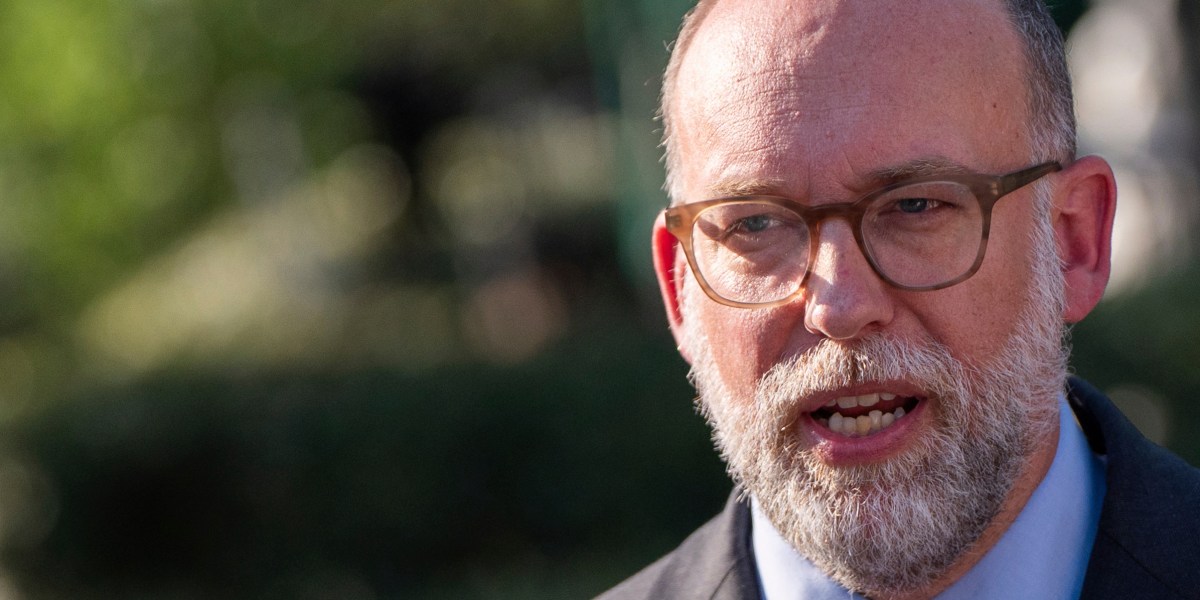
At the heart of this case is whether Russell Vought, President Donald Trump’s budget director and the acting director of the CFPB, can effectively shut down the agency and lay off all of the bureau’s employees. The CFPB has largely been inoperable since President Trump has sworn into office nearly a year ago. Its employees are mostly forbidden from doing any work, and most of the bureau’s operations this year has been to unwind the work it did under President Biden and even under Trump’s first term.

Vought himself has made comments where he has made it clear that his intention is to effectively shut down the CFPB. The White House earlier this year issued a “reduction in force” for the CFPB, which would have furloughed or laid off much of the bureau.

The National Treasury Employees Union, which represents the workers at the CFPB, has been mostly successful in court to stop the mass layoffs and furloughs. The union sued Vought earlier this year and won a preliminary injunction stopping the layoffs while the union’s case continues through the legal process.

In recent weeks, the White House has used a new line of argument to potentially get around the court’s injunction. The argument is that the Federal Reserve has no “combined earnings” at the moment to fund the CFPB’s operations. The CFPB gets its funding from the Fed through expected quarterly payments.

The Federal Reserve has been operating at a paper loss since 2022 as a result of the central bank trying to combat inflation, the first time in the Fed’s entire history its been operating at a loss. The Fed holds bonds on its balance sheet from a period of low interest rates during the COVID-19 pandemic, but currently has to pay out higher interest rates to banks who hold their deposits at the central bank. The Fed has been recording a “deferred asset” on its balance sheet which it expects will be paid down in the next few years as the low interest bonds mature off the Fed’s balance sheet.

Because of this loss on paper, the White House has argued there are no “combined earnings” for the CFPB to draw on. The CFPB has operated since 2011, including under President Trump’s first term, drawing on the Fed’s operating budget.

White House lawyers sent a notice to the court in early November, where they argued that the CFPB would run out of appropriations in early 2026, using the “combined earnings” argument, and does not expect to get any additional appropriations from Congress.

This combined earnings legal argument is not entirely new. It has floated in conservative legal circles going back to when the Federal Reserve started operating at a loss. The Office of Legal Counsel, which acts as the government’s legal advisors, adopted this legal theory in a memo on November 7. However, this idea has never been tested in court.

In her opinion, Berman said the OLC and Vought were using this legal theory to get around the court’s injunction instead of allowing the case to be decided on merits. A trial on whether the CFPB employees’ union can sue Vought over the layoffs is currently scheduled for February 2026.

“It appears that defendants’ new understanding of “combined earnings” is an unsupported and transparent attempt to starve the CPFB of funding and yet another attempt to achieve the very end the Court’s injunction was put in place to prevent,” Berman wrote in an opinion.

“We’re very pleased that the court made clear what should have been obvious: Vought can’t justify abandoning the agency’s obligations or violating a court order by manufacturing a lack of funding,” said Jennifer Bennett of Gupta Wessler LLP, who is representing the CFPB employees in the case.

A White House spokeswoman did not immediately respond to a request for comment on Berman’s opinion.


Source link

Continue Reading

Business

Tatiana Schlossberg, granddaughter of JFK and cousin of RFK Jr., dies of cancer at 35

Published

on


Tatiana Schlossberg, an environmental journalist, author, and granddaughter of President John F. Kennedy, has died at 35 after a highly publicized battle with an aggressive form of blood cancer. Her family announced her death on Tuesday through the John F. Kennedy Library Foundation, saying in a brief statement, “Our beautiful Tatiana passed away this morning. She will always be in our hearts.”​ The message was signed by her husband, George Moran, their children, and her immediate and extended family.

Schlossberg’s death comes just weeks after she publicly revealed in The New Yorker that she had been diagnosed with acute myeloid leukemia, a fast-moving blood cancer, with a rare mutation typically seen in older patients. She wrote that she had been given less than a year to live with the mutation, known as Inversion 3, making the disease especially difficult to treat.

Battle with leukemia

Schlossberg wrote that doctors first detected abnormalities in her blood counts shortly after the birth of her second child in May 2024, when a physician noticed her extremely elevated white blood cell levels. What initially could have been dismissed as a pregnancy-related complication instead led to a cascade of tests that confirmed leukemia at a moment when she was recovering from childbirth and caring for a toddler at home.

Her treatment included extended hospitalizations, intensive chemotherapy, and at least one stem cell or bone marrow transplant, including a donation from her sister, Rose Schlossberg. In her essay, Schlossberg wrote candidly of the dissonance of facing a terminal diagnosis despite having considered herself exceptionally healthy, noting her regular runs in Central Park and even a past swim across the Hudson River to raise money for blood cancer research.

Journalist and author

Born and raised in New York City, Schlossberg was the middle child of Caroline Kennedy and artist-designer Edwin Schlossberg. She grew up largely outside the direct political spotlight, even as she remained part of one of America’s most scrutinized families.

A graduate of Yale University with further study at the University of Oxford, Schlossberg built a career focused on environmental issues and climate change. She worked as a science and climate reporter at The New York Times and also contributed to outlets including The Atlantic and The Washington Post. In 2019, she published the book Inconspicuous Consumption: The Environmental Impact You Don’t Know You Have, examining how everyday habits drive global pollution and warming.

Earlier in her career, she reported for The Record in northern New Jersey, where she covered everything from crime to severe weather and was recognized as Rookie of the Year by the New Jersey Society of Professional Journalists in 2012. ​

A complex public voice

In her New Yorker essay and other remarks, she criticized policies advanced by her cousin, Health and Human Services Secretary Robert F. Kennedy Jr., arguing that his approach to public health and research funding was harmful and “an embarrassment” to her and the rest of the family.

She wrote about spending more and more of her life under the care of doctors, nurses, and researchers, while “Bobby cut nearly half a billion dollars for research into mRNA vaccines, technology that could be used against certain cancers,” in addition to slashing billions in funding from the National Institutes of Health. She wrote that she worried about funding for leukemia and bone-marrow research at Memorial Sloan Kettering, where she was receiving care, and that some trials that her cousin was threatening were her only chance at achieving remission of her cancer.

Join us at the Fortune Workplace Innovation Summit May 19–20, 2026, in Atlanta. The next era of workplace innovation is here—and the old playbook is being rewritten. At this exclusive, high-energy event, the world’s most innovative leaders will convene to explore how AI, humanity, and strategy converge to redefine, again, the future of work. Register now.


Source link

Continue Reading

Business

An AI super-bull who just backed the Nvidia-Groq deal warns of a data center bust: ‘We foresee a significant financial crisis’

Published

on


One of the most aggressive backers of the AI boom—whose firm most recently facilitated Nvidia’s largest deal ever—has issued a warning to the rest of the market: The “build it and they will come” approach to data centers is a dangerous gamble.

Alex Davis, chief executive of Austin-based investment firm Disruptive, wrote in a letter to investors he expects a “significant financing crisis” to hit the speculative data-center market as soon as 2027 or 2028, driven by extreme capital expenditure and a growing mismatch between who is constructing AI infrastructure and who will ultimately use it.

“We are seeing way too many business models (and valuation levels) with no realistic margin expansion story, extreme capex spend, lack of enterprise customer traction, or overdependence on “roundtrip” investments – in some cases all with the same company,” Davis wrote. 

Davis’ warning was first reported by Axios

The warning comes just days after Nvidia agreed to license assets from Groq, a high-performance AI chipmaking startup Disruptive has backed since its founding (not to be confused with Grok, Elon Musk’s AI chatbot). The transaction, which Davis has said is valued at roughly $20 billion in cash, represents the largest deal Nvidia has ever completed and underscores how aggressively the company is moving to lock up all the verticals in AI talent and intellectual property.

Yet, Davis argues the same exuberance driving landmark transactions at the chip level is also fueling excess elsewhere in the AI stack, particularly among third-party data-center developers betting on what he called the “build it and they will come” model.

“If you’re a hyperscaler, you will own your own data centers,” Davis wrote in the letter. “We want to back the owner-users, not the speculative landlords.”

The risk, as the venture capitalist sees it, is not that demand for AI compute disappears, but rather that capital has rushed into the wrong hands. While hyperscalers and well-capitalized tech companies can absorb massive upfront costs, speculative landlords rely on short-term financing and customers that may never materialize at scale.

Davis didn’t name names in his letter, but if you follow his distinction about “speculative landlords” versus “owner/users” like Microsoft and Meta that will eventually build their own facilities, the most obvious targets could be the legacy wholesale giants like Digital Realty and Equinix.

Structured as something called “real estate investment trusts,” these companies generate returns by developing and leasing capacity to the same tech giants Davis predicts will soon cut out to capture margins themselves. If that shift accelerates, it could leave landlords facing refinancing pressure just as a wave of debt comes due, even if overall demand for AI compute continues to rise. That imbalance, he warned, could place significant stress on private credit markets and ripple outward if financing conditions tighten.

Digital Realty and Equinix did not immediately respond to Fortune’s request for comment. 

Davis’ argument echoes warnings made on the other side of the aisle, including the thesis of famed short-seller Jim Chanos, who explicitly bets against “neoclouds” and converted crypto-miners like Cipher Mining. Chanos has argued that data center hosting is becoming a “commodity business,” warning clients that “the magic and the money is going to come from what the chips produce ultimately, not where they reside.” Both investors seem to agree that while the AI technology itself is valuable, the third-party landlords rushing to house it are walking into a trap.  

Yet the caution is startling coming from Davis, who said in the letter that he remains deeply bullish on AI itself. Disruptive has deployed billions of dollars across private technology companies it views as core to the AI economy, including Groq, open-source model developers, and defense-oriented software firms. Davis describes the current wave of AI innovation as a “once-in-a-lifetime” opportunity.

“While I continue to believe the ongoing advancements in AI technology present ‘once in a lifetime’ investment opportunities, I also continue to see risks and reason for caution and investment discipline,” he wrote.


Source link

Continue Reading

Trending

Copyright © Miami Select.