Connect with us

Sports

Macon Mayor Is Pushing For A New Arena
Published

on


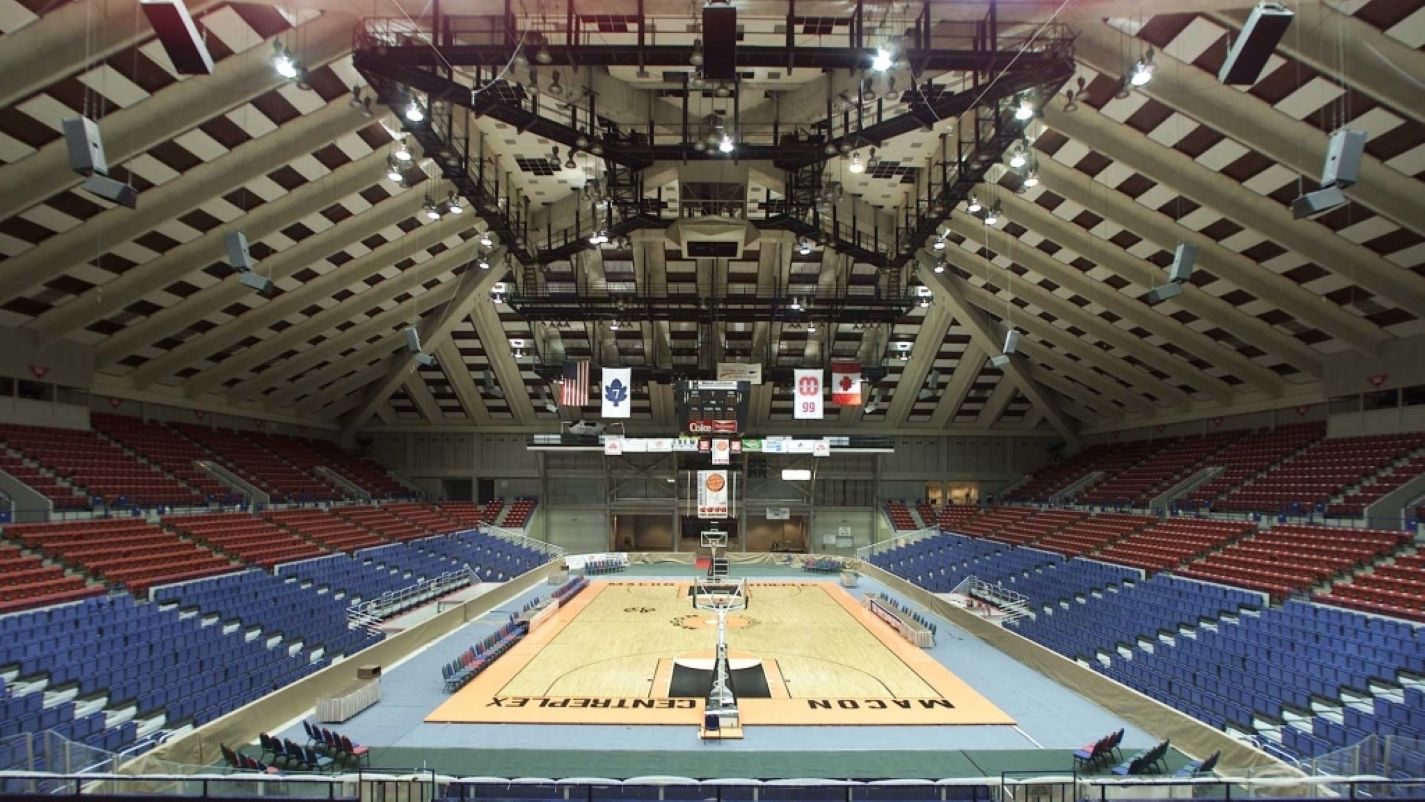
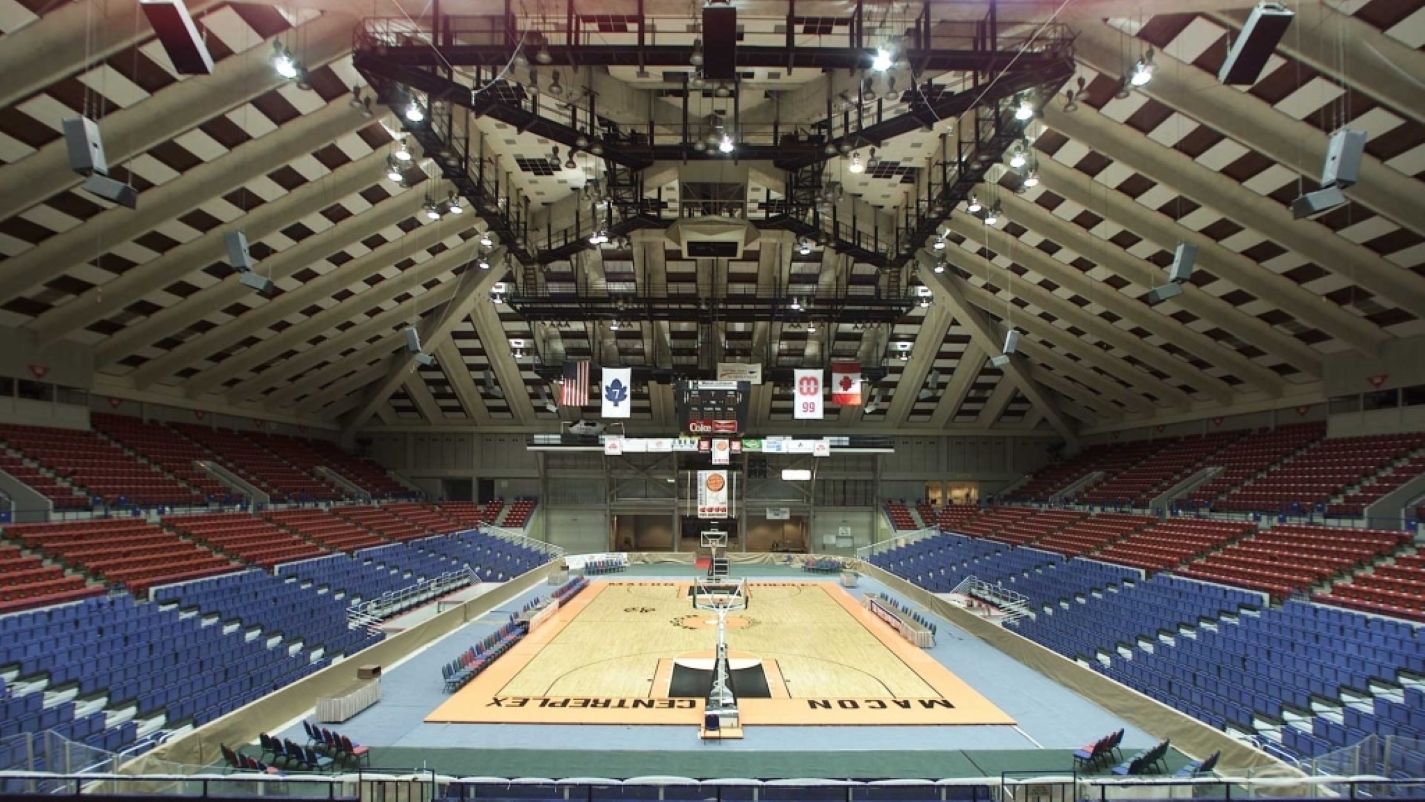
Macon Coliseum

The present building in Macon is 58 years old and outdated

Macon Officials Explore New Arena Proposal

The mayor of Macon, Georgia has signaled support for building a new arena in a city of roughly 157,000 residents. Macon ranks as the fourth-largest city in the state, and local leadership believes updated sports and entertainment infrastructure is necessary to remain competitive.

The push centers on replacing the Macon Coliseum, a 58-year-old facility that currently houses the Macon Mayhem, a minor-league hockey team in the Southern Professional Hockey League. The SPHL operates independently, with no direct affiliation to the National Hockey League. While the Coliseum has served the city for decades, officials describe the building as outdated and no longer meeting modern event standards.

Early Planning, No Price Tag Yet

Mayor Lester Miller and the Bibb County Commission have hired Barton Malow Builders to begin early-stage planning for a potential new arena. The project remains in its exploratory phase.

“So basically over the next several months we’ll get some architectural drawings,” Miller said. “We’ll get some rough figures sometime around January, and by the springtime we’ll have the final numbers to bring before commission to vote on.”

At this stage, there is no official cost estimate, no financing plan, and no proposed site publicly identified. What exists is a concept and a belief that a new building could elevate Macon’s standing in Georgia’s event marketplace.

Staying Competitive in a Crowded Market

Mayor Miller framed the proposal as a necessity rather than a luxury. He pointed to other Georgia cities that have recently invested in new arenas.

“We have to stay ahead of the game,” Miller said. “By game, I mean the competition amongst all the other places in Georgia that people have an opportunity to go to. Savannah has a new arena, Augusta has one, Athens has one. Macon-Bibb County has to stay competitive.”

The argument follows a familiar pattern. Cities fear being bypassed for concerts, conventions, and touring events if their facilities fall behind. A new arena, proponents argue, keeps Macon on the list when promoters plan regional stops.

Tourism Promises and Economic Claims

Miller has emphasized tourism as a primary benefit. He argues that visitors drawn to events would spend money locally, generating revenue that could support public services.

According to the mayor, those dollars would “directly benefit citizens through services, better schools, jobs, and lower taxes.”

That claim raises questions. While arenas can generate activity, minor-league sports historically do not create large numbers of high-paying jobs. Most arena employment consists of part-time, per-event work with limited wages and no long-term security.

The Reality of Minor-League Economics

The Macon Mayhem draw a loyal local audience, but they are not a regional tourism driver. Few fans travel significant distances to attend SPHL games. That reality complicates projections built on visitor spending.

Construction jobs would be temporary. Arena staffing would largely be per diem. The long-term economic return remains uncertain, particularly without a major-league tenant or guaranteed slate of high-profile events.

A Notion, Not a Decision

For now, the Macon arena proposal remains an idea rather than a commitment. No cost, no funding source, and no public vote.

What exists is a familiar civic debate. Build to compete, or risk falling behind. Whether taxpayers will ultimately be asked to fund that ambition remains the unanswered question.

Evan Weiner’s books are available at iTunes – https://books.apple.com/us/author/evan-weiner/id595575191

Evan can be reached at evan_weiner@hotmail.com


Source link

Continue Reading

Sports

Nashville may host a Super Bowl

Published

on


Drawing of planned Nashville stadium

Tampa stays in the mix but must do some upgrades

Attention Nashville and Tennessee taxpayers: National Football League Commissioner Roger Goodell is thanking you for your more than one‑billion‑dollar contribution to a private business — the Tennessee Titans — to help pay for the franchise’s new stadium. With that investment, Goodell all but suggested that a Super Bowl is coming to Nashville in the future. While the commissioner cannot award a Super Bowl himself, the 31 NFL owners and the Green Bay Packers Board of Directors can act on his recommendation. Historically, NFL owners reward markets that publicly finance stadium construction with the league’s crown‑jewel event.

Goodell recently toured the construction site of the Titans’ next home and was so impressed he nearly handed out a Super Bowl on the spot. Almost. Nashville already proved it can host a major NFL event when the 2019 NFL Draft brought an estimated 600,000 people downtown over three days. Goodell and league executives still reference that weekend as a turning point for the city’s NFL profile. “You took the draft and made it yours… it was a wake‑up moment that this is a Super Bowl‑ready city,” Goodell said. In NFL terms, “Super Bowl‑ready” means one thing: a new stadium backed by significant taxpayer investment.

Why Tampa Must Upgrade Raymond James Stadium to Stay in the Super Bowl Mix

While Nashville rises, Tampa faces a different message from the league. Raymond James Stadium — opened in 1998 and last renovated in 2018 — needs major upgrades if Tampa wants to remain in the Super Bowl rotation. Buccaneers ownership has acknowledged that the venue is aging and must modernize to stay competitive for marquee events. Reports from WUSF, Pro Football Network, FOX 13 Tampa Bay, Sports Illustrated, and Pewter Report outline the same theme: the NFL expects substantial improvements to fan experience, premium seating, technology, and stadium infrastructure before awarding another Super Bowl.

The Buccaneers and Hillsborough County are now evaluating “major” or “massive” renovation plans, including expanded premium areas, updated concourses, enhanced technology, and overall modernization to match newer NFL venues. With new stadiums opening across the league, Raymond James risks falling behind without significant investment.

The Bigger Picture: Stadium Money Still Drives the NFL’s Biggest Decisions

Nashville’s billion‑dollar taxpayer commitment has placed the city squarely in the Super Bowl conversation, while Tampa — a proven Super Bowl host — must now upgrade to keep pace. The NFL’s message remains consistent: cities that invest heavily in stadium infrastructure are rewarded with the league’s most lucrative events. As the Titans’ new stadium rises and Raymond James Stadium faces pressure to modernize, the Super Bowl landscape continues to shift — driven, as always, by public dollars, private franchises, and the NFL’s relentless pursuit of premium venues.

Evan Weiner’s books are available at iTunes – https://books.apple.com/us/author/evan-weiner/id595575191

Evan can be reached at evan_weiner@hotmail.com


Source link

Continue Reading

Sports

Georgia State University Is Building  A Small Baseball Stadium In Atlanta

Published

on


In 1961, ATlanta Mayor Ivan Allen, Jr. began pushing for Atlamta to build a Major League Baseball stadium

The stadium will be located at the old Atlanta Fulton County Stadium site

Stadiums as Pitstops, Not Destinations

Stadiums and arenas rarely serve as permanent homes. They function as pitstops in the larger race to stay relevant in major professional sports. Atlanta learned that lesson early and has lived it repeatedly for nearly seven decades.

The story begins in 1957, when the Eisenhower Administration expanded Atlanta’s airport and positioned the city as a national transit hub. Local elected officials and business leaders saw opportunity. If Atlanta could become a transportation crossroads, it could also become a major league city. The strategy was straightforward. Build a stadium first. Then chase a professional franchise to fill it.

At the time, baseball still ruled American sports. The National Football League existed, but college football dominated much of the South. Atlanta’s leaders understood the hierarchy. Landing a Major League Baseball team would place the city on the national sports map. Football could follow later and share the same facility if necessary.

Ivan Allen Jr. and the Big League Vision

During his 1961 campaign for mayor, Ivan Allen Jr. made a bold promise. He pledged to build a modern sports facility capable of attracting a Major League Baseball franchise. It was a political risk, but it matched the city’s ambitions.

Allen secured funding and broke ground in 1964. With a stadium rising, he turned to expansion and relocation talks. His first target was Kansas City A’s owner Charlie Finley. Allen negotiated a deal to bring the A’s to Atlanta, but American League owners rejected the move.

The setback did not end the pursuit. Soon after, ownership of the Milwaukee Braves accepted Atlanta’s offer. The Braves relocated in 1966 and became the city’s first major league tenant. Atlanta finally arrived.

Allen also worked both sides of professional football. He engaged the American Football League and the National Football League. That effort paid off when Atlanta received an NFL expansion franchise, also beginning play in 1966.

A New Stadium Grows Old Quickly

Success came fast, but so did dissatisfaction. The stadium that symbolized Atlanta’s arrival aged rapidly in the eyes of team owners.

By 1992, the football franchise moved into a new, football-only stadium downtown. Baseball followed a different path. The Braves left the original stadium and moved into the facility built for the 1996 Summer Olympics. One year later, that Olympic venue became their new home.

That move did not last either. In 2017, the Braves relocated again, this time to a suburban stadium designed to maximize revenue and development opportunities. Each move reflected the same pattern. Teams chase newer buildings. Cities chase teams.

What Remains After the Teams Leave

The original stadium did not survive. Crews demolished it and converted the site into a parking lot. The Olympic stadium endured, but not in its original form. It was downsized and repurposed for Georgia State University football.

Now the university plans to add a small baseball field at the site of the original stadium. What once symbolized Atlanta’s major league dreams now serves student-athletes and campus life.

The cycle continues. New buildings replace old ones. Purpose shifts. Memory fades.

The Cost of Staying “Major League”

Atlanta taxpayers have funded the construction of two baseball stadiums, two football stadiums, and two arenas. Each project aimed to keep the city in the major league conversation.

The pursuit has worked, depending on perspective. Atlanta hosts franchises. It stages global events. It remains relevant. The price has been constant reinvestment and repeated reinvention.

Stadiums come and go. Teams move on. Cities keep paying. In Atlanta, the buildings tell the story. They were never meant to last forever. They were meant to keep the city in the game.

Evan Weiner’s books are available at iTunes – https://books.apple.com/us/author/evan-weiner/id595575191

Evan can be reached at evan_weiner@hotmail.com


Source link

Continue Reading

Sports

Munich Wants A Summer Olympics in near future

Published

on


Munich wants to host another Summer Olympics

Germany has other areas that want the event outside of Munich as well

Bavarian Voters Signal Olympic Ambitions

Voters in Munich and across Bavaria have made their position clear. They want the Olympic Games to return to the region in the future. In a recent vote, Bavarians backed an Olympic bid by a two-to-one margin, signaling strong public support for hosting a Summer Games in 2036, 2040, or 2044.

Munich Mayor Dieter Reiter described the outcome as decisive. “There wasn’t a single outlier. All districts are backing the Olympic bid,” Reiter said. “I believe we can now approach the application with fresh energy and enthusiasm.” The result provides political momentum, but it does not guarantee Munich a place on the global Olympic stage.

Germany’s Internal Competition Comes First

Before Munich can take its case to the International Olympic Committee, it must first clear a national hurdle. In roughly a year, the German Olympic Sports Confederation will determine which region will represent Germany in any future Olympic bid.

Munich is not alone. Berlin, Hamburg, and the Rhine-Ruhr region are all competing for the same designation. Each offers different strengths, infrastructure, and political backing. Public support in Bavaria matters, but the final decision will balance logistics, cost, legacy planning, and international perception.

That internal competition ensures that even overwhelming regional enthusiasm does not translate automatically into an official bid.

History That Cannot Be Ignored

Any German Olympic bid carries historical weight. That reality looms especially large for Munich and Berlin.

The 1936 Berlin Olympics remain one of the most controversial Games in Olympic history. Adolf Hitler attempted to use the event as a propaganda platform to legitimize the Nazi regime and project a carefully controlled image of Germany to the world. That legacy still shapes international discussions around German Olympic bids.

Munich’s Olympic history is equally complex. The 1972 Summer Games were marred by tragedy when members of the Palestinian group Black September murdered 11 Israeli athletes and officials in what became known as the Munich Massacre. The event forever altered Olympic security and left a lasting scar on the city’s Olympic legacy.

Modern Leaders, Familiar Language

In 2023, Berlin Mayor Kai Wegner publicly supported hosting the Olympic and Paralympic Games in 2036. He described the bid as an “exceptional opportunity” to present a new image of Germany to the world.

The language is strikingly familiar. In 1936, Germany also sought to reshape its global image through the Olympics. Today’s context is vastly different, but history ensures comparisons will be made.

Germany must convince the international community that it can honor the past while presenting a modern, democratic, and inclusive vision for the Games.

A Complicated Olympic Past

Germany’s Olympic history includes another forgotten chapter. In 1938, the IOC removed the 1940 Winter Olympics from Sapporo, Japan, due to the Sino-Japanese War and reassigned them to Munich. That decision came after Hitler invaded Austria and Czechoslovakia.

The Games never happened. World War II forced their cancellation.

That legacy underscores how global politics and sport often collide, sometimes with lasting consequences.

What Comes Next

Bavaria’s vote reflects enthusiasm, not entitlement. Munich has infrastructure, experience, and public backing. It also carries history that will shape every discussion.

The next step lies with Germany’s Olympic leadership. From there, the world will decide whether Munich’s future Olympic dream can rise above its complicated past.

Evan Weiner’s books are available at iTunes – https://books.apple.com/us/author/evan-weiner/id595575191

Evan can be reached at evan_weiner@hotmail.com

Berllin wants the 2036 Olympic which is the 100th anniversary of the Hitler Games


Source link

Continue Reading

Trending

Copyright © Miami Select.