Connect with us

Business

Simon Sinek says not to worry about salaries during a job interview. Instead, ‘choose the job based on who you’re going to work for’

Published

on


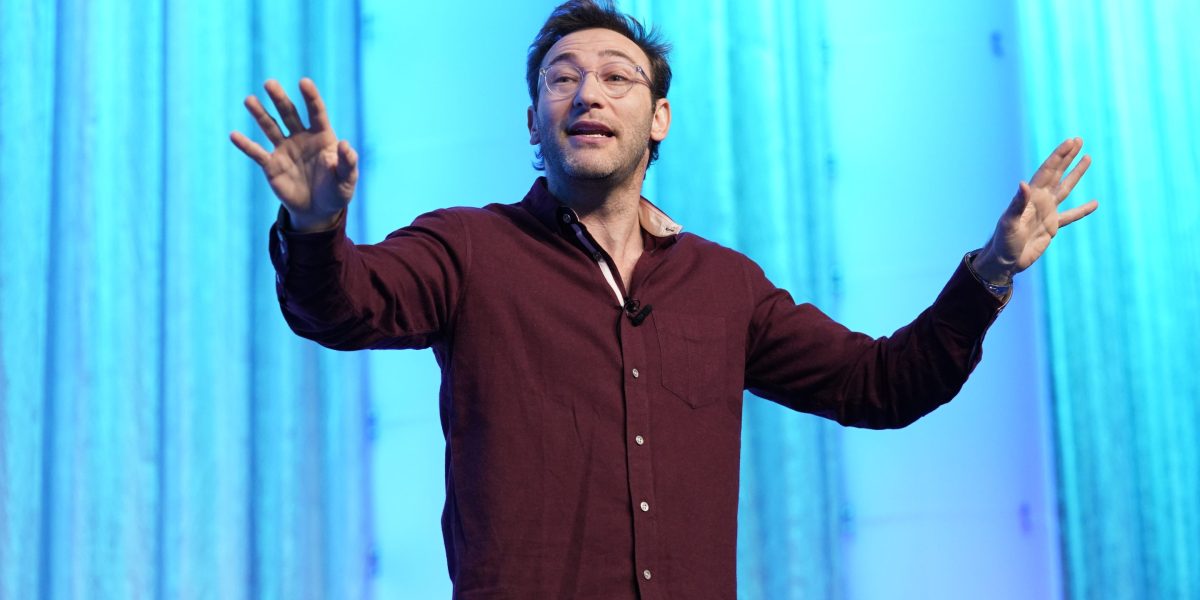
Considering the inflationary period Americans are struggling through, compounded with the impacts of tariffs, it’s hard not to get fixated on the dollar amount in job descriptions. But management expert Simon Sinek argues there’s something more important to consider when interviewing for jobs: the person you’ll be working for.

“If I got one thing right as a young person, it’s that I always chose jobs based on who I would work for,” Sinek told The Diary of a CEO podcast. “I didn’t care how much money they’re going to pay.”

Sinek is best known for his 2009 TED Talk on the concept of “why,” and his “Golden Circle” theory, which encourages leaders and organizations to define their core purpose or belief as the basis for inspiring employees and customers. His TED Talk was one of the most-watched of all time, with more than 60 million views on the TED website alone. Sinek has more than 8.7 million followers on LinkedIn today. 

This management guru trained as an ethnographer, studying the patterns in how effective leaders and organizations think, act, and communicate to create environments where people operate at their most optimal level. He studied cultural anthropology at Brandeis University and later began, but did not complete, law school at City University of London. Early in his career, he worked in advertising for New York-based agencies including Euro RSCG and Ogilvy & Mather, but later launched his own consultancy, Sinek Partners. 

But Sinek credits his career success to his early days when he prioritized finding the best mentors over a higher salary. 

“By the way, it’s not like I had money, [but] I knew they were going to pay me something. I knew I could pay my bills,” Sinek said. “I’m not a trust fund baby—like, I needed an income. But one company offered me $5,000 more, and one company offered me $5,000 less. But I really like the person over here, [so] I took that job.”

“Yes, I made less money than all of my friends in the short term,” he continued. But “I got an education and care from somebody who took me under their wing.”

What other experts say about prioritizing mentorship over salary

Some of the most successful people in business have also preached prioritizing mentorship over salary during your early career. 

Warren Buffett, who is set to retire as Berkshire Hathaway’s CEO in just a couple of days, said it’s “enormously important” to one’s success with whom they associate. 

“Don’t worry too much about starting salaries and be very careful who you work for because you will take on the habits of the people around you,” Buffett said at a shareholder meeting in May. “There are certain jobs you shouldn’t take.”

He said he’s had five bosses in his life, “and I liked every one of them.”

“They were all interesting,” Buffett continued. “I decided that I’d rather work for myself than anybody else. But if you find people that are wonderful to work with, that’s the place to go.”

Oprah Winfrey has also credited her continued success to the early days of her career when legendary writer Maya Angelou mentored her. Winfrey met Angelou in 1986, the year she debuted The Oprah Winfrey Show. Although she had already established herself as a talk show host, her relationship with Angelou continued to inspire her throughout her career. 

“Anybody who’s had any level of success in their life got to where they are because somebody, somewhere, was a guiding light,” Winfrey wrote in a 2024 article about her mentorship from Angelou. “Maybe they weren’t a full-on, consistent mentor in your life, but nobody, but nobody makes it out here alone.”

This story was originally featured on Fortune.com


Source link

Continue Reading

Business

Mark Zuckerberg’s Meta is dropping over $2 billion for an AI startup—a rare example of a U.S. tech giant buying a platform founded in China

Published

on


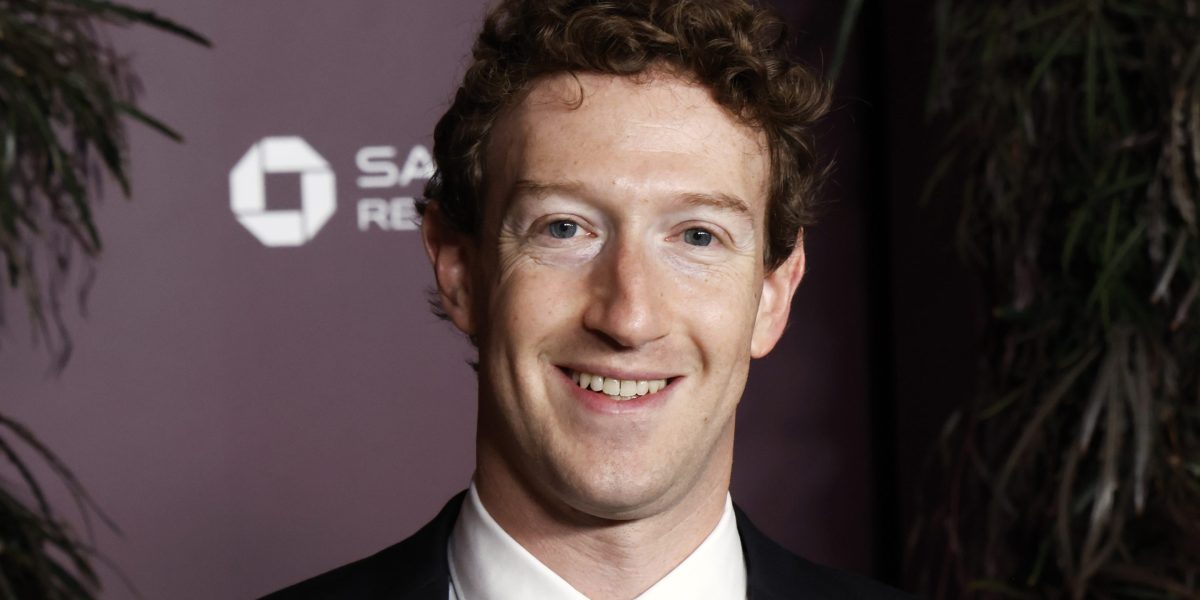
Mark Zuckerberg’s Meta says it has agreed to acquire Manus, a fast-growing AI startup with Chinese roots now based in Singapore, in a deal valued at more than $2 billion, according to multiple reports. The latest move underscores two big trends: the massive scale of AI spending among Silicon Valley companies, and the geopolitical sensitivities around companies and startups founded in China.​

Manus, in case you’re unfamiliar, builds so‑called AI “agents” that can carry out complex digital tasks for consumers and businesses. The idea here is that Manus will essentially fold its technology into Meta’s products, including the Meta AI assistant that runs across Facebook, Instagram, and WhatsApp. The deal marks one of the first major instances of a key player in U.S. tech buying a startup founded in China, making it somewhat of a litmus test for cross-border deals of this kind—especially in the AI space.​

Manus launched just three years ago, in 2022. It started as a project from Butterfly Effect, a.k.a. Monica.im, a startup that was based in Beijing before it moved its headquarters to Singapore earlier this year as it looks to expand globally. Manus’ AI agent, notably, can screen résumés, plan trips, analyze stock portfolios, and handle other multi‑step jobs with minimal human input, positioning it as a kind of virtual colleague rather than a simple chatbot.

Manus has seen explosive growth in its brief life so far. Just a little over a week ago, Manus released a blog post claiming it had reached $100 million in annualized recurring revenue and achieved a $125 million run rate, thanks largely to subscriptions and power users. The company also says Microsoft tested Manus on Windows 11 PCs this year to help users build websites and other content from their local files.

​The big picture for Meta

For Meta, the Manus deal is the latest in a series of multibillion‑dollar bets aimed at turning heavy infrastructure spending on AI chips and data centers into commercially viable products. Founder and CEO Mark Zuckerberg has called AI the company’s top priority: Meta continues to invest heavily in its Llama family of open‑source language models, and made a large strategic investment in Scale AI earlier this year, even bringing on the startup’s 28-year-old billionaire founder Alexandr Wang to lead Meta’s broader AI efforts.​

The acquisition also untangles Manus’s ownership ties to China. While the startup has received backing from Chinese investors from the likes of Tencent, ZhenFund, and HSG (formerly Sequoia China), a Meta spokesperson told Nikkei Asia “there will be no continuing Chinese ownership interests in Manus AI following the transaction, and Manus AI will discontinue its services and operations in China.” A Meta spokesperson did not immediately respond to Fortune’s request for comment.​

Of course, this move to disentangle Manus from China should help Meta avoid the eye and ire of U.S. politicians and regulators. John Cornyn, the 73-year-old Republican senator from Texas, slammed U.S. VC firm Benchmark Capital back in May for joining a $75 million funding round for Manus, asking and answering a hypothetical question on X, “Who thinks it is a good idea for American investors to subsidize our biggest adversary in AI, only to have the CCP use that technology to challenge us economically and militarily? Not me.”

Manus’s founder and CEO, Xiao Hong, framed the sale as a way to scale the technology globally. “The era of AI that not only talks but also acts, creates, and delivers is just beginning,” he said on social media, according to Al Jazeera. “Now, we have the opportunity to build it at a scale we could never have envisioned.”

Meta has said it will keep the Manus service running while integrating the team of roughly 100 employees into its broader AI organization.

This story was originally featured on Fortune.com


Source link

Continue Reading

Business

Putin ally Alisher Usmanov agrees to pay $11.8 million fine to resolve German federal probe

Published

on


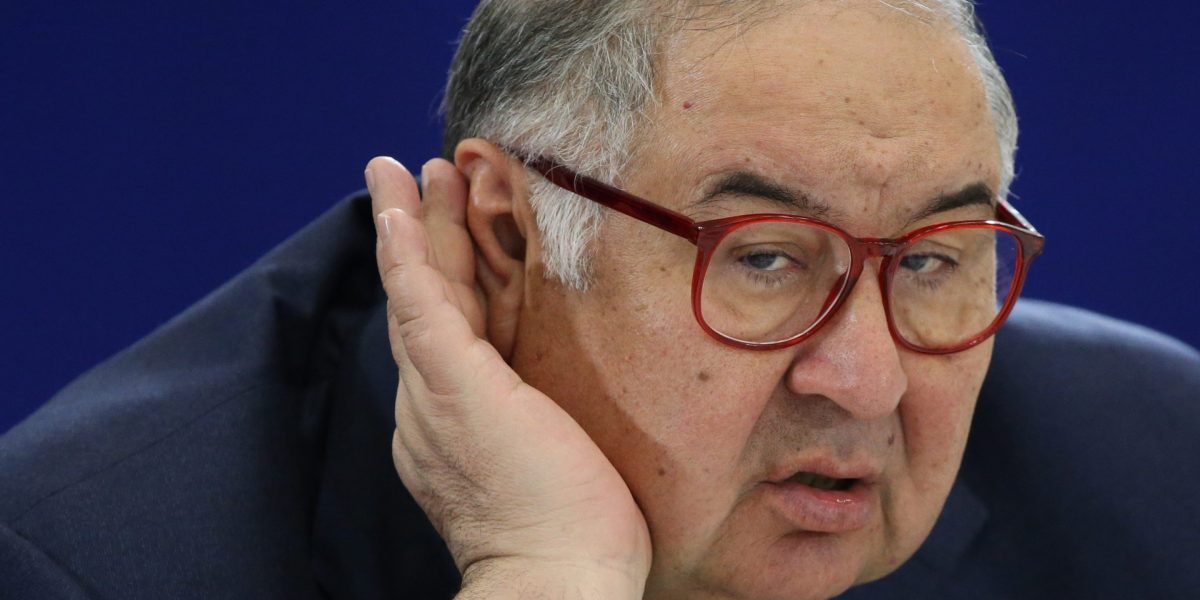
German prosecutors say they will drop an investigation of Russian oligarch Alisher Usmanov, a close ally of President Vladimir Putin, over possible breaches of sanctions and money laundering rules after he agreed to pay a 10 million euro (about $11.8 million) fine.

The Uzbekistan-born Russian billionaire and metals magnate, who was reelected as the president of the International Fencing Federation last year, has been facing European Union sanctions imposed after Russia’s full-scale invasion of Ukraine in 2022.

The Munich prosecutors office said Tuesday the probe of Usmanov, which prompted police raids of dozens of properties in Germany linked to him three years ago, will be dropped upon receipt of payment of the fine.

Some funds and assets linked to Usmanov had been frozen under the EU sanctions.

Prosecutors said Usmanov was suspected of transferring about 1.5 million euros through foreign-based companies for management of two properties in the lakeside town of Rottach-Egern south of Munich, in the months after the sanctions were imposed.

He was also alleged to have failed to declare valuables including jewelry, paintings and wines to authorities. Usmanov’s defense team had challenged the allegations about his ties to the companies and valuables and the applicability of EU law in the case.

The prosecutors said the discontinuation of the investigation upon payment of a fine was authorized under German criminal law.

This story was originally featured on Fortune.com


Source link

Continue Reading

Business

Television is a state of mind: why user experience will define the next era of media

Published

on


I struggle with the word television. Although we continue to use that term, recent market-definition debates – including in Netflix’s acquisition of Warner Bros. Discovery (WBD) assets – make it abundantly clear that what we call television is much more than a screen in a room where we lean back to watch professionally produced, long-form content delivered linearly at an appointed time. 

What we now call television is an experience that adapts to the viewer. It’s about how, when, and where we connect to content across moments, moods, and devices. Television is the moment we decide to be carried by a story: comfort, curiosity, escape, connection. That moment can happen on a couch, in an Uber, in the kitchen, or between meetings—across any screen, any length, any format. Television has become a state of mind.

When Product Experience Becomes Strategy 

Coming back to the U.S. after working in satellite television for News Corp. in India, I could see that digital streaming was the future. That feeling turned into a reality when I moved into the internet portfolio of News Corp./Fox during the MySpace era. My first big lesson was humbling: media companies don’t “go digital” by declaring a strategy. They go digital when the product experience is the strategy.

At MySpace, we signed what looked like a genius deal: Google guaranteed roughly $900 million over three years to serve ads on the Myspace platform. Wall Street applauded. Users did not. The interface and pages got cluttered, load times slowed, and the very vibe that made MySpace culturally dominant began to erode. When Facebook arrived with a cleaner, more intuitive design, people didn’t debate the switch. They simply left.

That moment clarified something the industry still struggles to accept: users vote with their behavior, not with their loyalty.

You Can’t Litigate Your Way to Relevance

MySpace also taught me you can’t litigate your way back to relevance. When music rights pressure intensified with Universal’s Music’s high stake litigation, a partnership was built in place of a war—structuring a Hulu-like joint venture with major labels that licensed catalogs and aligned incentives. The takeaway wasn’t “we won.” It was that the winners in disruption stop fighting the new behavior and start building an ecosystem around it. Disney’s recently announced partnership with OpenAI is a perfect example of this.

Engineers as Storytellers

Those lessons followed me into launching direct-to-consumer products for a major telecom platform and later for HBO Latin America. Inside big organizations, everyone understands technology matters. What’s harder is funding it, attracting talent to buy into the vision, and giving it the runway to pay off. Streaming “wars” are often narrated as content wars, but they’re increasingly product wars: discovery, personalization, and the quiet reduction of friction that keeps people in the experience.

To get closer to how that machine is built, I joined a PE-backed digital engineering services company as CLO and CPO and lived through the COVID era of forced digital transformation. I realized something that reshaped how I think about media: engineers are storytellers, like their counterparts on the content side. They don’t write the plot but they tell a story of how we live our lives online—how we find content, connect with others to share it, and return to continue engaging. The way we consume content becomes part of the content experience.

Future of TV

That’s the real power shift I wrote about recently: control is moving from whoever owns the most content to whoever delivers the best experience. YouTube is the clearest case study. It meets users in almost every “TV state of mind”—short bursts, deep dives, background listening, big-screen sessions—with a seamless product layer and a data flywheel that keeps audiences engaged. It also keeps creators engaged not by giving away equity, but by sharing advertising revenue at scale.

Netflix internalized the same idea early: one global product, one recommendation engine, one continuous engagement loop—and the willingness to invest heavily in technology so that the value of the company compounds. Now the industry is testing whether consolidation can accelerate that advantage. If Netflix’s pursuit of Warner Bros. Discovery’s studio and streaming assets signals anything, it’s that media deals should be judged less by “how much content did we buy” and more by whether the combined company can deliver a better experience, globally.

TV As a State of Mind

So what does the future look like when we treat television as a state of mind?

Theatrical doesn’t fade, It evolves from “watching a movie in an uninteresting venue” to showing up: a high-quality social ritual built on community and connection.

The winners will think like great hospitality brands and premium experience operators — designing nights people crave, delivering them consistently, and scaling them into repeatable, franchise-ready formats based on business models that create value and opportunity.

Home viewing becomes the default theater, but only if it’s designed, not delivered. “User-first” means personalization that recognizes mood, not just taste. Discovery that feels like curation, not an infinite shelf. Social layers and advertising opportunities are either optional or integrated in a seamless way into the user experience. Continuity that lets you start anywhere and finish anywhere.

The future of television is the feeling of being understood—and the platforms that earn that feeling will define what we call TV in the next decade ahead.

The opinions expressed in Fortune.com commentary pieces are solely the views of their authors and do not necessarily reflect the opinions and beliefs of Fortune.

This story was originally featured on Fortune.com


Source link

Continue Reading

Trending

Copyright © Miami Select.