Connect with us

Business

Zohran Mamdani to get sworn in twice—once underground at abandoned Subway station and once before freezing block party

Published

on


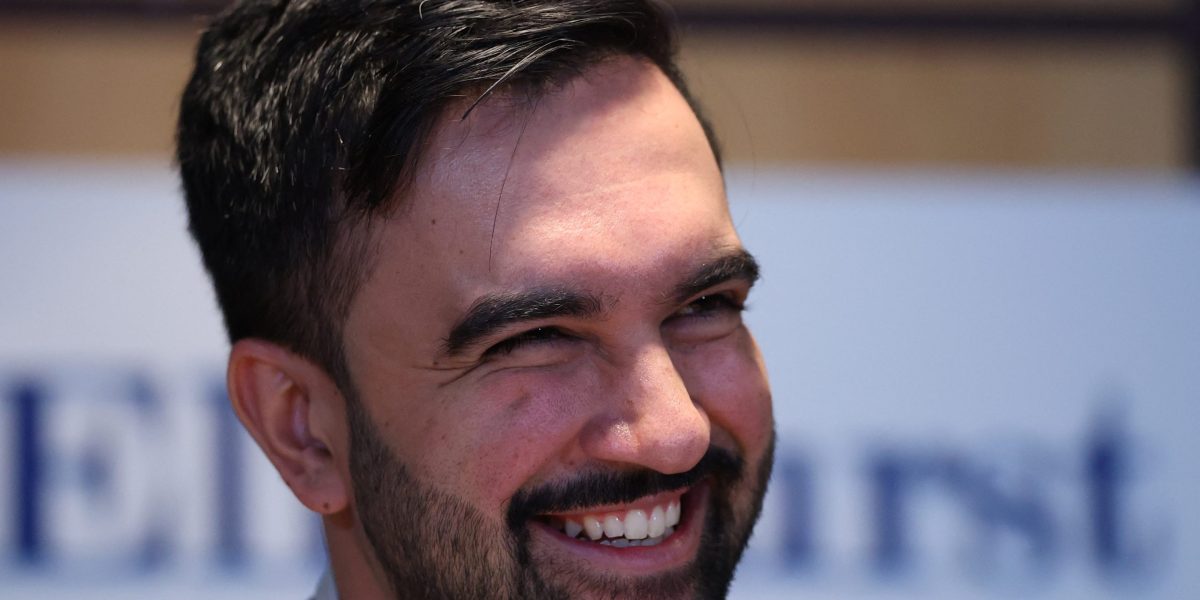
Zohran Mamdani will become mayor of New York City as the clock ticks over into 2026 — but the celebrations are set to last through New Year’s Day.

The Democrat’s team is planning two separate swearing-in ceremonies Thursday — a small, private one with his family in an old subway station around midnight, followed by a large event in the afternoon that will include a public block party outside City Hall.

As a new mayor’s term begins immediately with the new year, it has been customary for the city’s incoming leaders to hold two events. Outgoing mayor Eric Adams held his initial swearing-in at Times Square shortly after the famous ball drop, while Adams’ predecessor, Bill de Blasio, took his first oath at home in Brooklyn.

For his part, Mamdani will take his initial oath at the former City Hall subway station in Manhattan — one of the city’s original stops on its subterranean transit system, known for its tiled arches and vaulted ceilings.

New York Attorney General Letitia James, a political ally and notable foe of President Donald Trump, will administer the oath of office.

The old City Hall stop was designed as the flagship station of the city’s first subway line, but was decommissioned in 1945. These days, outside of occasional guided historical tours, locals can usually only catch a glimpse of it by staying on the 6 train after its last stop downtown when it turns around to head north.

In a statement, Mamdani’s office said the choice to be sworn in at the station reflected his “commitment to the working people who keep our city running every day.”

“When Old City Hall Station first opened in 1904 — one of New York’s 28 original subway stations — it was a physical monument to a city that dared to be both beautiful and build great things that would transform working peoples’ lives,” Mamdani said.

“That ambition need not be a memory confined only to our past, nor must it be isolated only to the tunnels beneath City Hall: it will be the purpose of the administration fortunate enough to serve New Yorkers from the building above,” he said.

On Thursday afternoon, Mamdani will be sworn in again, this time by U.S. Sen. Bernie Sanders, one of his political heroes, on the steps of City Hall in a ceremony scheduled to kick off at 1 p.m. U.S. Rep. Alexandria Ocasio-Cortez, another political ally, will deliver opening remarks.

Mamdani’s transition formed an inaugural committee that includes actor John Turturro, playwright Cole Escola and writer Colson Whitehead, as well as advocates, small business owners and campaign workers who the incoming mayor’s office says have “provided perspective, guidance, and cultural sensibility” for the ceremony.

The public swearing-in will be accompanied by a block party along a stretch of Broadway leading up to City Hall. Mamdani’s office expects thousands of people to attend and says there will be performances, music and interfaith elements.


Source link

Continue Reading

Business

Down Arrow Button Icon

Published

on


It makes little sense, when viewed from early April, that Canadian equities are closing out their second-best year this century. 

Donald Trump had just unleashed the harshest tariffs since The Depression, effectively choking off trade and tearing up a trade agreement he had negotiated. The US president was also openly discussing annexing Canada, stoking unfathomable tensions between the two long-time allies. Political turmoil added to unease up North.

Then Trump backed down from his most punishing tariffs. Technocrat Mark Carney took over as prime minister, easing financial market jitters and cooling tensions with his US counterpart. And, it turned out, Canada’s economy — driven by miners and internationally renowned financial firms —  was perfectly situated for the chaos of Trump’s new world order.

The S&P/TSX soared more than 40% from an April 8 low, putting the gauge on track to end 2025 with a 29% advance, trailing only 2009’s 31% gain for the best ever. The index notched a record 63 new all-time highs along the way, owing to a steady march higher over the year’s final seven months.

Miner and bank stocks have been central to the rally, with the materials subindex doubling on the back of rallies in gold, silver, copper and palladium. The financials group jumped 40%. Tech darlings like Shopify Inc. and Celestica Inc. have also contributed, moving the index by a combined 11% higher during the year. 

“The numbers themselves are somewhat jaw dropping,” said IG Wealth Management chief investment strategist Philip Petursson by phone. “But, I mean, you could sit there and say this is still a well-balanced market that has further upside in 2026.”

The fuel for the rally that powered precious metals to new records may not be spent. Three Federal Reserve rate cuts were a boon to an asset class that doesn’t pay interest. The US central bank is expected to cut twice in 2026. 

Gold and silver also served as a safe haven for traders worried about uncertainty around US trade policies and geopolitical tensions in Europe and the Middle East. Neither of those concerns have been laid fully to rest.

Petursson said he sees further runway for gold prices to continue supporting the S&P/TSX Composite index, but not to the same degree the markets have seen in the past year. 

“It would be foolish to just extrapolate this year’s gains into 2026,” he said, noting though that “the fundamentals are still there” as central banks are expected to continue cutting rates. 

Canada’s Big Six banks, including Toronto-Dominion and Bank of Montreal, posted stronger profits than expected over the year with the annual adjusted earnings coming ahead of Bloomberg consensus expectations by an average of 2 percentage points.

The group financial firms, including insurers and smaller banks, accounts for 33% of the Canadian index. They, too, have enjoyed lower rates in both the US and Canada, along with profits from dealmaking and a better batch of loans that required fewer set-asides. The Canadian group’s advance nearly doubled that of its US counterparts.

There is some concern over the group’s performance heading into 2026. Bank valuations have been elevated at the same time that the Canadian economy may be starting to feel the strain of higher tariffs, said Craig Basinger, Purpose Investments chief market strategist. 

“Gold, energy: those sectors really don’t care about the Canadian economy, but the banks probably should,” Basinger said. “And this just doesn’t feel like the time to be paying a premium valuation for Canadian banks.”

The S&P/TSX Composite banking subindex’s price to earnings ratio reached nearly 15, up from a low of 9.7 in 2022. 

The Canadian index’s record came despite one of the worst years for crude oil prices in recent memory. The problem, though, is the outlook for oil remains muted at best. Basinger said jumping into oil and gas stocks at the beginning of the year would be a very contrarian move given how demand is struggling to keep up with supply. 

The market would also be vulnerable to any troubles in the precious metals markets. Already, silver is sliding into the end of the year, though still on track for a record gain.

Bassinger’s firm took a partial underweight position in S&P/TSX Composite in the fourth quarter, which he said was more about profit-taking after “three consecutive years of oversized gains” rather than any negative view of the index.   

If the new year brings upside surprises to oil, then strategists like Petursson say the S&P/TSX Composite is a great way for foreign investors to leverage the energy play. For Petursson, the answer to the question of whether investors can be successful putting their money outside of the US is “yes”, and there are great options in other markets like Canada, Asia and Europe. 

“When foreign investors are looking for pockets of opportunity, if the TSX was not on their radar, I think it is now,” Petursson said. 


Source link

Continue Reading

Business

Down Arrow Button Icon

Published

on


The dollar is poised for its sharpest annual retreat in eight years and investors say more declines are coming if the next Federal Reserve chief opts for deeper interest-rate cuts as expected. 

The Bloomberg Dollar Spot Index has fallen about 8% this year so far. After tumbling in the wake of Donald Trump’s “Liberation Day” tariffs in April, the greenback came under sustained pressure as the president kicked off his aggressive campaign to get a dovish appointee installed as Fed chair next year.

“The biggest factor for the dollar in first quarter will be the Fed,” said Yusuke Miyairi, a foreign-exchange strategist at Nomura. “And it’s not just the meetings in January and March, but who will be the Fed Chair after Jerome Powell ends his term.”  

With at least two rate reductions priced in for next year, the US’s policy path diverges from some of its developed peers, further dimming the dollar’s appeal.

The euro has surged against the greenback as benign inflation and a coming wave of European defense spending keep rate-cut bets close to zero. In Canada, Sweden and Australia, meanwhile, rates traders are wagering on hikes. 

The dollar gauge rose as much as 0.2% Wednesday after Labor Department data showed applications for US unemployment benefits fell last week to one of the lowest levels this year. The greenback index was still on track to finish December down about 1%. 

This month, a brief period of bullish positioning on the dollar reverted to the more pessimistic stance that’s dominated since the April tariffs fueled concerns about the US economy, Commodity Futures Trading Commission data for the week ending Dec. 16 show.

For now, it’s all about the Fed and who steps into replace Jerome Powell, whose term as chair is set to end in May. 

Trump recently teased that he has a preferred candidate, but is in no hurry to make an announcement — while also musing that he might fire the central bank’s current leader.

National Economic Council Director Kevin Hassett has long been seen as the leading candidate, while Trump also expressed interest in former Fed governor Kevin Warsh. Fed governors Christopher Waller and Michelle Bowman and BlackRock’s Rick Rieder are also seen as being in the running. 

“Hassett would be more or less priced in since he has been the frontrunner for some time now, but Warsh or Waller would likely not be as quick to cut, which would be better for the dollar,” said Andrew Hazlett, a foreign-exchange trader at Monex Inc.


Source link

Continue Reading

Business

Gold and silver stumble at the end of best year since the 1970s

Published

on


Gold and silver fell on the last trading day of 2025, though both remained on track for the biggest annual gain in more than four decades as a banner year for precious metals draws to a close. 

Spot gold hovered around $4,320 an ounce, while silver slid toward $71. The two have seen exceptional volatility in thin post-holiday trading, plunging Monday before recovering Tuesday and dropping again Wednesday. The big swings prompted exchange operator CME Group to raise margin requirements twice. 

Both metals are still on track for their best year since 1979, supported by strong demand for haven assets amid mounting geopolitical risks, and by interest-rate cuts by the US Federal Reserve. The so-called debasement trade — triggered by fears of inflation and swelling debt burdens in developed economies — has helped supercharge the scorching rally.

In gold, the bigger market by far, those factors spurred a rush by investors into bullion-backed exchange-traded funds, while central banks extended a years-long buying spree.

Gold is up about 63% this year. In September, it eclipsed an inflation-adjusted peak set 45 years ago — a time when US currency pressures, spiking inflation and an unfolding recession pushed prices to $850. This time around, the record run saw prices smash through $4,000 in early October.

“In my career, it’s unprecedented,” said John Reade, a market veteran and chief strategist at the World Gold Council. “Unprecedented by the number of new all-time highs, and unprecedented in the performance of gold exceeding the expectations of so many people by so much.”

Silver has notched up a gain of more than 140% during the year, driven by speculative buying but also by industrial demand, with the metal used extensively in electronics, solar panels and electric cars. In October, it soared to a record as tariff concerns drove imports into the US, tightening the London market and triggering a historic squeeze.

The new peak was then passed the following month as US rate cuts and speculative fervor drove prices higher, and the rally topped out above $80 earlier this week — in part reflecting elevated buying in China.

Yet the latest move swiftly reversed, with the market closing down 9% on Monday then swinging the following two days. In response to the extreme volatility, CME Group again raised margins on precious-metal futures, meaning traders must put up more cash to keep their positions open. Some speculators may be forced to shrink or exit their trades — weighing on prices.

“The key driver today is the CME raising margins for the second time in just a few days,” said Ross Norman, chief executive officer of Metals Daily, a pricing and analysis website. The higher collateral requirements are “cooling the markets off,” he said.

Platinum, Palladium

The enthusiasm for gold and silver has extended into the wider precious-metals complex in 2025, with platinum breaking out of a years-long holding pattern to hit a new high.

The metal is on course for a third annual deficit, following disruptions in major producer South Africa, and supply will likely remain tight until there’s clarity on whether the Trump administration will impose tariffs — as well as on silver.

Prices for silver, platinum and palladium all sagged on Wednesday, though there’s little sign of enthusiasm waning.

“2025’s surprise was how safe-haven metals turned into momentum trades — silver in particular,” said Charu Chanana, chief market strategist at Saxo Markets in Singapore.

Silver traded down 6% at $71.44 an ounce as of 12:28 p.m. in New York. Gold slipped 0.4% to $4,322.04 an ounce, while the Bloomberg Dollar Spot Index was up 0.1%.


Source link

Continue Reading

Trending

Copyright © Miami Select.