Connect with us

Business

Zohran Mamdani is New York’s first millennial Mayor—experts say the young leader will ‘challenge the status quo’ set by boomers before him

Published

on


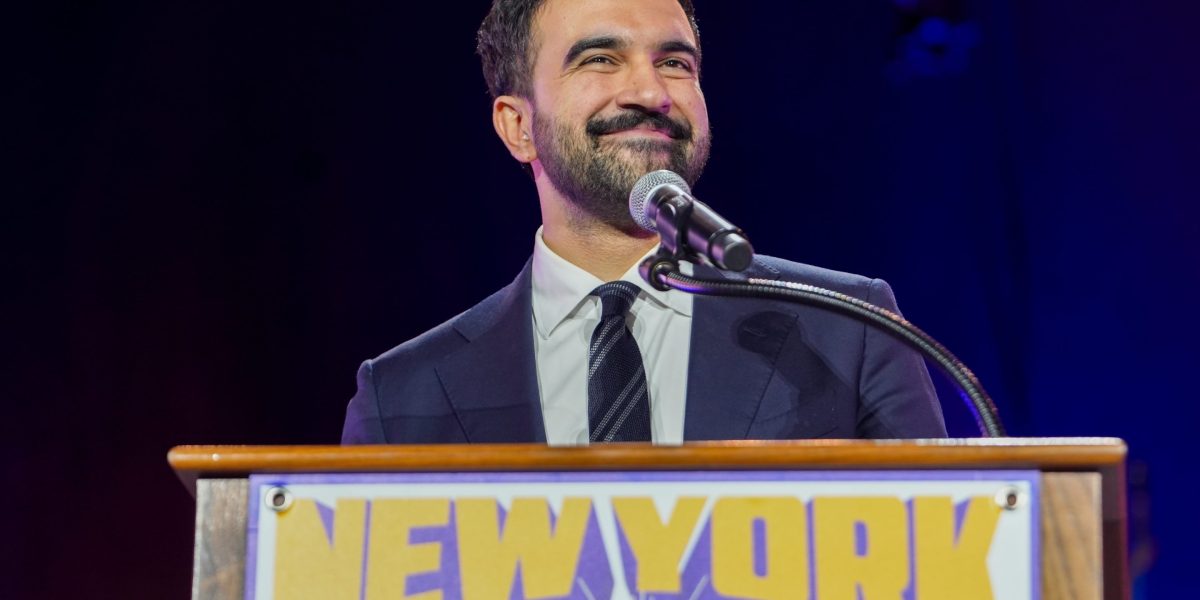
New York City’s political power is officially passing off to the millennial generation. Zohran Mamdani, 34, will be the city’s youngest mayor in over a century, unlocking a new era of leadership that’s likely to look very different from his boomer predecessors.

Mamdani’s win follows 65-year-old Eric Adams. Before that, former mayors behind Adams, such as de Blasio, Bloomberg, Giuliani, were all born before 1965. In fact, nobody under 40 has led the city since John Purroy Mitchel, who was nicknamed “the boy mayor”.  

With Gen Z as a key part of his voter base—and being on the younger side himself—Mamdani may have an edge in connecting with the bright young minds of tomorrow. Similar to Gen Z, millennials were the first generation to grow up online, and their formative experiences were defined by economic uncertainty and social activism.  

“We see younger leaders having notably more positive attitudes toward recognition, innovation, and psychological safety, and these traits may well carry into their leadership style as well,” Dr. Benjamin Granger, chief workplace psychologist at Qualtrics, tells Fortune. 

“If younger leaders are reporting significantly higher levels of recognition, psychological safety, and innovation encouragement in their own roles, it’s likely they’ll bring those same practices to how they lead their teams.” 

Policies that speak to a younger generation, as next-gen leaders prioritize work-life balance and wellbeing’

Not only could Mamdani’s younger age shape his leadership style, but the policies that follow. 

“The next generation of leaders aren’t afraid to challenge the status quo to bring new ideas to the table, care deeply about their work, but still prioritize work-life balance and wellbeing,” Granger added. 

In the workforce, younger generations are searching for more flexibility, such as work-from-home policies and four-day work weeks. In fact, 54% of Gen Z will not accept a job without flexible scheduling, according to research from Indeed. 

In addition, younger workers often feel that despite playing their cards right by attending college and (if they’re lucky enough) getting a stable job—they’re still stacking up side-hustles to make ends meet, and starving for affordability in the housing market

Previously, Mamdani has advocated for stronger tenant protections and measures for easing affordability for New Yorkers. He also has advocated for a higher minimum wage of up to $30 an hour, a policy that aligns closely with the challenges faced by Gen Z and millennial workers.

In a previous short interview alongside mayoral candidates Andrew Cuomo and Curtis Silwa, Mamdani said remote work positions should continue for workers, a policy preferred by younger generations. 

“I think that it is important that we also allow for remote-work provisions and I think that’s been critical in adapting to the flexibility that has become an innate part of people’s lives,” he said to Bloomberg. 

Younger leaders aren’t just influencing policy—they’re reshaping workplace culture too

Just as Mamdani aims to improve the lives of young people more broadly, those working under him could see a noticeable shift in how the workplace is run.

“Millennial leaders, in particular, have played a key role in normalizing flexible schedules and empathetic management, creating a workplace culture that aligns well with Gen Z’s expectations,” Indeed’s Workplace Trends Editor, Priya Rathod told Fortune.

Rathod added that some of those Gen Z and millennial preferences include professionals who tend to prioritize work-life balance, values-driven decision-making, and digital fluency. 

As Gen Z continues to grow its presence in the workforce, with projections estimating their numbers will triple to 51 million by 2030, their leadership preferences are beginning to shape the future of work. 

But on the flip side, Rathod warned that Gen X and Baby Boomer leaders often bring a results-oriented, pragmatic lens shaped by long-term experience. Their emphasis on consistency and discipline remains critical to organizational stability. 

“At times, these differing approaches can lead to tension, but they also present opportunities for cross-generational learning and innovation,” she added. 

“Ultimately, the most effective leadership strategies today are those that embrace generational differences, promote mutual respect, and adapt to evolving workforce needs,” Granger echoed.


Source link

Continue Reading

Business

Trump tones down escalating Greenland rhetoric in Davos

Published

on


President Donald Trump, in his own inimitable way, struck a bellicose and yet conciliatory tone with European leaders in Davos, Switzerland, on Wednesday, somewhat tempering rising trans-Atlantic tensions and stock market jitters over concerns the U.S. is considering a takeover of Greenland. 

The nearly 90-minute speech, in which Trump lectured and hectored the tech executives and government officials in the audience, many from Europe, before clarifying that he didn’t want to use force and ultimately wanted peace, could be summed up by Trump ribbing French President Emmanuel Macron, seemingly unaware of his eye injury. “I watched him yesterday with his beautiful sunglasses. I said, ‘What the hell happened?’” Trump later added, “I actually like him. I do.” 

And while the president ruled out using military force to acquire the Danish territory of Greenland, he did not back down from antagonistic rhetoric while repeating his contested claim of having stopped eight wars around the world. (Trump’s desire for a Nobel Peace Prize, one measure of his competitiveness with predecessor Barack Obama, has hung on this eight-war figure, which some countries such as India and Pakistan reject.)

Trump used his highly anticipated address at the World Economic Forum as a platform to reaffirm his critique of European nations and of the U.S.’s status as a global superpower, but clarified that he prefers a peaceful resolution to the question over Greenland’s ownership that has threatened to kneecap the 76-year-old NATO alliance.

“I don’t have to use force. I don’t want to use force. I won’t use force,” he said.

Trump’s statement on having resolved multiple conflicts first emerged in a leaked text message the president sent to Norwegian prime minister Jonas Gahr Støre over the weekend in which he said, ominously, that he was no longer obliged to “think purely of Peace.” In that message, Trump linked his Greenland bombast to the Nobel committee deciding not to award him a Peace Prize last October, despite having “stopped 8 wars PLUS.” The committee that awards Nobel Prizes is based in Norway, although the Norwegian government does not have a say in allocating the prizes. 

Sigh of relief in the mountains

The statement assuaged the concerns of some European leaders about a possible military confrontation with the U.S. and seemed to reassure markets jittery about the onset of a new trade war, or the end of the western alliance. 

Markets responded positively after their big Tuesday sell-off. As of late morning, both the S&P 500 and the Dow Jones Industrial Average had risen over 1%, while the Nasdaq Composite index had advanced 1.3%. The 10-year Treasury yield turned lower, and the U.S. dollar stabilized after big losses Tuesday.

But Trump’s comments were an olive branch in text only, not in tone. Speaking for over an hour, the president reiterated his desire for Greenland, stating “that’s our territory” with regards to the island, while claiming he had “stopped eight wars.” (India has repeatedly rejected Trump’s claim that he stopped a war between the countries, while Pakistan has welcomed his involvement, nominating him for a Nobel.)

And while Trump toned down aggressive rhetoric of an impending military takeover of Greenland, he made clear to foreign leaders that it was a choice, even a favor: “We probably won’t get anything unless I decide to use excessive strength and force, where we would be, frankly, unstoppable, but I won’t do that,” he said.

Trump’s claim has been disputed. While the president did not specify which wars he was referring to, the U.S. has been involved in six ceasefires, although tensions have occasionally flared between Israel and Hamas and India and Pakistan. He may also be referring to agreements brokered during his first term.

Trump’s ruling out of military force on Wednesday soothed some European officials. Rasmus Jarlov, who chairs the defense committee in Denmark’s parliament, told The New York Times he “wasn’t too upset” with the president’s comments.

Lars Lokke Rasmussen, Denmark’s foreign minister, was encouraged as well: “It is positive that it is being said that military force will not be used,” he told local reporters Wednesday. “But that will not make this case go away,” he added.

While Trump reiterated his desire for a peaceful resolution during his speech, he challenged European leaders to remain opposed to him.

“You can say yes and we will be very appreciative, or you can say no and we will remember,” he said.


Source link

Continue Reading

Business

One Trump proposal meant to prevent ‘nation of renters’ may make homeownership harder, experts say

Published

on


President Donald Trump said he is reestablishing the American dream of homeownership, but one of his most recent housing policy proposals may put the dream even more out of reach, experts say.

Speaking Wednesday at the World Economic Forum in Davos, Switzerland, Trump touted his barrage of recent housing policy executive orders, including preventing institutional investors from buying single-family homes and attempting to lower mortgage rates by directing government-controlled mortgage finance firms Fannie Mae and Freddie Mac to purchase $200 billion in mortgage-backed securities.

“It’s just not fair to the public [that] they’re not able to buy a house,” Trump said Wednesday of institutional homebuying. “And I’m calling on Congress to pass that ban into permanent law, and I think they will.” Trump has also asked Congress to cap credit-card interest rates at 10%, which he claimed Wednesday “will help millions of Americans save for a home.” 

Trump also spoke directly to Wall Street giants and institutional homebuyers at Davos, saying that “many of you are good friends of mine [and] many of you are supporters,” but “you’ve driven up housing prices by purchasing hundreds of thousands of single family homes.” 

“It’s been a great investment for them, often as much as 10% of houses on the market,” Trump said. “You know, the crazy thing is, a person can’t get depreciation on a house, but when a corporation buys it, they get depreciation.” 

One policy that went unmentioned during Trump’s Wednesday speech in Davos, and one experts say could carry potentially big risks and do little to address the root causes of high housing costs, is his proposal that would allow Americans tap their 401(k) savings for mortgage down payments, which now averages 19% of a home’s price. The current U.S. median home price is about $428,000, according to Redfin, meaning a down payment could amount to a whopping $81,000. Trump hasn’t put a dollar or percentage figure on the cap for the amount Americans could pull from their 401(k)s to use toward a down payment.

Trump’s final plan on allowing Americans to use their retirement savings for down payments would likely require congressional approval because it may involve changing the tax code. The proposal, announced Friday by Kevin Hassett, director of the National Economic Council, is Trump’s latest attempt to address growing concerns about affordability across the U.S. economy, especially in the housing market, and prevent America from becoming “a nation of renters,” as he said in his address at the World Economic Forum Wednesday.

Benefits of using 401(k) funds for a down payment

Trump’s idea has some benefits. The number of first time homebuyers has fallen to half of what it was about a decade ago, according to data from the National Association of Realtors. In addition, 22% of those who are able to buy their first home are already using either borrowed money or a gift from a friend or relative for their downpayment, according to the NAR.

While Americans can already withdraw up to $10,000 to pay for a home from individual retirement accounts (IRAs) without repaying it before age 59 ½ , this rule doesn’t apply to employer-sponsored 401(k)s, the most common retirement account, unless account holders pay a 10% penalty. 

Americans can withdraw money without a penalty from their retirement plans for some exempted purposes such as recovering from a natural disaster and some medical expenses, but still have to pay income taxes on their tax-deferred accounts. These “hardship withdrawals” increased to 4.8% of participants in Vanguard retirement plans in 2024, up from 3.6% in 2023.

Most employer-sponsored 401(k)s also allow Americans to borrow for a limited time from their retirement savings penalty-free before 59 ½, including for a home purchase, as long as they repay the amount borrowed to the account with interest.

Given the limited options for accessing retirement accounts, the president’s proposal could help Americans in need of cash to unlock liquidity for a down payment. This could be especially helpful for those who may struggle to repay an IRA loan, Robert Goldberg, a finance professor at Adelphi University in Garden City, N.Y., told Fortune.

Drawbacks of using 401(k) funds for a down payment

Still, Goldberg warned swapping out the diversified investments of a 401(k) and concentrating a large chunk of their investment into one asset is risky. While some believe home prices always go up, the housing market collapse of 2008 showed this isn’t always the case.

“Imagine home prices drop so much that the home price goes not just down to the mortgage level, but to below the mortgage level, wipes out your equity position,” he said. “You would have lost your equity, your 401(k) equity. Bad outcome.” 

Experts say Trump’s proposal also does little to address the supply side of the housing market, which has been largely frozen as homebuyers who bought in at lower interest rates prior to the pandemic have been hesitant to sell, Goldberg said. Giving more people the means to buy homes without adding more supply may inadvertently increase prices and lock more people out of the housing market, instead of making it more affordable, he argued. 

“Some people will benefit from [Trump’s plan], but overall it will just be more competition for homes,” Goldberg said. 

Yet, Trump’s proposal dealing with retirement savings is especially risky because it makes it easier for Americans to use crucial retirement savings meant for the future for non-retirement uses, said Jake Falcon, a chartered retirement planning counselor and the CEO of Falcon Wealth Advisors.

The median retirement savings for an American between the ages of 45 and 55 was $115,000 as of 2022, according to the Federal Reserve. Yet, this amount may not suffice for everyone, as some experts suggest the average person needs to have saved eight to 10 times their annual salary to retire comfortably.  

“People, generally speaking, are more than likely behind, and this will just make them further behind,” Falcon said.

Given the bleak data on American retirement savings, Falcon said the government should make dipping into a retirement account for other uses harder instead of easier.

“Allowing people to raid their 401(k) doesn’t solve the problem,” he said.


Source link

Continue Reading

Business

‘Let’s not be naive’: Ray Dalio warns the global rule-based order is already ‘gone,’ toppled by America’s debt crisis and raw power

Published

on


Bridgewater Associates founder Ray Dalio, speaking to Fortune‘s Kamal Ahmed at the World Economic Forum in Davos, Switzerland, issued a stark warning to global leaders and business executives: Stop pretending the old rules still apply. In a candid assessment of the current geopolitical landscape, Dalio argued the fate of the post-World War II global order—much debated amid President Donald Trump’s pursuit of Greenland and unsettling of the NATO alliance—is a moot point.

“Let’s not be naive and say, ‘Oh, we’re breaking the rule-based system,’” Dalio said. “It’s gone.”

The billionaire founder of the largest hedge fund in history added that as a student of financial history, he pays close attention to the economic cycles of the last 500 years and sees cycles repeat themselves over time.

“And what I learned through that exercise is the same thing happens over and over again,” he said. “And it’s like a movie for me. It’s like watching the same movie happen.”

According to Dalio, five specific forces interact to drive the movie plot forward, with the “money-debt cycle” serving as the MacGuffin that kicks things off. The roots of the current instability, Dalio explained, lie in the monetary decisions made during the past several decades. Since 1971, when the U.S. under President Richard Nixon broke the dollar’s link to gold, Dalio notes, governments have consistently chosen to “print money” rather than allow debt crises to naturally play out. This behavior occurs when debt-service payments rise faster than incomes, squeezing spending. After more than half a century of this, he argued, repeating a consistent warning in his public remarks on the subject, the world is now witnessing a “breakdown of the monetary order,” evidenced by central banks altering their reserves and buying gold.

The previous day, Dalio had said in an appearance on CNBC’s “Squawk Box,” from the sidelines of the annual meeting in Davos, fiat currencies and debt as a storehouse of wealth were “not being held by central banks in the same way” anymore. He pointed to a decoupling in which the U.S. markets have underperformed foreign markets in specific metrics, a trend visible in the changing balance sheets of global central banks.

The core of Dalio’s concern lies in the transition from trade disputes to what he terms “capital wars.” He alluded to how U.S. Treasury bonds were the bedrock of global reserves for decades, but now, Dalio said the sheer supply of debt being produced by the U.S. is colliding with a shrinking global appetite to hold it.

“There’s a supply-demand issue,” Dalio noted, adding “you can’t ignore the possibility that … maybe there’s not the same inclination to buy U.S. debt.”

This reluctance is driven by geopolitical friction. According to Dalio, in times of international conflict, “even allies do not want to hold each other’s debt,” preferring instead to move capital into hard currencies. This shift forces the issuer of the debt to monetize it, a phenomenon Dalio summarized bluntly: “We’re increasingly buying our own money. That’s… the lesson of all this.”

As Dalio was speaking on Monday, markets weathered a global selloff as they digested the revelation that President Donald Trump was demanding U.S. possession of Greenland in revenge for not getting the Nobel Peace Prize in 2025. He had texted the Prime Minister of Norway Jonas Gahr Støre in anger about this, according to confirmed reports over the weekend, even though the Nobel Prize committee is separately operated from the government of Norway. But Dalio’s Tuesday remarks came amid calmer markets, as Trump reiterated his request for Greenland but clarified he would not authorize use of force to acquire it.

This economic instability feeds directly into the collapse of political norms, Dalio told Fortune on Wednesday. He argued the multilateral world order established in 1945—characterized by institutions such as the United Nations and the World Trade Organization—was arguably a “naive system” from the start, as it relied on representation without guaranteed enforcement.

“What happens when the leading power doesn’t want to abide by the vote?” Dalio asked. “Do you really expect that there’s going to be a United Nations vote or a World Court that’s going to resolve these things?”

The result, he argued, is a definitive shift from a multilateral system to a unilateral one. Dalio posited the central question of our time has become: “Who makes the rules, who enforces the rules, and how are you going to deal with that?”

Perhaps the most chilling aspect of Dalio’s analysis is the erosion of legal authority in favor of brute force. “Power matters more” than the law, he told Fortune, noting conflicts are increasingly decided by who controls the military, the police, and the National Guard. This trend is visible not only internationally but within nations, where democracy is threatened by populism and a growing belief the system is corrupt.

When asked if this rupture should strike fear into corporate boards and CEOs who have long relied on stable global rules, Dalio responded ignoring the truth is far more dangerous.

“I think what always scares me is the lack of realism,” he said.

Dalio advised leaders to stop relying on a dissolving rule-based system and instead focus on “jurisdiction questions,” seeking out places where people are “like-minded” and mutually supportive. Whether dealing with international boundaries or domestic regulations, Dalio insists businesses must now face the hard reality the era of assured legal protection is ending.

“Will law prevail?” Dalio asked. “Internationally, everybody is having to deal with that question.”

As confidence in institutions, the law itself, and fiat-denominated debt erodes, Dalio highlighted to CNBC the quiet but significant resurgence of gold. He emphasized gold should not be viewed merely as a speculative asset but as “the second-largest reserve currency” in the world. He noted in the previous year, gold was the “biggest market to move,” and it performed far better than tech stocks as central banks diversified their holdings. JPMorgan CEO Jamie Dimon had similar remarks in an interview with Fortune at the Most Powerful Women conference in October, when he said for the first time in his life, it had become “semi-rational” to have gold in your portfolio.

However, Dalio’s outlook was not entirely defensive. He said he sees the current era as a bifurcation between the decaying monetary order and a “wonderful technological revolution,” echoing Trump’s remarks onstage earlier that day about the “economic miracle” taking place. In that regard, at least, might may end up making right.

This story was originally featured on Fortune.com


Source link

Continue Reading

Trending

Copyright © Miami Select.