
Politics
Yvette Benarroch budget transparency proposal clears first House Committee
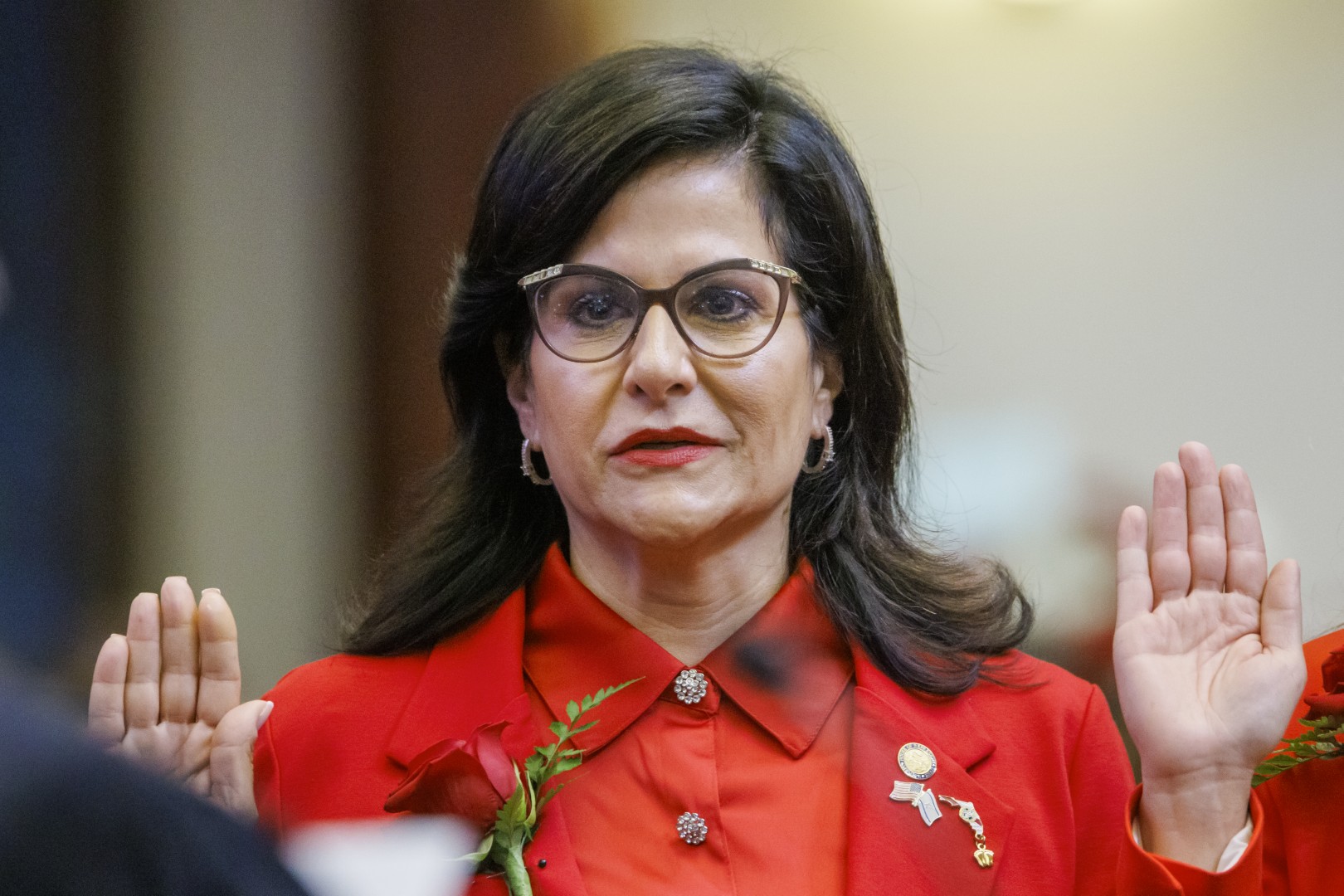
A proposal by Naples Republican Rep. Yvette Benarroch aimed at expanding and standardizing how local governments make budget information available to the public cleared its first House Committee stop, though it sparked extended debate across party lines over cost, local control and scope.
Benarroch told members of the Intergovernmental Affairs Subcommittee that state law requires local governments to make budgets public, but does not clearly spell out how long those documents must remain available, where they must be posted or whether they must be presented in a way the public can easily use.
“Most people need Ph.D.s to understand these budgets,” Benarroch told Committee members. “What this bill is asking local governments is to make sure that it doesn’t matter what education level you have, or where you are or what ZIP code you live in, we all have and need access to know how local governments are spending our money.”
If approved, HB 1329 would specifically mandate earlier and longer online posting of tentative and adopted budgets in searchable and downloadable formats. It also requires public access to detailed spending data, employee salaries and travel expenses, increases notice and retention requirements for budget amendments, and requires a pre-adoption budget reduction exercise.
The bill also includes a separate provision prohibiting cities and counties from spending public funds on diversity, equity and inclusion (DEI) programs or contracting for DEI-related services.
Benarroch said Thursday that the proposal is a clarification of existing law meant to standardize transparency, rather than a new spending mandate, arguing that current practices often leave taxpayers without meaningful access to budget information.
The proposal sparked debate divided across party lines. Several Democratic lawmakers questioned the scope of the proposal, whether it could apply to state agencies, the absence of data demonstrating deficiencies in existing local budget practices and the potential financial impact on local governments.
“You cannot clearly identify to me through the data … how this is impacting our cities and our counties in an era and in a time where we’re talking about ‘DOGE’ing’ and looking at how do we save dollars because we’re overly spending,” Fort Lauderdale Democratic Rep. Daryl Campbell said. “It feels like your bill is creating more of a cost for our cities and our counties by putting in repetitive steps that they’re already doing.”
Other lawmakers also pushed back against the bill, arguing that many local governments already provide searchable budgets and questioning whether a statewide mandate is necessary.
“As it pertains to the local government, I pulled up my local government, both the city of Orlando and Orange County,” Orlando Democratic Rep. Jennifer Harris said. “Their 2026 adopted budget is online … with graphs, analysis and charts.”

Supporters of the bill said it would promote consistency across jurisdictions and strengthen public trust. St. Johns Republican Rep. Kim Kendall said increasing budget transparency makes local officials more accountable to local residents themselves.
“There is nothing more home-rule than the residents themselves, not the Administrator,” Kendall said. “I love line 66, a tentative budget or a final budget hosted on the county’s official website. What’s so terrible about that?”
Benarroch disputed claims that the bill constitutes an unfunded mandate or interferes with local decision-making, saying it does not dictate policy decisions but instead clarifies how budget information must be made accessible.
“Whether someone lives in a small town or a large city, they deserve the same ability to see, understand and evaluate government spending,” Benarroch said.
“This bill does not grow government or take away local authority, it strengthens trust by making transparency real, consistent and meaningful for the people we serve. It seems to me that the burden is always on the people, and this is the people’s House. It is time we start standing up for the people.”
The Subcommittee voted 8 to 4 to advance the bill to its second of three Committee stops, in the State Administration Budget Subcommittee. St. Petersburg Republican Sen. Nick DiCeglie introduced a similar bill (SB 1566) that has not yet been considered at a Senate Committee.
Meanwhile, Jacksonville Republican Rep. Dean Black filed HB 1001 and Jacksonville Republican Sen. Clay Yarborough filed SB 1134, which are identified as comparable bills to HB 1329 because they also prohibit counties and municipalities from funding or promoting DEI programs. Both bills each cleared their first of three committee stops this week.
If approved by the Legislature and signed by the Governor, HB 1329 would go into effect July 1.