Connect with us

Business

YouTube, Reddit, and Instagram are tech giants—but some of their founders cashed out early

Published

on


To sell or not to sell.

That’s the major dilemma founders around the world face: Once they’ve started to get big enough to attract the attention of buyers, they face the decision of whether to cash out now, or use the compliment as fuel to go even bigger.

While it may seem like a no-brainer to say yes to an acquisition to the tune of millions—or even billions—it can be hard to later rest easy thinking about how much more you could have made independently. 

There may be no better recent case study than Mark Zuckerberg. In 2006, he received massive offers—$750 million from Viacom and $900 million from Yahoo—to buy out Facebook. But, as a 22-year-old, he was bullish that he still had plenty of runway left.

“We’re focused on building the company for the long term,” Zuckerberg said at the time. Today, the social platform now known as Meta is worth just over $1.9 trillion—a 2,100x increase over two decades. And Zuckerberg’s own wealth has ballooned to over $260 billion, according to the Bloomberg Billionaire Index.

Years later, Facebook began to make its own acquisitions; notably offering to buy Snapchat for $3 billion in 2013. But, Snap founder Evan Spiegel resisted, and today, the photo social platform is worth $12 billion.

Of course, in both of these instances, the founders are now members of the ultrawealthy and made far more by waiting versus selling out early. However, this isn’t the reality for everyone. 

YouTube: from $1.65 billion sale to $550 billion global platform

When YouTube’s first-ever video—”Meet me at the zoo”—went live in 2005, no one could have expected that the video platform would explode onto the internet.

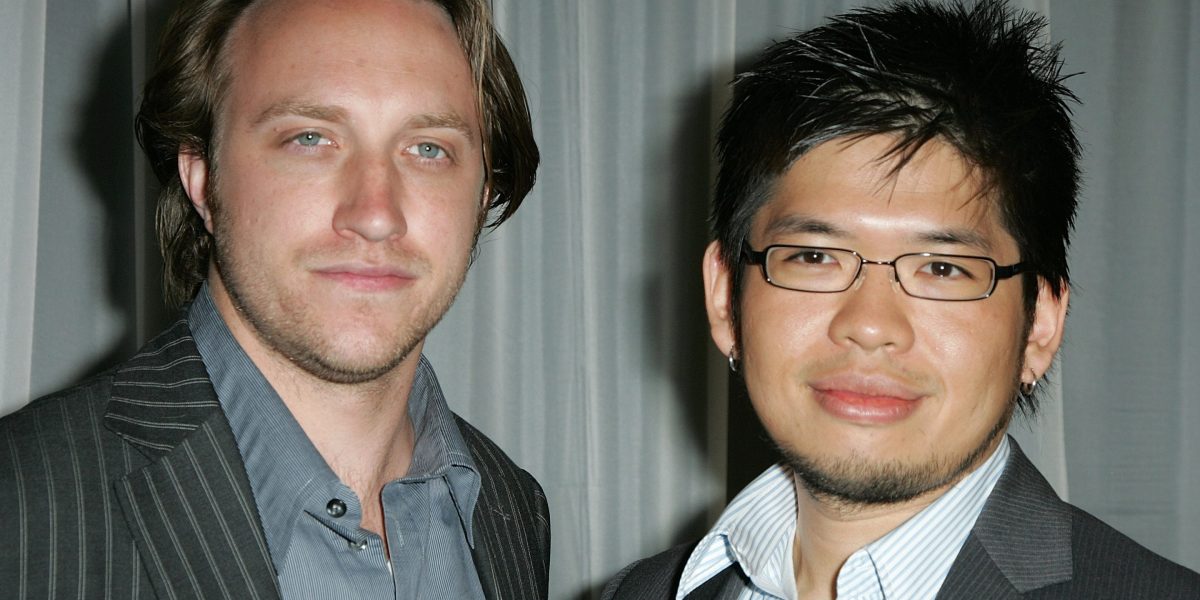
The growth was so substantial that just over a year after founding, cofounders Chad Hurley, Steven Chen and Jawed Karim decided that Google’s $1.65 billion offer was too good to resist

“This is great,” Hurley said in a video posted when the sale was in fall 2006. “Two kings have gotten together. The king of search, the king of video have gotten together. We’re going to have it our way.”

Hurley, YouTube’s then-CEO, received shares worth about $345 million by the time the Securities and Exchange Commission documents were released a few months later, according to The New York Times. Chen, YouTube’s then-CTO, received about $326 million in shares; and Jawed Karim, who left the venture early to go back to school, got $64 million.

While the sale made them financially secure for life and cemented their status as tech pioneers, it was just a fraction of the $550 billion that YouTube is valued at today, a 333x increase (unadjusted for inflation). For Hurley and Chen, their current slice could be worth some $100 billion each.

Reddit: From Waffle House to eventual IPO

After walking out of his LSAT exam 20 minutes in and heading to a Waffle House, Alexis Ohanian decided he wanted to become an entrepreneur. And after meeting Steve Huffman as students at the University of Virginia and later joining forces with Aaron Schwartz, the foundations for Reddit were created in 2005.

Within a year and a half, the social platform exploded to over 70,000 daily unique visitors, and buyers came knocking. But instead of holding out, the cofounders, who were in their early 20s, couldn’t resist the $10 million offer from Conde Nast. Plus, Ohanian’s life was a bit in shambles: his girlfriend at the time was in a coma, his dog died, and his mom was diagnosed with terminal brain cancer.

“As a first-time CEO fresh out of college, you’re feeling invulnerable, feeling really good about building this business,” Ohanian told Wired last month. “And then all of these things happen. And in particular when my mom was diagnosed, it really framed mortality for me in a new way.”

Flash forward to today, Reddit is now worth over $45 billion after going public earlier this year. The founders could be sharing a pie over 4,500x the size of the original sale. In fact, Ohanian would even surpass his wife, Serena Williams, with her $350 million net worth.  

Instagram: The photo app that Facebook grew by 100x

Instagram exploded on the social media stage in late 2010, with 1 million users registering within just two months of its creation, and buyers soon started expressing interest in the photo-sharing app.

In April 2012, Facebook announced it was purchasing Instagram for about $1 billion in cash and stock. It left cofounder Kevin Systrom, then 28, with about $400 million and Mike Krieger, then 25, with about $100 million; the rest was divided between investors and Instagram’s 11 other employees.

And while the payday was substantial, it was not as rewarding for the cofounders as they anticipated.

“I think the biggest lesson … coming into a fair amount of money pretty quickly, was that money itself is no end. It doesn’t make you happy. It doesn’t solve health problems. It can help in those things,” Systrom said at SXSW in 2019.

The cofounders decided to sell in part because Zuckerberg allowed them to stay at Instagram; Systrom remained as CEO and Krieger CTO until 2018. However, it also gave them a first-hand view into the wealth they could have made alone, with the photo-app soaring to a $100 billion valuation. Today, it is worth about $114 billion, according to Kantar—meaning each of the cofounders’ net worths would be well into the multi-billions.

Krieger now serves AI firm Anthropic’s product chief, whereas Systrom has not updated his LinkedIn after serving as CEO of Artifact, an AI-driven news aggregation platform the duo founded after leaving Facebook. Artifact was purchased by Yahoo in 2024 for an undisclosed amount.

The founder dilemma

There’s no question that in each of these cases, the acquisition had a positive impact on each company’s overall success. And while the founders of YouTube, Reddit, or Instagram may have missed out on billions more in wealth (Systrom, for example, has billionaire status today), their early sell provided security, resources, and freedom that they otherwise might have never received. 

It remains a nearly impossible game to predict if the startups could have scaled on par without their new corporate parent. But ultimately, these examples underscore just how the decision to sell can be one of the toughest—and most impactful—an entrepreneur may ever make.

Did you sell your company early, or did one major decision completely change the course of your career?Email your story to preston.fore@fortune.com.


Source link

Continue Reading

Business

Coupang CEO resigns over historic South Korean data breach

Published

on


Coupang chief executive officer Park Dae-jun resigned over his failure to prevent South Korea’s largest-ever data breach, which set off a regulatory and political backlash against the country’s dominant online retailer.

The company said in a statement on Wednesday that Park had stepped down over his role in the breach. It appointed Harold Rogers, chief administrative officer for the retailer’s U.S.-based parent company Coupang Inc., as interim head.

Park becomes the highest-profile casualty of a crisis that’s prompted a government investigation and disrupted the lives of millions across Korea. Nearly two-thirds of people in the country were affected by the breach, which granted unauthorized access to their shipping addresses and phone numbers.

Police raided Coupang’s headquarters this week in search of evidence that could help them determine how the breach took place as well as the identity of the hacker, Yonhap News reported, citing officials.

Officials have said the breach was carried out over five months in which the company’s cybersecurity systems were bypassed. Last week President Lee Jae Myung said it was “truly astonishing” that Coupang had failed to detect unauthorized access of its systems for such a long time.

Park squared off with lawmakers this month during an hours-long grilling. Responding to questions about media reports that claimed the attack had been carried out by a former employee who had since returned to China, he said a Chinese national who left the company and had been a “developer working on the authentication system” was involved.

The company faces a potential fine of up to 1 trillion won ($681 million) over the incident, lawmakers said.

Coupang founder Bom Kim has been summoned to appear before a parliamentary hearing on Dec. 17, with lawmakers warning of consequences if the billionaire fails to show.

Park’s departure adds fresh uncertainty to Coupang’s leadership less than seven months after the company revamped its internal structure to make him sole CEO of its Korean operations. In his new role, Rogers will focus on addressing customer concerns and stabilizing the company, Coupang said.

Join us at the Fortune Workplace Innovation Summit May 19–20, 2026, in Atlanta. The next era of workplace innovation is here—and the old playbook is being rewritten. At this exclusive, high-energy event, the world’s most innovative leaders will convene to explore how AI, humanity, and strategy converge to redefine, again, the future of work. Register now.


Source link

Continue Reading

Business

Databricks CEO Ali Ghodsi says company will be worth $1 trillion by doing these three things

Published

on


Ali Ghodsi, the CEO and cofounder of data intelligence company Databricks, is betting his privately held startup can be the latest addition to the trillion-dollar valuation club.

In August, Ghodsi told the Wall Street Journalthat he believed Databricks, which is reportedly in talks toraise funding at a $134 billion valuation, had “a shot to be a trillion-dollar company.” At Fortune’s Brainstorm AI conference in San Francisco on Tuesday, he explained how it would happen, laying out a “trifecta” of growth areas to ignite the company’s next leg of growth.

The first is entering the transactional database market, the traditional territory of large enterprise players like Oracle, which Ghodsi said has remained largely “the same for 40 years.” Earlier this year, Databricks launched a link-based offering called Lakehouse, which aims to combine the capabilities of traditional databases with modern data lake storage, in an attempt to capture some of this market.

The company is also seeing growth driven by the rise of AI-powered coding. “Over 80% of the databases that are being launched on Databricks are not being launched by humans, but by AI agents,” Ghodsi said. As developers use AI tools for “vibe coding”—rapidly building software with natural language commands—those applications automatically need databases, and Ghodsi they’re defaulting to Databricks’ platform.

“That’s just a huge growth factor for us. I think if we just did that, we could maybe get all the way to a trillion,” he said.

The second growth area is Agentbricks, Databricks’ platform for building AI agents that work with proprietary enterprise data.

“It’s a commodity now to have AI that has general knowledge,” Ghodsi said, but “it’s very elusive to get AI that really works and understands that proprietary data that’s inside enterprise.” He pointed to the Royal Bank of Canada, which built AI agents for equity research analysts, as an example. Ghodsi said these agents were able to automatically gather earnings calls and company information to assemble research reports, reducing “many days’ worth of work down to minutes.”

And finally, the third piece to Ghodsi’s puzzle involves building applications on top of this infrastructure, with developers using AI tools to quickly build applications that run on Lakehouse and which are then powered by AI agents. “To get the trifecta is also to have apps on top of this. Now you have apps that are vibe coded with the database, Lakehouse, and with agents,” Ghodsi said. “Those are three new vectors for us.”

Ghodsi did not provide a timeframe for attaining the trillion-dollar goal. Currently, only a handful of companies have achieved the milestone, all of them as publicly traded companies. In the tech industry, only big tech giants like Apple, Microsoft, Nvidia, Alphabet, Amazon, and Meta have managed to cross the trillion-dollar threshold.

To reach this level would require Databricks, which is widely expected to go public sometime in early 2026, to grow its valuation roughly sevenfold from its current reported level. Part of this journey will likely also include the expected IPO, Ghodsi said.

“There are huge advantages and pros and cons. That’s why we’re not super religious about it,” Ghodsi said when asked about a potential IPO. “We will go public at some point. But to us, it’s not a really big deal.”

Could the company IPO next year? Maybe, replied Ghodsi.


Source link

Continue Reading

Business

New contract shows Palantir working on tech platform for another federal agency that works with ICE

Published

on


Palantir, the artificial intelligence and data analytics company, has quietly started working on a tech platform for a federal immigration agency that has referred dozens of individuals to U.S. Immigration and Customs Enforcement for potential enforcement since September.

The U.S. Citizenship and Immigration Services agency—which handles services including citizenship applications, family immigration, adoptions, and work permits for non-citizens—started the contract with Palantir at the end of October, and is paying the data analytics company to implement “Phase 0” of a “vetting of wedding-based schemes,” or “VOWS” platform, according to the federal contract, which was posted to the U.S. government website and reviewed by Fortune.

The contract is small—less than $100,000—and details of what exactly the new platform entails are thin. The contract itself offers few details, apart from the general description of the platform (“vetting of wedding-based schemes”) and an estimate that the completion of the contract would be Dec. 9.Palantir declined to comment on the contract or nature of the work, and USCIS did not respond to requests for comment for this story.

But the contract is notable, nonetheless, as it marks the beginning of a new relationship between USCIS and Palantir, which has had longstanding contracts with ICE, another agency of the Department of Homeland Security, since at least 2011. The description of the contract suggests that the “VOWS” platform may very well be focused on marriage fraud and related to USCIS’ recent stated effort to drill down on duplicity in applications for marriage and family-based petitions, employment authorizations, and parole-related requests.

USCIS has been outspoken about its recent collaboration with ICE. Over nine days in September, USCIS announced that it worked with ICE and the Federal Bureau of Investigation to conduct what it called “Operation Twin Shield” in the Minneapolis-St. Paul area, where immigration officials investigated potential cases of fraud in immigration benefit applications the agency had received. The agency reported that its officers referred 42 cases to ICE over the period. In a statement published to the USCIS website shortly after the operation, USCIS director Joseph Edlow said his agency was “declaring an all-out war on immigration fraud” and that it would “relentlessly pursue everyone involved in undermining the integrity of our immigration system and laws.” 

“Under President Trump, we will leave no stone unturned,” he said.

Earlier this year, USCIS rolled out updates to its policy requirements for marriage-based green cards, which have included more details of relationship evidence and stricter interview requirements.

While Palantir has always been a controversial company—and one that tends to lean into that reputation no less—the new contract with USCIS is likely to lead to more public scrutiny. Backlash over Palantir’s contracts with ICE have intensified this year amid the Trump Administration’s crackdown on immigration and aggressive tactics used by ICE to detain immigrants that have gone viral on social media. Not to mention, Palantir inked a $30 million contract with ICE earlier this year to pilot a system that will track individuals who have elected to self-deport and help ICE with targeting and enforcement prioritization. There has been pushback from current and former employees of the company alike over contracts the company has with ICE and Israel.

In a recent interview at the New York Times DealBook Summit, Karp was asked on stage about Palantir’s work with ICE and later what Karp thought, from a moral standpoint, about families getting separated by ICE. “Of course I don’t like that, right? No one likes that. No American. This is the fairest, least bigoted, most open-minded culture in the world,” Karp said. But he said he cared about two issues politically: immigration and “re-establishing the deterrent capacity of America without being a colonialist neocon view. On those two issues, this president has performed.”


Source link

Continue Reading

Trending

Copyright © Miami Select.