Connect with us

Business

Xi touts China’s AI, chip wins in triumphant New Year’s speech

Published

on


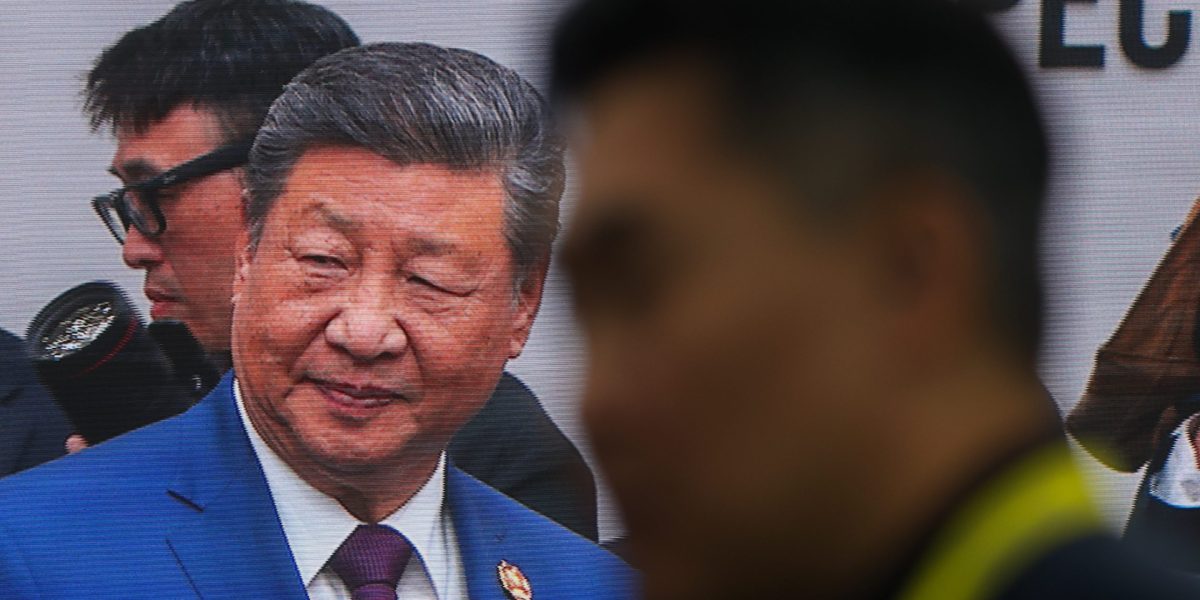
President Xi Jinping highlighted China’s achievements in artificial intelligence and the chip industry in a triumphant New Year’s Eve speech as he called for more confidence in the country’s development path in the year ahead.

“China has become one of the world’s fastest-rising economies in terms of innovative capacity,” he declared in a televised address on Wednesday beamed to the nation’s 1.4 billion people, in which he touted China’s achievements in large AI models and breakthroughs in chip research and development.

The Chinese leader underscored the role of innovation in his government’s aim for high-quality economic development and the integration of technology and industry, citing the advancements in humanoid robots and drones. He also touted China’s progress in aerospace and defense, pointing to the country’s latest aircraft carrier, the Fujian, which is equipped with a new electromagnetic catapult launch system.

China had “overcome numerous difficulties and challenges” to meet the targets set out in its 14th Five-Year Plan, Xi said, adding that the country’s gross domestic product is on track to reach 140 trillion yuan ($20 trillion) in 2025. 

“Our economic, technological and national defense capabilities, along with our overall national strength, have risen to new heights,” Xi said.

The speech was Xi’s most upbeat New Year’s Eve address in recent years, coming after his government overcame a multitude of challenges to underscore China’s status as a rising global superpower.

The year opened with a surprise breakthrough when Chinese AI startup DeepSeek defied US chip curbs to release a powerful, low-cost model that stunned Silicon Valley and rattled Wall Street. Chinese chipmakers have rushed to the IPO market, raising funds that are key to the nation’s goal of technological self-reliance and winning the global race on artificial intelligence.

China also stared down US President Donald Trump’s renewed trade war, wielding its dominance over rare earths to extract concessions on tariffs and export controls. Chinese shipments found new homes outside the US, pushing its trade surplus beyond $1 trillion for the first time — a new record in global trade history.

data-srcyload

Ties between the world’s largest economies have stabilized in recent months after Xi and Trump struck a one-year truce in South Korea in October. Trump is scheduled to visit China in April.

In a further sign of Xi’s confidence in handling relations with Washington, the Chinese leader on Wednesday did not highlight “external uncertainties” as a challenge in his outlook for the new year as he had done for 2025. Instead, he noted that 2026 marks the start of the government’s 15th Five-Year Plan and called for a focus on high-quality development.

“We must remain anchored to our objectives, maintain firm confidence, and build on our momentum,” he said.

Anti-Corruption Drive

Xi also stressed the need to push ahead with his anti-corruption campaign, calling for the ruling Communist Party to enforce strict discipline and promote self-reform to “remove decay and grow new flesh.” Xi’s widening purge has ousted scores of military generals and investigated a record number of high-level officials for corruption this year.

Despite the triumphant tone, Xi still faces plenty of challenges at home, including a host of structural vulnerabilities in the world’s second largest economy.

Earlier on Wednesday, Xi declared that China is expected to meet its growth target of “about 5%,” providing an upbeat backdrop to data showing a recovery in the nation’s manufacturing sector. Official data released on Wednesday showed the first expansion in factory activity in nine months, with the manufacturing purchasing managers’ index rising to 50.1 in December from 49.2 in November.

But the economy remains fragile as the year draws to a close. Investment lost further ground in November, consumer spending growth slowed sharply and the property sector deteriorated, reflecting persistent weaknesses in domestic demand.

Xi has previously signaled a tolerance for slower growth in some regions and even said recently that China should crack down on “reckless” projects, highlighting his focus on the quality, rather than pace, of economic growth.

As in previous years, Xi used his speech to reiterate the ruling Communist Party’s stance on Taiwan. “Compatriots on both sides of the Taiwan Strait are connected by blood that is thicker than water. The historical trend toward national reunification is unstoppable,” he said, alluding to Beijing’s longtime vow to bring the self-ruled island under its control, by force if necessary.

Xi’s message to Taiwan came after the People’s Liberation Army’s concluded its most expansive drills around the island democracy in decades. For two days, Chinese warships and aircraft simulated a blockade of the global chip hub with live-fire exercises encircling the main island, while dozens of rockets struck waters near its northern and eastern ends on Tuesday.


Source link

Continue Reading

Business

5 states to ban soda, candy, other snacks from SNAP recipients under MAHA food-stamp push

Published

on


Starting Thursday, Americans in five states who get government help paying for groceries will see new restrictions on soda, candy and other foods they can buy with those benefits.

Indiana, Iowa, Nebraska, Utah and West Virginia are the first of at least 18 states to enact waivers prohibiting the purchase of certain foods through the Supplemental Nutrition Assistance Program, or SNAP.

It’s part of a push by Health Secretary Robert F. Kennedy Jr. and Agriculture Secretary Brooke Rollins to urge states to strip foods regarded as unhealthy from the $100 billion federal program — long known as food stamps — that serves 42 million Americans.

“We cannot continue a system that forces taxpayers to fund programs that make people sick and then pay a second time to treat the illnesses those very programs help create,” Kennedy said in a statement in December.

The efforts are aimed at reducing chronic diseases such as obesity and diabetes associated with sweetened drinks and other treats, a key goal of Kennedy’s Make America Healthy Again effort.

But retail industry and health policy experts said state SNAP programs, already under pressure from steep budget cuts, are unprepared for the complex changes, with no complete lists of the foods affected and technical point-of-sale challenges that vary by state and store. And research remains mixed about whether restricting SNAP purchases improves diet quality and health.

The National Retail Federation, a trade association, predicted longer checkout lines and more customer complaints as SNAP recipients learn which foods are affected by the new waivers.

“It’s a disaster waiting to happen of people trying to buy food and being rejected,” said Kate Bauer, a nutrition science expert at the University of Michigan.

A report by the National Grocers Association and other industry trade groups estimated that implementing SNAP restrictions would cost U.S. retailers $1.6 billion initially and $759 million each year going forward.

“Punishing SNAP recipients means we all get to pay more at the grocery store,” said Gina Plata-Nino, SNAP director for the anti-hunger advocacy group Food Research & Action Center.

The waivers are a departure from decades of federal policy first enacted in 1964 and later authorized by the Food and Nutrition Act of 2008, which said SNAP benefits can be used for “any food or food product intended for human consumption,” except alcohol and ready-to-eat hot foods. The law also says SNAP can’t pay for tobacco.

In the past, lawmakers have proposed stopping SNAP from paying for expensive meats like steak or so-called junk foods, such as chips and ice cream.

But previous waiver requests were denied based on USDA research concluding that restrictions would be costly and complicated to implement, and that they might not change recipients’ buying habits or reduce health problems such as obesity.

Under the second Trump administration, however, states have been encouraged and even incentivized to seek waivers – and they responded.

“This isn’t the usual top-down, one-size-fits-all public health agenda,” Indiana Gov. Mike Braun said when he announced his state’s request last spring. “We’re focused on root causes, transparent information and real results.”

The five state waivers that take effect Jan. 1 affect about 1.4 million people. Utah and West Virginia will ban the use of SNAP to buy soda and soft drinks, while Nebraska will prohibit soda and energy drinks. Indiana will target soft drinks and candy. In Iowa, which has the most restrictive rules to date, the SNAP limits affect taxable foods, including soda and candy, but also certain prepared foods.

“The items list does not provide enough specific information to prepare a SNAP participant to go to the grocery store,” Plata-Nino wrote in a blog post. “Many additional items — including certain prepared foods — will also be disallowed, even though they are not clearly identified in the notice to households.”

Marc Craig, 47, of Des Moines, said he has been living in his car since October. He said the new waivers will make it more difficult to determine how to use the $298 in SNAP benefits he receives each month, while also increasing the stigma he feels at the cash register.

“They treat people that get food stamps like we’re not people,” Craig said.

SNAP waivers enacted now and in the coming months will run for two years, with the option to extend them for an additional three, according to the Agriculture Department. Each state is required to assess the impact of the changes.

Health experts worry that the waivers ignore larger factors affecting the health of SNAP recipients, said Anand Parekh, a medical doctor who is the chief health policy officer at the University of Michigan School of Public Health.

“This doesn’t solve the two fundamental problems, which is healthy food in this country is not affordable and unhealthy food is cheap and ubiquitous,” he said.

——

The Associated Press Health and Science Department receives support from the Howard Hughes Medical Institute’s Department of Science Education and the Robert Wood Johnson Foundation. The AP is solely responsible for all content.


Source link

Continue Reading

Business

‘You only find out who is swimming naked when the tide goes out’: Pearls of Warren Buffett wisdom on his last day in charge

Published

on


The advice that legendary investor Warren Buffett offered on investing and life over the years helped earn him legions of followers who eagerly read his annual letters and filled an arena in Omaha every year to listen to him at Berkshire Hathaway’s annual meetings.

Buffett’s last day as CEO is Wednesday after six decades of building up the Berkshire conglomerate. He’ll remain chairman, but Greg Abel will take over leadership.

Here’s a collection of some of Buffett’s most famous quotes from over the years:

___

“Be fearful when others are greedy, and greedy when others are fearful.”

That’s how Buffett summed up his investing approach of buying out-of-favor stocks and companies when they were selling for less than he estimated they were worth.

He also urged investors to stick with industries they understand that fall within their “circle of competence” and offered this classic maxim: “Rule No. 1: Never lose money. Rule No. 2: Never forget Rule No. 1.”

___

“After they first obey all rules, I then want employees to ask themselves whether they are willing to have any contemplated act appear the next day on the front page of their local paper to be read by their spouses, children and friends with the reporting done by an informed and critical reporter.

“If they follow this test, they need not fear my other message to them: Lose money for the firm and I will be understanding; lose a shred of reputation for the firm and I will be ruthless.”

That’s the ethical standard Buffett explained to a Congressional committee in 1991 that he would apply as he cleaned up the Wall Street investment firm Salomon Brothers. He has reiterated the newspaper test many times since over the years.

___

“You only find out who is swimming naked when the tide goes out.”

Many companies might do well when times are good and the economy is growing, but Buffett told investors that a crisis always reveals whether businesses are making sound decisions.

___

“Who you associate with is just enormously important. Don’t expect that you’ll make every decision right on that. But you are going to have your life progress in the general direction of the people you work with, that you admire, that become your friends.”

Buffett always told young people that they should try to hang out with people who they feel are better than them because that will help improve their lives. He said that’s especially true when choosing a spouse, which might be the most important decision in life.

___

“Our unwavering conclusion: never bet against America.”

Buffett has always remained steadfast in his belief in the American capitalist system. He wrote in 2021 that “there has been no incubator for unleashing human potential like America. Despite some severe interruptions, our country’s economic progress has been breathtaking.”


Source link

Continue Reading

Business

JPMorgan says Javice firms billed millions just for ‘attendance’

Published

on


JPMorgan Chase & Co. said Charlie Javice’s “unconscionable” $74 million tab for legal fees included more than $5 million in charges for lawyers and other staff just for attending her fraud trial, even on days court wasn’t in session.

A previously sealed Delaware court filing released Monday offered the most detailed picture yet of JPMorgan’s claim that Javice, who was convicted in March of defrauding the largest US bank in a $175 million deal, abused a 2023 order requiring it to cover the costs of her defense. 

JPMorgan is seeking to avoid $10.2 million in disputed charges and end the requirement that it pay future bills. Lawyers at Javice’s five law firms billed unnecessary work and inappropriate expenses under the mindset that “someone else is paying her bills,” according to the filing.

The dispute has raised the question of how much is too much for a top-flight criminal defense. Javice’s costs have been much higher than the $30 million in bills Theranos Inc. founder Elizabeth Holmes amassed in her defense. 

The bank focused much of its criticism on Javice’s two largest firms, Quinn Emanuel Urquhart & Sullivan and Mintz, Levin, Cohn, Ferris, Glovsky and Popeo, which it said “have already received tens of millions, and seek millions more for patently unreasonable fees and expenses that constitute clear abuse.” 

JPMorgan said it has “largely resolved” bills through July with Javice’s other firms, including the one for her planned appeal.

In a statement, a Quinn Emanuel spokesman said, “JPMorgan is trying to walk away from its contractual obligation to pay the remainder of Ms. Javice’s legal bills — all in hopes it can cut off her right to pursue her meritorious appeal.” Mintz didn’t immediately respond to phone calls and emails seeking comment.

The two large firms had already billed more than $22 million in the criminal case by August 2024, when Javice hired two smaller firms defend her in the upcoming trial, offering “no explanation” for why Quinn Emanuel and Mintz Levin couldn’t serve as lead trial counsel. 

Quinn Emanuel’s fee’s “skyrocketed” after telling the court before trial that it anticipated transitioning its responsibilities to Mintz, JPMorgan argued. And the Mintz Levin lawyers were “peripheral and unnecessary, even during trial,” the bank said.

JPMorgan said that Javice had as many as 16 to 29 lawyers and other legal professionals in court for every day of her trial, billing an average of $360,000 a day during the six weeks of the trial. No more then four lawyers had speaking roles, and many of the bills were for “trial attendance alone,” JPMorgan said. “Javice’s counsel even improperly billed for trial ‘attendance’ on non-trial days.”

According to the bank, lawyers attending the trial charged a number of inappropriate expenses, the bank said. Included in 2,377 pages of receipts submitted for March were a Cookie Monster toddler’s toy, lavender and jasmine sachets, 57 hotel room upgrades at $300 a night and a $900 meal at Koloman, a highly rated New York restaurant, JPMorgan said.

A New York jury found Javice guilty of misleading JPMorgan into acquiring her student-finance startup, Frank, by creating millions of fake users for the site. She was sentenced in September to seven years in prison but is free on bail pending her appeal.

As part of her sentence, Javice was ordered to repay the legal fees JPMorgan covered. But even if that order is upheld, the bank is unlikely to ever get back more than a small fraction of the total amount. Javice is only required to pay 10% of her income in restitution after she leaves prison, and the order expires in 20 years.

The case is Javice v. JPMorgan, 2022-1179, Delaware Chancery Court (Wilmington).


Source link

Continue Reading

Trending

Copyright © Miami Select.