Connect with us

Politics

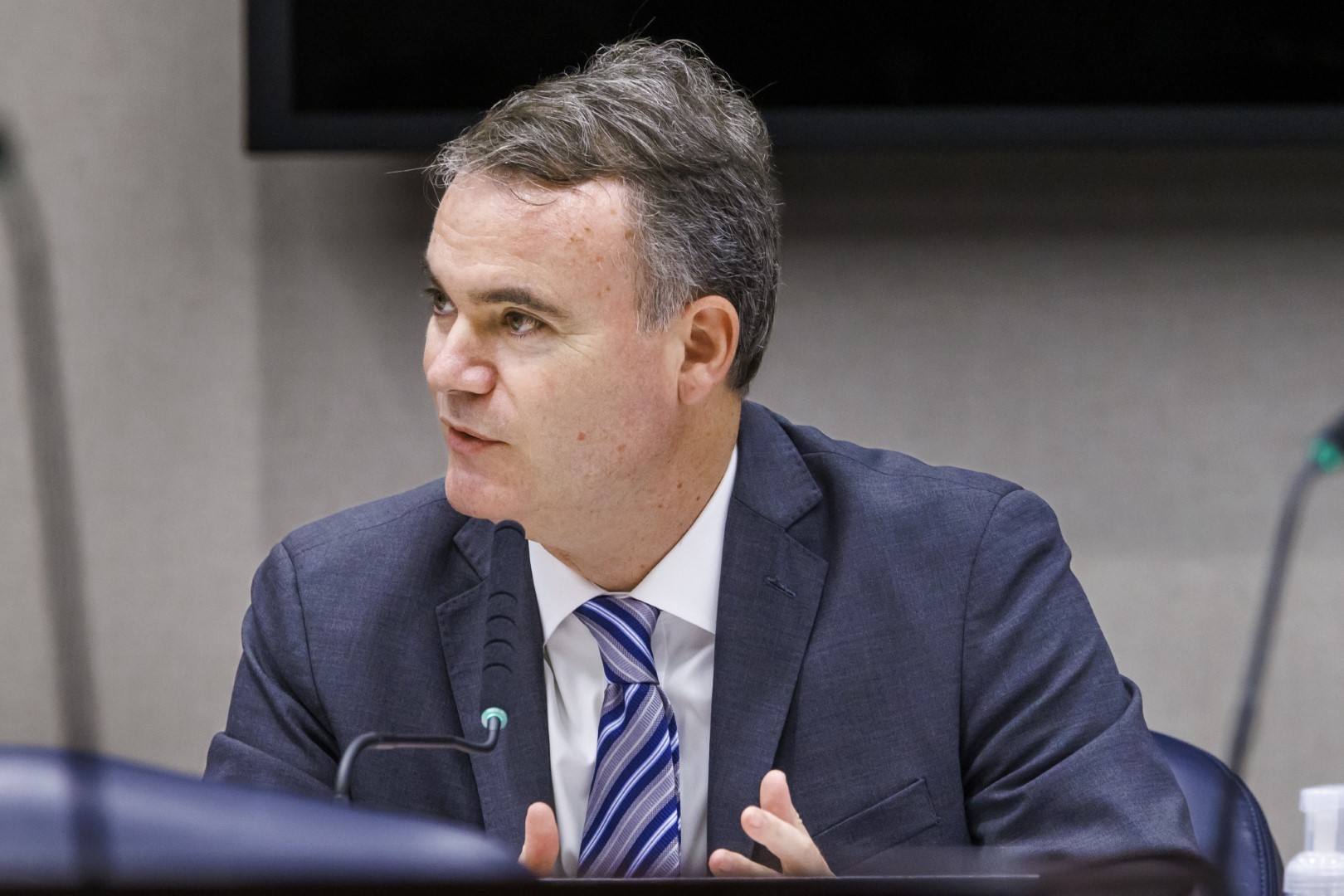
Wyman Duggan files bill to give Duval School Board more legal autonomy

Published

on


The city of Jacksonville’s lawyer would maintain significant control if this bill becomes law.

The Duval County School Board could be positioned to have its own General Counsel next year, breaking with almost six decades of precedent in Jacksonville’s consolidated government.

Legislation from House Speaker Pro Tempore Wyman Duggan (HB 4049) seeks a General Counsel independent of the one atop local government, although the Board lawyer ultimately would be “subject to the opinion” of the city’s General Counsel, and would otherwise be subordinate in litigation and contract preparation, in a condition to which the Board agreed.

The local bill met resistance from the Jacksonville City Council when presented for its approval. Some Council members said it threatened the consolidated government model ahead of voting against recommending the charter change to the delegation.

The controversy that a majority of the City Council couldn’t abide stemmed from whether the School Board could subvert the independent authority of the city’s General Counsel.

Explaining the proposal earlier this year, Chair Charlotte Joyce noted that the School Board was concerned about the candidates who applied earlier this year for an opening not being certified in education law, and said other Districts pick their own lawyers, who are eligible for the Florida Retirement System.


Source link

Continue Reading

Politics

After quiet off-year elections, Democrats renew worries about Donald Trump interfering in Midterms

Published

on


If history is a guide, Republicans stand a good chance of losing control of the House of Representatives in 2026. They have just a slim majority in the chamber, and the incumbent party usually gives up seats in Midterm elections.

President Donald Trump, whose loss of the House halfway through his first term led to two impeachments, is trying to keep history from repeating — and doing so in ways his opponents say are intended to manipulate next year’s election landscape.

He has rallied his party to remake congressional maps across the country to create more conservative-leaning House seats, an effort that could end up backfiring on him. He’s directed his administration to target Democratic politicians, activists and donors. And, Democrats worry, he’s flexing his muscles to intervene in the Midterms like no administration ever has.

Democrats and other critics point to how Trump has sent the military into Democratic cities over the objections of Democratic Mayors and Governors. They note that he’s pushed the Department of Homeland Security to be so aggressive that at one point its agents handcuffed a Democratic U.S. Senator. And some warn that a Republican-controlled Congress could fail to seat winning candidates if Democrats reclaim the House majority, recalling Trump’s efforts to stay in power even after voters rejected him in 2020, leading to the violent attack by his supporters on the U.S. Capitol.

Regarding potential military deployments, Ken Martin, Chairman of the Democratic National Committee (DNC), told The Associated Press: “What he is going to do is send those troops there, and keep them there all the way through the next election, because guess what? If people are afraid of leaving their house, they’re probably not going to leave their house to go vote on Election Day. That’s how he stays in power.”

Military to the polls, or fearmongering?

Democrats sounded similar alarms just before November’s elections, and yet there were no significant incidents. California Gov. Gavin Newsom, a frequent Trump antagonist who also warns about a federal crackdown on voting in 2026, predicted that masked immigration agents would show up at the polls in his state, where voters were considering a ballot measure to counter Trump’s redistricting push.

There were no such incidents in November, and the measure to redraw California’s congressional lines in response to Trump’s efforts elsewhere won in a landslide.

White House spokeswoman Abigail Jackson said the concerns about the Midterms come from Democratic politicians who are “fearmongering to score political points with the radical left flank of the Democrat party that they are courting ahead of their doomed-to-fail presidential campaigns.”

She described their concerns as “baseless conspiracy theories.”

Susie Wiles, Trump’s Chief of Staff, denied that Trump was planning to use the military to try to suppress votes.

“I say it is categorically false, will not happen. It’s just wrongheaded,” she told Vanity Fair for an interview that was published earlier in December.

DNC Litigation Director Dan Freeman said he hasn’t seen an indication that Trump will send immigration enforcement agents to polling places during the Midterms, but is wary.

He said the DNC filed public records requests in an attempt to learn more about any such plans and is drafting legal pleadings it could file if Trump sends armed federal agents to the polls or otherwise intervenes in the elections.

“We’re not taking their word for it,” Freeman said in an interview.

States, not presidents, run elections

November’s off-year elections may not be the best indicator of what could lie ahead. They were scattered in a handful of states, and Trump showed only modest interest until late in the fall when his Department of Justice announced it was sending federal monitors to California and New Jersey to observe voting in a handful of counties. It was a bureaucratic step that had no impact on voting, even as it triggered alarm from Democrats.

Alexandra Chandler, the Legal Director of Protect Democracy, a group that has clashed with Trump over his role in elections, said she was heartened by the lack of drama during the 2025 voting.

“We have so many positive signs we can look to,” Chandler said, citing not only a quiet election but GOP Senators’ resistance to Trump’s demands to eliminate the filibuster and the widespread resistance to Trump’s demand that television host Jimmy Kimmel lose his job because of his criticism of the President. “There are limits” on Trump’s power, she noted.

“We will have elections in 2026,” Chandler said. “People don’t have to worry about that.”

Under the Constitution, a President has limited tools to intervene in elections, which are run by the states. Congress can help set rules for federal elections, but states administer their own election operations and oversee the counting of ballots.

When Trump tried to singlehandedly revise election rules with a sweeping executive order shortly after returning to office, the courts stepped in and stopped him, citing the lack of a constitutional role for the President. Trump later promised another order, possibly targeting mail ballots and voting machines, but it has yet to materialize.

DOJ voter data request ‘should frighten everybody’

Still, there’s plenty of ways a President can cause problems, said Rick Hasen, a UCLA law professor.

Trump unsuccessfully pushed Georgia’s top election official to “find” him enough votes to be declared the winner there in 2020 and could try similar tactics in Republican-dominated states in November. Likewise, Hasen said, Trump could spread misinformation to undermine confidence in vote tallies, as he has done routinely ahead of elections.

It’s harder to do that in more lopsided contests, as many in 2025 turned into, Hasen noted.

“Concerns about Trump interfering in 2026 are real; they’re not frivolous,” Hasen said. “They’re also not likely, but these are things people need to be on guard for.”

One administration move that has alarmed election officials is a federal demand from his Department of Justice for detailed voter data from the states. The administration has sued the District of Columbia and at least 21 states, most of them controlled by Democrats, after they refused to turn over all the information the DOJ sought.

“What the DOJ is trying to do is something that should frighten everybody across the political spectrum,” said David Becker, a former Justice Department voting rights attorney and Executive Director of the Center for Election Innovation & Research. “They’re trying to use the power of the executive to bully states into turning over highly sensitive data — date of birth, Social Security numbers, driver’s license, the Holy Trinity of identity theft — hand it over to the DOJ for who knows what use.”

‘Voter protection’ vs ‘election integrity’

Voting rights lawyers and election officials have been preparing for months for the midterms, trying to ensure there are ways to counter misinformation and ensure state election systems are easy to explain. Both major parties are expected to stand up significant campaigns around the mechanics of voting: Democrats mounting what they call a “voter protection” effort to monitor for problems while Republicans focus on what they call “election integrity.”

Freeman, the DNC Litigation Director who previously worked in the DOJ’s voting section, said his hiring this year was part of a larger effort by the DNC to beef up its in-house legal efforts ahead of the midterms. He said the committee has been filling gaps in voting rights law enforcement that the DOJ has typically covered, including informing states that they can’t illegally purge citizens from their voter rolls.

Tina Barton, Co-Chair of the Committee on Safe and Secure Elections, a coalition of law enforcement and election officials who advise jurisdictions on de-escalation and how to respond to emergencies at polling places, says interest in the group’s trainings has “exploded” in recent weeks.

“There’s a lot at stake, and that’s going to cause a lot of emotions,” Barton said.

___

Republished with permission of The Associated Press.


Source link

Continue Reading

Politics

Byron Donalds calls for restrictions on police use of drones

Published

on


Gubernatorial candidate Byron Donalds says he intends to limit the use of drones by Florida law enforcement.

The Republican Congressman posted on the topic after an article by The Wall Street Journal, titled “A police drone might be behind your next ticket,” covered the expanded use of drones by law enforcement nationwide over the objection of privacy rights groups.

“Not in my Florida!” Donalds wrote on X. “I oppose red light cameras, and as Governor, I’ll ground these drones.”

His campaign in a statement to Florida Politics clarified that Donalds would not stop all use of drones by police, but wants significant limits.

“Drones should not be used to issue tickets or create broad surveillance of Floridians. There are legitimate law enforcement purposes for drone technology, but they should not be used in a Big Brother-like manner,” the statement reads.

Pasco County Sheriff Chris Nocco, who endorsed Donalds in September, agrees.

“I agree with Congressman Donalds’ position,” Nocco said. “While there are many benefits from the use of drones for law enforcement, such as finding missing people and security around critical incidents, these drones should not be used for traffic enforcement, as Floridians have consistently rejected this red-light camera-like approach and instead they should be used for saving and protecting lives and property.”

That puts Donalds and Nocco on the same side regarding this issue as the American Civil Liberties Union (ACLU). Jay Stanley, senior policy analyst with the ACLU Speech, Privacy, and Technology Project, told The Wall Street Journal that drones have use for some police activity, but should not be used to monitor people in their daily lives.

“There needs to be limits, lest drone surveillance becomes pervasive and changes what it’s like to be out in public in America,” Stanley said.

But as the Journal notes, many agencies are already using drones with regularity, including in Florida. The story spotlighted surveillance being done by Sunny Isles Beach to patrol beaches, and video accompanying the article online shows a drone hovering over Collins Avenue.

Donalds’ position already garnered pushback from political opponents who questioned why he hasn’t taken a more aggressive position as a lawmaker in Congress or the Legislature.

When Donalds initially posted, then deleted, that he “protected Florida from red light cameras,” GOP Primary opponent James Fishback replied: “Are you smoking crack? There are literally thousands of them across the state,” Fishback posted.

The Florida Supreme Court in 2018 ruled that red-light cameras do not violate the Florida Constitution. Gov. Ron DeSantis in 2024 signed a measure that puts transparency and reporting requirements on local governments employing the technology.

But legislation signed this year by the Governor, while imposing criminal penalties on individuals using drones to spy on people, still allows police the power to use drones for surveillance. The law specifically exempts any state agency or law enforcement entity using a drone in the “course and scope” of employment.


Source link

Continue Reading

Politics

December interest rate cut was a close call for some Fed officials, minutes show

Published

on


Some Federal Reserve officials who supported cutting a key interest rate earlier this month could have instead backed keeping the rate unchanged, minutes released Tuesday show, underscoring the divisions and uncertainty permeating the central bank.

At their December 9-10 meeting Fed officials agreed to cut their key interest rate by a quarter point for the third time this year, to about 3.6%, the lowest in nearly three years. Yet the move was approved by a 9-3 vote, an unusual level of dissent for a committee that typically works by consensus. Two Fed officials supported keeping the rate unchanged, while one wanted a larger, half-point reduction.

The minutes underscored the deep split on the 19-member policymaking committee over what constitutes the biggest threat to the economy: weak hiring or stubbornly-elevated inflation. If a sluggish job market is the biggest threat, then the Fed would typically cut rates more. But if still-high inflation is the bigger problem, then the Fed would keep rates elevated, or even raise them. Just 12 of the 19 members vote on rate decisions, though all participate in discussions.

The minutes showed that even some Fed officials who supported the rate cut did so with reservations. Some Fed officials wanted to wait for more economic data before making any further moves, the minutes said. Key economic data on jobs, inflation, and growth were delayed by the six-week government shutdown, leaving Fed officials with only outdated information at their meeting earlier this month.

The minutes don’t identify specific officials. But how they vote is public, and two policymakers dissented in favor of keeping rates unchanged: Jeffrey Schmid, the President of the Federal Reserve Bank of Kansas City, and Austan Goolsbee, President of the Chicago Fed.

The third dissent was from Fed Governor Stephen Miran, who was appointed by President Donald Trump in September and favored a half-point cut.

When the Fed reduces its key rate, over time it can lower borrowing costs for homes, cars, and credit cards, though market forces also affect those rates.

At its December meeting, the Fed also released quarterly economic projections, which also showed the extent of the divisions on the Fed committee. Seven officials projected no cuts in 2026, while eight forecast two or more reductions. Four supported just one cut.

A weaker job market would likely spur the Fed to reduce borrowing costs more quickly. Two weeks ago, the government reported that employers had cut about 40,000 jobs in October and November, while the unemployment rate rose to 4.6%, a four-year high.

Inflation, meanwhile, remains above the Fed’s 2% target, complicating the central bank’s next moves. In November, annual inflation cooled to 2.7%, down from 3% in September, but last month’s data were likely distorted by the shutdown, economists said, which forced the government to estimate many price changes rather than measuring them directly.

Fed Chair Jerome Powell said after the Dec. 10 meeting that the central bank cut rates out of concern that the job market is even weaker than it appears. While government data shows that the economy added just 40,000 jobs a month from April through September, Powell said that figure could be revised lower by as much as 60,000, which would mean employers actually shed an average of 20,000 jobs a month during that period.

“It’s a labor market that seems to have significant downside risks,” Powell told reporters. “People care about that. That’s their jobs.”

___

Republished with permission of The Associated Press.


Source link

Continue Reading

Trending

Copyright © Miami Select.