Connect with us

Fashion

WOW founder Dimas Gimeno: “Channels no longer exist, retail must move beyond physical and digital”
Published

on


Translated by

Nazia BIBI KEENOO

Published


October 31, 2025

WOW opened its doors on Madrid’s Gran Vía in 2022, bringing a new department store concept to the heart of the Spanish capital. In 2023, it opened a second store on Calle Serrano and, in 2025, the company aims to reach €30 million ($32 million) in sales, with long-awaited profitability expected between 2026 and early 2027. Its founder, Dimas Gimeno, former president of El Corte Inglés, gave a talk on Thursday, Oct. 30, at the 4th Aragonese Congress on Commerce and Innovation, held in Zaragoza and organized by the Government of Aragon. FashionNetwork.com spoke with Gimeno about his vision for retail and the challenges facing the sector in general—and the platform he founded in particular.

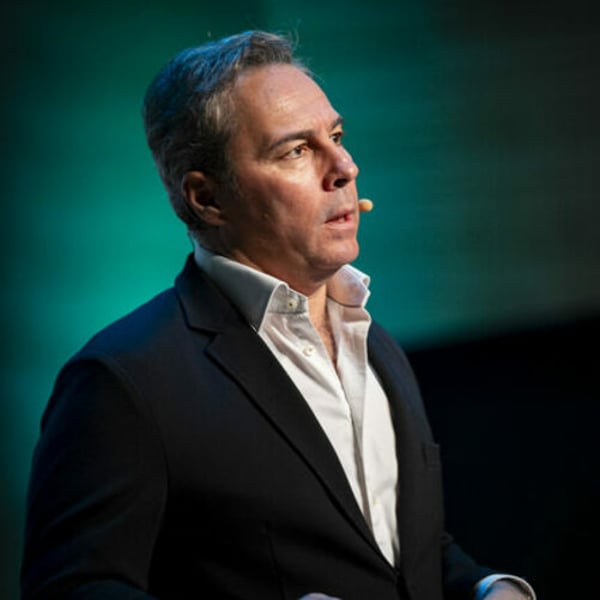
Dimas Gimeno, founder of WOW – IV Congreso Aragonés de Comercio e Innovación

FashionNetwork.com: You mentioned at the beginning of your talk that retail defines a city’s identity. How can that identity be maintained in a world where commerce is increasingly uniform?

Dimas Gimeno: By focusing on the local. It’s essential to recognize that a city—and its retail—should represent local products. And that’s where I think Spain is particularly privileged, because it offers an extraordinary variety of craftsmanship and gastronomy. We are also manufacturers and home to thriving brands—that’s what tourists are looking for.

FNW: You maintain that omnichannel has not worked, despite being the big bet of many brands, and that we must move toward “phygital.” Why?

D. G.: Omnichannel is a concept—a goal. I think it was conceived the wrong way. Why do I think it didn’t work? Because, at the time, it was framed—quite logically for those of us already in the physical world—as the task of digitizing our offline reality. It made sense: if your business is there, you adapt the new to what you already have.

However, it has been demonstrated that this alone isn’t sufficient. It’s not about digitizing the physical, but about understanding that you have to be 100% digital and, from there, design your physical presence. Now they call it “unified commerce”; I call it “phygital.” The key is to understand that channels no longer exist. We must stop thinking in terms of “physical” and “digital.” There’s one customer who moves fluidly, engages with your brand constantly, and in different ways.

FNW: Do customers no longer make that distinction between channels?

D. G.: If you ask a customer about physical or digital channels, they probably don’t care. They may have discovered you on a social network; from there, if they decide to buy, they’ll naturally move to your e-commerce. And from e-commerce, you guide them into the physical store. Why? Because the physical store is where true loyalty is forged, the brand develops far more, and, above all, the conversion rate is much higher.

Think of the shopping basket we all recognize online: the key would be for that basket to be the same in-store and online. Omnichannel doesn’t work because it simply digitizes a physical process. And the first requirement for being unified is that your range is 100% available online. Many brands and retailers still haven’t achieved this because it’s highly complex.

FNW: How can small businesses face this challenge? These are the ones that give cities their identity.

D. G.: By being very true to themselves—making sure what they sell is authentic, different, and unique. In that respect, small businesses are unbeatable. They also have a tremendously valuable relationship with their customers. We’re talking about generations, neighborhoods, personal connections—that’s fundamental.

However, these businesses struggle to invest in technology because they’re too small. They should also make their physical offer purchasable online. But individually, they can’t do it. Platforms must emerge that aggregate many small players and, by pooling them, create a kind of digital marketplace that unites them. That’s where I think public funding should play a role.

Dimas Gimeno, in his talk in Zaragoza
Dimas Gimeno, in his talk in Zaragoza – IV Congreso Aragonés de Comercio e Innovación

FNW: Why do you believe the physical store is the future of retail?

D. G.: First, because I consider myself a shopkeeper and because I’ve been a salesperson; I know what I’m talking about and I know how important it is. It’s a wonderful profession, although it’s not always well-regarded because it demands hard work. But I’m an advocate because I’ve seen—and I know—what a well-executed physical store can do when a customer comes in and wants to buy everything. The digital channel can’t do that; only a physical store can.

If you add to that a distinctive, surprising product proposition and a salesperson who is well-trained, passionate about what they sell, and equipped with today’s technological tools, you’ll be creating something unparalleled. That’s the key to competing with the big platforms: it’s exactly what they can’t do.

FNW: Customer experience, along with omnichannel, is one of the most recurring concepts in recent years. What should retailers offer customers?

D. G.: If you asked someone from the last century about customer experience, they’d say, “What’s that?” The experience itself is a combination of various things. For example, you can have a beautiful store, but if the salesperson hasn’t treated the customer well, the experience is ruined.

It’s a space that catches the eye, where you want to be, but where there’s also someone who attends to you, cares about you, perhaps even knows who you are. And thanks to that person, when you plan to buy one thing, you end up buying seven. That—and leaving satisfied—is a shopping experience. It’s about getting to know your customer, bringing them the product they want, even beyond that, and ensuring they return. And that was already true in the last century.

FNW: You discuss the importance of sales staff, but is it challenging to find those profiles for retail, as is the case in the hospitality industry?

D. G.: The service sector as such has the same problem: it’s not a career that’s well regarded. At WOW, we are successfully attracting top salespeople and, above all, young individuals who are eager to pursue a career in this field. This challenge has always existed: you need a good recruitment process, but you also have to train and motivate your people.

Another important point is to offer a professional career path within the company, with room for growth. If the idea is to hire people, keep them for a year, and then replace them… who wants to be a salesperson in a model like that?

FNW: Speaking of WOW, what is the company’s current status?

D. G.: We have been around for three and a half years. At that time, our ambition and what we want to achieve haven’t changed, but there has been a learning curve in understanding the economic model. It’s one thing to be clear that you’re presenting something truly unique and innovative, and another to learn how to translate that into profitability.

If you’re doing something different, you have to understand how you achieve profitability. It’s something we’ve already learned: we’re not profitable yet, but it’s a horizon we can already see. The idea is that, at some point next year, or at the latest, by the beginning of the following year, we will be profitable.

The key to our growth continues to be our commitment to the physical store, and in Spain, Barcelona is a city where we’d clearly like to be. But our big bet is digital. In digital, you can explore markets more cost-effectively and with less risk. The important thing, in any case, is to be profitable: no company grows if it isn’t.

FNW: What percentage does the online channel represent in your business?

D. G.: We had to change our technology platform less than a year ago, and now we’re working with Shopify. So we’ve had to reset our digital operations. Online is now growing strongly, and our idea is that, in 2026, it will account for more than 15% of the business. Of course, in the long term, it has to exceed that percentage by a wide margin.

FNW: Is your platform also available outside Spain?

D. G.: Yes, although, for the moment, we are only shipping within the European Union. The plan is to begin entering new markets in 2026.

FNW: Which store performs better, Gran Vía or Serrano?

D. G.: Serrano is a more rewarding store because it’s bigger; it delivers results more quickly. However, Gran Vía is surprising us: it’s a much more eye-catching store, and now that we’re taking greater care of it and expanding the range, it’s going to bring us plenty of satisfaction. Serrano has a higher turnover because it’s larger and has a much more recurrent customer base; Gran Vía is surprising us because it’s experiencing the boom along this retail corridor.

FNW: You talk about curating the assortment—what does that mean?

D. G.: The first phase of WOW was product curation, but obviously, this isn’t just about selecting brands; otherwise, we’d be a magazine or a museum, and we’d charge admission. From there, we embarked on a journey to understand the economic model and move a little closer to something more traditional—more commercial, with more recognizable stores.

At one point, we carried higher-priced products from luxury and semi-luxury brands, and we’ve phased out many of them—not because they didn’t sell well, but because of the purchasing model. We’ve had to evolve toward a more profitable format. When luxury brands force you to buy the merchandise, that’s where the numbers don’t stack up; it’s not so much about choosing one product or another.

Curating the range remains key, and we want to invest even more in it—bringing in different, innovative brands that can’t be found in physical stores. That’s the value proposition, regardless of whether the brands are expensive or affordable.

This article is an automatic translation.
Click here to read the original article.

Copyright © 2025 FashionNetwork.com All rights reserved.


Source link

Continue Reading

Fashion

Matalan’s Q3 and Christmas update shows return to sales growth

Published

on


Published


January 20, 2026

Matalan is the latest big-name UK retailer to report on the Golden Quarter as well as the narrower festive season and it appears to have done well late last year.

It said that in Q3 (the three months ended 28 November) EBITDA was up 38% year-on-year “reflecting sales growth and market share gains”.

The fashion and homewares retailer said that pre-IFRS16 EBITDA jumped to £27 million during the quarter on the back of like-for-like sales growth of 2%, coupled with its ongoing focus on margin and efficiencies. This builds on the strong momentum delivered in H1 2026, with pre-IFRS16 EBITDA up 53% to £61 million in the financial year to date.

Its digital performance was “very strong” in Q3, with like-for-like sales up 11% and Black Friday delivering its strongest ever online sales day outside of the pandemic. That reflects the firm’s heavy investment in this channel of late and with a new native app due to launch later this year alongside a refreshed loyalty scheme, it’s clearly expecting the outperformance to continue. 

But its stores are a key part of its investment programme too and in particular, during Q3, its refreshed stores outperformed the wider estate by 12%. The company didn’t detail how the stores performed overall but did say that it plans to upgrade 40 more locations in its next financial year.

As for the nine weeks up to 2 January, like-for-like sales rose 1%, which is below the 2% recorded for Q3 but coming against a backdrop in which many retailers reported falls, it’s not a bad result.

Categories including women’s outerwear and men’s formalwear and sportswear performed particularly well and the retailer said it gained market share across both women’s and men’s in the period, “reflecting the renewed product offer and significant improvements in brand perception”.

Overall, it “outperformed the wider market in October through to December, delivering year-on-year sales growth ahead of peers”.

Executive chair Karl-Heinz Holland said: “Our business transformation continues to deliver tangible results, with another strong quarter of EBITDA performance, alongside a return to sales growth. This reflects our relentless focus on delivering better quality, style and value, underpinned by sustained investment in product, stores and digital. This has enabled us to outperform the market, despite a challenging trading backdrop. Looking ahead, we look forward to welcoming our new CEO next month and remain confident in the business delivering sustainable profitable growth.”

Copyright © 2026 FashionNetwork.com All rights reserved.


Source link

Continue Reading

Fashion

Harrods buying chief hails Milan menswear’s ‘thoughtful luxury’

Published

on


Published


January 20, 2026

With fashion weeks having kicked off in earnest this month, the world’s top buyers are gathering their thoughts about what they expect affluent shoppers to snap up come AW26 collections arriving in-store and Simon Longland, director of fashion buying at London’s Harrods, is among them.

Prada – Fall-Winter2026 – 2027 – Menswear – Italie – Milan – ©Launchmetrics/spotlight

Just back from the Milan menswear shows, he highlighted the importance of timeless fashion.

“Milan menswear has always lived between two opposing forces: Fashion with a capital ‘F’, and quiet luxury rooted in sartorial tradition and timelessness,” he explained. 

“This season, more than ever, the balance of the schedule leaned firmly towards the latter. The result was a Milan season defined by quality, cut, cloth and craft. There was a palpable sense that product integrity and the final customer were front and centre. Less noise, fewer theatrics—but a stronger, more coherent message around what modern luxury menswear looks like today: thoughtful, considered, and built to last.”

He hailed big names including Polo’s Purple Label, Zegna, Prada, Brioni and Dunhill both for the impact of the shows or presentations and the looks they included.

Zegna – Fall-Winter2026 – 2027 – Menswear – Italie – Milan – ©Launchmetrics/spotlight

“This season, the strongest ‘shows’ were the ones that felt complete: a clear point of view, real product conviction, and a wardrobe that moves the customer forward,” he said. “Ralph Lauren’s return to Milan brought scale and theatre, but crucially it was backed by wearable, elevated classics that translate beautifully across Polo through Purple Label.

“Zegna delivered that modern luxury sweet spot—quiet confidence, investment dressing, and a proposition built on longevity and wardrobe building rather than novelty.

“And Prada was Prada in the best way: intellectually sharp, slightly disruptive, and refreshingly anti-‘power uniform’—a collection that challenged the idea of what contemporary menswear authority looks like.

Longland thought the best presentation was Brioni “because it understood the moment: craftsmanship, ease, and a sense of journey—luxury that doesn’t shout, it lasts”.

But he also liked Dunhill, calling it “a masterclass in mood and restraint—an incredibly precise take on British elegance, with the kind of tonal sophistication that customers immediately understand”.

Giorgio Armani – Fall-Winter2026 – 2027 – Menswear – Italie – Milan – ©Launchmetrics/spotlight

As for the season’s top trends so far. In tailoring, he noted “a confident split: either slouchy, relaxed tailoring (softened shoulders, easier proportions), or clean, slim, sharply tailored lines for the customer who wants refinement without volume. Prada and the broader conversation around modern tailoring really underlined this shift”.

He also thought co-ords and tonal dressing were significant with “head-to-toe dressing in shades of one colour now a key styling language—particularly in neutrals and ‘quiet’ hues. It reads modern, premium, and effortless”.

Colour-wise, Longland called out the colours of nature: greens, greys, browns—earthy, mineral, and outdoors-referenced tones “that feel calm, grounded, and timeless”.

And as for materials, leather nd suede were crucial and could be found “everywhere in a more refined register—often softer, more tactile, and less overtly aggressive. It’s about texture, depth and longevity rather than statement”.

On the key item front, Longland’s backing bomber jackets that have “continued to evolve—less ‘street’, more luxury wardrobe essential: cleaner finishes, elevated fabrics, and styling that works over tailoring as easily as with casual trousers”.

And he sees a jacket or coat in “beautifully supple suede, ideally in chocolate brown or charcoal” as a “must-have” for the season. Why? “It perfectly encapsulates the season’s mood—luxurious yet understated, timeless yet modern, and endlessly versatile within a contemporary wardrobe”.

Copyright © 2026 FashionNetwork.com All rights reserved.


Source link

Continue Reading

Fashion

Okkia, Le Béret Français, Aurora: spotlight on accessory brands at Who’s Next

Published

on


Published


January 20, 2026

The Who’s Next trade show, held in Hall 7 of the Parc des Expositions (Paris XV) from January 17 to 19, put accessory brands centre stage. Eyewear, jewellery of every kind, bags, mittens, and headwear – buyers were spoilt for choice. Among these brands, a few caught the eye of FashionNetwork.com.

Italian Okkia and its affordable eyewear

Founded in 2016, this Italian brand specializes in affordable eyewear. – Okkia

Founded in 2016, Okkia is an Italian brand offering affordable eyewear, from prescription frames to sunglasses. It is exhibiting at Who’s Next for the first time, with ambitious international plans. Its attractive pricing — €25 for prescription glasses, €27 for sunglasses and €40 for both — helped it sell one million units in 2025. Already widely distributed across Europe, the brand is also present in the United States, several Latin American countries, Turkey and the Maldives. It now aims to establish itself in countries such as Australia, where it is not yet present, and to strengthen its global footprint. This year will see the launch of two new lines for Okkia, as well as a collaboration with Italian designer Seletti.

Lumielle Aurora 1896 umbrellas and Tokyo Hat caps

Lumielle Aurora 1896 holds umbrella licences for a number of brands, including Agnès b.
Lumielle Aurora 1896 holds umbrella licences for a number of brands, including Agnès b. – Lumielle Aurora 1896

Japanese premium umbrella brand Lumielle Aurora 1896 marked its second appearance at the show, having made its debut last September. The brand is seeking a foothold in European stores — a strategy only recently set in motion — but is, for now, hampered by its pricing. Made in Japan from textiles produced in-house in the Niigata region, these umbrellas, with wooden or bamboo handles, have so far found limited traction in Europe. Lumielle Aurora 1896 has, therefore, developed a more affordable line, presented at the show alongside parasols for hot weather. Aurora has also owned Tokyo Hat since 2007, a brand of caps and other headwear featured across several stands. With a more contemporary offer, Tokyo Hat hopes to win over retailers with a younger clientele and a taste for creative fashion.

The timeless Le Béret Français and Le Bonnet Français

Le Béret Français regularly benefits from French lifestyle trends
Le Béret Français regularly benefits from French lifestyle trends – Le Béret Français

Le Béret Français and its recently acquired subsidiary, Le Bonnet Français, were also in attendance this January. Le Béret Français, which holds the Entreprise du Patrimoine Vivant (EPV) label, aims to maintain its positive growth trajectory, particularly buoyed in recent years by the Rugby World Cup in France and the Paris 2024 Olympic and Paralympic Games. With €1 million in annual sales, the company nevertheless faces strong competition from other brands, whose product quality is not always on a par with its own, made in Bayonne from French wool. Even so, Le Béret Français can boast sales to a wide range of partners, including department stores, milliners and even museums, whose end consumers are very diverse.

Who’s Next also boasted a broad line-up of exhibitors, including Naked Wolfe and its colourful shoes, Zen Collective and its Buddhist bracelets, and Hinterveld and its thick mohair scarves.

This article is an automatic translation.

Copyright © 2026 FashionNetwork.com All rights reserved.


Source link

Continue Reading

Trending

Copyright © Miami Select.