Connect with us

Business

World Menopause Day: support women, strengthen systems

Published

on


Menopause has long been treated as a quiet, private ordeal. That silence carries a cost. On World Menopause Day, bringing menopause out of the shadows is not a niche concern but a public priority with tangible dividends for health, equity, and economic growth. The conversation must move from scattered efforts to a coordinated plan that is practical to implement in clinics, workplaces, and national policies.

Perimenopause and menopause can span more than a decade. At any given moment, more than 450 million women worldwide are navigating this transition. According to research by the World Economic Forum’s Global Alliance for Women’s Health, closing the women’s health gap on menopause alone could yield an estimated 2.4 million disability adjusted life years every year and roughly 120 billion dollars in annual GDP gains. These figures represent fewer missed workdays, steadier household income, and less strain on health systems. They also represent lives experienced with more comfort, clarity, and confidence. Numbers summarize the stakes, but lived experience explains them.

What stands in the way is not a lack of need but a lack of preparation across the systems that touch women’s lives. Diagnosis and care are often late, inconsistent, or inaccessible. And there is evidence to back this — a Yale University review of insurance claims showed while 60% of women with significant symptoms of menopause seek treatment, almost 75% are left untreated. Training is part of the problem. In one study, half of family medicine doctors reported only a single lecture on menopause during training, and one in five reported none at all. The workforce impact is visible. Research indicates that one in four women has considered leaving work during the transition, and one in ten who have worked through menopause left a job because of their symptoms. This is not only a productivity story, it is also one of opportunity cost. It is a story about experienced leaders stepping back, about teams losing anchors, and about families absorbing avoidable stress.

As an Expert Member of the one-of-its-kind multistakeholder platform, the World Economic Forum’s Global Alliance for Women’s Health, as well as an expert medical advisor at acclaimed actress, director, producer, advocate, and entrepreneur, Halle Berry’s menopause care platform, Respin Health, I see how quickly the conversation shifts when evidence meets execution. These organisations are helping translate science into clinical standards and employer policies, while informing policy frameworks that leaders can adopt and fund. Advocacy is meaningful when it results in actions that are easy to copy, measure, and sustain. Our work with Halle Berry, who recently joined the Global Alliance for Women’s Health as Public Ambassador, showcases the sheer appetite and momentum that exists to redefine menopause and empower women to be the guardians of their own health. The path is known. What remains is follow-through.

“When we leave women to figure menopause out alone, we pay a grave price in health, productivity, and our very own dignity. We have to normalize this conversation about menopause. We have to make guidance useable. We have to improve access to quality care, and we need to invest in research and innovation,” said Halle Berry. 

Health care is the first place to start

Menopause should be part of routine primary care, not a specialty service that only a few can reach. Screening can begin during routine visits for women in their forties and fifties, with clear pathways for counselling and treatment. Evidence based options include lifestyle approaches, non-hormonal treatments, and, when appropriate and safe, hormonal therapies guided by informed choice. Care should consider mental health and cardiometabolic risk, since sleep disruption, mood changes, and metabolic shifts often travel together. Referral pathways must connect primary care, gynaecology, mental health, and cardiometabolic services so women are not left to navigate a maze with contradictory advice. This is not about boutique clinics for the few. It is about equipping the front lines to meet a ubiquitous need.

Workplaces are the next lever. Simple adjustments can make a meaningful difference. Flexibility where feasible, paid time off for symptom flare days, and practical measures like temperature control and quiet rest areas reduce the friction that turns symptoms into lost days. Benefits should name menopause explicitly, so women know coverage exists. Manager training should normalize support without forcing disclosure. Employers who measure retention, error rates, and team performance before and after adopting these practices will find what many have already learned. Small investments stabilize teams and pay for themselves.

Research and product design must close the data gap and raise the bar for solutions. Studies should reflect the diversity of real women, including race, age, and co existing conditions. Endpoints should be comparable so clinicians and consumers can tell what works and for whom. Digital tools and consumer products that target sleep, cognition, thermoregulation, and pelvic health should be evaluated against evidence standards and priced for broad access. Innovation is welcome. So is rigor. Women deserve both.

Policy and financing can turn best practice into the baseline

Essential menopause services belong in national primary health packages and in public and private insurance coverage. Governments can accelerate employer adoption with clear standards, public recognition, and targeted incentives that reward organizations for implementing menopause supportive policies. Public information campaigns can replace stigma with practical knowledge for women, partners, managers, and clinicians. Countries should publish a small set of indicators that matter in daily life. Time to diagnosis, treatment access, and workforce participation are simple to understand and powerful to track. Accountability is easier when the yardstick is clear.

Why does this matter beyond the clinic and the workplace? Because when women’s health is prioritized, families and economies function better. Earlier diagnosis and appropriate treatment reduce absenteeism. Menopause supportive workplaces keep experienced talent on the job and reduce turnover. Good care prevents avoidable complications that are costly later. These mechanisms repeat across millions of women and thousands of organizations. The cumulative effect shows up in national productivity. The more important return, however, is human. Better sleep, clearer thinking, steadier mood, and restored confidence change how women experience midlife. That is growth measured in dignity and opportunity.

Effective advocacy pairs public leadership with technical depth and coordinated action. Public figures help make the issue relatable. Researchers and clinicians define what quality care looks like. Cross-sector forums align employers, health systems, and governments on practical standards and timelines. This combination turns awareness into accountable implementation. This is where platforms such as the Global Alliance for Women’s Health and the International Menopause Society bring real value to the conversation — by bringing together experts and leaders to make the shift from intention to implementation. 

What should happen now?

Health systems can add a brief screening and counselling step to routine primary care visits and build simple referral pathways that do not collapse under real world pressure. Medical schools and continuing education providers can strengthen training, so the next generation of clinicians starts on firmer ground. Employers can publish a menopause policy, train managers, and update benefits language so support is easy to find. Researchers can design studies that reflect the diversity of women and use shared endpoints that allow transparent comparisons. Policymakers can put menopause care in the basic benefit package and require transparent reporting on access and outcomes. None of these actions is a moonshot. Each is a choice that aligns with what we already know.

Culture change travels alongside policy change. Partners can listen without judgment. Friends can share what has helped them. Community leaders can include menopause in health talks that already reach women where they live and work. The tone matters. Precision matters. A plan matters. Together they create an environment where a woman does not have to spend years searching for a name for her symptoms or for a path to relief.

World Menopause Day should not be a once-a-year reminder. It should be a yearly accountability moment that asks a simple question: Did we make it easier this year for women to find accurate information, timely care, and practical support? If the answer is yes, the benefits will be visible in clinics, workplaces, homes, and countries.

The path is clear — what remains is resolve. Let us act today so more women can live, work, and thrive tomorrow.

The opinions expressed in Fortune.com commentary pieces are solely the views of their authors and do not necessarily reflect the opinions and beliefs of Fortune.


Source link

Continue Reading

Business

Australia will start banning kids from social media this week

Published

on


Starting this Wednesday, many Australian teens will find it near impossible to access social media. That’s because, as of Dec. 10, social media platforms like TikTok and Instagram must bar those under the age of 16, or face significant fines. Australian Prime Minister Anthony Albanese called the pending ban “one of the biggest social and cultural changes our nation has faced” in a statement.

Much is riding on this ban—and not just in Australia. Other countries in the region are watching Canberra’s ban closely. Malaysia, for example, said that it also plans to bar under-16s from accessing social media platforms starting next year. 

Other countries are considering less drastic ways to control teenagers’ social media use. On Nov. 30, Singapore said it would ban the use of smartphones on secondary school campuses. 

Yet, governments in Australia and Malaysia argue a full social media ban is necessary to protect youth from online harms such as cyberbullying, sexual exploitation and financial scams.

Tech companies have had varied responses to the social media ban. 

Some, like Meta, have been compliant, starting to remove Australian under-16s from Instagram, Threads and Facebook from Dec. 4, a week before the national ban kicks in. The social media giant reaffirmed their commitment to adhere to Australian law, but called for app stores to instead be held accountable for age verification.

“The government should require app stores to verify age and obtain parental approval whenever teens under 16 download apps, eliminating the need for teens to verify their age multiple times across different apps,” a Meta spokesperson said.

Others, like YouTube, sought to be excluded from the ban, with parent company Google even threatening to sue the Australian federal government in July 2025—to no avail.

However, experts told Fortune that these bans may, in fact, be harmful, denying young people the place to develop their own identities and the space to learn healthy digital habits.

“A healthy part of the development process and grappling with the human condition is the process of finding oneself. Consuming cultural material, connecting with others, and finding your community and identity is part of that human experience,” says Andrew Yee, an assistant professor at the Nanyang Technological University (NTU)’s Wee Kim Wee School of Communication and Information.

Social media “allows young people to derive information, gain affirmation and build community,” says Sun Sun Lim, a professor in communications and technology at the Singapore Management University (SMU), who also calls bans “a very rough tool.”

Yee, from NTU, also points out that young people can turn to platforms like YouTube to learn about hobbies that may not be available in their local communities. 

Forcing kids to go “cold turkey” off social media could also make for a difficult transition to the digital world once they are of age, argues Chew Han Ei, a senior research fellow at the Lee Kuan Yew School of Public Policy in the National University of Singapore (NUS).

“The sensible way is to slowly scaffold [social media use], since it’s not that healthy social media usage can be cultivated immediately,” Chew says.

Enforcement

Australia plans to enforce its social media ban by imposing a fine of 49.5 million Australian dollars (US$32.9 million) on social media companies which fail to take steps to ban those under 16 from having accounts on their platforms.

Malaysia has yet to explain how it might enforce its own social media ban, but communications minister Fahmi Fadzil suggested that social media platforms could verify users through government-issued documents like passports. 

Though young people may soon figure out how to maintain their access to social media. “Youths are savvy, and I am sure they will find ways to circumvent these,” says Yee of NTU. He also adds that young may migrate to platforms that aren’t traditionally defined as social media, such as gaming sites like Roblox. Other social media platforms, like YouTube, also don’t require accounts, thus limiting the efficacy of these bans, he adds.

Forcing social media platforms to collect huge amounts of personal data and government-issued identity documents could also lead to data privacy issues. “It’s very intimate personally identifiable information that’s being collected to verify age—from passports to digital IDs,” Chew, from NUS, says. “Somewhere along the line, a breach will happen.”

Moving towards healthy social media use

Ironically, some experts argue that a ban may absolve social media platforms of responsibility towards their younger users. 

“Social media bans impose an unfair burden on parents to closely supervise their children’s media use,” says Lim of SMU. “As for the tech platform, they can reduce child safety safeguards that make their platforms safer, since now the assumption is that young people are banned from them, and should not have been venturing [onto them] and opening themselves up to risks.”

And rather than allow digital harms to proliferate, social media platforms should be held responsible for ensuring they “contribute to intentional and purposeful use”, argues Yee.

This could mean regulating companies’ use of user interface features like auto-play and infinite scroll, or ensuring algorithmic recommendations are not pushing harmful content to users.

“Platforms profit—lucratively, if I may add—from people’s use, so they have a responsibility to ensure that the product is safe and beneficial for its users,” Yee explains. 

Finally, conversations on safe social media use should center the voices of young people, Yee adds.

“I think we need to come to a consensus as to what a safe and rights-respecting online space is,” he says. “This must include young people’s voices, as policy design should be done in consultation with the people the policy is affecting.”


Source link

Continue Reading

Business

Jimmy Kimmel signs ABC extension through 2027

Published

on


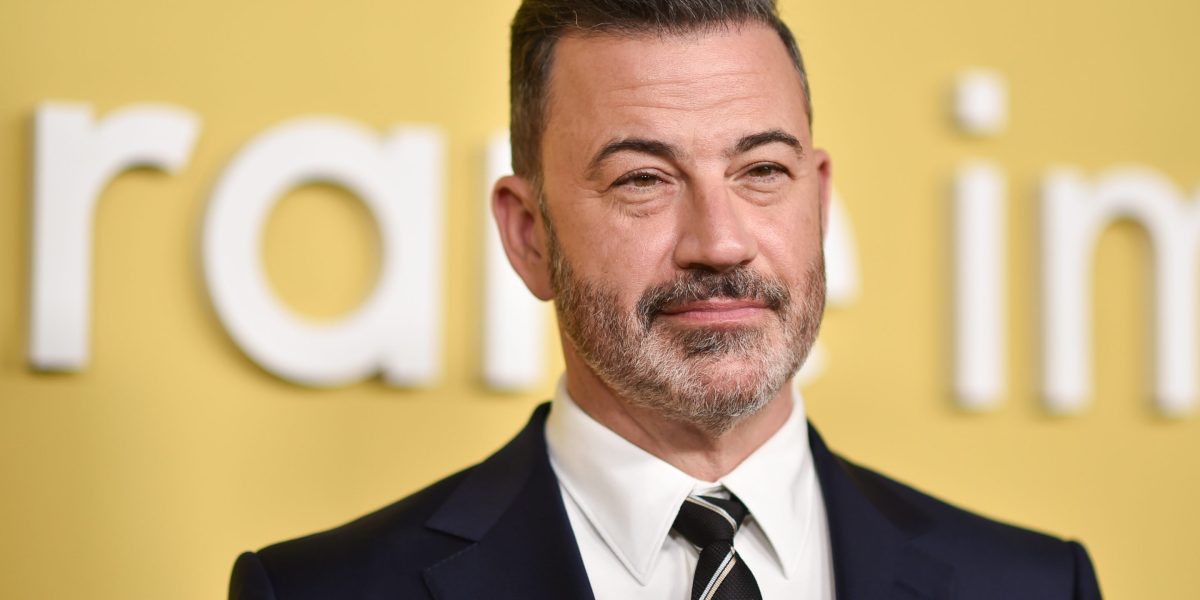
Kimmel’s previous, multiyear contract had been set to expire next May, so the extension will keep him on the air until at least May 2027.

Kimmel’s future looked questionable in September, when ABC suspended “Jimmy Kimmel Live!” for remarks made following the assassination of conservative activist Charlie Kirk. Following a public outcry, ABC lifted the suspension, and Kimmel returned to the air with much stronger ratings than he had before.

He continued his relentless joking at the president’s expense, leading Trump to urge the network to “get the bum off the air” in a social media post last month. The post followed Kimmel’s nearly 10-minute monologue on Trump and the Jeffrey Epstein files.

Kimmel was even on Trump’s mind Sunday as the president hosted the Kennedy Center Honors in Washington.

“I’ve watched some of the people that host,” Trump said. “I’ve watched some of the people that host. Jimmy Kimmel was horrible, and some of these people, if I can’t beat out Jimmy Kimmel in terms of talent, then I don’t think I should be president.”

Kimmel has hosted the Oscars four times, but he’s never hosted the Kennedy Center show.

Just last week, Kimmel was needling Trump on the president’s approval ratings. “There are gas stations on Yelp with higher approval ratings than Trump right now,” he said.

Kimmel will be staying longer than late-night colleague Stephen Colbert at CBS. The network announced this summer it was ending Colbert’s show next May for economic reasons, even though it is the top-rated network show in late-night television.

ABC has aired Kimmel’s late-night show since 2003, during a time of upheaval in the industry. Like much of broadcast television, late-night ratings are down. Viewers increasingly turn to watching monologues online the day after they appear.

Most of Kimmel’s recent renewals have been multiyear extensions. There was no immediate word on whose choice it was to extend his current contract by one year.

Bill Carter, author of “The Late Shift” and veteran chronicler of late-night TV, cautioned against reading too much into the length of the extension. Kimmel, at age 58, knows he’s getting close to the end of the line, Carter said, but when he leaves, he doesn’t want it to appear under pressure from Trump or anyone.

“He wants to make sure that it’s on his terms,” Carter said.

Kimmel has become one of the leading voices resisting Trump. “I think it’s important for him and for ABC that they are standing up for him,” Carter said.

Following Kirk’s killing, Kimmel was criticized for saying that “the MAGA gang” was “desperately trying to characterize this kid who murdered Charlie Kirk as anything other than one of them and doing everything they can to score political points from it.” The Nexstar and Sinclair television ownership groups said it would take Kimmel off the air, leading to ABC’s suspension.

When he returned to the air, Kimmel did not apologize for his remarks, but he said he did not intend to blame any specific group for Kirk’s assassination. He said “it was never my intention to make the light of the murder of a young man.”


Source link

Continue Reading

Business

Trump says he’ll allow Nvidia to sell advanced chips to ‘approved customers’ in China

Published

on


President Donald Trump said Monday that he would allow Nvidia to sell an advanced type of computer chip used in the development of artificial intelligence to “approved customers” in China.

There have been concerns about allowing advanced computer chips to be sold to China as it could help the country better compete against the U.S. in building out AI capabilities, but there has also been a desire to develop the AI ecosystem with American companies such as chipmaker Nvidia.

The chip, known as the H200, is not Nvidia’s most advanced product. Those chips, called Blackwell and the upcoming Rubin, were not part of what Trump approved.

Trump said on social media that he had informed China’s leader Xi Jinping about his decision and “President Xi responded positively!”

“This policy will support American Jobs, strengthen U.S. Manufacturing, and benefit American Taxpayers,” Trump said in his post.

Nvidia said in a statement that it applauded Trump’s decision, saying the choice would support domestic manufacturing and that by allowing the Commerce Department to vet commercial customers it would “strike a thoughtful balance” on economic and national security priorities.

Trump said the Commerce Department was “finalizing the details” for other chipmakers such as AMD and Intel to sell their technologies abroad.

The approval of the licenses to sell Nvidia H200 chips reflects the increasing power and close relationship that the company’s founder and CEO, Jensen Huang, enjoys with the president. But there have been concerns that China will find ways to use the chips to develop its own AI products in ways that could pose national security risks for the U.S., a primary concern of the Biden administration that sought to limit exports.

Nvidia has a market cap of $4.5 trillion and Trump’s announcement appeared to drive the stock slightly higher in after hours trading.


Source link

Continue Reading

Trending

Copyright © Miami Select.