Connect with us

Business

With its hire of top Trump crypto official Bo Hines, the stablecoin giant Tether is trying to outrun its past.

Published

on


Tether is the most captivating story you’ve never heard of. A first mover in the stablecoin space, Tether’s flagship product has grown to a monster $167 billion in market cap with just around 200 employees and $13 billion in profits last year, making it one of the most successful corporations on the planet. (And it was cofounded by a Mighty Duck, but that’s a story for another time.)

And yet, the company has been dogged by accusations of opacity, compliance blunders, and worse throughout its decade-long history, including a settlement with the New York attorney general and a reported investigation by the Department of Justice’s Southern District of New York office. Just last year, it seemed the crypto giant was marching into the crosshairs of the SDNY—a potential existential threat for a company that needs access to U.S. Treasuries to survive. 

To put it mildly, Tether’s fortunes changed with Trump’s election. For years, it was unclear who held the Treasuries that serve as the reserves backing up Tether’s stablecoin, with journalists racing to figure out the offshore banks like the Bahamian Deltec servicing the crypto firm. Thanks to Tether’s own sketchy accounting process, critics argued that Tether didn’t even hold the reserves it claimed to, though the company vociferously denied the claim. Then, in early 2023, Tether revealed it was working with the New York financial firm Cantor Fitzgerald, with Cantor’s CEO Howard Lutnick publicly defending the company in early 2024. One year after that, Lutnick would become Trump’s commerce secretary. 

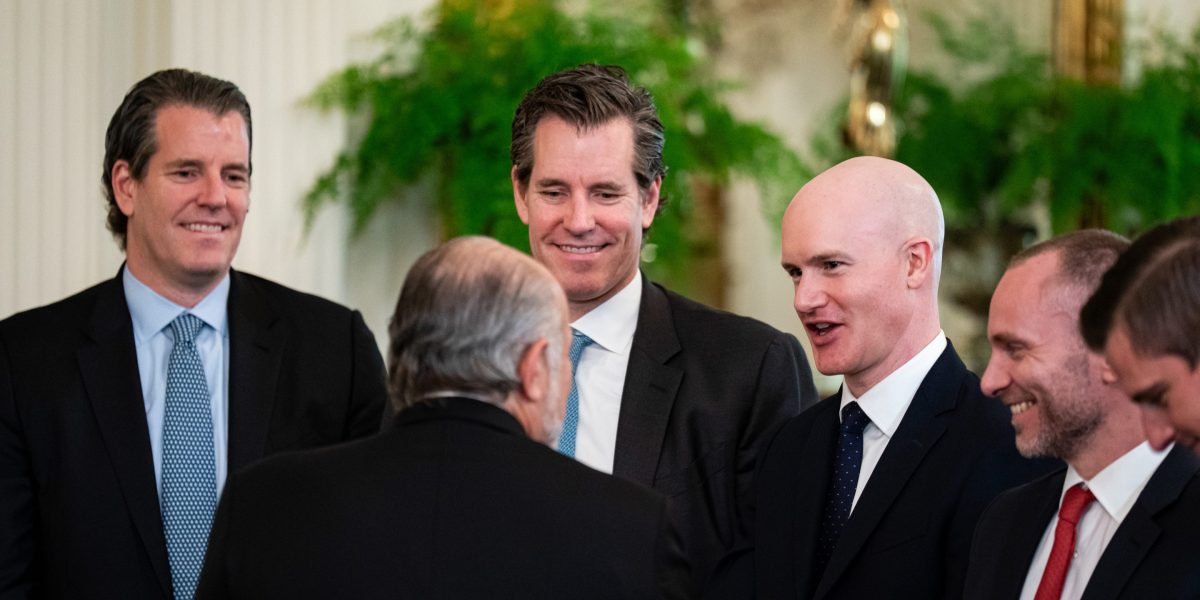
Tether has been on a meteoric rise ever since. After Congress passed the Genius Act, which established regulations for the stablecoin sector, Tether’s CEO, Paolo Ardoino, scored a prime seat at Trump’s signing ceremony in July, alongside other CEOs, including Gemini’s Winklevoss twins and Coinbase’s Brian Armstrong. 

That was only the beginning. Yesterday, Ben Weiss and I reported that Tether made its most brazen move yet by hiring Bo Hines, the 29-year-old former Yale wide receiver and two-time congressional candidate that Trump tapped in January to lead his far-reaching crypto agenda. After Hines announced his departure from the role just over a week ago, the crypto industry rumor mill churned with guesses about where he would end up. Hines told us last Thursday that he was deciding between five final offers. It turns out it wasn’t a difficult choice. 

Hines, whom Jessica Mathews and I profiled in April, will help lead Tether’s expansion in the U.S., which Ardoino has said will include a new, U.S.-based stablecoin compliant with the new Genius regulations. With a $167 billion moat that blows its competitors out of the water, Tether is betting that it can beat new entrants into the stablecoin wars, from Stripe to Citi. And with its shiny new hire, Tether is hoping the critics forget about its past. 

Leo Schwartz
X:
@leomschwartz
Email: leo.schwartz@fortune.com

Submit a deal for the Term Sheet newsletter here.

Joey Abrams curated the deals section of today’s newsletter. Subscribe here.

VENTURE DEALS

Aalo Atomics, an Austin, Texas-based builder of nuclear plants, raised $100 million in Series B funding. Valor Equity Partners led the round and was joined by Fine Structure Ventures, Hitachi Ventures, NRG Energy, Vamos Ventures, Tishman Speyer, Kindred Ventures, and others.

Midas, an Istanbul, Turkey-based investment app, raised $80 million in Series B funding. QED Investors led the round and was joined by International Finance Corporation and QuantumLight.

Seemplicity, a Tel Acic, Israel-based risk management & remediation platform, raised $50 million in Series B funding. Sienna Venture Capital led the round and was joined by Essentia Venture Capital and existing investors Glilot Capital Partners, NTTVC, and S Capital.

Kasa, a San Francisco-based operator of hotel and apartment hotel rentals, raised $40 million in funding. Silver Lake Waterman led the round.

Zed, a Boulder, Colo.-based developer of an open-source code editor, raised $32 million in Series B funding. Sequoia Capital led the round.

Pylon, a San Francisco-based AI-powered support platform for B2B companies, raised $31 million in Series B funding. Andreessen Horowitz and Bain Capital Ventures led the round.

Keychain, a New York City-based developer of an AI-powered manufacturing platform for the consumer packaged goods industry, raised $30 million in Series B funding. Wellington Management and BoxGroup led the round and were joined by existing investors. 

Tote.ai, a San Francisco-based AI-powered point-of-sale system for fuel and convenience stores, raised $22.6 million in funding. Cota Capital led the round and was joined by Storm Ventures and Cervin Ventures

Bluefish AI, a New York City-based AI platform for brand marketing, raised $20 million in Series A funding. NEA led the round and was joined by Salesforce Ventures, Crane Venture Partners, Swift Ventures, and Bloomberg Beta.

Convoke, a Cambridge, Mass.-based developer of an AI-powered operating system, raised $8.6 million in seed capital. Kleiner Perkins and Dimension Capital led the round and were joined by ACME, Comma Capital, Liquid2, Not Boring Capital, Audacious, and others.

TensorZero, a New York City-based startup building open-source infrastructure for LLMs, raised $7.3 million in seed funding. FirstMark led the round and was joined by Bessemer, Bedrock, DRW, Coalition, and angel investors. 

Zipline AI, a San Mateo, Calif.-based AI infrastructure company, raised $7 million in seed funding. Wing VC led the round and was joined by Stripe, Box Group, and Exceptional Capital.

PRIVATE EQUITY

Edison Partners invested $65 million in KnowledgeLake, a St. Louis, Mo.-based AI-powered document processing and workflow automation platform. 

4M Building Solutions, backed by O2 Investment Partners acquired Miracle Clean Services, an Akron, Ohio-based provider of commercial and office cleaning services, and FKI Cleaning, a Washington, Mo.-based commercial cleaning company. Financial terms were not disclosed.

Charlesbank Capital Partners acquired a majority stake in CENTEGIX, an Atlanta, Ga.-based workplace safety company. Financial terms were not disclosed. 

Incode, backed by General Atlantic, acquired AuthenticID, a Kirkland, Wash.-based AI-powered identity verification platform. Financial terms were not disclosed. 

Residex.AI, backed by Accel-KKR, acquired Kevala, a Seattle, Wash.-based AI-powered workforce management platform for health care staffing. Financial terms were not disclosed. 

Ruppert Landscape, backed by Knox Lane, acquired Enviro-Scapes, a Nashville, Tenn.-based landscaping company. Financial terms were not disclosed.

TigerConnect, backed by Vista Equity Partners, acquired eVideon, a Grand Rapids, Mich.-based developer of hospital smart room technology and digital patient engagement. Financial terms were not disclosed.

EXITS

Daikin Applied acquired DDC Solutions, a San Diego, Calif.-based high-density GPU cabinet cooling company, from Thompson Street Capital Partners and Cequel III. Financial terms were not disclosed.

OTHER

Salesforce agreed to acquire Regrello, a San Francisco-based AI-powered operating system for manufacturing and supply chain operations. Financial terms were not disclosed.

FUNDS + FUNDS OF FUNDS

Pritzker Private Capital, a Chicago, Ill. and Los Angeles, Calif.-based investment firm, raised $3.4 billion for its fourth fund focused on family, founder, and management-owned businesses in the manufactured products and services sectors. 

PEOPLE

Scale Venture Partners, a Foster City, Calif.-based venture capital firm, promoted Maggie Basta and Max Abram to principal. The firm also promoted Damian Gardiner to senior associate.


Source link

Continue Reading

Business

Parents are sacrificing retirement, taking second jobs, and liquidating investments for college

Published

on


Parents make countless sacrifices for their children. And now that college is more expensive than ever, they’re jeopardizing their own financial futures to try to secure their kids’. 

According to a survey of 1,000 parents from Citizens Bank, respondents say they are taking on a second job (19%), borrowing against their 401(k) or liquidating personal funds (30%), pausing investing entirely (26%), and cutting back on major purchases or vacations (66%). And more than 60% of parents reported they expect to delay their retirement in order to pay for their kids’ college education.

The cost of college has ballooned: It’s 40 times higher than it was in 1963, according to the Education Data Initiative. And between 2010 and 2023 alone, tuition costs at four-year public universities jumped more than 36%, Education Data Initiative said, with the average cost of college today nearly $40,000 per year.

That’s led more than 60% of parents to need to go “above and beyond” typical financing options like 529 plans and federal loans, according to the Citizens survey data. 

“Compared to just a few years ago, the pressure has increased due to rising tuition, inflation, and greater uncertainty around future costs,” Tony Durkan, vice president and head of 529 college savings at Fidelity, told Fortune. “Many families are still underprepared, often relying on rough estimates rather than clear savings goals.”

Financial sacrifices for a college education are ‘very risky

Pam Krueger, investment advisor and founder of Wealthramp, said the phenomenon of parents taking on side gigs, pulling money out of retirement, and refinancing their homes to pay for college is incredibly common. 

“It’s coming from a place of love and a desire to protect their kids from the burden of student debt—but it’s also very risky,” Krueger warned. “These choices can set parents back in a way that’s really hard to recover from.”

Part of the problem is the disconnect between college admissions and financial planning, according to Citizens. Survey data showed one in five parents admitted they just focused on getting their child into college without thinking about how to pay for it. And it’s such a touchy and embarrassing topic for parents,  almost 50% of survey-takers said they would rather talk to their children about drugs and alcohol. 

How to prepare to pay for college

While pulling money from retirement, taking on another job, or refinancing your home may feel like the only option to come up with enough funding for college, financial advisors say there are other options. 

Of course, a 529 savings plan can help—but that has a longer runway. These tax-advantaged plans can sometimes allow you to pay for tuition ahead of time, but many people save for many, many years to fund these accounts. 

Still, “the earlier you begin saving, the more time your money has to grow through compounding,” Durkan said. “Even small, regular contributions can add up significantly over time.” Plus, any funds that aren’t used can be transferred to a sibling, cousin, or back to yourself, meaning no wasted money—and it stays in the family, Krueger said.

But if it’s too late in the process—like if your kid is already in high school—an alternate strategy is needed. Krueger said this requires open and honest communication with your child about what you can actually afford. 

“Sit down with your child and talk openly about what’s realistic. Explore schools that are generous with merit aid or have transparent pricing,” Krueger said. “And look at the full cost—not just tuition, but room and board, books, travel. Sometimes the ‘big name’ school isn’t the best financial fit—and that’s okay.”

For parents just starting to plan for college while their children are in high school, Brian Safdari, founder and CEO of College Planning Experts, also suggests moving around investments and assets and as well as applying for grants, scholarships, merit-based aid, and institutional aid starting as early as ninth or 10th grade. Even private colleges with sticker prices of $95,000 or more a year could offer generous aid that make the final cost the same as a public school or even less, he told Fortune.

Still, “the expected cost minus savings minus free money will likely still leave a gap,” Safdari said. “Once we have that number, we can start figuring out how to fund it over four years, while minimizing student debt and leaving enough money to retire.”

A version of this story was published on Fortune.com on June 25, 2025.

More on saving for college:

Fortune Brainstorm AI returns to San Francisco Dec. 8–9 to convene the smartest people we know—technologists, entrepreneurs, Fortune Global 500 executives, investors, policymakers, and the brilliant minds in between—to explore and interrogate the most pressing questions about AI at another pivotal moment. Register here.


Source link

Continue Reading

Business

Apple won’t be the same in 2026 as these rising stars follow its biggest executive exodus in years

Published

on


Apple is experiencing the most extensive leadership transformation since its visionary CEO and cofounder Steve Jobs died in 2011, with a wave of departures across artificial intelligence, design, legal, operations, and financial divisions that will reshape one of the world’s most valuable companies.

The iPhone maker announced last week that Lisa Jackson, its vice president of environment, policy, and social initiatives, will retire in January, while Kate Adams, who has served as general counsel since 2017, will retire late next year. These departures follow a cascade of recent exits including AI chief John Giannandrea, who announced his retirement this month, and Alan Dye, the head of user interface design since 2015, who left to join Meta. Bloomberg also reported that Johny Srouji, Apple’s chief chip architect for Apple Silicon, is mulling an exit, but the 61-year-old executive threw cold water on those rumors Monday, saying “I love my team, I love my job at Apple” in a memo to staffers.

Speaking of Meta, Mark Zuckerberg’s social media empire has been the beneficiary of Apple’s exodus. Billy Sorrentino, another senior design director, chose to leave for Meta with Dye, and Ruoming Pang, who headed Apple’s AI foundation models team, also left for Meta in July, taking approximately 100 engineers with him. Ke Yang, who led AI-driven web search for Siri, and Jian Zhang, Apple’s AI robotics lead, also left for Meta this year.

But perhaps the biggest change at the top this year has been Chief Operating Officer Jeff Williams, who decided to retire in July after 27 years with Apple. He was long considered the top candidate to succeed CEO Tim Cook. Also this summer, CFO Luca Maestri stepped back from his role to instead oversee corporate services starting in the new year, while Kevan Parekh took over as CFO.

Succession planning and Tim Cook’s future

The scale of the turnover has been striking, but the timing appears connected to succession planning. Both Bloomberg and the Financial Times have reported that Apple is ramping up efforts to prepare for Cook, who turned 65 in November, to potentially retire in 2026. He has led the company since 2011 and grown its market cap from roughly $350 billion to $4 trillion.

John Ternus, Apple’s senior vice president of hardware engineering, has emerged as the leading internal candidate to replace Cook. Ternus, 50, joined Apple’s product design team in 2001 and has overseen hardware engineering for every generation of iPad, the latest iPhone lineup, and AirPods. He played a crucial role in the Mac’s transition to Apple silicon.

The choice of Ternus would mark a departure from Apple’s recent operational focus under Cook. While Cook and Williams both had operational backgrounds with expertise in global supply chains, Ternus brings technical hardware expertise. His selection would signal that Apple is prioritizing product innovation as it faces challenges in new categories like the Vision Pro and competition in artificial intelligence.

Apple’s new AI leadership

Apple is bringing in Amar Subramanya, a veteran of both Google and Microsoft, to lead its AI efforts. Subramanya spent 16 years at Google, eventually becoming head of engineering for Google’s AI assistant Gemini, before a brief stint at Microsoft as corporate vice president of AI. He will oversee Apple Foundation Models, machine learning research, and AI safety, reporting to software chief Craig Federighi.

Subramanya’s hire signals Apple’s determination to accelerate its AI capabilities after falling behind competitors like Google and OpenAI. His experience building large language models at Google positions him to help Apple develop competitive generative AI products, a critical battleground for tech companies in the coming years.

Apple’s new design leadership

On the design front, Stephen Lemay is replacing Dye as the head of user interface design. Lemay has been with Apple since 1999 and played a key role in designing every major Apple interface from the original iPhone to the latest operating systems.

The promotion of Lemay has reportedly been met with enthusiasm inside Apple. Blogger and podcaster John Gruber, who has covered Apple for decades and has deep ties within the company, wrote that employees are borderline “giddy” about Lemay taking over.

“Sources I’ve spoken to who’ve worked with Lemay at Apple speak highly of him, particularly his attention to detail and craftsmanship,” Gruber wrote. “Those things have been sorely lacking in the Dye era.”

This internal promotion contrasts sharply with how Dye’s departure was received. Dye had overseen UI design for a decade but faced internal criticism over design direction and product quality. Lemay’s appointment represents a return to the company’s design-first philosophy that characterized Apple’s earlier innovation phases.

Apple’s new operations and supply chain leadership

Sabih Khan, who has been with Apple for 30 years, took over as chief operating officer in July, succeeding Williams. Khan joined the executive team as senior vice president of operations in 2019 and has overseen Apple’s global supply chain for the past six years. Khan will also now oversee environment and social initiatives, taking on some of Lisa Jackson’s former responsibilities.

Khan’s appointment represents continuity in operations while consolidating responsibilities across the executive suite. His deep knowledge of Apple’s manufacturing and logistics networks positions him to navigate ongoing supply chain challenges, particularly as the company diversifies production beyond China.

Jennifer Newstead, currently Meta’s chief legal officer and a former legal adviser to the U.S. State Department, will become Apple’s general counsel on March 1, 2026. In a consolidation of responsibilities, Newstead will oversee both legal and government affairs, effectively merging the roles previously held by Adams and Jackson.

Newstead brings significant international law and regulatory expertise at a critical time for Apple. The company faces increasing scrutiny from antitrust regulators worldwide, particularly in the European Union and the United States. The Justice Department and 16 attorneys general filed an antitrust suit against Apple last March, alleging the company’s policies hamper competition and make it difficult for consumers to switch phones. A trial date is not yet set, but suffice to say Newstead’s work will be cut out for her once she starts.

Her appointment underscores Apple’s focus on navigating complex regulatory environments while addressing regulatory challenges around AI development and data privacy. Her experience in government affairs at Meta, where she managed relations with policymakers globally, makes her well-suited to handle Apple’s expanding regulatory obligations.

Apple’s new financial leadership

Kevan Parekh assumed the chief financial officer role on January 1, 2025, replacing Luca Maestri, who had held the position since 2014. Parekh brought deep familiarity with Apple’s financial operations, having worked in the company’s finance division previously. His transition to CFO continues Apple’s pattern of promoting experienced insiders to top roles, though his tenure also reflects the company’s need for steady financial stewardship amid market volatility and shifting investor expectations.

Apple’s inflection point

The departures span functions critical to Apple’s competitive position. Beyond the visible departures, Apple has lost significant talent in AI research to its competition in Silicon Valley, namely Google, Microsoft, and OpenAI. Apple is attempting to address this through high-profile hires like Subramanya, but the scale of departures suggests internal friction or strategic shifts that pushed executives to explore opportunities elsewhere.

The consolidation of responsibilities—particularly having Newstead oversee both legal and government affairs, and Khan handling operations and environmental initiatives—suggests Apple is also tightening its executive structure. This could be driven by cost considerations or by a desire to create clearer lines of authority as the company prepares for potential leadership transitions.

Despite the upheaval, Apple is positioning these changes as strategic rather than reactive. The transitions of Williams, Maestri, and others were described as “long-planned successions” in company announcements. Cook has publicly praised the incoming leaders and emphasized continuity, even as Apple assembles what amounts to an entirely new leadership team for its next chapter.

Cook himself remains a question mark. While some reports suggest he could retire in 2026, the executive has been adamant about his plans. In January, Cook told CNBC he would never retire, at least in “the traditional way,” adding he would “always want to work.” Still, all the reliable reporting since that on-air interview points to scenarios in which Cook will step back from day-to-day operations.

Looking ahead

Whether this new generation can maintain Apple’s innovation momentum while navigating AI competition, regulatory pressure, and the eventual departure of Cook himself remains the defining question for the company’s future. The success of Ternus, Newstead, Lemay, Khan, and Subramanya will determine whether Apple can accelerate its AI capabilities, maintain design excellence, navigate regulatory challenges, and sustain the company’s position as one of the world’s leading tech companies.

The changes also reflect a shift in Apple’s strategic priorities. Under Cook, the company has excelled in operational efficiency and global supply chain management. But under Ternus—if he indeed becomes CEO—the company may place greater emphasis on hardware innovation and product differentiation, particularly in emerging categories where AI and design intersect.

The appointment of Subramanya to lead AI, combined with the return of Stephen Lemay to design, suggests Apple is doubling down on what made it successful in the first place: breakthrough products with cutting-edge technology with thoughtful design.

It all suggests 2026 will be a pivotal year for Apple, which is expected to accelerate its AI efforts, roll out new phone designs, and fend off regulators to secure long-term positioning in the rapidly changing landscape.

For this story, Fortune journalists used generative AI as a research tool. An editor verified the accuracy of the information before publishing. 


Source link

Continue Reading

Business

Paramount launches WBD hostile bid that includes Trump son-in-law Jared Kushner

Published

on


In a separate regulatory filing, Paramount disclosed that Affinity Partners, the private equity firm led by Jared Kushner, is part of the bid. It added that sovereign wealth funds from Saudi Arabia, Abu Dhabi, and Qatar are also participating.

Affinity and the other outside financing partners have agreed to forgo any governance rights, which Paramount said means the Committee on Foreign Investment in the United States would have no jurisdiction over the transaction. Meanwhile, Chinese tech conglomerate Tencent is no longer a partner.

The offer comes after Paramount lost out in the bidding war for the assets last week to Netflix, which made a cash-and-stock deal worth $27.75 per share. Paramount’s proposed transaction is for the entirety of WBD, including the Global Networks segment, while Netflix’s deal is for the studio and HBO Max.

Paramount argued its offer to WBD shareholders provides a superior alternative to the Netflix transaction, which offers “inferior and uncertain value and exposes WBD shareholders to a protracted multi-jurisdictional regulatory clearance process with an uncertain outcome,” referring to the likely antitrust concerns for Netflix’s megadeal.

At the Kennedy Center over the weekend, President Donald Trump partially confirmed reporting from Bloomberg’s Lucas Shaw about his private conversations with Netflix co-CEO Ted Sarandos, saying they had met in the Oval Office before Netflix announced its winning bid, while adding that its combined market share with WBD could be an antitrust concern.

Paramount argued that WBD’s recommendation of the Netflix offer is based on an “illusory prospective valuation of Global Networks that is unsupported by the business fundamentals” and encumbered by high levels of financial leverage assigned to the entity. Netflix’s offer would assume $11 billion of debt and involve a $59 billion bridge loan, which Bloomberg reported was among the highest ever.

David Ellison, chairman and CEO of Paramount, said: “WBD shareholders deserve an opportunity to consider our superior all-cash offer for their shares in the entire company.”

Paramount, which earlier sent a letter to WBD CEO David Zaslav complaining of a “tainted” sale process, further asserted today that although Paramount made six offers for WBD over 12 weeks, “WBD never engaged meaningfully with these proposals, which we believe deliver the best outcome for WBD shareholders.

“We believe our offer will create a stronger Hollywood. It is in the best interests of the creative community, consumers, and the movie theater industry. We believe they will benefit from the enhanced competition, higher content spend and theatrical release output, and a greater number of movies in theaters as a result of our proposed transaction,” Ellison continued. “We look forward to working to expeditiously deliver this opportunity so that all stakeholders can begin to capitalize on the benefits of the combined company.”

Paramount’s tender offer is scheduled to expire at 5 p.m. ET on Jan. 8, 2026. The company said its offer will be financed by new equity backstopped by Paramount’s well-capitalized principal equity holders, and $54 billion of debt commitments from Bank of America, Citi, and Apollo.

Centerview Partners and RedBird Advisors are acting as lead financial advisors to Paramount, and Bank of America Securities, Citi, and M. Klein & Co. are also acting as financial advisors. Cravath Swaine & Moore and Latham & Watkins are acting as legal counsel to Paramount.

Disclosure: The author worked at Netflix from June 2024 through July 2025.


Source link

Continue Reading

Trending

Copyright © Miami Select.