Connect with us

Politics

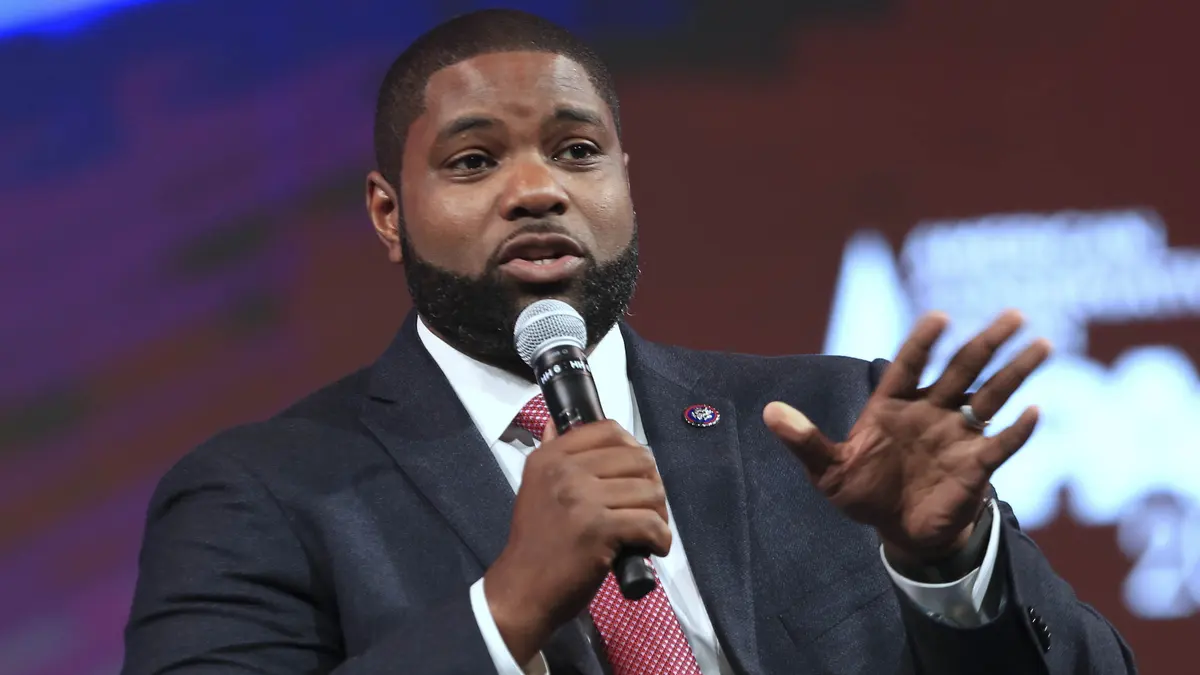
With exactly one year before gubernatorial Primary, Byron Donalds is clear front-runner
Published

on


The Florida GOP Primary is in exactly one year, but despite an open race for Governor, the state may be looking at an election that was over before it even began.

While most potential 2026 GOP gubernatorial hopefuls followed Gov. Ron DeSantis’ lead in 2024, or at least kept quiet about the growing feud between then-candidate Donald Trump and the home-state Governor, U.S. Rep. Byron Donalds spent most of the year campaigning for now-President Trump.

Donalds’ loyalty is being fully compensated, with an early endorsement from Trump in February that easily cemented his front-runner status in the still fledgling Governor’s race.

Donalds was able to leverage the endorsement for cash, raising more than $20 million in less than four months on the campaign trail, $3 million more than DeSantis raised throughout the entirety of his Primary campaign in 2018.

Add the endorsement and the strong fundraising to Donalds’ ever-rising star through frequent appearances on Fox News and other cable networks, and it’s a recipe for success.

Polls agree. A recent St. Pete Polls survey put Donalds at 44% support in a hypothetical Republican Primary against Agriculture Commissioner Wilton Simpson, former House Speaker Paul Renner and new Lt. Gov. Jay Collins. No one else even came close, with poll numbers in the single digits.

The poll also ran a scenario by respondents that looped First Lady Casey DeSantis into the field. If that result, from last month, is any indication, she would do better than other Republicans rumored to be in the mix, at 27% support to Donalds’ 35%. But that scenario is increasingly unlikely given recent events.

It’s no secret that Ron DeSantis has reservations — if not outright disdain — for a Donalds candidacy. He’s still salty about Donalds’ early support of Trump in the 2024 Presidential Election in which DeSantis walked away battered and embarrassed.

And the Governor has spent the better part of the last year attempting to position an alternative to Donalds, including with his wife. But as promising as a Casey DeSantis candidacy could have been, it was quickly scuttled by the Hope Florida controversy, forcing Ron DeSantis to recalibrate. That recalibration was good news for Collins, who is now the primary benefactor of the DeSantis machine.

If Collins runs under the DeSantis banner, he’d be starting from a baseline of just 2% support, even worse than the abysmal 4% support the poll found for Simpson and 3% for Renner.

Politics are fickle, though, and this all assumes Trump continues to survive the never ending onslaught of criticism. If Trump’s support takes a hit — say perhaps by some new revelation about the Jeffrey Epstein files or a drastic hit to the economy — Donalds could feel the pain.

But the bottom line for now is this: Regardless of who, if any one, actually files to run against Donalds, they’re going to start their campaign down about 40 points in polling, with about a $20 million funding deficit and without that all-important Big Beautiful Endorsement.

That certainly feels like the GOP Primary for Governor is over before it ever started.


Post Views: 0


Source link

Continue Reading

Politics

House expands paid parental leave for employees, Daniel Perez says

Published

on


The policy expansion is retroactive through November 2024.

The House is expanding its paid parental leave policy when employees have a baby or adopt a child, House Speaker Daniel Perez announced.

The policy takes effect immediately and applies retroactively for parents who took leave from Nov. 19, 2024, onward.

Going forward, full-time salaried employees will get up to seven consecutive weeks of paid parental leave for maternity leave after childbirth.

The House will also offer mothers and fathers paid care and bonding leave for up to two weeks within one year after a child’s birth or adoption. The care and bonding leave “may be granted on an intermittent basis” and can’t be taken during the 60-day Legislative Session. It requires supervisor approval as well, Perez’s memo said.

It’s an expansion from the current policy, which Perez explained in the memo.

“As has been the policy of the House, an employee who is the father or mother of a natural born or adopted child will continue to be granted parental leave for a period not to exceed three months total,” Perez’s memo said.

“The employee may include in the request for parental leave one or all of the following types of leave: (new) paid parental leave when allowable; up to 240 hours of accrued sick leave; annual leave; compensatory leave; personal holiday; and leave without pay.”

To help retroactively, the House Office of Administration and Professional Development will be contacting employees to talk about their situations.

The majority of Americans don’t get paid time off for childbirth, according to a 2019 Kaiser Foundation study.

A few major employers in Florida are offering the benefit to new parents.

Publix, for instance, began offering full- and part-time employees paid parental leave in 2022.

“We frequently review our benefits to continually offer a comprehensive package to our associates,” Publix spokesperson Maria Brous told Florida Politics at the time the policy was unveiled.


Source link

Continue Reading

Politics

Ben Albritton on the future of property tax proposals in the Senate: ‘We’re still measuring’

Published

on


With eight proposals on eliminating or cutting property taxes moving through the House and Gov. Ron DeSantis maintaining that none go far enough, many are looking more and more to the Senate for signs of what, if any, change could be coming.

As he’s done in months past, Senate President Ben Albritton is advocating for a cautious, unhurried approach.

“Honest to goodness, we’re still measuring,” Albritton told reporters Monday. “We’ve looked at the House proposals, and every one of those has a certain amount of cost to it and a certain amount of impact to Floridians.”

Albritton said that while the Senate is committed to delivering financial relief to Floridians in the form of property tax cuts or rollbacks, he and others in the chamber are cognizant that many core services at the local level stand to be adversely affected if it’s done carelessly.

“Every Floridian … depends on the fact that if they call 911, somebody comes to their place, somebody comes to help them,” he said. “We’ve got to be thoughtful about that.”

Asked whether the Governor has unilateral authority to redistribute funds derived from well-to-do counties like Miami-Dade, Broward, Palm Beach and Orange to 29 fiscally constrained, mostly rural counties — as DeSantis has proposed doing — Albritton’s answer was more definitive: “No.”

“The Florida Legislature (is) given the power to appropriate. The Governor is certainly the chief executive. He has the ability to veto or be supportive. He has, I would say, the ability and the opportunity to be able to share perspective in his budget request and when he lays out the budget,” he said.

“The opportunity to backfill lies in the Legislature.”

On the idea of cash-strapped counties asking the state for funding annually that they’d otherwise generate locally, Albritton said it’s “certainly a concern.”

“Do I love the idea? Of course not,” he said. “But I (believe) affordability is a challenge, and providing some relief in the property tax space is a great way to do that, and especially for (homesteaded) Floridians … that’s great.”

Albritton pushed back on the idea that eliminating property taxes would lead to a “gold rush” of wealthy transplants to the Sunshine State, stressing that he is “optimistic” about the prospect despite its potentially negative effects.

“But it’s not that simple,” he said. “And that’s one of the things that I’m finding in that here again: Don’t take down a fence until you know why it was put up.”


Source link

Continue Reading

Politics

Florida ranks fourth-most deadly state for road travel during Christmastime

Published

on


5 of the 10 most dangerous states were in the Southeast.

In a place known for warm Winter getaways, Florida’s highways deliver a chilling dose of danger near Christmas.

The Utah-based personal injury law firm of Steele Adams Hosman conducted a study of the most dangerous roads for travelers at Christmastime using National Highway Traffic Safety Administration (NHTSA) data. The study ranked Florida as the fourth-most dangerous.

Looking at data spanning Dec. 21 to Dec. 28 between 2014 to 2023, the study found Florida recorded about 16.48 car-crash deaths per 1 million residents annually. That’s 54.62% higher than the average among U.S. states.

In total, 355 road fatalities were posted in Florida in that decade. In terms of raw numbers, that’s more than double than any state listed in the top 10 and more than triple most of those states. But Florida also has a much bigger population than any of those states.

“As we enter the busiest travel period of the year, drivers need to be especially mindful of safety,” said Justin Hosman, a partner at the Steele Adams Hosman firm. “Whether you’re traveling across the country or just across town, staying focused, driving sober, and eliminating distractions can help ensure everyone reaches their destination safely.”

Out of Florida’s fatalities on the road surrounding Christmas, 57.51% were drivers, which ranks 28th in the nation. Another 20.96% were pedestrians, landing Florida 15th in the nation in that respect.

The five most deadly states for road travel during the Christmas holiday were all in the Southeastern United States. Mississippi was at the top, followed by Louisiana in second, Alabama in third and South Carolina in fifth.

Southern states made up most of the top 10, with Georgia at No. 7, Arkansas at No. 9 and Oklahoma at No. 10.


Source link

Continue Reading

Trending

Copyright © Miami Select.