Connect with us

Business

Winter storm cancels more than 1,000 flights in the Northeast and Great Lakes regions as state of emergency declared in N.Y., N.J.

Published

on


More than a thousand flights were canceled or delayed across the Northeast and Great Lakes regions due to snow as thousands took to U.S. roads and airports during the busy travel period between Christmas and New Year’s.

As of Saturday morning, New York City had received just under three inches of snow — roughly half of what some forecasts had predicted. At least 1,500 flights were canceled from Friday night into Saturday, according to flight-tracking service FlightAware.

Newark Liberty International Airport, John F. Kennedy International Airport and LaGuardia Airport posted snow warnings on the social media platform X on Friday, cautioning that weather conditions could cause flight disruptions.

The National Weather Service warned of hazardous travel conditions from the Great Lakes through the northern mid-Atlantic and southern New England, with the potential for tree damage and power outages. Forecasters said the storm was expected to weaken by Saturday morning.

Ahead of the storm, New York Gov. Kathy Hochul declared a state of emergency for more than half of the state. Acting New Jersey Gov. Tahesha Way declared a state of emergency for all of New Jersey, “due to a severe winter storm causing dangerous weather conditions, including heavy snow, sleet, and freezing rain.”

“This storm will cause dangerous road conditions and impact holiday travel,” Way said in a statement. “We are urging travelers to avoid travel during the storm and allow crews to tend to the roads. Drivers should plan their travel accordingly, monitor conditions and road closures, and follow all safety protocols.”

This story was originally featured on Fortune.com


Source link

Continue Reading

Business

Cisco’s top exec and Amazon’s Andy Jassy share the same hiring red flag

Published

on


It’s not what you know, or even who you know. According to Cisco’s new U.K. chief, your next promotion might hinge on your attitude.

“You cannot teach positive attitudes and engagement and energy,” Sarah Walker tells Fortune. That’s the No. 1 green-flag trait she keeps an eye out for when hiring or looking to promote from within—and she says it outweighs what’s on your resume, especially early in your career. 

The 45-year-old boss spent 25 years climbing the ranks at the Fortune 500 Europe telecommunications giant BT. In that time, Walker went from joining the sales team at the £14.21 billion British ($17.7 billion) legacy brand to leaving as its director of corporate and public sector. Following a micro-retirement, she joined Cisco as managing director before being promoted to lead its U.K. and Ireland arm just two years later. 

Now that she calls the shots, the CEO’s go-to choice for her team is always the upbeat, eager-to-learn worker.

“It’s more about the person first and foremost than it is about skills or experience,” she adds.

Skills become more important with experience—but it always pays to be positive and humble

“I always try and distinguish between the things that can be taught and learnt and the things that are just inherent in somebody,” Walker says, adding that skills become more important as you climb the ladder and enter more specialist roles.

Even then, she says someone with a great attitude and willingness to learn can still bag a role over someone more experienced if they can be developed into the role. 

 “You don’t need to be the finished article to be promoted, but we need to know that you are in a position where within a reasonable timeframe, you’ll have invested the time to upskill and develop—so I say to people, be very focused on who you are first and foremost, because that’s the bit that makes you stand out, and can’t be taught and will be a differentiator,” she adds.

But no matter how junior—or senior—you are, she still thinks a bad attitude will make you stand out for all the wrong reasons.

“I can’t stand arrogance. Be confident, but have a level of humility,” Walker warns. “You can’t rest on your laurels because you’ve done something well in the past, you need to be thinking about what’s the next great thing that you’ll do?”

“Even at my level, you have to be open to the fact that there’s lots more yet to learn and grow and adapt,” she concludes. “I always know that I’m only as good as the last good thing that I’ve done, and I’ll only continue to be good if I continue to do good things.” 

An ’embarrassing’ amount of your success in your 20s depends on your attitude, Jassy echoes

Walker’s not the only CEO to reveal that it’s not a ritzy college degree or being the best networker that will make you stand out at the start of your career—but a positive attitude. Amazon CEO Andy Jassy has said that an “embarrassing amount of how well you do, particularly in your twenties” depends on it.

Even Walker’s predecessor, David Meads previously echoed to Fortune that “EQ is at least as important as IQ.” The now MEA chief at Cisco stressed that he sees “no difference in terms of the capability” from talent with or without a degree while adding that qualifications hold even less weight in external-facing roles.

“You need that EQ to be able to read the room and understand what’s being said by what’s not being said.”

In the end, numerous leaders, including Pret and Kurt Geiger’s CEOs, have stressed that being nice to their boss and coworkers was one of the biggest determining factors in their success.

As Maya Angelou famously said: “People will forget what you said, people will forget what you did, but people will never forget how you made them feel.” And ultimately, the same is true for hiring managers and those with promotion powers.

A version of this story originally published on Fortune.com on January 30, 2025.


Source link

Continue Reading

Business

Scott Galloway says the key to landing jobs is be as social as possible

Published

on


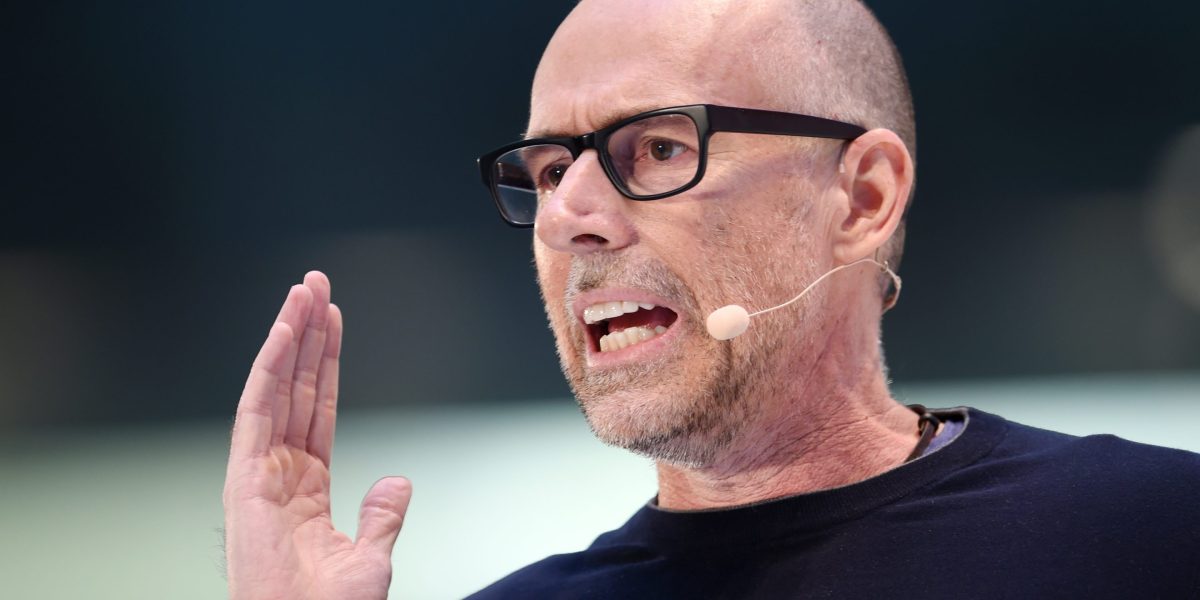
Business professor and entrepreneur Scott Galloway shared some career advice for young people struggling to find a job during a recent appearance on Shane Smith’s Vice News podcast, emphasizing how networking and personal connections remain critical to a long and successful career.

During the interview, Galloway highlighted the stark mathematics of modern job searches. “Google puts out a job opening, they get 200 CVs within like eight minutes. They limit it down to the 20 most qualified. Seventy percent of the time, the person they pick is someone who has an internal advocate,” he said.

The advice from Galloway, a marketing professor from the NYU Stern School of Business, aligns with extensive research on hiring patterns. Studies show employee referrals, while representing only 6% to 7% of job applications, account for 37% to 45% of successful hires across various industries, underscoring the importance of making connections. You never know who might be able to help you get your next gig.

The social imperative

Galloway’s advice seems deceptively simple: If you want a great career, you need to make connections in the real world first. “The way you [achieve professional success] as a young person is you go out, you make friends, you drink, and at every possible opportunity, you help that person out,” he said, also recommending speaking well of others behind their backs and positioning yourself to be remembered when opportunities come up.

“You want to be placed in rooms of opportunities when you’re not physically there,” Galloway said, emphasizing effective networking creates advocates who will recommend you for positions even when you’re not actively job searching.

The professor drew parallels to high school social dynamics to illustrate his point.

“The most successful people in high school aren’t the best looking [or] the best athletes, they’re the ones that like other people the most. The kid who says, ‘Hey, you know, great game, Brett,’ or ‘Wow, way to go on the basketball team, Lisa.’ The person who shows the most goodwill and like toward other people is the most popular, successful person in high school,” he said.

Research backs up Galloway’s assertion. Referred candidates are 40% more likely to be hired than those sourced through other means, and people hired through internal referrals tend to perform 25% better and stay 70% longer than employees hired through traditional job boards.

This advice extends to current workplace trends around working remotely versus returning to the office. As you might expect, people who go into the office have a clear advantage as they’re able to be more social with colleagues. According to a 2021 study from the U.K.’s Office of National Statistics, young professionals working remotely are 38% less likely to receive promotions compared to their office-based counterparts.

You can watch the full interview with Scott Galloway and Shane Smith below.

For this story, Fortune used generative AI to help with an initial draft. An editor verified the accuracy of the information before publishing.

A version of this story originally published on Fortune.com on October 7, 2025.


Source link

Continue Reading

Business

California drops lawsuit to reinstate federal bullet train funding as high-speed rail authority seeks private investors

Published

on


California this week dropped a lawsuit officials filed against the Trump administration over the federal government’s withdrawing of $4 billion for the state’s long-delayed high-speed rail project.

The U.S. Transportation Department slashed funds for the bullet train aimed at connecting San Francisco to Los Angeles in July. The Trump administration has said the California High-Speed Rail Authority had “ no viable plan ” to complete a large segment of the project in the farm-rich Central Valley.

The authority quickly filed a lawsuit, with Democratic Gov. Gavin Newsom calling the federal government’s decision “a political stunt to punish California.”

The authority said this week that it would focus on other funding sources to complete the project, which is estimated to cost more than $100 billion.

“This action reflects the State’s assessment that the federal government is not a reliable, constructive, or trustworthy partner in advancing high-speed rail in California,” an authority spokesperson said in a statement.

The Transportation Department did not respond to a request for comment. President Donald Trump and Transportation Secretary Sean Duffy have both previously criticized the project as a “train to nowhere.”

“The Railroad we were promised still does not exist, and never will,” Trump said on his social media platform Truth Social in July. “This project was Severely Overpriced, Overregulated, and NEVER DELIVERED.”

The authority’s decision to drop the lawsuit comes as the group seeks private investors to support the bullet train. The project recently secured $1 billion in annual funding from the state’s cap-and-trade program through 2045.

The program sets a declining limit on total planet-warming emissions in the state from major polluters. Companies must reduce their emissions, buy allowances from the state or other businesses, or fund projects aimed at offsetting their emissions. Money the state receives from the sales funds climate-change mitigation, affordable housing and transportation projects, as well as utility bill credits for Californians.

The rail authority said its shift in focus away from federal funding offers “a new opportunity.”

“Moving forward without the Trump administration’s involvement allows the Authority to pursue proven global best practices used successfully by modern high-speed rail systems around the world,” a spokesperson said in a statement.

This story was originally featured on Fortune.com


Source link

Continue Reading

Trending

Copyright © Miami Select.