
Politics
Winner and Loser of the Week in Florida politics — Week of 11.16.25


Samantha Scott hasn’t won a single vote yet, but she’s already secured one of the smoothest victories of the 2026 cycle — and that didn’t happen by accident.
When her only Republican opponent abruptly withdrew from the House District 52 race, Scott became the presumptive Representative nominee, effectively locking down the seat before campaign season even began. It’s a striking rise for a first-time candidate, but insiders saw it coming, because this wasn’t just Scott’s win — it was Sam Garrison’s work.
The incoming House Speaker has been quietly recruiting the next generation of his caucus, and Scott’s uncontested glide path is the clearest evidence yet of how effectively he’s shaping the map while leading the Republicans’ elections arm. This is exactly the kind of methodical move that strengthens Garrison’s influence by ensuring allies are positioned in winnable districts and clearing the field when necessary.
By engineering a no-drama route for Scott, Garrison didn’t just help her — he helped himself. It gives him a loyal freshman, stabilizes a safe GOP seat, and signals to the rest of the caucus that he intends to manage his Speakership with precision.
In Tallahassee, where succession planning is often messy and competitive, Garrison managed to make this one look effortless. Scott’s easy ascent is the latest reminder that the most important victories in Florida politics often happen long before Election Day.
Now, it’s onto our weekly game of winners and losers.
Winners
Honorable mention: Home insurance market. After a long stretch of rate spikes, insolvencies and policy cancellations, Florida’s homeowners market is continuing to show signs of stabilization. Regulators are pointing to 162 filings this year that came in flat or as actual decreases, and the statewide average rate increase of 0.8% was the lowest in the nation, according to Insurance Commissioner Michael Yaworsky.
Private carriers are coming back in, too. After ballooning into Florida’s largest insurer, Citizens has now been overtaken by State Farm thanks to aggressive depopulation efforts.
That doesn’t mean all Floridians are suddenly feeling relief. Premiums are still high, and voters consistently rank insurance as a top concern. The average homeowners premium is still north of $3,800. And there’s lingering skepticism about whether the gains are structural or simply the product of a couple of quiet hurricane seasons.

Yaworsky and Gov. Ron DeSantis credit recent lawsuit restrictions for helping slow the bleeding, but analysts also note Florida has avoided the kind of catastrophic storm activity that triggered past collapses. The big question now is whether regulators can prevent another cycle of boom, bust and billions being siphoned off through affiliated companies, as uncovered in prior reporting.
Still, compared to the bleak landscape of the past decade, the shift is welcome. Yaworsky says “practically every data point” is headed in the right direction and plans to ask lawmakers for additional oversight authority next Session to keep the momentum going.
Almost (but not quite) the biggest winner: Carmine Marceno. Federal authorities have formally closed a long-running investigation into allegations that had dogged Marceno for more than a year — and had been weaponized by a political rival during his last campaign.
The U.S. Attorney’s Office for the Middle District of Florida and the FBI notified Marceno’s attorney on Nov. 18 that the probe was over and that no charges would be filed. For a Sheriff who had spent the better part of two election cycles swatting down rumors of kickbacks, money laundering and improper gifts, the letter clearing Marceno was a welcome relief.
The investigation stemmed from accusations pushed by 2024 challenger Michael Hollow, who circulated a recording from a former Sheriff’s Office consultant alleging he had funneled money to a relative of Marceno’s and covered personal expenses, including gambling debts.
But the investigators involved made clear they had reviewed the claims, examined the materials and found nothing to support criminal charges.
For Marceno, who has held the job since 2018 and cruised through re-election, the official closure of the investigation removes the cloud that had followed him for months. He praised the process, saying the independent review affirmed what he had maintained all along: that the allegations were politically motivated and unsupported by facts.
Now the question becomes: Does Marceno try to take his cleared name to Washington?
The biggest winner: Vicki Lopez. Lopez is sitting pretty after being appointed to the District 5 seat on the Miami‑Dade County Commission, replacing Eileen Higgins, who vacated the post to run for Mayor of Miami.
The Commission ultimately decided to appoint a replacement for Higgins, rather than hold a Special Election. The body’s 7-5 vote to select Lopez allows her to move from the House — where she served representing House District 113 — to a prominent county role that offers greater influence over South Florida’s major metropolitan and coastal issues.
Lopez moves into a seat that covers some of the most well-known turf in the county: parts of Miami, Miami Beach, Brickell and Little Havana, among other areas. By taking that seat, she locks in the advantage of incumbency for the next countywide election in 2026. That means Lopez starts with institutional backing and a mandate to run the district ahead of the election, rather than simply preparing for a campaign from the sidelines.
Now, Lopez can hit the ground running on issues like local development, transit, housing and coastal resiliency — matters central to Miami-Dade’s future.
Lopez’s transition to the County Commission is a smart strategic move. It elevates her visibility and power in one of Florida’s largest-and most consequential regions, and she now enters the next phase of her public-service career with clear direction
Losers
Dishonorable mention: Sheila Cherfilus-McCormick. Federal prosecutors have indicted Cherfilus-McCormick for allegedly directing $5 million in COVID-relief funds into her campaign account — a charge that triggered swift fallout and raised serious questions about her future in office.
The indictment, made public in recent days, accuses Cherfilus-McCormick of misappropriating pandemic relief designed for small businesses and channeling portions into her political apparatus. She responded by saying she is innocent, but the damage is mounting all the same.
The political consequences were almost immediate. Hakeem Jeffries — leader of the House Democrats — stripped Cherfilus-McCormick of her ranking member status of a key foreign affairs subcommittee amid mounting pressure and threats of censure. And U.S. Rep. Greg Steube has launched a push to expel her from Congress entirely.
For Cherfilus-McCormick, this goes beyond being just a legal fight and could serve as a referendum on her credibility as a public figure. Cherfilus-McCormick can still defend herself, but this week’s events show that the climb back is steep.
Almost (but not quite) the biggest loser: Jay Collins 2026. Collins’ perceived springboard for a 2026 Governor run — as the DeSantis-aligned Lieutenant Governor — doesn’t appear to have the juice one might have expected a few years ago.
GOP megadonor Ken Griffin reportedly rebuffed DeSantis’ overtures to back Collins financially. That’s a big deal. Griffin has been one of the most powerful players in Florida Republican fundraising, and his decision to decline makes Collins look less like a contender and more like a long shot with shaky donor confidence.
It’s an especially bad look for Collins because his potential candidacy is deeply tied to DeSantis’ ability to channel major donor support into building a successor infrastructure. The fact that DeSantis personally courted Griffin — apparently pitching Collins — shows how much he was counting on Griffin’s backing. Instead, Griffin for now is staying on the sidelines.
This raises serious strategic questions: If a major DeSantis ally struggles to harness the support of the biggest GOP financiers in Florida, what does that say about his long-term viability? Without marquee donors willing to go all in, Collins risks being seen as a placeholder or a fallback rather than a top-tier candidate.
Collins is already starting miles behind Byron Donald in polling and fundraising after waiting this long to enter the race. Griffin’s decision perhaps should give Collins pause about running at all, though if his recent social media activity is any indication- Collins has already made the decision to plow full steam ahead anyway.
The biggest loser: Cory Mills. Mills’ already scandal-plagued background is now snowballing into raising very real questions about whether he belongs in Congress at all.
And Mills isn’t just earning blowback from Democrats or out-of-state Republicans — two of his loudest critics are Florida colleagues, in U.S. Reps. Kat Cammack and Anna Paulina Luna.
Mills has been under scrutiny for since-recanted domestic assault allegations, a murky military record critics say he has burnished, and a restraining order tied to alleged cyberstalking and revenge porn. Now comes a detailed account alleging he hired sex workers repeatedly while embedded with a private rescue team during the Afghanistan withdrawal — the same mission he has spent years mythologizing as the core of his political identity.
That mission made him a MAGA celebrity and Fox News favorite. It’s the foundation of his rise: the dramatic story he retold in interview after interview, on the campaign trail, and even on the House floor. But the new reporting suggests a very different version of events — one in which Mills behaved recklessly, endangered a sensitive extraction effort, disrupted a team of seasoned operators and went rogue in ways that forced others to scramble and clean up the mess.
The reporting also exposes a second potential track of misconduct: the secret nonprofit Mills created immediately after returning from that trip. Despite federal law requiring disclosure of nonprofit affiliations, he never reported it.
The report also raises questions about the group’s finances. Tax filings show revenue classified only as “service revenue,” zero donations, and more than $100,000 routed to unnamed subcontractors. A separate nonprofit, founded by now-FBI Director Kash Patel, reported giving the group $20,000 — a donation Never Forgotten did not acknowledge in its own filings.
By the way, all of this came the same week that the House Ethics Committee expanded its investigation into Mills to cover “sexual misconduct.” related to stories from earlier this year.
Taken together, each new revelation seems to open an entirely new lane of vulnerability and further beg the question of whether voters or his colleagues in the House should tolerate the risk of keeping him in office.

Last Call – A prime-time read of what’s going down in Florida politics.
First Shot
Black Democratic members of the Florida Legislature are set to push back against Attorney General James Uthmeier’s recent opinion declaring Florida’s affirmative action laws unconstitutional.
Lawmakers are scheduled to hold a noon news conference on the Fourth Floor Rotunda, where they are expected to challenge both the substance and the real-world implications of the Attorney General’s position.
According to a media advisory, Florida Legislative Black Caucus Chair Sen. Darryl Rouson, alongside two dozen Black Democratic members of the House and Senate, will discuss how the opinion could impact civil rights and equal protection, health care equity, education and workforce pipelines, small business development, public boards and governance, as well as how the opinion may be applied in practice across state government.
The news conference comes after Uthmeier issued a nonbinding but sweeping opinion asserting that Florida statutes requiring race-based considerations in hiring, contracting and other government functions violate the U.S. and Florida Constitutions. The opinion drew immediate attention, particularly given its release on Martin Luther King Jr. Day.
In the 14-page opinion, the Attorney General specifically cited an “egregious” Florida statute that mandates statewide participation in “programs of affirmative and positive action” and stipulates that every executive agency “develop and implement an affirmative action plan” that includes goals for race-based hires.
Evening Reads
—”Donald Trump hails ‘framework’ of Greenland deal, reversing tariff threats” via Emily Davies, Cat Zakrzewski and Michael Birnbaum of The Washington Post
—”MAGA’s ‘Manifest Destiny’ coalition has arrived” via Makena Kelly of WIRED
—”How ‘if you give a mouse a cookie’ explains Donald Trump’s 2nd term” via Chris Cillizza of So What
—“In 2026, ICE detainees are dying at an alarming rate” via Judd Legum, Rebecca Crosby, and Noel Sims of Popular Information
—”The Supreme Court is likely to hand Trump a rare loss on the Federal Reserve” via Ian Millhiser of Vox
—“’I think about Jurassic Park’: Ron DeSantis-backed AI bill of rights clears first Committee hurdle” via Liv Caputo of the Florida Phoenix
—”Florida State Guard director practiced flying on state planes, members say” via Lawrence Mower of the Tampa Bay Times
—“As pennies fade away, Senate panel advances Don Gaetz proposal setting cash-rounding rules” via Jesse Mendoza of Florida Politics
—“Al Lawson verging on decision to run for Tallahassee Mayor” via James Call of the Tallahassee Democrat
Quote of the Day
“Every time I think about this, I think about Jurassic Park. There was a message there. … There was a warning about technologies exactly like this. Just because you can do something doesn’t necessarily mean you should.”
— AFL-CIO Director of Politics and Public Policy Rich Templin, on the “AI bill of rights.”
Put it on the Tab
Look to your left, then look to your right. If you see one of these people at your happy hour haunt, flag down the bartender and put one of these on your tab. Recipes included, just in case the Cocktail Codex fell into the well.
Slide a Copper Illusion (it’s tastier than a Petit Zinc) to Sen. Don Gaetz for his bill prepping Florida for a penny-free world.
Rep. Yvette Benarroch is due for a Tandem Bike now that her e-bike and scooter regulation bill has joined its Senate companion in clearing its first committee stop.
Order a Final Approach for Rep. Adam Botana, whose proposal to turn the Naples Airport Authority into a Board elected by voters soared through the Government Operations Committee.


Breakthrough Insights

Tune In
UCF women play at No. 14 Baylor
The UCF Knights women’s basketball team travels to Waco, Texas, for a matchup with No. 14 Baylor tonight (8 p.m. ET, ESPN+).
The Knights (10-8, 2-5 in Big 12) are coming off a 74-68 victory over Colorado in the annual Space Game. The Knights rebrand as the Citronauts for the game and wear Space U uniforms. The game honors UCF’s founding mission from 1963 to provide personnel for the U.S. Space program.
Against Colorado, UCF saw sophomore guard Summer Yancy score a career-high 25 points, including making five three pointers in the victory. Yancy is one of 12 players in the conference to score 25 points with at least six rebounds and four assists in a game.
Baylor (17-3) is tied with Texas Tech and TCU atop the Big 12 standings. The Bears’ success has been based on a strong defense. Baylor ranks No. 1 in the nation in 3-point defense, holding opponents to 22% from beyond the arc. They have been even stingier in conference play, limiting Big 12 opponents to under 20% from long range.
The Bears come into the game on a six-game winning streak. Baylor is led by Taliah Scott, who averages 20.5 points per game. The Orange Park, Fla. native began her career at Arkansas before transferring to Auburn and now to Baylor. She has averaged at least 20 points in all three of her college seasons.
Tonight’s matchup is the first of two between the programs this season. The Bears return to Central Florida on Feb. 15.
After tonight’s game, the Knights continue the homestand against another ranked team from Texas when they host No. 9 TCU on Saturday.
___
Last Call is published by Peter Schorsch, assembled and edited by Phil Ammann and Drew Wilson, with contributions from the staff of Florida Politics.
Politics
James Uthmeier issues opinion that municipalities can’t force businesses to have shopping cart container plans

Politics
Lois Frankel, Debbie Wasserman Schultz scold Florida for proposed cuts to AIDS care eligibility
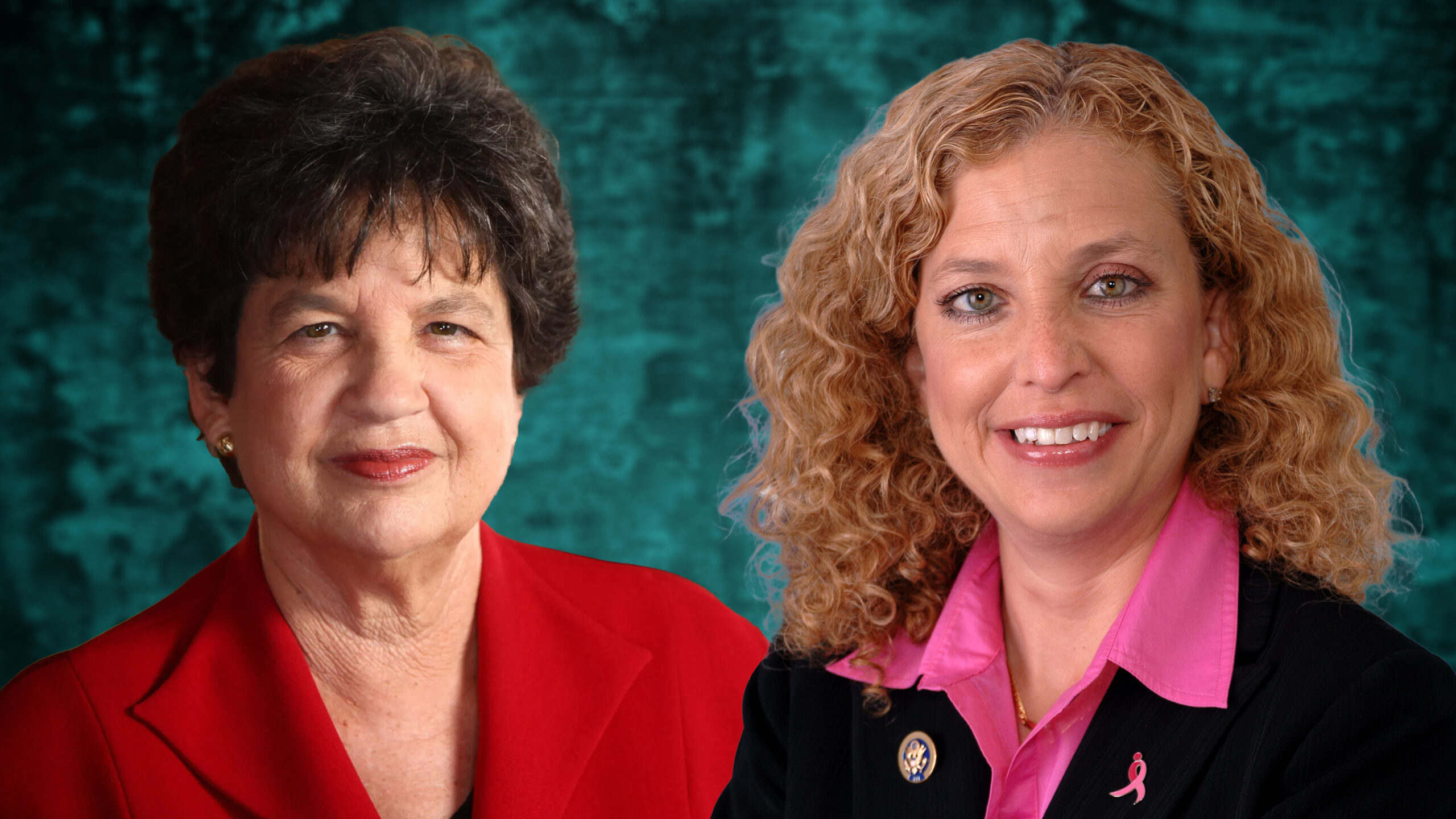
Democrats representing Florida in Congress say Florida’s Health Department doesn’t need to nix support for 10,000 AIDS patients. Worse, they say doing so could both cost lives and lead to further spread of the disease.
U.S. Reps. Lois Frankel and Debbie Wasserman Schultz slammed a recent decision by the Department of Health (DOH) to change eligibility requirements for the Ryan White AIDS Drug Assistance Program. That program, named for deceased child AIDS activist Ryan White, provides prescription drugs for more than 50,000 people living with HIV or AIDS in Florida. But financial eligibility changes strip coverage for more than 10,000 people.
“Researchers estimate the average lifetime health care costs associated with HIV infection can get up into the hundreds of thousands,” said Frankel, a West Palm Beach Democrat.
She made the comments on a press call featuring Florida Democrats and medical experts.
Frankel said the decision to kill funding for the program likely means a death sentence for many who will lose access to care, and now she wants the U.S. Department of Health and Human Services to investigate Florida’s administration of the program.
Wasserman Schultz, a Weston Democrat, said ending coverage for many would be a choice, and a wrong one, by Gov. Ron DeSantis’ administration.
“This is a lifeline that provides critical financial assistance to low-income Floridians living with HIV and AIDS. It helps ensure that they can afford their prescriptions and their health insurance, and despite its resounding success now the program is in jeopardy,” she said.
She said the change means most Floridians applying for the program would be denied if they made $120,000 or more, but HIV medication can cost thousands each month.
The subject has already spurred discussions in the Florida Legislature about whether other funding should be diverted.
Florida Surgeon General Joseph Ladapo told the Senate Health and Human Service Appropriations Committee, “It’s a really, really serious issue,” as reported by the Tampa Bay Times.

He notably blamed a budget shortfall on a federal government shutdown in the Fall, one that ultimately failed to lead to any extension in funding for pandemic-era Affordable Care Act tax credits. Ultimately, he said, that left funding for the program $120 million short.
But cutting the AIDS program is the wrong answer, experts on the call said. Michael Rajner, a public health advocate who personally has lived with HIV since 1995, said cutting the eligibility for the program will create an impossible financial burden on many patients.
“We need the Surgeon General and the Governor to give a halt to this and reverse these cuts and find the money, whether it’s through a budget spending authority request to the Legislature and the Governor,” he said.
Moreover, he said he believed money had been misappropriated. DOH has been criticized for spending money on marketing campaigns about marijuana and abortion ballot measures ultimately defeated at the ballot box last year, though Rajner declined to say explicitly which funding he was referring to. But he said some spending mistakes are easily documented.
“This is a problem that they created themselves because of how they administer the program and the fact that they’ve also forced out several staff over the last year,” Rajner said.
Carl Baloney Jr., President and CEO of AIDS United, said the consequences of cutting participation in the program could be far-reaching.
“This is not only morally wrong, it’s financially reckless,” Baloney said. “Consistent HIV treatment saves money, and disrupting care leads to emergency room visits, hospitalizations and higher uncompensated care. Florida is acting without transparency, without following the required regulatory process.”
Wasserman Schultz noted that Biktarvy was the most prescribed once-daily pill used by HIV patients, and forcing people to switch off that drug could cost individuals thousands each year and put their health at risk.
Dr. Elizabeth Sherman of Nova Southeastern University, an HIV clinical pharmacy specialist, said Florida ranks third in the nation right now for new HIV diagnoses. But with the help of public funding, the state has also seen fast incorporation of treatments like Pre-Exposure Prophylaxis, or PrEP, which uses drugs that not only treat HIV, but prevent its transmission.
That suggests that ending programs won’t just shorten lives, but will potentially lead to more infections.
“We have been the envy of many other states for successfully implementing test-and-treat programs where people with HIV are started on treatment on day one of their diagnosis,” she said. “We can continue to make incredible progress, or we can let our guard down now and watch it get worse.”
Frankel dismissed accusations that the problem came from the federal government. The U.S. House Appropriations Committee member said Florida has not requested additional help.
“Florida, I think, last year got about $130 million. And as far as I know, there has not been any request by the federal government to the states to put in their own funds,” she said, “nor do I know of any outreach by Gov. DeSantis to any of us on appropriations for more money.”
She said the impact on eligibility warranted a federal investigation to figure out the true cause of the funding shortfall.


Trump says Mark Zuckerberg showed him a ‘Manhattan-sized’ AI data center

Timothy Busfield Seen for First Time Since Jail Release Pending Trial

Last Call for 1.21.26 – A prime-time read of what’s going down in Florida
-

 Politics9 years ago
Congress rolls out ‘Better Deal,’ new economic agenda
-
Entertainment9 years ago
New Season 8 Walking Dead trailer flashes forward in time
-
Politics9 years ago
Poll: Virginia governor’s race in dead heat
-
Politics9 years ago
Illinois’ financial crisis could bring the state to a halt
-
Entertainment9 years ago
The final 6 ‘Game of Thrones’ episodes might feel like a full season
-
Entertainment9 years ago
Meet Superman’s grandfather in new trailer for Krypton
-
Business9 years ago
6 Stunning new co-working spaces around the globe
-
Tech9 years ago
Hulu hires Google marketing veteran Kelly Campbell as CMO