Connect with us

Business

Will.i.am says work-life balance is for people ‘working on someone else’s dream’

Published

on


Will.i.am is busy. When he’s not writing hit songs like “OMG” for Usher, he’s looking for the next big pop star on The Voice UK, or running his new AI company, FYI. So how exactly does he balance it all? 

The Grammy Award–winning artist turned tech entrepreneur revealed to Fortune that he maxes out the 5-to-9 after the daily grind of his 9-to-5, and he advises Gen Zers to forget about work-life balance if they want to emulate his success.

“If you’re trying to build something that doesn’t exist, it’s about dream-reality balance,” he says. “Work-life balance means that you’re working for somebody else’s dream. You just have a job supporting somebody else’s dream, and you want to balance your work and your life.

“But if it’s dream-reality balance, then it’s not work. It’s a dream that you’re trying to put into reality, and you’re ignoring your current reality.”

For example, after working on his tech venture from 9 a.m. to 5 p.m., Will.i.am says that he goes back to work on his creative business until 9 p.m. But before his AI company was a reality, his day was flipped. He’d work on music first before dipping into his tech side hustle well into the evening. 

It’s why he advises young people to reframe how they think of their time off work and their current 9-to-5 reality.

“I’m not really paying attention to this reality,” he explains. “I’m trying to bring that one [a new business venture or idea] here and focusing on how do I get people who believe in this dream to help me materialize it? So for that, you have to make some type of sacrifice to bring this thing that doesn’t exist here.

“From that perspective, work-life balance is not for the architects that are pulling visions into reality. Those words don’t compute to the mindset of the materializers.”

Will.i.am doesn’t even take time out for his birthday—and goes to work in China on Boxing Day

Of course, many young people already put in hours to their side hustles and personal development after work. Millions of Gen Zers and millennials are tuning into people’s 5-to-9 evening routines on TikTok

But Will.i.am says chipping away at your dream when most people are off work extends to weekends, birthdays, and holidays.

“I didn’t party. I was always a square, meaning, ‘You work too much, man, let’s go out.’ Like what? Go out. I don’t want to go out. I just always worked,” the rapper says. “It’s your birthday what are you gonna do? Work. You ain’t gonna celebrate?”

The multimillionaire says he’s always saved the celebrating for the stage, where he can finally enjoy the fruits of his labor.

“There’s nothing that’s ever gonna feel that glorious than when you’re actually at a festival. But how do you get to headline a festival? You’ve got to work. My friends would go out and party, hanging out with chicks, doing drugs, drinking. I was just in the studio working, writing songs.”

To this day, he says that he hasn’t gone out and celebrated a birthday—including his most recent one, which was just last week on March 15.

“Like on Christmas for the past 12 years: I could celebrate Christmas with my family, and then on the 26th, I fly to China because that’s dream maker heaven. Anything you want to make is there.”

Will.i.am was speaking to Fortune in Rome for the rollout of Raidio.FYI radios in Mercedes-Benz cars.

Will.i.am’s daily work routine

7 a.m.: Will.i.am is not a part of the CEO-approved 5 a.m. club. Instead, he told Fortune he wakes up at around 7 a.m., and he sticks to this routine whether he’s living in L.A. or London. 

8 a.m.: “I walk, do my calls, and get to work,” he says, with the aim to start work at 9 a.m. 

9 a.m. to 5 p.m.: “I get a lot done from nine to 12, do my little lunch, then back to work at one, finish at five, and that’s all my tech, like entrepreneurial activities.”

5 p.m. to 9 p.m.: “The night hours are creativity,” he says, adding that specifically between 7 p.m. and 9 p.m. is when he gets the best ideas. “That’s the juicy bits, [when] I’m freaking soaking in emotion, to where I just rinse it out in the phone.” 

9 p.m. onward: When Will.i.am was in his late twenties, he says going to sleep at 4 a.m. (and waking up at noon) was the norm. But now, at 50 and balancing both his tech and music ventures, he starts unwinding for bed after 9 p.m. and is asleep by 11 p.m. 

A version of this story originally published on Fortune.com on March 23, 2025.

Join us at the Fortune Workplace Innovation Summit May 19–20, 2026, in Atlanta. The next era of workplace innovation is here—and the old playbook is being rewritten. At this exclusive, high-energy event, the world’s most innovative leaders will convene to explore how AI, humanity, and strategy converge to redefine, again, the future of work. Register now.


Source link

Continue Reading

Business

Inherent contempt charges are being drafted to fine AG Pam Bondi over Epstein files, congressmen say

Published

on


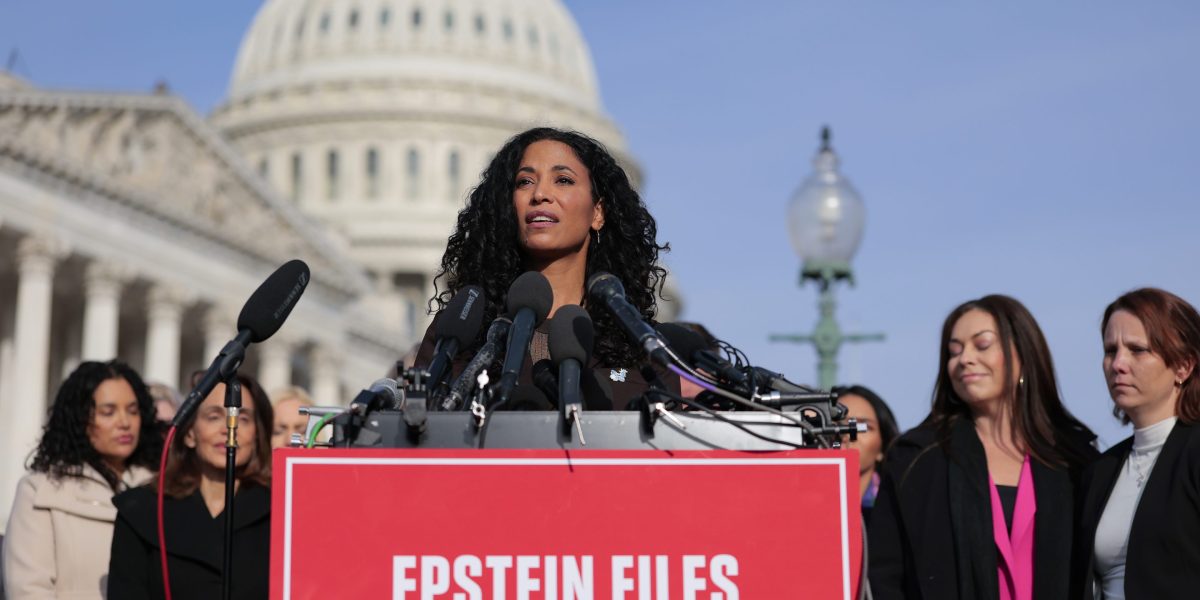
The members of Congress who led the effort to release files on Jeffrey Epstein are eyeing penalties for the Justice Department after it failed to disclose all its documents on the late sex trafficker.

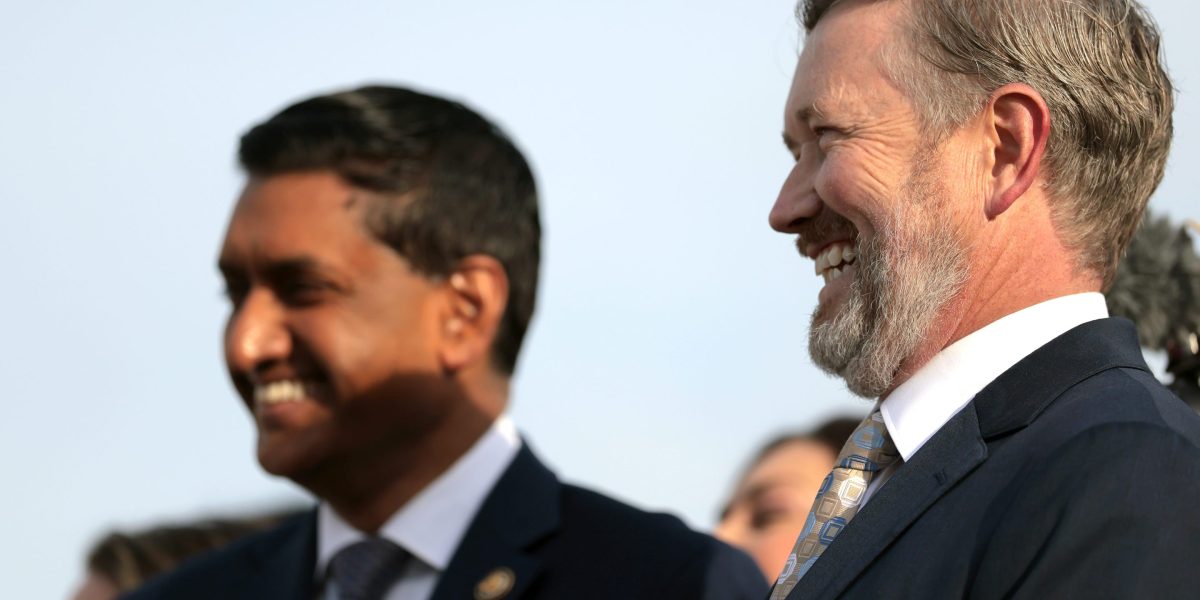
Rep. Thomas Massie, R-Ky., and Rep. Ro Khanna, D-Calif., spearheaded passage of the overwhelmingly bipartisan Epstein Files Transparency Act, but they have said the records published don’t comply with the law, which required that all of them be made public on Friday.

Instead, just a small fraction of the total are out so far, with more expected in the coming weeks, and many of the documents are heavily redacted. The Justice Department maintains that it is in compliance with the law.

In an interview on CBS News’ Face the Nation on Sunday, Massie upped the ante in the dispute over obtaining all the Epstein files.

“There are several ways to get at this. Some take longer. Some are shorter. The quickest way, and I think most expeditious way, to get justice for these victims is to bring inherent contempt against Pam Bondi, and that doesn’t require going through the courts,” he said. “Basically Ro Khanna and I are talking about and drafting that right now.”

And unlike the process for impeachment and removal, the Senate’s approval wouldn’t be necessary for inherent contempt, Khanna pointed out.

He added that he and Massie are building a bipartisan coalition to “fine Pam Bondi for every day that she’s not releasing these documents.”

“Instead of holding them accountable, Pam Bondi is breaking the law,” Khanna said. “And this is the corrupt system, the Epstein class that people are sick of. So I believe we’re going to get bipartisan support in holding her accountable, and a committee of Congress should determine whether these redactions are justified or not.”

Meanwhile, Deputy Attorney General Todd Blanche was defiant in the face of potential legal consequences over not fully releasing the Epstein files.

In an interview Sunday with NBC’s Meet the Press with Kristen Welker, he argued that the extensive redactions were necessary to protect victims and that releasing the documents on a rolling basis instead of all at once still complied with the law.

When asked whether he takes threats of impeachment or contempt charges seriously, he replied, “Not even a little bit. Bring it on. We are doing everything we’re supposed to be doing to comply with this statute.”

Either chamber of Congress can hold someone in contempt on criminal or civil charges with a simple majority vote if that person refuses to testify, withholds information, or obstructs a congressional inquiry, according to the American Bar Association

Any criminal charges would forwarded to the U.S. Attorney’s Office, but it’s not obligated to prosecute. In that case, the House can pursue civil enforcement in U.S. district court. Inherent contempt is a separate option when the House or Senate holds its own proceedings and cites someone for contempt.

Despite the escalation in the lawmakers’ fight with DOJ, inherent contempt stops short of the more severe threat of impeachment, which Khanna had raised on Friday.

“Impeachment is a political decision, and is there the support in the House of Representatives? I mean Massie and I aren’t going to just do something for the show of it,” he told CNN.


Source link

Continue Reading

Business

Trump photo pulled from Epstein files: DOJ cites victim-rights groups, doesn’t believe victims shown

Published

on


Deputy Attorney General Todd Blanche cited victim protection protocols to explain why the Department of Justice quietly removed a photo of President Donald Trump from the Epstein files on Saturday, even as he admitted the agency does not believe the image actually depicts any victims. 

At least 16 files vanished from the DOJ’s public Epstein document webpage less than a day after they were posted Friday. Among them was file 468, an image showing a drawer filled with photographs, including one with Trump alongside Jeffrey Epstein, Melania Trump and Epstein associate Ghislaine Maxwell. Another photograph in the drawer showed Trump surrounded by women. 

In an interview on NBC’s Meet the Press on Sunday, Blanche said the DOJ “learned” after releasing the photo that there were women in it, and there were “concerns about those women, and the fact that we had put that photo up, so we pulled that photo down. It has nothing to do with President Donald Trump.”

He cited the DOJ’s obligation under a New York judge’s order and federal law against releasing material that could identify survivors of Epstein’s crimes.

“But the reality is anybody, any victim, any victim’s lawyers, any victim rights group can reach out to us and say, ‘Hey, Department of Justice, there’s a document, there’s a photo, there’s something within the Epstein files that identifies me.’ And we will then of course pull that off and investigate it.”

However, Meet the Press host Kristen Welker asked whether the image actually contained women who are victims or survivors.

“No, that’s not what I’m saying. If we believed that photograph contained a survivor, we wouldn’t have put it up in the first place without redacting the faces,” Blanche replied. “But notwithstanding what we believe, we don’t have perfect information. And so when we hear from victims’ rights groups about this type of photograph, we pull it down and investigate. We’re still investigating that photo. The photo will go back up. And the only question is whether there will be redactions on the photo.”

The DOJ’s removal of file 468 drew swift criticism online, with the Democrats on the House Oversight Committee repeatedly accusing the White House of executing a “cover up” on Saturday

Blanche rejected suggestions that the takedown had anything to do with Trump, calling claims of political motivation “laughable.” He noted that photographs of Trump with Epstein have been publicly available for years and that Trump has acknowledged socializing with Epstein in the 1990s and early 2000s. 

He also said the photo would be reposted, adding that “the only question” was whether it would require redactions—even as he reiterated that if DOJ believed survivors were depicted, the image would not have been released unredacted in the first place.

Blanche added that the department has no intention of redacting or withholding material related to Trump, beyond what is strictly required by law, and repeatedly guaranteed that every mention and photograph of the president contained in the Epstein files will be released.

Blanche said Trump has insisted since before taking office that the records be made public and has “nothing to hide,” rejecting claims that DOJ is shielding him from scrutiny. He emphasized that the department’s review process applies uniformly to all names that appear in the files and is driven solely by victim-protection obligations and other legal constraints, not political considerations.

The Justice Department has said it will continue releasing Epstein-related records on a rolling basis, citing the time required to review materials for potential redactions. Blanche did not say when the removed files, including file 458, will be reposted, or whether any redactions will ultimately be applied.

A very small percentage of the files have been released, Democratic Rep. Ro Khanna, who authored the Epstein Files Transparency Act with Republican Rep. Thomas Massie, said on CNN Saturday evening. 

“There are 300 gigabytes of files, according to [FBI Director] Kash Patel; they released 2.5 of them,” Khanna said

That’s less than 1% of the files. The act required the department to release all unclassified Epstein-related records by Friday and sharply limits the grounds for withholding or redaction.

Massie said Sunday that the most “expeditious way to get justice for these victims” is to bring inherent contempt charges against Attorney General Pam Bondi, as they said the initial disclosures failed to meet the statute’s requirements and warned DOJ officials could face consequences, including impeachment, if the department is found to be obstructing compliance.

Blanche dismissed those concerns during the interview with NBC, insisting the department is “doing everything we’re supposed to be doing” under the law and prioritizing victim protection over rigid deadlines. He added the DOJ collected far more material than required and is continuing to review.

Blanche said the department is “not prepared” to bring more charges to anyone based on the release of the files. 

“We learned the names of additional victims as recently as Wednesday of this week — there’s new names that we didn’t have before — that we ran across our database to understand whether they had ever met with law enforcement or ever talked to the FBI, and so we’re always investigating. And it would be premature and not fair for me to to unilaterally say yes or no.”


Source link

Continue Reading

Business

HubSpot CEO avoids the Sunday scaries simply by working on the weekend

Published

on


We all know that familiar feeling of dread: setting our alarm clocks for Monday morning on Sunday evening, or even earlier in the day knowing your weekend of fun has come to an end.

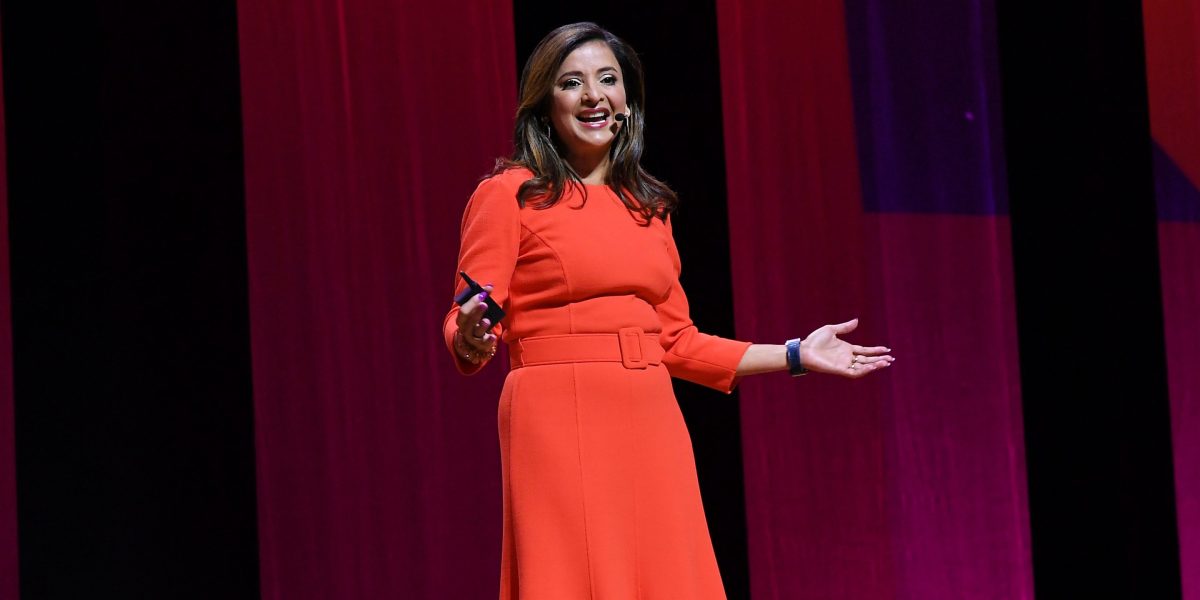
But HubSpot CEO Yamini Rangan knows no such feeling, she said in an episode of The Grit podcast. That’s because she uses Sundays as her own personal work day. 

“I’m not scared of Sundays. I enjoy it because it’s my time,” said Rangan, who helms the $20 billion software company. “I get to decide what I’m learning, what I’m doing, what I’m thinking, what I’m writing. It is completely my schedule.”

Instead, Rangan—who said she struggles to sit still and take time away from work—carves out Friday night and all of Saturday to take a break. She spends this time going on walks with her husband Kash (a managing director with Goldman Sachs), doing yoga, meditating, and reading. 

“Saturdays are precious to me,” Rangan said. “When I didn’t take breaks, I got burned out pretty quickly.” 

HubSpot employees know Rangan won’t look at or respond to emails on Saturdays, but she’ll spend time on Sundays scheduling emails that hit inboxes in the wee morning hours on Mondays. 

Rangan, who’s been with HubSpot for about five years now, typically starts her weekdays around 6 a.m. and is on work calls by 7 a.m. She says she will work as late as 11 p.m. 

She joined the marketing software company right before the pandemic began as chief customer officer. The pandemic actually boded well for HubSpot as more and more companies started digitizing more of their processes and procedures. The company’s revenue more than doubled, said Rangan, who became CEO in September 2021. HubSpot was also recognized on Fortune’s Future 50 list in 2024 for companies that are likely to adapt, thrive, and grow. HubSpot didn’t immediately respond to Fortune’s request for comment about Rangan’s worth ethic and how she’s impacted the company.

Rangan built her 25-year-plus tech career serving in leadership positions at other large software companies including Dropbox, Workday, and SAP. But the tech powerhouse came from humble beginnings. 

Rangan was born and raised in South India, where she grew up in a 350-foot apartment with her parents and older sister. She says her mother inspired her to become a woman pioneer—whether it was becoming the first woman in India to win a major case, the first woman engineer to “do something really cool,” or becoming a doctor who would do something amazing, Rangan said. 

She ended up studying computer engineering at Bharathiar University in India, and moved to the U.S. at age 21 to earn her MBA from the University of California—Berkeley’s Haas School of Business. She used her combined experience of engineering and business to become a successful salesperson, eventually climbing the ranks in the tech industry. 

Although Rangan is successful—and has a near-$26 million salary to match—she reminds her two teenage sons they’ll have to work hard like she did in order to earn the lifestyle they live now. Rangan is one of the highest-paid Indian-origin CEOs in the U.S., alongside Nikesh Arora, CEO of Palo Alto Networks.

She takes her sons to India every couple of years to show where she and her husband grew up and takes her sons to see a local orphanage they sponsor to “give them a sense of what your responsibility is in society,” Rangan said. 

“[It’s] not just for you to make money and live in the Bay Area,” she said. “It is to figure out how you can actually have a broader impact.”

A version of this story published on Fortune.com on May 12, 2025.

Join us at the Fortune Workplace Innovation Summit May 19–20, 2026, in Atlanta. The next era of workplace innovation is here—and the old playbook is being rewritten. At this exclusive, high-energy event, the world’s most innovative leaders will convene to explore how AI, humanity, and strategy converge to redefine, again, the future of work. Register now.


Source link

Continue Reading

Trending

Copyright © Miami Select.