
Politics
Why Orange County school leaders should look to Wichita


It may be a memorable line in the White Stripes’ iconic anthem, “Seven Nation Army.” But the phrase “I’m goin’ to Wichita” hardly has the same luster or appeal as the oft-heard exclamation, “We’re going to Disney World!”
Still, if members of the Orange County School Board want to do right by their K-12 students growing up in the shadow of the Magic Kingdom, they should pack their bags and pay a visit to homely Wichita. Soon.
Wichita, you see, is home to one of the most interesting innovations in K-12 education to come along in years. And it’s exactly the kind of innovation the Orange County School Board ought to consider before proceeding with plans to close seven public schools this Fall.
Several years ago, some forward-looking Wichita leaders had an interesting thought: “What if we converted our old historic train station into a co-learning space that could serve all sorts of K-12 students in our city?”
The idea took hold. Soon, Wichita’s Union Station was bustling with schoolchildren eager to learn from a variety of educators.

Wichita’s Learning Lab has four anchor programs, each providing a distinctive educational experience in a dedicated learning space. Two of these anchors are run by public school educators; one is a private school startup, and the fourth is a homeschooling co-op.
Complementing these Learning Lab fixtures are a variety of “a la carte” offerings that occupy flexible workshop spaces staffed by community partners. Among the specialty programs offered: printmaking, forensic science, ballet, Spanish, American Sign Language, sports journalism, college prep, and musical theatre.
If all this sounds magical — like something out of “The Wizard of Oz” — the truth is co-locational learning arrangements may have even greater potential in Florida than in Kansas. Florida’s robust school choice scholarship programs already blur the lines between public, private, and home schooling. For example, two-thirds of Florida’s 67 public School Districts now offer “a la carte” courses for scholarship students primarily educated elsewhere.
Co-locational learning arrangements like Wichita’s Learning Lab could also help solve a thorny problem facing School Districts statewide: what to do with excess classrooms when there aren’t enough public school students to fill them.
The Orange County School Board’s current impulse is simple: “Shut down some schools.” That’s why seven are now on the chopping block. But closing neighborhood schools is rarely popular, especially with families who don’t want their children bused far from home.

With the growing popularity of microschools, hybrid programs, specialty courses, and other innovations, School Boards increasingly need to borrow a page from Wichita. They need to ask, “Why don’t we invite community partners to rent space in our schools and offer programs that serve students beyond our own public schoolers?”
Renting space to K-12 partners would help districts’ bottom lines. Co-locational education makes far more sense than closing schools needlessly or converting them into something else entirely. After all, school buildings were designed for K-12 students — right down to the child-sized toilets.
So, as hordes of visitors stream into Orlando to fulfill dreams of going to Disney World, members of the Orange County School Board should be planning a trip in the opposite direction. They should be getting out of Dodge to check out the Learning Lab just down the road from Dodge City — in the luster-lacking city the White Stripes sang about: Wichita.
___
William Mattox is the senior director of the Marshall Center for Education Freedom at The James Madison Institute.
Politics
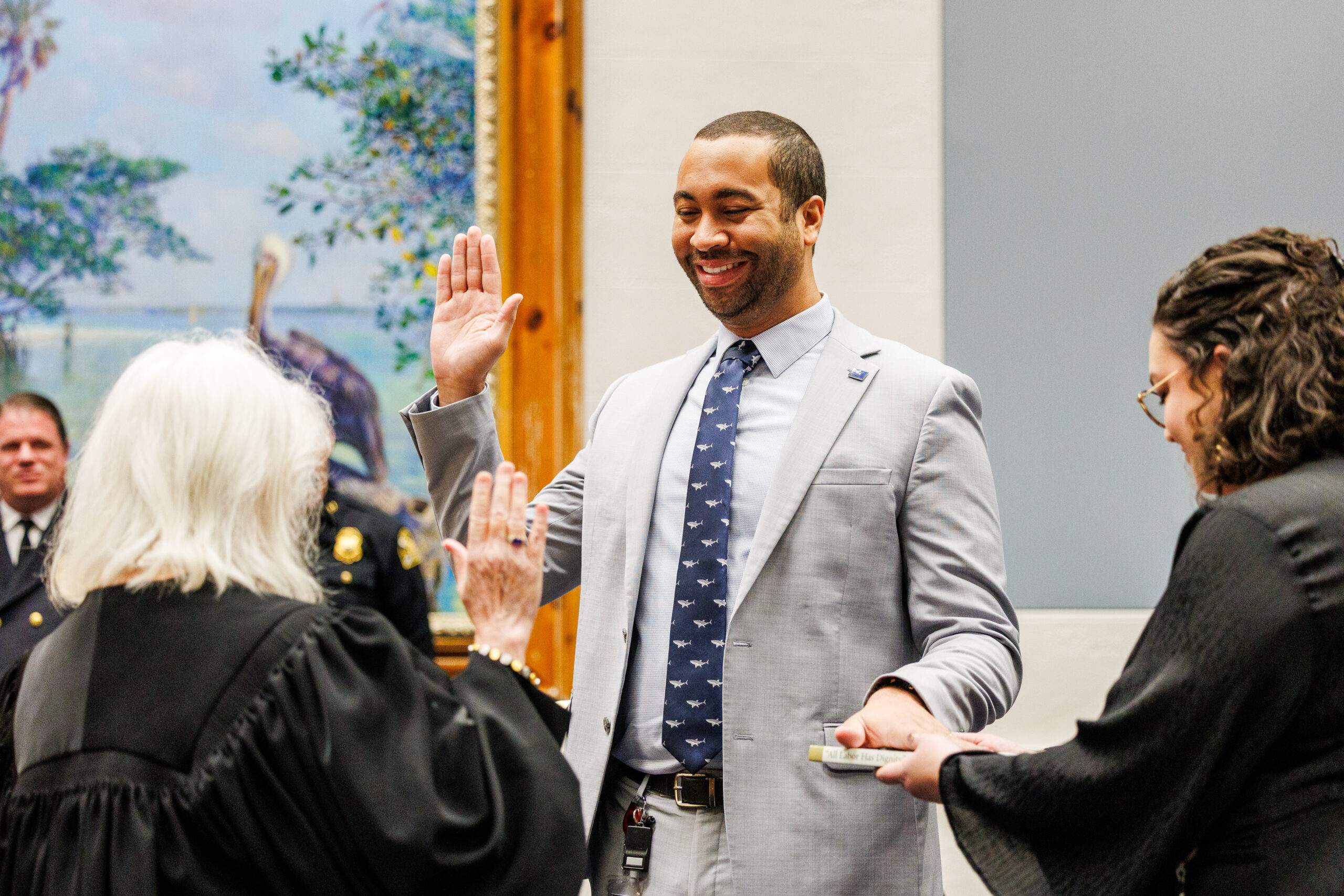
Richie Floyd seeks re-election to St. Pete City Council, pledging to fight corporate influence
Politics
Barbara Sharief bill to delay child separation in questionable abuse claims gets first Senate OK
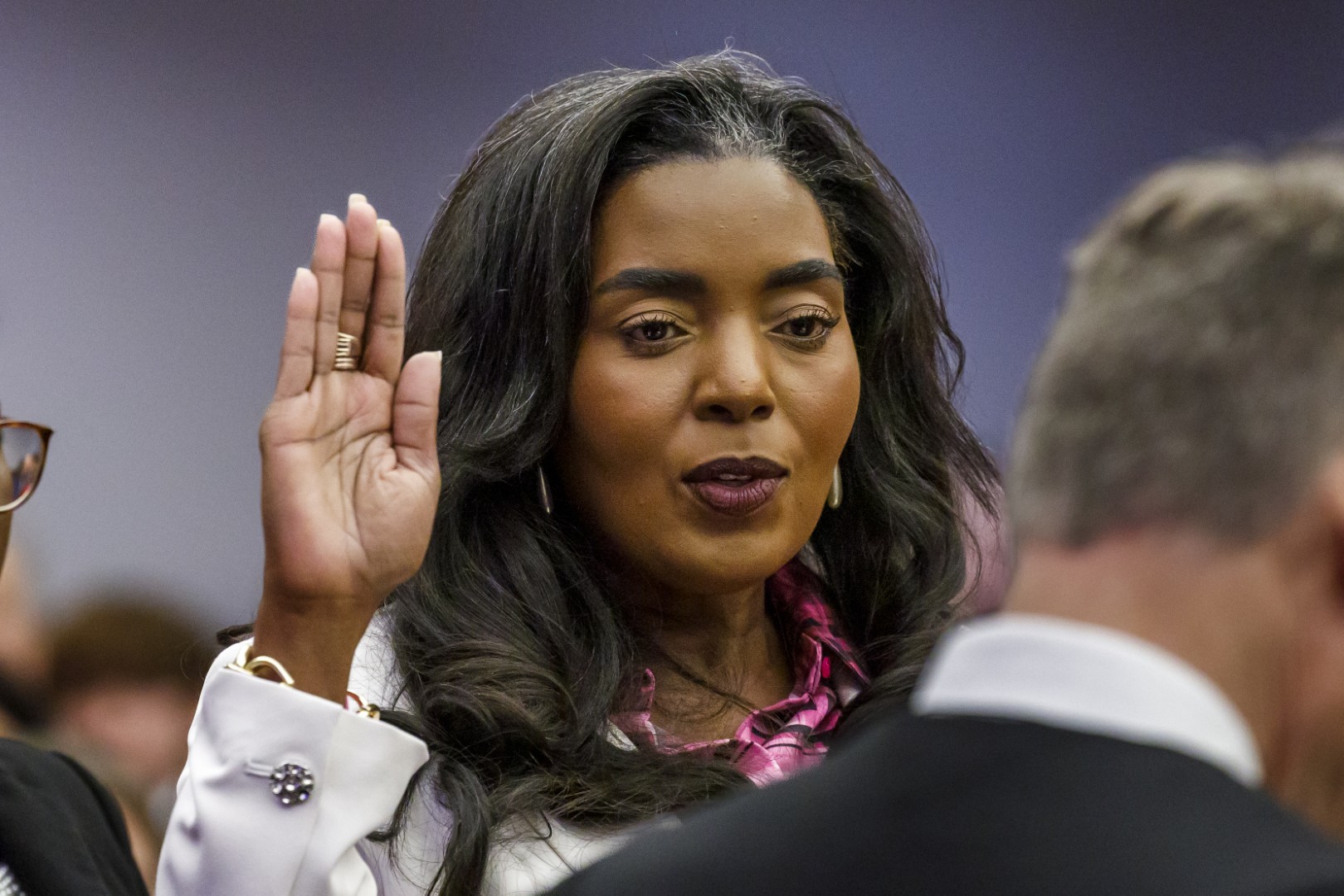
Legislation by Broward Democratic Sen. Barbara Sharief to prevent the state from tearing apart families on false child abuse claims is again advancing in the Senate after almost becoming law last year.
Members of the Senate Children, Families and Elder Affairs Committee voted unanimously for the measure (SB 42), which Sharief described as a “child safety and due process bill.”
“Under current law, certain complex medical conditions can be misinterpreted as signs of abuse and neglect, particularly in medically complex children,” Sharief said.
“When that happens, families can be subjected to unnecessary investigations, and children can be removed from their homes without the benefit of appropriate medical expertise.”
SB 42 would change child welfare investigations by allowing the Department of Children and Families (DCF) to delay referring allegations of child abuse to law enforcement when a parent reports a specified preexisting diagnosis or requests a medical examination.
It would also require Child Protection Teams to consult with qualified pediatric medical professionals when evaluating medically complex children or diagnoses that can mimic abuse, and gives parents limited rights to request additional examinations — at their own expense or through insurance — while barring second opinions on sexual abuse determinations.
The bill is dubbed “Patterson’s Law,” named after Michael and Tasha Patterson and their twin sons, whom the DCF took custody of in 2022 after broken bones the boys suffered raised alarms during an emergency room visit.
The couple took the matter to court, citing medical evidence showing that like their mother, the boys — who have still not been returned — have a rare genetic disorder called Ehlers-Danlos syndrome that causes fragile bones and easy bruising.
Sharief, a doctor of nursing practice and former Broward Mayor, said various preexisting genetic conditions like Ehlers-Danlos, rickets, osteogenesis imperfecta and vitamin D deficiency can lead to signs of bodily harm that aren’t due to physical abuse, but the state’s process for determining whether that’s the case is faulty, and it’s hurting families.
More than a dozen people who appeared at the Monday committee meeting backed up Sharief’s assertions along with several organizations — Disability Rights of Florida, the Florida Justice Association and Florida chapter of the American Academy of Pediatrics among them — that signaled support for SB 42.

Tasha Patterson called the current system “broken,” as it “chooses to defend (DCF’s) mistakes instead of (correcting) them.” She detailed how DCF did not consider input from 12 experts on medically complex children and has continued to ignore evidence of non-abuse, including how her boys sustained additional injuries even after the state stepped in and while neither parent was with them.
“This year will make it four years of litigation to bring our children home. We are yet in another appeal,” she said. “My hope is that the system can learn to prioritize accountability, transparency and fairness when new information emerges.”
Another parent, Diana Sullivan, shared a similar story of how she and her husband were “thrust into an investigation process that treated the unknown as guilt.” The state, she said, took away her newborn daughter and other children after her daughter began exhibiting symptoms of Ehlers-Danlos and osteogenesis imperfecta.
Maddeningly, she continued, the initial DCF report included rare health maladies as a possible cause for the infant’s injuries, but the state still chose to take the children rather than investigate those possibilities.
“Tests were ordered. Answers were possible. But the tests were never run. Eight of our doctors, for a second opinion, deemed her condition not (to be) abuse and explained why,” she said. “We’re not asking for special treatment. We’re asking for humanity, a system … that protects children without destroying the families who love them.”
Sharief, in her closing remarks on the bill, noted that none of the people who spoke in support of SB 42 stand to benefit from it.
“They are here purely to prevent future families from going through the same thing,” she said.
SB 42 will next go to the Senate Appropriations Committee on Health and Human Services, its second-to-last stop before reaching a floor vote. Its identical companion in the House (HB 47), sponsored by Weston Democratic Rep. Robin Bartleman and Shalimar Republican Rep. Patt Maney, awaits a first committee hearing.
The Senate passed “Patterson’s Law” last Session on a 37-0 vote. The bill then died in the House, where Bartleman and Maney’s version of the legislation was denied a hearing in its third and final committee stop.
Politics
Bill to rename Miami-Dade road after Charlie Kirk clears first Senate hurdle on party-line vote



Is Powell’s Fed head independence dead? It’s just one more diversionary Trump trick

Surgeon to Be Extradited to Ohio For Allegedly Murdering Ex-Wife, Husband

Sophie Fontanel receives Legion of Honor
-

 Politics8 years ago
Congress rolls out ‘Better Deal,’ new economic agenda
-
Entertainment8 years ago
New Season 8 Walking Dead trailer flashes forward in time
-
Politics8 years ago
Poll: Virginia governor’s race in dead heat
-
Politics8 years ago
Illinois’ financial crisis could bring the state to a halt
-
Entertainment8 years ago
The final 6 ‘Game of Thrones’ episodes might feel like a full season
-
Entertainment8 years ago
Meet Superman’s grandfather in new trailer for Krypton
-
Business8 years ago
6 Stunning new co-working spaces around the globe
-
Tech8 years ago
Hulu hires Google marketing veteran Kelly Campbell as CMO