Connect with us

Business

Why Lyft CEO David Risher still drives customers once a month

Published

on


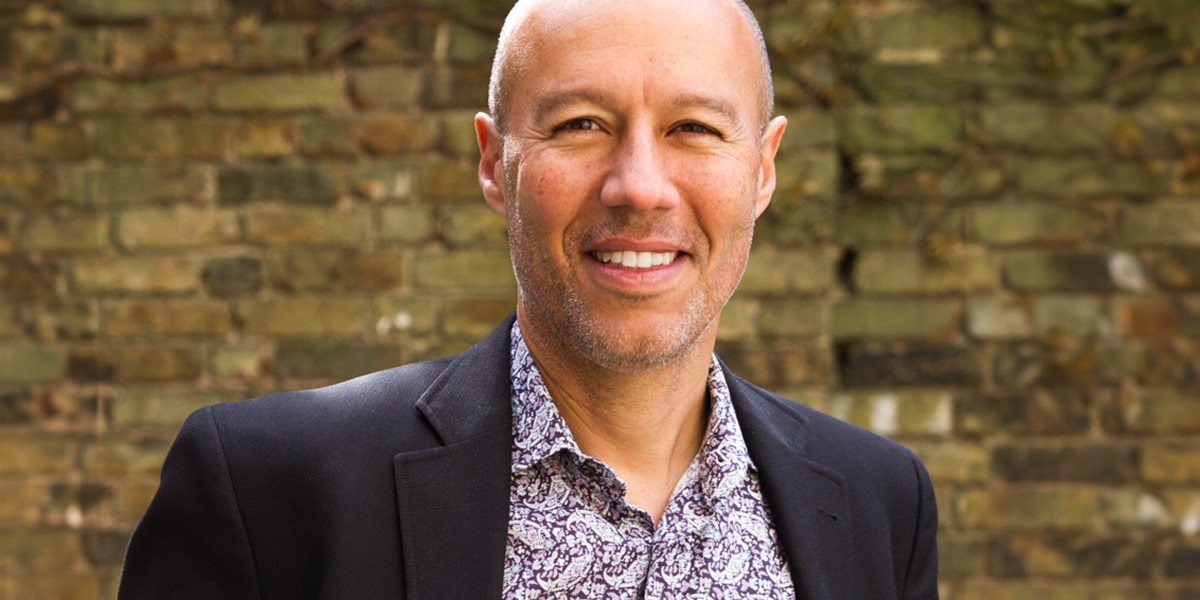
Good morning. When David Risher became CEO of Lyft, he drove part-time to get a feel for the job. Two and a half years later, he still drives at least once a month to, as he puts it, “learn, not earn.” In the latest episode of Leadership Next, taped at Fortune’s Brainstorm Tech conference in Deer Valley earlier this month, Risher talked to me and Kristin Stoller about how his part-time gig has shaped policy:

Fixed Prices: Risher says a passenger named Anne from Sausalito inspired him to let customers lock in a price for their morning commute after she talked about the stress of not knowing what she would have to pay every morning. “I began to realize people really don’t like surge pricing,” he says, “so we developed a product called price lock that allows people to lock in a price over a given route, and it’s been a game changer for commutes.”

Earnings Guarantee: “One of the things that really frustrates drivers is when they make too little versus what the rider pays,” he said. “Last year, we put in something called a 70% earnings guarantee. It means over the course of a week, drivers will never earn less than 70% of what riders pay after fees.”  One result: “We now have a 19-point advantage over the other guys in terms of driver preference.”

Accountability: “If we want to develop the best possible service product, the highest-level service, we have to implicate our drivers.” So Risher’s team did a deep dive into why some drivers cancel, and which customers faced longer wait times, and then they worked to get those numbers down. “We’ve got 25% more riders and we’ve gone from losing share to gaining share,” he says.

Driver Choice: “You can say, ‘I only want to drive within this area,’ right? Because I know that I don’t want to go over the bridge, or I know I need to get home by seven o’clock.  You learn to really value those things as a driver.” And being in the same neighborhood often allows drivers to forge connections with the people they serve, so Lyft introduced a feature that lets riders have favorite drivers, allowing those relationships with customers to deepen. Having done it himself, Risher understands the gig: “Being a driver is a little bit like being a therapist and a bartender,” he says. You can check out our full conversation on Apple and Spotify; we’ll share video clips across our social channels. And a shout out to our producer, Lydia Randall, because podcasting—like every other part of journalism—is a team sport.

Contact CEO Daily via Diane Brady at diane.brady@fortune.com

Top news

Introducing the Fortune AIQ 50

Today we published the Fortune AIQ 50, a new ranking that evaluates how Fortune 500 companies are actually deploying AI, and how technology leaders value those investments relative to industry peers. The ranking is a record of how 18 sectors across the Fortune 500, including financials, health care, and retailing, are utilizing AI to personalize customer experiences, provide groundbreaking data analysis, optimize supply chains, and more. Explore the list, and catch up on our ongoing Fortune AIQ series.

Hamas must accept Gaza peace plan or face destruction

The U.S. and Israel, with the backing of a swathe of countries in the Middle East and Europe, have agreed a peace plan for Gaza which features a full withdrawal of Israeli troops and a return of all hostages. There’s just one catch: Hamas has yet to accept it. If it does not, Israel will be allowed to “finish the job” in Gaza—a phrase used by both Israel’s Prime Minister Netanyahu and U.S. President Trump.

U.S. government set to shut down tonight

The U.S. federal government will shut down at 12.01 a.m. Wednesday morning unless Republicans cave to Democratic Party demands that Affordable Care Act tax credits, and other measures to reduce healthcare costs, be included in the spending bill. Some Democrats helped the Republicans keep the government open the last time a shutdown loomed and now the party feels burned by the experience, the WSJ says.

More tariffs?!

President Trump wants a 100% tariff on foreign movies and “substantial Tariffs” on foreign furniture.

YouTube pays Trump $22 million

Google settled a lawsuit against it brought by the president after he was booted off YouTube following the January 6 insurrection because the company wanted to reduce the risk of further violence from his supporters. Trump’s lawsuit claimed that censoring him was “unconstitutional.” Reality check: Declining to host someone on your tech platform is not unconstitutional. It is more likely that Google parent Alphabet has chosen expediency over legal principle. $22 million is a rounding error in Google’s finances.

Exodus of top talent at Elon Musk’s companies

The FT named 23 top executives who left Musk’s companies in recent months, many citing the frustration of working 24/7 and dealing with a CEO who deliberately stokes culture wars. One of them, xAI’s head of legal Robert Keele, posted a cartoon of a lawyer shoveling hot coals in his announcement that he was leaving, saying “I love my two toddlers and I don’t get to see them enough.”

Wiz’s five-year surge to success

Cloud security company Wiz made headlines this spring when it was acquired by Google for more than $32 billion, marking one of the 10 biggest tech M&A deals in history. Fortune’s Michal Lev-Ram sat down with cofounder and CEO Assaf Rappaport to explain why he turned down previous iterations of the deal—and how they surged to massive success in just five years.

Nvidia’s Huang boosts “sovereign AI”

Must-read deep dive on how Nvidia’s Jensen Huang persuades foreign governments to go all-in on “sovereign AI” programs: On September 17, Huang had dinner with President Trump and King Charles, and the next day hosted a party in London along with U.K. Prime Minister Kier Starmer and U.S. commerce secretary Howard Lutnick. The FT reports, “Then, channelling Oprah Winfrey’s famous TV show giveaways, Huang started distributing prizes into the audience. Pledging £2bn for UK-based AI start-ups, he anointed eight companies one by one, telling each in turn: ‘I’m going to invest in your next round.’ Many of the British people in the audience were left bemused. ‘The whole event was totally unhinged,’ says one attendee.”

The markets

S&P 500 futures were down 0.16% this morning. The index closed up 0.26% in its last session. STOXX Europe 600 was down 0.32% in early trading. The U.K.’s FTSE 100 down 0.19% in early trading. Japan’s Nikkei 225 was down 0.25%. China’s CSI 300 was up 0.45%. The South Korea KOSPI was down 0.19%. India’s Nifty 50 was flat before the end of the session. Bitcoin rose to $113.5K.

Around the watercooler

Ford CEO warns there’s a dearth of blue-collar workers able to construct AI data centers and operate factories: ‘Nothing to backfill the ambition’ by Sasha Rogelberg

Trump’s tariffs are already spurring Japanese companies to shift more production to the U.S. by Jason Ma

OpenAI rolls out ‘instant’ purchases directly from ChatGPT, in a radical shift to e-commerce and a direct challenge to Google by Jeremy Kahn

Top crypto regulator Adrienne Harris steps down from the New York Department of Financial Services by Leo Schwartz

CEO Daily is compiled and edited by Joey Abrams and Jim Edwards.

This is the web version of CEO Daily, a newsletter of must-read global insights from CEOs and industry leaders. Sign up to get it delivered free to your inbox.


Source link

Continue Reading

Business

Construction workers are earning up to 30% more in the data center boom

Published

on


Big Tech’s AI arms race is fueling a massive investment surge in data centers with construction worker labor valued at a premium. 

Despite some concerns of an AI bubble, data center hyperscalers like Google, Amazon, and Meta continue to invest heavily into AI infrastructure. In effect, construction workers’ salaries are being inflated to satisfy a seemingly insatiable AI demand, experts tell Fortune.

In 2026 alone, upwards of $100 billion could be invested by tech companies into the data center buildout in the U.S., Raul Martynek, the CEO of DataBank, a company that contracts with tech giants to construct data centers, told Fortune.

In November, Bank of Americaestimated global hyperscale spending is rising 67% in 2025 and another 31% in 2026, totaling a massive $611 billion investment for the AI buildout in just two years.

Given the high demand, construction workers are experiencing a pay bump for data center projects.

Construction projects generally operate on tight margins, with clients being very cost-conscious, Fraser Patterson, CEO of Skillit, an AI-powered hiring platform for construction workers, told Fortune.

But some of the top 50 contractors by size in the country have seen their revenue double in a 12-month period based on data center construction, which is allowing them to pay their workers more, according to Patterson.

“Because of the huge demand and the nature of this construction work, which is fueling the arms race of AI… the budgets are not as tight,” he said. “I would say they’re a little more frothy.”

On Skillit, the average salary for construction projects that aren’t building data centers is $62,000, or $29.80 an hour, Patterson said. The workers that use the platform comprise 40 different trades and have a wide range of experience from heavy equipment operators to electricians, with eight years as the average years of experience.

But when it comes to data centers, the same workers make an average salary of $81,800 or $39.33 per hour, Patterson said, increasing salaries by just under 32% on average.

Some construction workers are even hitting the six-figure mark after their salaries rose for data center projects, according to The Wall Street Journal. And the data center boom doesn’t show any signs it’s slowing down anytime soon.

Tech companies like Google, Amazon, and Microsoft operate 522 data centers and are developing 411 more, according to The Wall Street Journal, citing data from Synergy Research Group. 

Patterson said construction workers are being paid more to work on building data centers in part due to condensed project timelines, which require complex coordination or machinery and skilled labor.

Projects that would usually take a couple of years to finish are being completed—in some instances—as quickly as six months, he said.

It is unclear how long the data center boom might last, but Patterson said it has in part convinced a growing number of Gen Z workers and recent college grads to choose construction trades as their career path.

“AI is creating a lot of job anxiety around knowledge workers,” Patterson said. “Construction work is, by definition, very hard to automate.”

“I think you’re starting to see a change in the labor market,” he added.


Source link

Continue Reading

Business

Netflix cofounder started his career selling vacuums door-to-door before college—now, his $440 billion streaming giant is buying Warner Bros. and HBO

Published

on


Reed Hastings may soon pull off one of the biggest deals in entertainment history. On Thursday, Netflix announced plans to acquire Warner Bros.—home to franchises like Dune, Harry Potter, and DC Universe, along with streamer HBO Max—in a total enterprise value deal of $83 billion. The move is set to cement Netflix as a media juggernaut that now rivals the legacy Hollywood giants it once disrupted.

It’s a remarkable trajectory for Netflix’s cofounder, Hastings—a self-made billionaire who found a love for business starting as a teenage door-to-door salesperson.

“I took a year off between high school and college and sold Rainbow vacuum cleaners door to door,” Hastings recalled to The New York Timesin 2006. “I started it as a summer job and found I liked it. As a sales pitch, I cleaned the carpet with the vacuum the customer had and then cleaned it with the Rainbow.”

That scrappy sales job was the first exposure to how to properly read customers—an instinct that would later shape Netflix’s user-obsessed culture. After graduating from Bowdoin College in 1983, Hastings considered joining the Marine Corps but ultimately joined the Peace Corps, teaching math in Eswatini for two years. When he returned to the U.S., he obtained a master’s in computer science from Stanford and began his career in tech.

The idea for Netflix reportedly came a few years later in the late 1990s. After misplacing a VHS copy of Apollo 13 and getting hit with a $40 late fee at Blockbuster, Hastings began exploring a mail-order rental service. While it’s an origin story that has since been debated, it marked the start of a company that would reshape global entertainment.

Hastings stepped back as CEO in 2023 and now serves as Netflix’s chairman of the board. He has amassed a net worth of about $5.6 billion. He’d be even richer if he didn’t keep offloading his shares in the company and making record-breaking charitable donations.

Netflix’s secret for success: finding the right people

Hastings has long said that one of the biggest drivers of Netflix’s success is its focus on hiring and keeping exceptional talent.

“If you’re going to win the championship, you got to have incredible talent in every position. And that’s how we think about it,” he told CNBC in 2020. “We encourage people to focus on who of your employees would you fight hard to keep if they were going to another company? And those are the ones we want to hold onto.”

To secure top performers, Hastings said he was more than willing to pay for above-market rates. 

“With a fixed amount of money for salaries and a project I needed to complete, I had a choice: Hire 10 to 25 average engineers, or hire one ‘rock-star’ and pay significantly more than what I’d pay the others, if necessary,” Hastings wrote. “Over the years, I’ve come to see that the best programmer doesn’t add 10 times the value. He or she adds more like a 100 times.”

That mindset also guided Netflix’s leadership transition. When Hastings stepped back from the C-suite, the company didn’t pick a single successor—it picked two. Greg Peters joined Ted Sarandos as co-CEO in 2023.

“It’s a high-performance technique,” Hastings said, speaking about the co-CEO model. “It’s not for most situations and most companies. But if you’ve got two people that work really well together and complement and extend and trust each other, then it’s worth doing.”

Netflix’s stock has soared more than 80,000% since its IPO in 2002, adjusting for stock splits.

Netflix brought unlimited PTO into the mainstream

Netflix’s flexible workplace culture has also played a key role in its success, with Hastings often known for prioritizing time off to recharge. 

“I take a lot of vacation, and I’m hoping that certainly sets an example,” the former CEO said in 2015. “It is helpful. You often do your best thinking when you’re off hiking in some mountain or something. You get a different perspective on things.”

The company was one of the first to introduce unlimited PTO, a policy that many firms have since adopted. About 57% of retail investors have said it could improve overall company performance, according to a survey by Bloomberg. Critics have argued that such policies can backfire when employees feel guilty taking time off, but Hastings has maintained that freedom is core to Netflix’s identity. 

“We are fundamentally dedicated to employee freedom because that makes us more flexible, and we’ve had to adapt so much back from DVD by mail to leading streaming today,” Hastings said. “If you give employees freedom you’ve got a better chance at that success.”

Netflix’s other cofounder, Marc Randolph, embraced a similar philosophy of valuing work-life balance.

“For over thirty years, I had a hard cut-off on Tuesdays. Rain or shine, I left at exactly 5 p.m. and spent the evening with my best friend. We would go to a movie, have dinner, or just go window-shopping downtown together,” Randolph wrote in a LinkedIn post.

“Those Tuesday nights kept me sane. And they put the rest of my work in perspective.”


Source link

Continue Reading

Business

‘This species is recovering’: Jaguar spotted in Arizona, far from Central and South American core

Published

on


The spots gave it away. Just like a human fingerprint, the rosette pattern on each jaguar is unique so researchers knew they had a new animal on their hands after reviewing images captured by a remote camera in southern Arizona.

The University of Arizona Wild Cat Research and Conservation Center says it’s the fifth big cat over the last 15 years to be spotted in the area after crossing the U.S.-Mexico border. The animal was captured by the camera as it visited a watering hole in November, its distinctive spots setting it apart from previous sightings.

“We’re very excited. It signifies this edge population of jaguars continues to come here because they’re finding what they need,” Susan Malusa, director of the center’s jaguar and ocelot project, said during an interview Thursday.

The team is now working to collect scat samples to conduct genetic analysis and determine the sex and other details about the new jaguar, including what it likes to eat. The menu can include everything from skunks and javelina to small deer.

As an indicator species, Malusa said the continued presence of big cats in the region suggests a healthy landscape but that climate change and border barriers can threaten migratory corridors. She explained that warming temperatures and significant drought increase the urgency to ensure connectivity for jaguars with their historic range in Arizona.

More than 99% of the jaguar’s range is found in Central and South America, and the few male jaguars that have been spotted in the U.S. are believed to have dispersed from core populations in Mexico, according to the U.S. Fish and Wildlife Service. Officials have said that jaguar breeding in the U.S. has not been documented in more than 100 years.

Federal biologists have listed primary threats to the endangered species as habitat loss and fragmentation along with the animals being targeted for trophies and illegal trade.

The Fish and Wildlife Service issued a final rule in 2024, revising the habitat set aside for jaguars in response to a legal challenge. The area was reduced to about 1,000 square miles (2,590 square kilometers) in Arizona’s Pima, Santa Cruz and Cochise counties.

Recent detection data supports findings that a jaguar appears every few years, Malusa said, with movement often tied to the availability of water. When food and water are plentiful, there’s less movement.

In the case of Jaguar #5, she said it was remarkable that the cat kept returning to the area over a 10-day period. Otherwise, she described the animals as quite elusive.

“That’s the message — that this species is recovering,” Malusa said. “We want people to know that and that we still do have a chance to get it right and keep these corridors open.”


Source link

Continue Reading

Trending

Copyright © Miami Select.