Connect with us

Business

Why Jerome Powell’s latest rate cut still won’t help you get a lower mortgage rate

Published

on


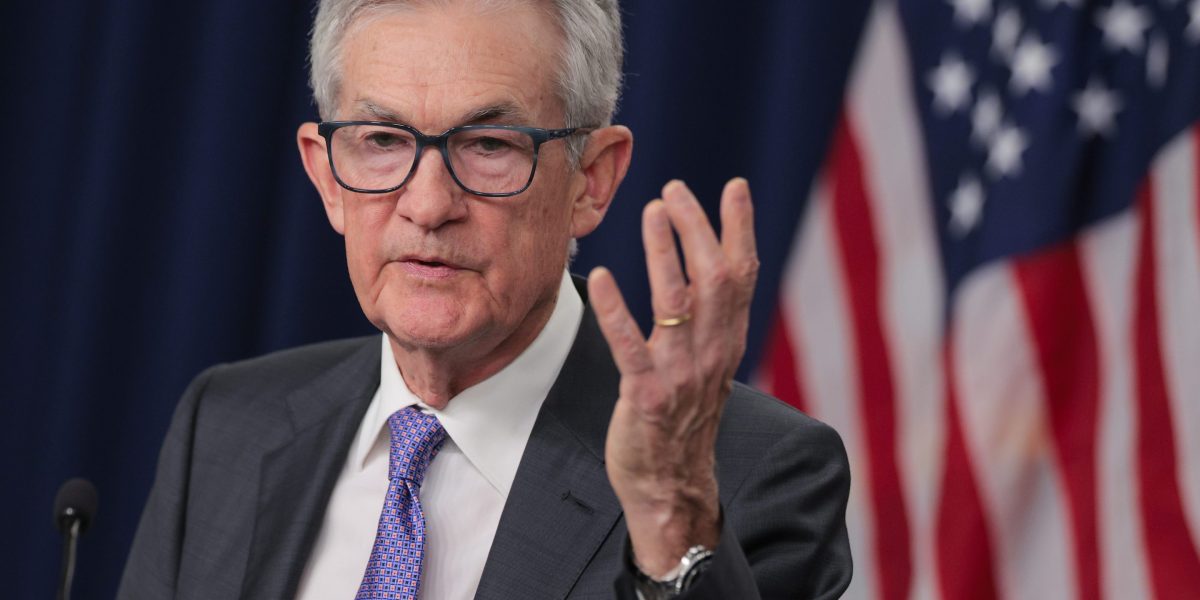
For the third meeting in a row, the Federal Reserve cut interest rates—a “hawkish” move in an effort to help a softening labor market. The 0.25% cut brought the interest rate range to 3.5% to 3.75%—but economists and housing experts warn that’s not going to affect mortgage rates in the way potential homebuyers were hoping for. 

Chen Zhao, head of economics research at Redfin, wrote in a Wednesday post that the Fed’s December interest rate cut won’t move mortgage rates “because markets have already priced it in.” 

The Federal Reserve controls the Federal funds rate, which is a rate that banks charge each other and is more closely tied to credit cards, personal loans, and home-equity lines. A standard 30-year mortgage, on the other hand, is a long-term loan, and the pricing of those loans are tied more closely to yields on longer-term bonds like the 10-year Treasury and mortgage-backed securities. 

“Since this rate cut was no surprise, the markets have taken it in stride,” 43-year mortgage industry veteran Melissa Cohn, regional vice president of William Raveis Mortgage, told Fortune. She said more dropping shoes in terms of economic data will be the real turning point: “The future of bond yields and mortgage rates will be determined as new data on jobs and inflation get released.”

The current mortgage rate is 6.3%, according to Mortgage News Daily, which is of course much higher than the sub-3% rate that homebuyers from the pandemic era remember, although it’s also a far cry from the 8% peak in October 2023

“The committee’s projections and Chair Jerome Powell’s remarks indicate that this will be the last interest cut for a while,” Zhao wrote. “Given the underlying economic fundamentals of 3% inflation coupled with a weakening—but not recessionary—labor market, the Fed is likely to hold steady in the near future.

“Mortgage rates are unlikely to fall or rise by much,” she continued.

How mortgage rates affect housing affordability

Mortgage rates are just one piece of the housing affordability puzzle. While it may feel as if it’s the major roadblock in the ability to buy a home—especially having a recent memory of the pandemic housing boom—mortgage rates are only one factor. 

To put it in perspective, Zillow reported earlier this year not even a 0% mortgage rate would make buying a house affordable in several major U.S. cities. 

Let that sink in. 

Even without any interest accrued on a loan, homebuying is still out of reach for the typical American. Much of the affordability crisis has to do with home prices, which are more than 50% higher than in 2020. This has locked out new homebuyers from entering the market and current homeowners from selling. 

The mortgage rate drop required to make an average home affordable (to about 4.43%) for the typical buyer is “unrealistic,” according to Zillow economic analyst Anushna Prakash.  

“It’s unlikely rates will drop to the mid-[4% range] anytime soon,” Arlington, Va.–based real estate agent Philippa Main told Fortune. “And even if they did, housing prices are still at historic highs.” With 11 years of experience, Main is also a licensed mortgage loan officer.

To be sure, some economists see some light at the end of the tunnel for homebuyers plagued by high mortgage rates and home prices.

“For prospective buyers who have been waiting on the sidelines, the housing market is finally starting to listen,” wrote First American chief economist Mark Fleming in an Aug. 29 blog post. First American’s analysis takes into account inflation, and Fleming said: “The price of a house today is not directly comparable to the price of that same house 30 years ago.”


Source link

Continue Reading

Business

Down Arrow Button Icon

Published

on


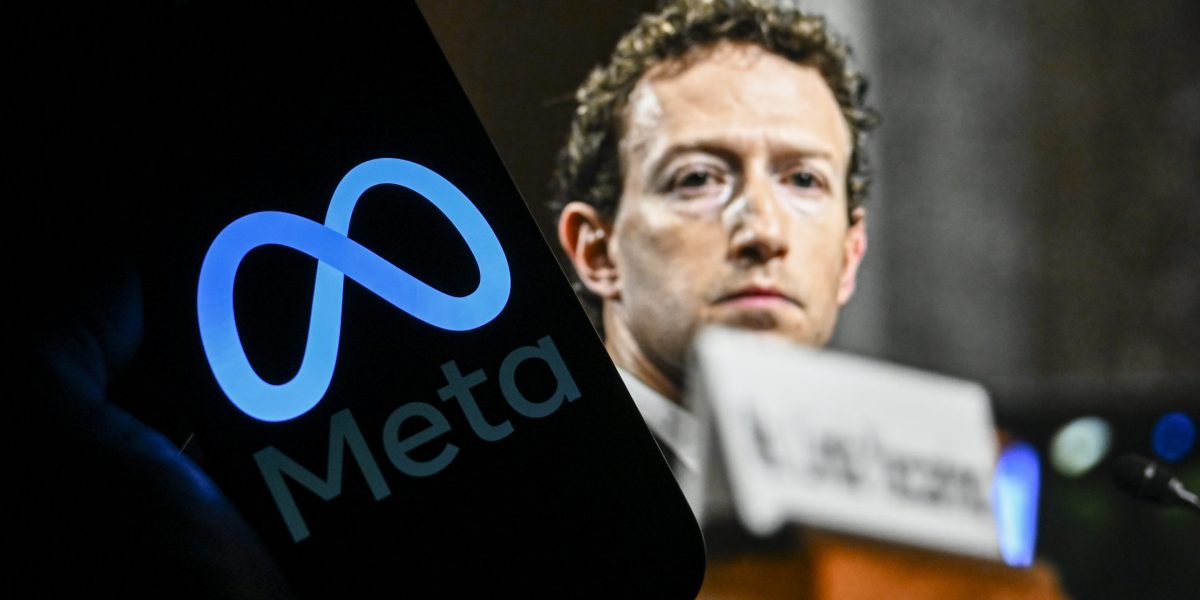
A sweeping Reuters investigation has put a price tag on Meta’s tolerance for ad fraud: billions of dollars a year. For Rob Leathern, a former Meta executive who led the company’s business integrity operations until 2019, the findings expose a stark tension between revenue growth and consumer harm.

The report, published Monday, found that Meta generated roughly $18 billion in advertising revenue from China in 2024, around 10% of its global revenue, even as internal documents showed that nearly one-fifth of that (about $3 billion) came from ads tied to scams, illegal gambling, pornography, and other prohibited activity. Meta internally labeled China its top “scam exporting nation,” accounting for 25% of all scam and banned-product ads globally, according to the report.

Meta’s core social media platforms (Facebook, Instagram, WhatsApp) are blocked in China, but the company still earns billions from Chinese advertisers targeting global users.

The investigation, Leathern told Fortune, illuminates several issues with both Meta and the broader Chinese ad market. “It appears that a variety of business partners that Meta has are not conducting themselves in an ethical way and or there are employees of those companies that are not doing what they’re supposed to be doing,” he said. “It’s quite telling that Meta took down its entire partner directory, which obviously means that they must be reviewing their partners, and there’s a lot of them.”

“Scams are spiking across the internet, driven by persistent criminals and sophisticated, organized crime syndicates constantly evolving their schemes to evade detection. We are focused on rooting them out by using advanced technical measures and new tools, disrupting criminal scam networks, working with industry partners and law enforcement, and raising awareness on our platforms about scam activity. And when we determine that bad actors have violated our rules prohibiting fraud and scams, we take action,” a Meta spokesperson told Fortune in a statement.  

Meta communications chief Andy Stone, however, pushed back on the investigation, posting on Threads, “Once again, Reuters is misconstruing and misrepresenting the facts.” He argued that CEO Mark Zuckerberg’s “integrity strategy pivot”—which included instructing the China ads-enforcement team to reportedly “pause” its work—was to improve teams’ goals and “instruct them to redouble efforts to fight frauds and scams globally, not just from specific markets.” 

Stone also claimed that these teams have “doubled their fraud and scam reduction goal and over the last 15 months, user reports of scam ads have declined by well over 50%.”

The revelations published by Reuters echo—but far exceed—the AI-driven deepfake scheme earlier this year involving Goldman Sachs during which scammers used AI-generated videos of investment strategist Abby Joseph Cohen to lure retail investors into fraudulent WhatsApp groups via Instagram ads.

Reuters’ reporting suggests Meta’s China-linked scam problem is not an edge case or a blind spot, but an allegedly known and lucrative segment of its advertising business.

According to internal estimates cited by Reuters, Meta served as many as 15 billion “high-risk” fraudulent ads per day, generating roughly $7 billion annually. The company required a 95% confidence threshold before banning fraudulent advertisers; those falling below it were often allowed to continue operating, sometimes at higher fees. Meta also established a 0.15% revenue “guardrail” (about $135 million) as the maximum revenue it was willing to forgo to crack down on suspicious ads, even as it earned $3.5 billion every six months from ads deemed to carry “higher legal risk.”

Internal decision-making was explicit. When enforcement staff proposed shutting down fraudulent accounts, internal documents reviewed by Reuters showed they sought assurance that growth teams would not object “given the revenue impact.” Asked whether Meta would penalize high-spending Chinese partners running scams, the answer was reportedly “No,” citing “high revenue impact.” Internal assessments reportedly noted that revenue from risky ads would “almost certainly exceed the cost of any regulatory settlement,” effectively treating fines as a cost of doing business.

In late 2024, Meta reinstated 4,000 second-tier Chinese ad agencies that had previously been suspended, unlocking $240 million in annualized revenue—roughly half of it tied to ads violating Meta’s own safety policies, according to the investigation. More than 75% of harmful ad spending, Reuters found, came from accounts benefiting from Meta’s partner protections. The company also disbanded its China-focused anti-scam team.

An external audit commissioned by Meta from the Propellerfish Group reached a blunt conclusion when investigating fraud and scams on the platform: Meta’s “own behavior and policies” were promoting systemic corruption in China’s advertising ecosystem. Reuters reported that the company largely ignored the findings and expanded operations anyway.

Leathern, who reviewed the reporting and internal figures referenced in the report, told Fortune the scale of the problem was difficult to defend. “I was disappointed that the violation rates for the China-specific advertisers were as high as they were in the last year,” he said. “It’s disappointing, because there are ways to make it lower.”

His critique goes to the heart of the failure. Platforms, he said, should hold intermediary agencies accountable for the quality of advertisers they bring in. “If you’re measuring violation rates coming from certain partners, and those rates are above a threshold every quarter or every year, you can just fire your worst-performing customers,” he said.

“I think it’s important for us to have some sense of transparency into how policies are being enforced and what companies are doing in terms of reducing scams on their platforms,” Leathern added.

Over the last 18 months, Meta has removed or rejected more than 46 million advertisements placed via so-called resellers, or large Chinese ad firms. And more than 99% of ad accounts associated with resellers found to be violating the company’s fraud policies were proactively detected and disabled. 

Aside from a need for transparency, Leathern warned that prioritizing short-term revenue over trust ultimately threatens the business itself. “If people don’t trust advertisers, advertising, it reduces the effectiveness of that channel for all advertisers,” he said. “There’s a lot of risk to their business, directly and indirectly, from not doing a good enough job on stopping scams.”

The human cost is already visible. Reuters documented victims across North America and Asia, including U.S. and Canadian investors who lost life savings to fake stock and crypto ads, Taiwanese consumers misled into buying counterfeit health products, and a Canadian Air Force recruiter whose Facebook account was hijacked to run crypto scams. Meta’s own internal safety staff estimated the company’s platforms were “involved” in roughly one-third of all successful U.S. scams, linked to more than $50 billion in consumer losses.

The problem is intensifying as generative AI lowers the barrier for scammers. “You can create something that looks plausible far more easily than ever before,” Leathern said. “The speed and adaptability of criminals and their use of AI tools just makes the environment far more tricky.”

Yet Leathern said platforms like Meta have not been sufficiently transparent about how aggressively they are using those same tools to fight abuse. “We just don’t have a ton of insight into what they’re doing to reduce scams and fraud coming in through ads,” he said.

For Leathern, the investigation should be a turning point. “I hope they see this as an opportunity to improve things for people,” he said.



Source link

Continue Reading

Business

Morgan Stanley strategist Michael Wilson says lackluster job numbers could actually be good news

Published

on


Ahead of the highly anticipated November jobs data to be released this week, even lackluster numbers may be greeted with relief by Wall Street.

A moderately cooling labor market could increase the likelihood of more rate cuts by the Federal Reserve—a tantalizing prospect for many investors eying future earnings growth—fueling bullish behaviors in the stock market, according to Morgan Stanley analysts.

“We are now firmly back in a good is bad/bad is good regime,” Michael Wilson, chief U.S. equity strategist and chief investment officer for Morgan Stanley, wrote in a note to investors on Monday.

Fed Chair Jerome Powell’s divisivecut last week, the Fed’s third cut in as many meetings, was based on consistent data showing a softening job market, including unemployment rising three months in a row through September, and the private sector shedding 32,000 jobs last month, per ADP’s November report

According to Powell, the quarter-point cut was defensive and a way to prevent the labor market from tumbling, adding that while inflation sits at about 2.8%, which is higher than the Fed’s preferred 2%, he said he expects inflation to peak early next year, barring no additional tariffs.

He added that monthly jobs data may have been overcounted by about 60,000 as a result of data collection errors, and that payroll gains may actually be stagnant or even negative.

“I think a world where job creation is negative…we need to watch that very carefully,” Powell said at the press conference directly following the announcement of the rate cut. 

Wilson suggested that Powell’s emphasis on the jobs data, as well as his de-emphasis on tariff-caused inflation, makes the labor market a crucial factor in monetary policy going into 2026. 

As a result of the government shutdown, the Labor Department’s job market report will be released on Tuesday, which will contain data from both October and November, and is expected to show a modest 50,000 payroll gain in November, with the unemployment rate ticking up from 4.4% to about 4.5%, consistent with the trend of a labor market that is slowing, but not suddenly bottoming out. 

‘Rolling recovery’ versus plain bad news

The Morgan Stanley strategist has previously argued that weak payroll numbers are actually a sign of a “rolling recovery,” with the economy in the early stages of an upswing slowly making its way through each sector. It follows three years of a “rolling recession” that Wilson said had kept the economy weaker than what employment and GDP figures suggested.

In Wilson’s eyes, because jobs data is a lagging metric, the trough of the labor cycle was actually back in the spring, coinciding with mass DOGE firings and “Liberation Day” tariffs. For a more accurate representation of the health of the economy, Wilson argued to look instead at the markets. The S&P 500, for example, is up nearly 13% over the last six months.

However, with Powell basing his policy decisions on data such as jobs, Wilson noted, the Fed could still see more room to cut, even as Morgan Stanley sees a labor market that is not in jeopardy.

“In real time, the data has not been weak enough to justify cutting more,” Wilson told CNBC last week prior to the Fed meeting. “But when they actually look at the revisions now…it’s very clear that we had a significant labor cycle, and we’ve come out of it, which is very good.”

But just as economists weren’t in consensus for the FOMC’s most recent rate cut, the possibility of more meager jobs numbers is not universally favored.

Claudia Sahm, chief economist at New Century Advisors and a former Fed economist, agreed the job data is a lagging economic indicator, but warned it could indicate a recession is underway, not that we’re already in the clear. What was particularly concerning to her was that lagging labor data could bear worse job news, as layoffs have yet to surge following shrinking job openings. 

She told Fortune ahead of the Fed’s decision last week that additional rate cuts would not be welcome news, but rather a sign the Fed had acted too late in trying to correct a battered labor market.

“If the Powell Fed ends up doing a lot more cuts, then we probably don’t have a good economy,” she said. “Be careful what you wish for.”


Source link

Continue Reading

Business

Actor Joseph Gordon-Levitt wonders why AI companies don’t have to ‘follow any laws’

Published

on


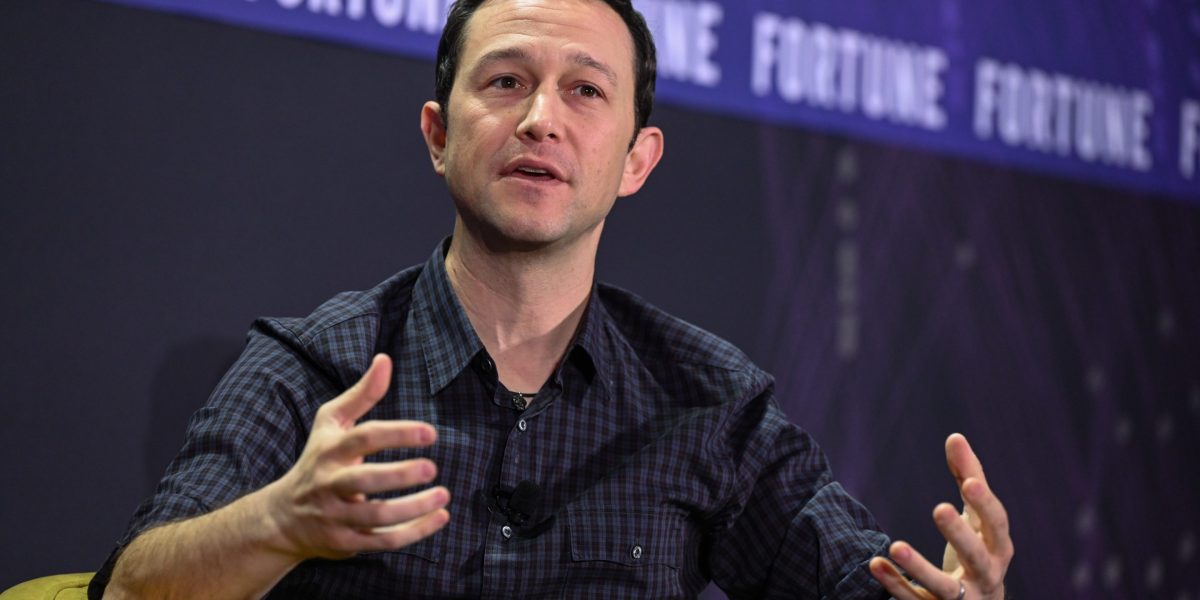
In a sharp critique of the current artificial intelligence landscape, actor-turned-filmmaker-turned- (increasingly) AI activist Joseph Gordon-Levitt challenged the tech industry’s resistance to regulation, posing a provocative rhetorical question to illustrate the dangers of unchecked development: “Are you in favor of erotic content for eight-year-olds?”

Speaking at the Fortune Brainstorm AI conference this week with editorial director Andrew Nusca, Gordon-Levitt used “The Artist and the Algorithm” session to pose another, deeper question: “Why should the companies building this technology not have to follow any laws? It doesn’t make any sense.”

In a broad-ranging conversation covering specific failures in self-regulation, including instances in which “AI companions” on major platforms reportedly verged into inappropriate territory for children, Gordon-Levitt argued relying on internal company policies rather than external law is insufficient, noting such features were approved by corporate ethicists.

Gordon-Levitt’s criticisms were aimed, in part, at Meta, following the actor’s appearance in a New York Times Opinion video series airing similar claims. Meta spokesperson Andy Stone pushed back hard on X.com at the time, noting Gordon-Levitt’s wife was formerly on the board of Meta rival OpenAI.

Gordon-Levitt argued without government “guardrails,” ethical dilemmas become competitive disadvantages. He explained that if a company attempts to “prioritize the public good” and take the “high road,” they risk being “beat by a competitor who’s taking the low road.” Consequently, he said he believes business incentives alone will inevitably drive companies toward “dark outcomes” unless there is an interplay between the private sector and public law.

‘Synthetic intimacy’ and children

Beyond the lack of regulation, Gordon-Levitt expressed deep concern regarding the psychological impact of AI on children. He compared the algorithms used in AI toys to “slot machines,” saying they use psychological techniques designed to be addictive.

Drawing on conversations with NYU psychologist Jonathan Haidt, Gordon-Levitt warned against “synthetic intimacy.” He argued that while human interaction helps develop neural pathways in young brains, AI chatbots provide a “fake” interaction designed to serve ads rather than foster development.

“To me it’s pretty obvious that you’re going down a very bad path if you’re subjecting them to this synthetic intimacy that these companies are selling,” he said.

Haidt, whose New York Times bestseller The Anxious Generation came recommended from Gordon-Levitt onstage, recently appeared at a Dartmouth-United Nations Development Program symposium on mental health among young people and used the metaphor of tree roots for neurons. Explaining tree-root growth is structured by environments, he brought up a picture of a tree growing around a Civil War–era tombstone. With Gen Z and technology, specifically the smartphone, he said: “Their brains have been growing around their phones very much in the way that this tree grew around this tombstone.” He also discussed the physical manifestations of this adaptation, with children “growing hunched around their phone,” as screen addiction is literally “warping eyeballs,” leading to a global rise in myopia shortsightedness.

The ‘arms race’ narrative

When addressing why regulations have been slow to materialize, Gordon-Levitt pointed to a powerful narrative employed by tech companies: the geopolitical race against China. He described this framing as “storytelling” and “handwaving” designed to bypass safety checks,. Companies often compare the development of AI to the Manhattan Project, arguing slowing down for safety means losing a war for dominance. In fact, The Trump administration’s “Genesis Mission” to encourage AI innovation was unveiled with similar fanfare just weeks ago, in late November.

However, this stance met with pushback from the audience. Stephen Messer of Collectiv[i] argued Gordon-Levitt’s arguments were falling apart quickly in a “room full of AI people.” Privacy previously decimated the U.S. facial recognition industry, he said as an example, allowing China to take a dominant lead within just six months. Gordon-Levitt acknowledged the complexity, admitting “anti-regulation arguments often cherrypick” bad laws to argue against all laws. He maintained that while the U.S. shouldn’t cede ground, “we have to find a good middle ground” rather than having no rules at all.

Gordon-Levitt also criticized the economic model of generative AI, accusing companies of building models on “stolen content and data” while claiming “fair use” to avoid paying creators. He warned a system in which “100% of the economic upside” goes to tech companies and “0%” goes to the humans who created the training data is unsustainable.

Despite his criticisms, Gordon-Levitt clarified he is not a tech pessimist. He said he would absolutely use AI tools if they were “set up ethically” and creators were compensated. However, he concluded without establishing the principle that a person’s digital work belongs to them, the industry is heading down a “pretty dystopian road.”


Source link

Continue Reading

Trending

Copyright © Miami Select.