Connect with us

Business

Why Equinox’s CTO is testing a generative AI pilot to suggest workout and nutrition advice

Published

on


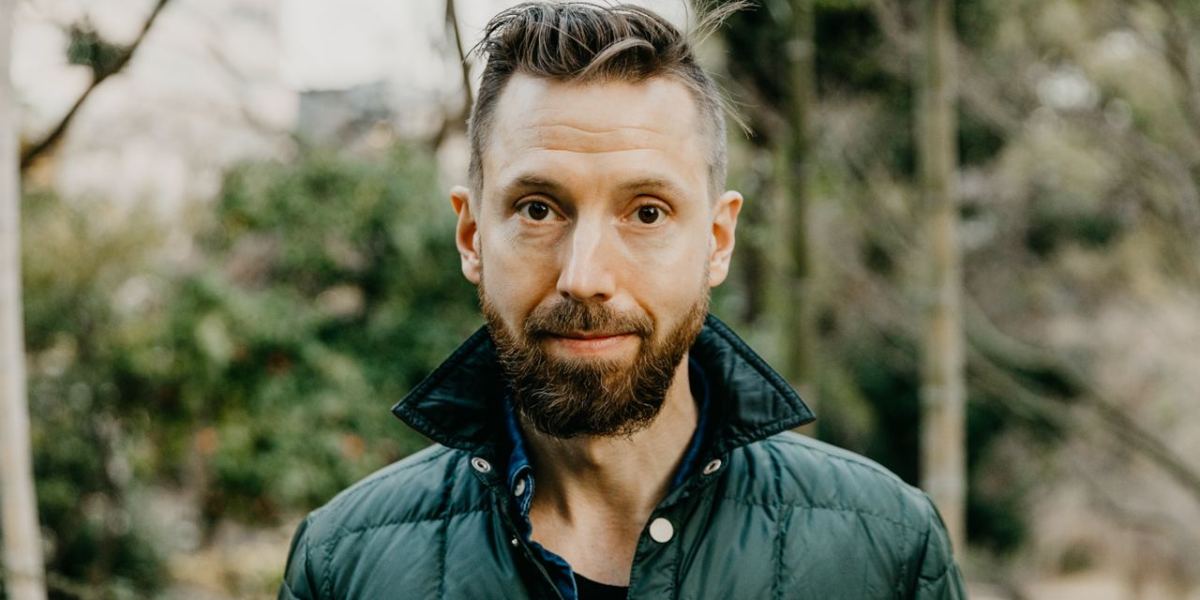
Eswar Veluri, the chief technology officer at Equinox, says that when the luxury gym operator is flexing new generative artificial intelligence muscles, the focus tends to center on the two Ps: productivity and personalization.

The productivity bucket is fairly straightforward. Equinox’s team is using AI to summarize documents, create emails, and automate some marketing materials and contracts. Where it gets more interesting for Equinox, which operates more than 100 fitness clubs, is a pilot of a generative AI-enabled feature that offers workout recommendations and nutrition tips.

This tools is built in Equinox’s branded mobile app but only available for employees. The rollout began with the tech team, then corporate employees and instructors, before it could become widely available to all Equinox gym goers if all goes well. This reflects Veluri’s technology playbook: always test internally first. 

“Our personal training coaches are probably going to be the most rigorous in terms of the feedback,” says Veluri. 

He asserts that the insights from Equinox’s rigorous training data are what sets it apart from the more generalized recommendations that may be produced from standard AI models. “The value is added when we have our proprietary thinking that is embedded with the general recommendation, so that the end user should feel that this is something that I’m getting that is on par with what an Equinox coach would provide,” says Veluri.

There’s also a more valuable feedback loop with the application of generative AI, as Equinox is now able to utilize large language models that can digest written comments from users and then adjust future fitness and nutrition suggestions. Prior variations of these tools would rely on a more simplistic “thumbs up, thumbs down” response.

“That ability for our members to have agency over the recommendations, and for us to be able to incorporate that feedback into modifying the recommendations, is something that would not have been possible if we did not have gen AI,” says Veluri. 

Veluri has had a long career at Equinox, joining the fitness company in 2010 as director of digital products and rising up through the ranks to become CTO in 2021. Through that time, Equinox has invested in a mobile app that offers users virtual classes, and invested in more technically advanced treadmills, ellipticals, and other workout machinery.

Over that period of time, the fitness industry has democratized the accessibility of workout data, with fitness trackers like the Apple Watch, Fitbit, and Garmin enjoying mass adoption and easily tracking steps taken throughout the day, calories burned, sleep, and heart rate. Studies on these devices are fairly limited, but research does indicate that the use of fitness trackers can promote more fitness.

AI could make promoting a healthier lifestyle even easier. One way that Equinox utilizes AI, which predates the generative boom, involves Netflix-styled recommendations for classes that a fitness freak may want to try based on their past preference for yoga or cycling, the weather of the day, and the club locations they tend to frequent. Veluri says after this feature went live, Equinox saw class bookings dramatically increase. That engagement can lead to less club member attrition.

The company has also rolled out a generative AI chatbot that can answer straightforward questions including “What time is my gym open?”

“Our business model is one where we want and encourage our members to use our clubs as often as they can,” says Veluri.

With a scrappy technology team of just around 80 people, Veluri says he has to be careful about spending and doesn’t put too much money into any one tech initiative.

Equinox also has a close relationship with Amazon Web Services, a partner it leaned on to rearchitect its tech stack and streamline workflows for engineers. Previously, Equinox ran workloads on a Windows-based server and each digital fitness service ran as an individual task. That added complexity to the software updates process. While the application infrastructure is now housed more efficiently with AWS, Equinox says it utilizes large language models from various providers, including AWS and Anthropic.

Veluri says the culture he’s created with his technology team is one that encourages everyone to offer suggestions for what mobile app features should be explored next. The team takes a close look at competitor gym and fitness apps to ensure the features Equinox offers are in good shape.

“The biggest advantage of Equinox is that we use the services of our company a lot,” says Veluri. “We also have goals and we also want to achieve results.”

John Kell

Send thoughts or suggestions to CIO Intelligence here.

NEWS PACKETS

Big Tech’s 2025 AI Spending Total: $344 billion. Bloomberg took a look at the latest quarterly spending plans from four of the world’s largest technology companies—Microsoft, Amazon, Meta Platforms, and Alphabet—and found that their capital expenditures reached $89 billion in the second quarter. A lot of those funds are going toward building out data centers that are needed to run AI models, which can give these tech giants an edge that Wall Street is rewarding or punishing based on what they are gleaning from the earnings results. Facebook and Instagram parent Meta, as an example, reported a second-quarter sales total that exceeded expectations and issued a positive revenue forecast, growth that CEO Mark Zuckerberg attributed to “AI unlocking greater efficiency and gains across our ad system.” Amazon, meanwhile, saw shares fall partly due to retail volatility but also the competitive dynamics in cloud and AI that led to some concerns about the company’s market position.

AI blamed for thousands of job cuts so far this year. Under the hood of a U.S. job market that’s looking increasingly shaky after a weak report for July and downward revisions for the prior two months is a report from outplacement firm Challenger, Gray & Christmas that found the adoption of generative AI technology by private employers accounted for more than 10,000 job cuts for the first seven months in 2025. As prior reporting has shown, the impact of AI on hiring has most notably affected younger workers. CBS News reports that job listings for entry-level corporate roles have declined 15% over the past year, citing data from career platform Handshake. “The industry is being reshaped by the advancement of artificial intelligence and ongoing uncertainty surrounding work visas, which have contributed to workforce reductions,” Challenger, Gray & Christmas said. Meanwhile, IT trade group CompTIA reports that postings for tech positions contracted slightly in July from the prior month.

Apple is feeling the pressure in the AI race. After the tech behemoth reported a robust fiscal third-quarter earnings report, driven by strong demand for iPhones, Bloomberg says CEO Tim Cook held a rare all-hands meeting intended to rally the troops around the company’s AI prospects and pipeline of features even as questions continue to linger about Apple’s AI struggles. “We’ve rarely been first,” Cook reportedly told Apple’s team. “There was a PC before the Mac; there was a smartphone before the iPhone; there were many tablets before the iPad; there was an MP3 player before iPod.” Separately, the outlet reports of the early stages of a new team called “Answers, Knowledge and Information,” which may be working on creating a new ChatGPT-like search engine. Rivals have taken notice, with Google recently poking fun of Apple’s delayed AI features in an advertisement for the Pixel 10 smartphone.

OpenAI, Amazon, and Google among companies that signed EU’s AI code of practice. The European Commission’s AI office published a list of signatories that have committed to the EU’s AI code of practice, a set of rules as it pertains to transparency, copyright, safety, and security for companies that deploy general-purpose AI models. U.S. tech giants including Google, Amazon, IBM, Microsoft and OpenAI have signed the code of practice, as well as Europe’s Mistral AI and Aleph Alpha. Meta was a notable hold out, as was Elon Musk’s xAI, which only signed onto one of the three chapters of the code. Those that haven’t signed the code of practice will still need to adhere to the requirements in the EU’s AI Act, which was adopted by the European Parliament last year, though most of the substantive requirements will be applicable by 2026. 

ADOPTION CURVE

IT leaders say they are losing 8.6% of business revenue on inability to tap AI. A survey of 800 global IT decision-makers from businesses with over 1,000 employees reported that they believe the inability to make use of AI in a timely manner would them to lose, on average, 8.6% of their revenue. For the sample of the study, conducted by database software provider Couchbase, that would equate to an annual loss of almost $87 million.

Businesses say that the top issues disrupting their AI projects include a perception that the risk of failure was or had become too high (45% of respondents), followed by an inability to secure the necessary budget or stay within budget (39%) and a lack of confidence that the project would meet security or compliance demands (36%).

Julie Irish, chief information officer at Couchbase, told Fortune that her approach to keep costs in check on AI investments centered on piloting every single solution pitched by vendors. Irish says by doing so, she can keep a close eye on how long it takes to implement new AI tools, better predict costs for a broader rollout, and determine if the technology meets the use case.

“I think there’s a lot of overpromising,” says Irish. “If it’s really as easy as they say, and it’s really going to add that much value, ‘Hey, let’s try it out. Let’s see how it’s working.’”

Courtesy of Couchbase

JOBS RADAR

Hiring:

Ronald McDonald House Charities is seeking a CIO, based in Chicago. Posted salary range: $222K-$289K/year.

EchoStar is seeking a CIO, based in Englewood, Colorado. Posted salary range: $400K-$500K/year.

Air Force Research Laboratory is seeking a CTO, based in Dayton, Ohio. Posted salary range: $125.2K-$197.5K/year.

Royal Electric is seeking a CIO, based in Long Beach, California. Posted salary range: $220K-$295K/year.

Hired:

Amway appointed Ryan Talbott as CTO, succeeding Becky Smith, the direct selling company’s chief financial officer, who had served as interim CTO for the past several months. Prior to joining Amway, Talbott was VP and global CIO for automotive parts supplier BorgWarner. He has also held executive roles at auto maker Stellantis and management consulting firm Accenture.

Certara announced the appointment of Christopher Bouton as CTO, where he will oversee the technology strategy for the drug development software maker. Bouton previously was the founder and CEO of life sciences software company Vyasa Analytics, which Certara acquired in 2022. He also previously found and led software provider Entagen, which was acquired by Thomson Reuters.

Highmark Health named Dr. Alistair Erskine as chief information digital officer, joining the Pittsburgh-based health care company after most recently serving as CIDO at Georgia health care system Emory Healthcare. He also previously served as chief digital health officer at not-for-profit health care system Mass General Brigham and CIO at Pennsylvania regional health care provider Geisinger.

Advarra appointed Brian Hart as CTO, joining the clinical research services provider after most recently serving as CTO at clinical analytics company Covera Health. Earlier in his career, he served as a director of clinical data and innovation at IBM Watson Health and VP of research and development for Merge Healthcare, a medical imaging company acquired by IBM in 2015.

CSAA Insurance Group named Bradley Lontz as EVP and CIO, joining the insurance provider after most recently serving as CIO at CopperPoint Insurance. Prior to that, he also held CIO roles at California Dental Association and Nautilus Insurance. Earlier in Lontz’s career, he held senior leadership positions at Liberty Mutual, Cummins, and PwC.

CloudFactory announced the appointment of Ajai Sharma as chief product and technology officer, responsible for product strategy and technology vision for the company that labels data used for training AI models. Sharma previously served as a head of product at Amazon Web Services and before that, an AI and deep learning product expert for consultancy McKinsey.

Inmar Intelligence promoted Srini Varadarajan to the role of CTO, after he most recently served as SVP of software engineering for the data insights company. Earlier in Varadarajan’s career, he consulted and led engineering teams at organizations including Volvo, Avis, and JPMorgan Chase.



Source link

Continue Reading

Business

Nvidia’s CEO says AI adoption will be gradual, but we still may all end up making robot clothing

Published

on


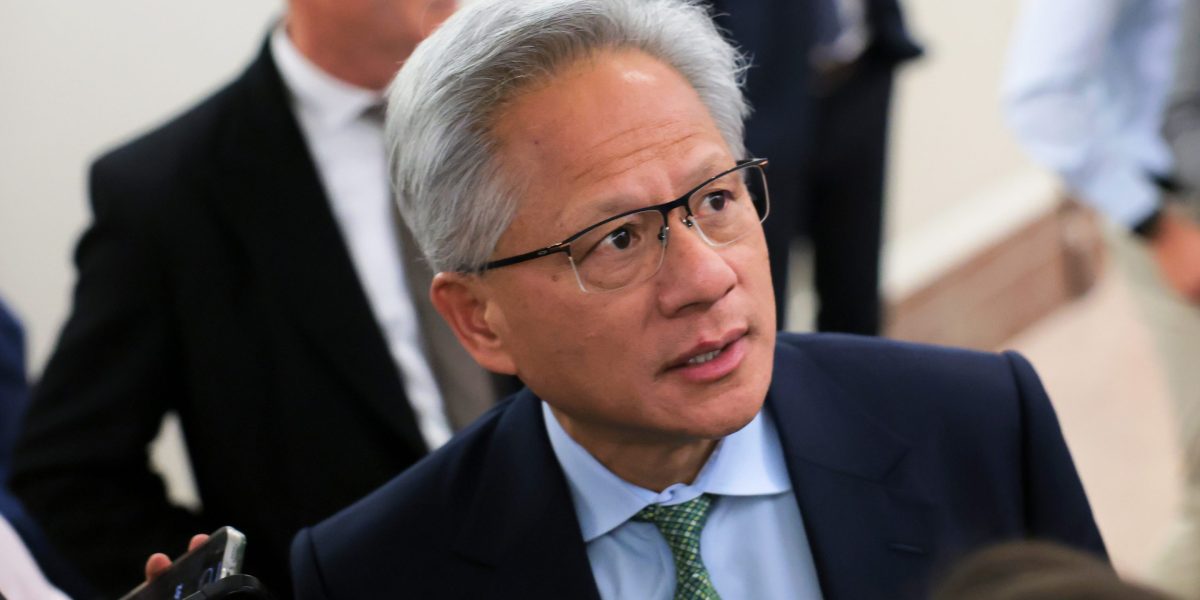
Nvidia CEO Jensen Huang doesn’t foresee a sudden spike of AI-related layoffs, but that doesn’t mean the technology won’t drastically change the job market—or even create new roles like robot tailors.

The jobs that will be the most resistant to AI’s creeping effect will be those that consist of more than just routine tasks, Huang said during an interview with podcast host Joe Rogan this week. 

“If your job is just to chop vegetables, Cuisinart’s gonna replace you,” Huang said.

On the other hand, some jobs, such as radiologists, may be safe because their role isn’t just about taking scans, but rather interpreting those images to diagnose people.

“The image studying is simply a task in service of diagnosing the disease,” he said.

Huang allowed that some jobs will indeed go away, although he stopped short of using the drastic language from others like Geoffrey Hinton a.k.a. “the Godfather of AI” and Anthropic CEO Dario Amodei, both of whom have previously predicted massive unemployment thanks to the improvement of AI tools.

Yet, the potential, AI-dominated job market Huang imagines may also add some new jobs, he theorized. This includes the possibility that there will be a newfound demand for technicians to help build and maintain future AI assistants, Huang said, but also other industries that are harder to imagine.

“You’re gonna have robot apparel, so a whole industry of—isn’t that right? Because I want my robot to look different than your robot,” Huang said. “So you’re gonna have a whole apparel industry for robots.”

The idea of AI-powered robots dominating jobs once held by humans may sound like science fiction, and yet some of the world’s most important tech companies are already trying to make it a reality. 

Tesla CEO Elon Musk has made the company’s Optimus robot a central tenet of its future business strategy. Just last month, Musk predicted money will no longer exist in the future and work will be optional within the next 10 to 20 years thanks to a fully fledged robotic workforce. 

AI is also advancing so rapidly that it already has the potential to replace millions of jobs. AI can adequately complete work equating to about 12% of U.S. jobs, according to a Massachusetts Institute of Technology (MIT) report from last month. This represents about 151 million workers representing more than $1 trillion in pay, which is on the hook thanks to potential AI disruption, according to the study.

Even Huang’s potentially new job of AI robot clothesmaker may not last. When asked by Rogan whether robots could eventually make apparel for other robots, Huang replied: “Eventually. And then there’ll be something else.”


Source link

Continue Reading

Business

The ‘Mister Rogers’ of Corporate America shows Gen Z how to handle toxic bosses

Published

on


After two decades of climbing the corporate ladder at companies ranging from ABC, ESPN, and Charter Communications (commonly known as Spectrum), Timm Chiusano quit it all to become a content creator. 

He wasn’t just walking away from high titles, but a high salary, too. In his peak years, Chiusano made $600,000 to $800,000 annually. But in June of 2024, after giving a 12-week notice, he “responsibility fired himself” from his corporate job as VP of production and creative services at Charter.

He did it all to help others navigate the challenges of a workplace, and appreciate the most mundane parts of life on TikTok.

@timmchiusano

most people are posting their 2024 recaps; these are a few of my favorite moments from the year that was, but i need to start reintroducing myself too i dont have a college degree, no one in my life knew that until i was 35 when i eventually got my foot in the door in my early 20’s after a few years of substitute teaching and part time jobs, i thought for sure i had found the career path of my dreams in live sports production i didn’t think i had a chance of surviving that first college football season but i busted my ass, stuck around and got promoted 5 times in 5 years then i met a girl in Las Vegas, got married in 7 months, and freaked out about my career that had me travelling 36 weeks a year i had to find a more stable “desk job”, i was scared shitless that i was pigeonholed and the travel would eventually destroy my marriage i crafted a narative for espn arguing they needed me on their marketing team because of my unique perspective coming from the production side i got rejected, but kept trying and a year i got that job the 7 years with espn were incredible, but also exhausting and raised all kinds of questions about corporate america, toxic situations, and capitalism in general why was i borderline heart attack stressed so often when i could see that my ideas were literally generating 2,000 times the money that i was getting paid? in 2012 i had a kid and in 2013 i got the biggest job of my career to reinvent how to produce 20,000 commercials a year for small business it took 12 rounds of interviews, a drug test i somehow passed, and a background check that finally made me tell my wife of 8 years that i didnt have a college degree they brought me in the thursday before my first day and told me what i told grace in that clip the next decade was an insane blur; i saw everything one would ever see in their career from the perspective of an executive at a fortune 100 i started making tiktoks, kinda blacked out at some point in 2019 and responsibly fired myself in 2024 to see what i might be capable of on my own with all the skills i picked up along my career journey now the mission is pay what i know forward, and see if i can become the mr rogers of corporate america cc: @grace beverley @Ryan Holiday @Subway Oracle

♬ original sound – timm chiusano

What started as short-video vlogs on just about anything in 2020 (reviews on protein bars, sushi, and sneakers) later transitioned to videos on growing up, and dealing with life’s challenges, like coming to terms when you have a toxic boss. Today, his platform on TikTok has over 1 million followers

With the help of going viral from his “loop” format where videos end and seamlessly circle back to the beginning, he began making more videos as a side-hustle on top of his day-to-day tasks in the office.

“How can I get people to be smarter and more comfortable about their careers in ways that are gonna help on a day-to-day basis?” Chiusano told Fortune.

Today, he could go by many titles: former vice president at a Fortune 100 company, motivational speaker, dad, content creator, or as he labels himself, the Mister Rogers of Corporate America. 

Just as the late public television icon helped kids navigate the complexities of childhood, Chiusano wants to help young adults think about how to approach their careers and their potential to make an impact. 

“Mister Rogers is the greatest of all time in his space. I will never get to that level of impact. But it’s an easy way to describe what I’m trying to do, and it consistently gives me a goal to strive for,” he said. “There are some parallels here with the quirkiness.”

Firing himself after 25 years in the corporate world

Even with years in corporate, Chiusano doesn’t resemble the look of a typical buttoned-up executive. Today, he has more of a relaxed Brooklyn dad attire, with a sleeve of tattoos and a confidence to blend in with any trendy middle aged man in Soho. During our interview, he showed off one of the first tattoos he got: two businessmen shaking hands, a reference to Radiohead’s OK Computer album.

“This is a dope ass Monday in your 40s,” began one of his videos.

It consisted of Chiusano doing everyday things such as eating leftovers, going to the gym, training for the NYC marathon, taking out the trash, dropping his daughter off at school, a rehearsal for a Ted Talk, eating lunch with his wife, and brand deal meetings. Though the content sounds pretty normal, that’s the point. 

“The reason why I fired myself in the first place was to be here,” he says in the video while picking his daughter up from school.

Today, Chiusano spends his days making content on navigating workplace culture, public speaking, brand deals, brand partnerships, executive coaching, writing a book, and the most important job: being a dad to his 13-year-old daughter Evelyn.

“I’m basically flat [in salary] to where I was, and this is everything I could ever want in the world,” he said. “The ability to send my kid to the school she’s been going to, eat sushi takeout almost as much as I’d like, and do nice things for my wife.”

In fact, when sitting inside one of his favorite New York City spots, Lure Fishbar, he keeps getting stopped by regulars who know him by name. He points out that one of his favorite interviews he filmed here was with legendary filmmaker Ken Burns.

Advice to Gen Z

In a time where Gen Z has been steering to more unconventional paths, like content creation or skill trades rather than just a 9-to-5 office job, Chiusano opens up a lens to what life looks like when deciding to be present rather than always looking for what’s next—a mistake he said he made in his 20s. 

Instead, he wants to teach the younger generation to build skills for as long as you can, but “if you are unhappy, that’s a very different conversation.”

“I think some people will make themselves more unhappy because they feel like that’s what’s expected of a situation,” he said.

“I would love to be able to empower your generation more, to be like somebody’s gonna have to be the head of HR at that super random company to put cool standards and practices in place for better work-life balance for the employees.” 


Source link

Continue Reading

Business

Mark Zuckerberg says the ‘most important thing’ he built at Harvard was a prank website

Published

on


For Mark Zuckerberg, the most significant creation from his two years at Harvard University wasn’t the precursor to a global social network, but a prank website that nearly got him expelled.

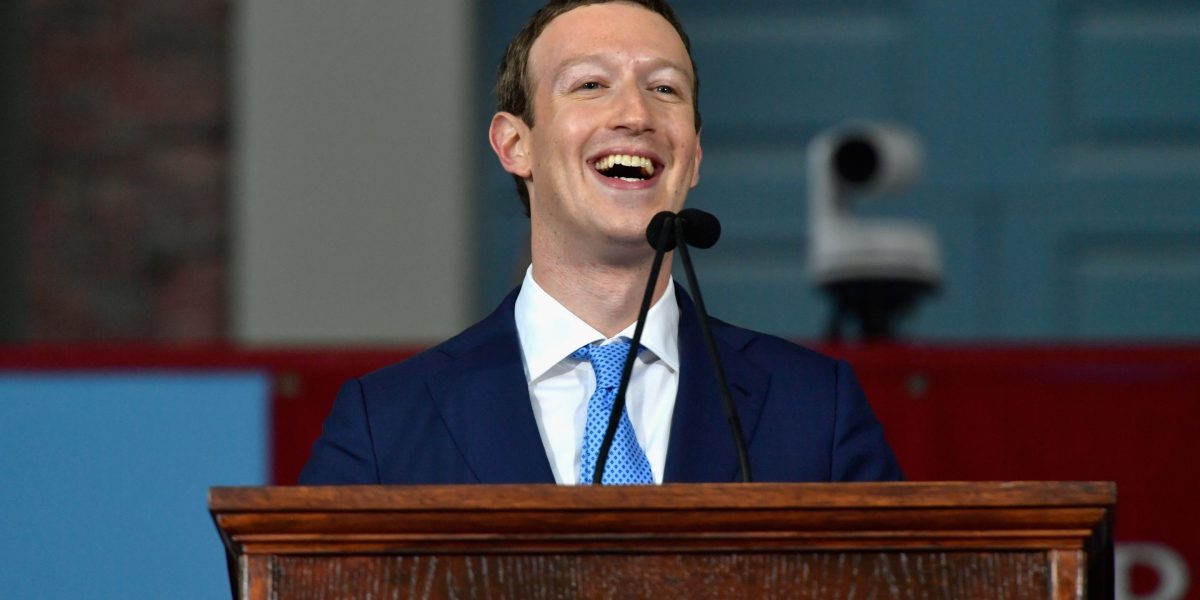
The Meta CEO said in a 2017 commencement address at his alma mater that the controversial site, Facemash, was “the most important thing I built in my time here” for one simple reason: it led him to his wife, Priscilla Chan.

“Without Facemash I wouldn’t have met Priscilla, and she’s the most important person in my life,” Zuckerberg said during the speech.

In 2003, Zuckerberg, then a sophomore, created Facemash by hacking into Harvard’s online student directories and using the photos to create a site where users could rank students’ attractiveness. The site went viral, but it was quickly shut down by the university. Zuckerberg was called before Harvard’s Administrative Board, facing accusations of breaching security, violating copyrights, and infringing on individual privacy.

“Everyone thought I was going to get kicked out,” Zuckerberg recalled in his speech. “My parents came to help me pack. My friends threw me a going-away party.”

It was at this party, thrown by friends who believed his expulsion was imminent, where he met Chan, another Harvard undergraduate. “We met in line for the bathroom in the Pfoho Belltower, and in what must be one of the all time romantic lines, I said: ‘I’m going to get kicked out in three days, so we need to go on a date quickly,’” Zuckerberg said.

Chan, who described her now-husband to The New Yorker as “this nerdy guy who was just a little bit out there,” went on the date with him. Zuckerberg did not get expelled from Harvard after all, but he did famously drop out the following year to focus on building Facebook.

While the 2010 film The Social Network portrayed Facemash as a critical stepping stone to the creation of Facebook, Zuckerberg himself has downplayed its technical or conceptual importance.

“And, you know, that movie made it seem like Facemash was so important to creating Facebook. It wasn’t,” he said during his commencement speech. But he did confirm that the series of events it set in motion—the administrative hearing, the “going-away” party, the line for the bathroom—ultimately connected him with the mother of his three children.

Chan, for her part, went on to graduate from Harvard in 2007, taught science, and then attended medical school at the University of California, San Francisco, becoming a pediatrician.

She and Zuckerberg got married in 2012, and in 2015, they co-founded the Chan Zuckerberg Initiative, a philanthropic organization focused on leveraging technology to address major world challenges in health, education, and science. Chan serves as co-CEO of the initiative, which has pledged to give away 99% of the couple’s shares in Meta Platforms to fund its work.

You can watch the entirety of Zuckerberg’s Harvard commencement speech below:

For this story, Fortune journalists used generative AI as a research tool. An editor verified the accuracy of the information before publishing. 


Source link

Continue Reading

Trending

Copyright © Miami Select.