Connect with us

Business

Why companies are leaning into skills-first, AI-enabled employment models

Published

on


Good morning. As AI continues to revolutionize business, companies are fundamentally rethinking their workforce strategies for the decade ahead—and exploring new options.

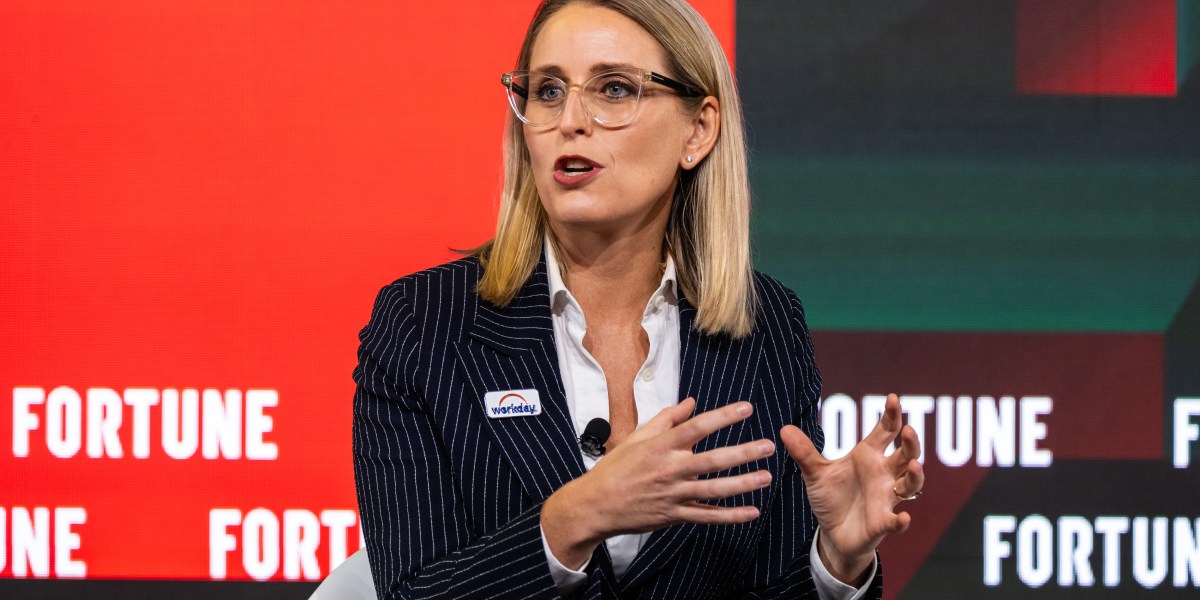
This topic came up during a panel session at the Fortune Brainstorm AI Singapore conference last week. Jess O’Reilly, Workday’s general manager for the ASEAN business, reflected on how a major Southeast Asian bank is considering a skills-based approach to employment.

“I was in Thailand a couple of weeks ago with a huge bank, and they’re really looking at their 10-year strategy and saying, ‘We don’t even know if our people are going to have a traditional full-time job anymore,’” O’Reilly said. Instead of planning around fixed job roles, the bank is considering pivoting to what it calls a “skills economy.” Here, every project or initiative is treated like a gig assignment—team members are chosen for their specific skill sets relevant to the project at hand.

What’s particularly notable is the bank’s approach to continuous learning and reskilling. O’Reilly explained that there’s always room for someone new to build their skills within these project teams. For example, the bank might set aside 1% of a project team for employees looking to reskill—people who say, “I don’t have these skills yet, but I have experience in adjacent areas and I want to learn.” By doing so, the company ensures that fresh talent is constantly cycling into critical roles.

O’Reilly posed the question: How do we use AI not just for automation, but as the backbone for identifying and matching skills with project needs? She argued that AI can help organizations inventory existing skills, identify opportunities, and make it easier to create space for upskilling and onboarding new talent through gig-style projects.

Perhaps a gig-based workplace would also inject variety into the day-to-day. And many companies are considering moving away from job-centric structures and toward a skills-focused approach, according to Deloitte’s report, “Becoming an AI-enabled, skills-based organization.” The firm finds that companies integrating both AI and skills-based approaches will be better positioned to predict talent gaps, improve talent placement, retain high performers, and reduce mis-hires.

AI and skills-based approaches could also mean that entry-level positions aren’t eliminated by automation—instead, new hires would be selected for specific skill sets that can be expanded and developed.

Skill requirements for jobs are constantly changing, noted Peiying Chua, head economist for APAC at LinkedIn, during the panel session. “For entry-level workers, this presents the opportunity to upskill and work on different sets of abilities—to build human-centric skills, agility, and creativity,” she said.

Sheryl Estrada
sheryl.estrada@fortune.com

Leaderboard

William J. Atkins was appointed interim principal financial officer of the casual-dining chain BJ’s Restaurants Inc., effective July 28, according to an SEC filing. Atkins has been a partner in the consulting firm FLG Partners, a consulting firm, since 2023, and since then has served as a consulting CFO or advisor to clients. Before that, Atkins was CFO for software services company Mobileum, and CFO for climate resilience data analytics company One Concern.

Daniel Berenbaum was appointed CFO of Zūm, a student transportation provider.  Berenbaum brings three decades of experience in financial management. He was previously CFO at Bloom Energy, NI (National Instruments), and Everspin, and held finance leadership roles at Micron and GlobalFoundries.

Big Deal

Eton Bridge Partners’ 2025 CFO Pathways Report examines the leadership trends shaping senior finance appointments globally. The executive search and finance consulting firm analyzed 6,400 CFO appointments across the top 10 countries by hiring volume.

In the U.S., which accounted for roughly one-third of all global CFO appointments—the highest share by far—over 90% of hires involved individuals moving to new roles within the same industry.

Most new CFOs were promoted internally (59%), typically advancing from other CFO-titled roles or from VP/senior VP of finance positions. External hires made up 41% of appointments. The average age at appointment was 51, with opportunities peaking in the mid-50s.

Fewer than one-third (29%) of U.S. hires were first-time CFOs, suggesting boards prefer seasoned financial leaders.

While public companies remained influential, the majority of appointments (about 72%) were in private and PE-backed businesses, reinforcing the significant role of private capital in the CFO landscape.

Overall, the U.S. reflects a mature market where private equity influence, regulatory complexity, and sector-specific growth in healthcare and technology drive demand for highly experienced, sector-savvy finance leaders, according to the report. The talent pool is deep, competitive, and in high demand. Whether these trends will continue in 2025 remains to be seen.

Courtesy of Eton Bridge Partners

Going deeper

“U.S. and E.U. reach a trade deal that sets 15% tariff rate and pledges hundreds of billions in investments” is a Fortune report by Jason Ma.

From the report: “The U.S. and European Union agreed on trade terms that include a 15% rate on most E.U. products as well as hundreds of billions of dollars of investments in American industry.

President Donald Trump and European Commission President Ursula von der Leyen met in Scotland on Sunday to iron out the agreement.

Trump said the E.U. will invest $600 billion in the U.S. and buy $750 billion of U.S. energy, with ‘vast amounts’ of American weapons also in the mix. He also said the E.U. will be ‘opening up their countries at zero tariff.’ Von der Leyen said the 15% rate was ‘all inclusive,’ but Trump said later that it didn’t apply to pharmaceuticals and metals, though it does for autos.”

Overheard

“I ask them, what would make them more effective? Which basically is saying, what are your weaknesses? And you’d be amazed at how many people can’t answer that.”

—Kelli Valade, CEO of Denny’s Corporation, told Fortune the critical questions she asks job applicants at the end of an interview. 

This is the web version of CFO Daily, a newsletter on the trends and individuals shaping corporate finance. Sign up for free.


Source link

Continue Reading

Business

Congressman leading GOP’s mid-term House campaign says Trump is intimately involved in recruitment

Published

on


Even though Republican Brian Jack is only a first-term congressman, he has become a regular in the Oval Office these days. As the top recruiter for his party’s House campaign team, the Georgia native is often reviewing polling and biographies of potential candidates with President Donald Trump.

Lauren Underwood, an Illinois congresswoman who does similar work for Democrats, has no such West Wing invitation. She is at the other end of Pennsylvania Avenue working the phones to identify and counsel candidates she hopes can erase Republicans’ slim House majority in November’s midterm elections.

Although they have little in common, both lawmakers were forged by the lessons of 2018, when Democrats flipped dozens of Republican-held seats to turn the rest of Trump’s first term into a political crucible. Underwood won her race that year, and Jack became responsible for dealing with the fallout when he became White House political director a few months later.

Underwood wants a repeat in 2026, and Jack is trying to stand in her way.

For Republicans, that means going all-in on Trump and his “Make American Great Again” agenda, gambling that durable enthusiasm from his base will overcome broader dissatisfaction with his leadership.

“You’re seeing a lot of people very inspired by President Trump,” Jack said about his party’s House candidates. “They’re excited to serve in this body alongside him and the White House. That’s been a tool and a motivating factor for so many people who want to run.”

Underwood said she is looking for candidates with community involvement and public service beyond Washington politics. A registered nurse, she was a health care advocate before she ran in 2018, joining a cadre of Democratic newcomers that included military veterans, educators, activists and business owners.

“It’s about having ordinary Americans step up” in a way that “draws a sharp contrast with the actions of these MAGA extremists,” she said.

Trump’s involvement is more direct than in 2018

It’s routine for a president’s party to lose ground in Congress during the first midterms after winning the White House. Trump, however, is in the rare position to test that historical trend with a second, nonconsecutive presidency.

Neither party has released its list of favored candidates in targeted seats. But Jack said Oval Office discussions with Trump focus on who can align with the White House in a way that can win.

Jack highlighted former Maine Gov. Paul LePage as an example. LePage is running in a GOP-leaning district where Democrats face the challenge of replacing Rep. Jared Golden, another member of the party’s 2018 class who recently announced he would not seek reelection.

Trump’s involvement contrasts with 2017, when he was not as tied to House leadership, including then-Speaker Paul Ryan, R-Wis., on details of the midterm campaign as he is now. Jack, who got his start with Trump by managing delegate outreach before the 2016 convention, was White House deputy political director during that span. He was promoted to political director after the 2018 losses.

Jack continued advising the president, especially on his endorsements, between Trump’s 2021 departure for the White House and Jack’s own congressional campaign in 2024. He described Trump as intimately involved in recruitment decisions and open to advice on his endorsements since those 2018 defeats.

Trump loyalty will not always be easy to measure, especially in first-time candidates.

But Jack said Republicans have quality options. He pointed to Albuquerque, New Mexico, where Republicans could have a competitive primary that includes Jose Orozco, a former Drug Enforcement Administration contractor, and Greg Cunningham, a former Marine and police officer.

“They both have very inspirational stories,” Jack said.

Orozco has asked voters to “give President Trump an ally in Congress.” Cunningham did not focus on Trump in his campaign launch.

Democrats describe a district-by-district approach

Underwood said Democrats are replicating a district-by-district approach of 2018. Recruiting in the Trump era, she said, is more often about talking with prospective candidates who raised their hands to run than about coaxing them into politics.

The notable numbers of women and combat veterans in her first-term class, Underwood said, was not a top-down strategy but the result of candidates who saw Trump and Republicans as threats to functional government and democracy.

Underwood, who at age 32 became the youngest Black woman ever to serve in Congress after her 2018 election, recalled that Republicans’ efforts to repeal the Affordable Care Act spurred her to run because of her training as a nurse. She shares those experiences with recruits, sharpening how they can connect their ideas and background to the job of a congressperson.

Underwood said she also regularly fields questions about serving in an era of political violence and about the day-to-day balance of being a candidate or congressperson, especially from recruits who have children.

National security is again a draw for Democrat. Former Marine JoAnna Mendoza is running in a largely rural southern Arizona seat and former Rep. Elaine Luria, another Underwood classmate and former naval officer, is running again in Virginia after losing her seat in 2022. Luria was among the lead House investigators of the Jan. 6, 2021, Capitol riot.

Underwood said there are clear parallels to 2018, when successful congressional candidates included Mikie Sherrill, a former Navy helicopter pilot who is now New Jersey governor-elect; Jason Crow, a former Army Ranger who is one of her recruiting co-chairs; and Virginia Gov.-elect Abigail Spanberger, a former CIA case officer.

Democrats also noted the need to find candidates who reflect a district’s cultural sensibilities, meaning a candidate who can withstand Republican accusations that national Democrats are out of touch with many voters.

For instance, in a South Texas district, the top potential Democratic challenger is Tejano music star Bobby Pulido. The five-time Latin Grammy nominee has criticized progressive Rep. Alexandria Ocasio-Cortez of New York for using the term “Latinx” rather than “Latino” or “Latina.”

Trump’s gerrymandering fight causes uncertainty

Mid-decade gerrymandering, mostly in Republican-led states at Trump’s behest, leaves the state of the 435 House districts in flux. Even with the changes, Democrats identify more than three dozen Republican-held seats they believe will be competitive. Republicans counter with about two dozen Democratic-held seats they think can flip.

In the Southwest, Democrats are targeting all three Republican seats in Arizona. The GOP is aiming at three Democratic seats in Nevada. From the Midwest across to the Philadelphia suburbs, Democrats want to flip two Iowa seats, two in Wisconsin three in Michigan, three in Ohio and four in Pennsylvania. Republicans are targeting four Democratic seats in New York.

Nearly all Democratic targets were within a 15-percentage point margin in 2024, many of them much closer than that. Democratic candidates in 2025 special elections typically managed double-digit gains compared with Trump’s margins in 2024, including a recent special House election in Tennessee, when Democrats came within 9 points in a district Trump won by 22 points.

“It’s the same kind of shifts that we saw in 2017 before the 2018 wins,” said Meredith Kelly, a top official at the Democratic Congressional Campaign Committee during Trump’s first presidency. “So, it becomes a mix of that national environment and finding the right candidates who fit a district and can take advantage.”


Source link

Continue Reading

Business

Connecticut cashes in on Hallmark Movie status to drive kitschy Christmas tourism boom

Published

on


“Christmas at Pemberly Manor” and “Romance at Reindeer Lodge” may never make it to Oscar night, but legions of fans still love these sweet-yet-predictable holiday movies — and this season, many are making pilgrimages to where their favorite scenes were filmed.

That’s because Connecticut — the location for at least 22 holiday films by Hallmark, Lifetime and others — is promoting tours of the quaint Christmas-card cities and towns featured in this booming movie market; places where a busy corporate lawyer can return home for the holidays and cross paths with a plaid shirt-clad former high school flame who now runs a Christmas tree farm. (Spoiler alert: they live happily ever after.)

“It’s exciting — just to know that something was in a movie and we actually get to see it visually,” said Abby Rumfelt of Morganton, North Carolina, after stepping off a coach bus in Wethersfield, Connecticut, at one of the stops on the holiday movie tour.

Rumfelt was among 53 people, mostly women, on a recent weeklong “Hallmark Movie Christmas Tour,” organized by Mayfield Tours from Spartanburg, South Carolina. On the bus, fans watched the matching movies as they rode from stop to stop.

To plan the tour, co-owner Debbie Mayfield used the “ Connecticut Christmas Movie Trail ” map, which was launched by the wintry New England state last year to cash in on the growing Christmas-movie craze.

Mayfield, who co-owns the company with her husband, Ken, said this was their first Christmas tour to holiday movie locations in Connecticut and other Northeastern states. It included hotel accommodations, some meals, tickets and even a stop to see the Rockettes in New York City. It sold out in two weeks.

With snow flurries in the air and Christmas songs piped from a speaker, the group stopped for lunch at Heirloom Market at Comstock Ferre, where parts of the Hallmark films “Christmas on Honeysuckle Lane” and “Rediscovering Christmas” were filmed.

Once home to America’s oldest seed company, the store is located in a historic district known for its stately 1700s and 1800s buildings. It’s an ideal setting for a holiday movie. Even the local country store has sold T-shirts featuring Hallmark’s crown logo and the phrase “I Live in a Christmas Movie. Wethersfield, CT 06109.”

“People just know about us now,” said Julia Koulouris, who co-owns the market with her husband, Spiros, crediting the movie trail in part. “And you see these things on Instagram and stuff where people are tagging it and posting it.”

Christmas movies are big business — and a big deal to fans

The concept of holiday movies dates back to 1940s, when Hollywood produced classics like “It’s A Wonderful Life,” “Miracle on 34th Street” and “Christmas in Connecticut,” which was actually shot at the Warner Bros. studios in Burbank, California.

In 2006, five years after the launch of the Hallmark Channel on TV, Hallmark “struck gold” with the romance movie “The Christmas card,” said Joanna Wilson, author of the book “Tis the Season TV: The Encyclopedia of Christmas-Themed Episodes, Specials and Made-for-TV Movies.”

“Hallmark saw those high ratings and then started creating that format and that formula with the tropes and it now has become their dominant formula that they create for their Christmas TV romances,” she said.

The holiday movie industry, estimated to generate hundreds of millions of dollars a year, has expanded beyond Hallmark and Lifetime. Today, a mix of cable and broadcast networks, streaming platforms, and direct-to-video producers release roughly 100 new films annually, Wilson said. The genre has also diversified, with characters from a wider range of racial and ethnic backgrounds as well as LGBTQ+ storylines.

The formula, however, remains the same. And fans still have an appetite for a G-rated love story.

“They want to see people coming together. They want to see these romances. It’s a part of the hope of the season,” she said. “Who doesn’t love love? And it always has a predictable, happy ending.”

Hazel Duncan, 83, of Forest City, North Carolina, said she and her husband of 65 years, Owen, like to watch the movies together year-round because they’re sweet and family-friendly. They also take her back to their early years as a young couple, when life felt simpler.

“We hold hands sometimes,” she said. “It’s kind of sweet. We’ve got two recliners back in a bedroom that’s real small and we’ve got the TV there. And we close the doors off and it’s just our time together in the evening.”

Falling in love again… with a state

Connecticut’s chief marketing officer, Anthony M. Anthony, said the Christmas Movie Trail is part of a multipronged rebranding effort launched in 2023 that promotes the state not just as a tourist destination, but also as a place to work and live.

“So what better way to highlight our communities as a place to call home than them being sets of movies?” he said.

However, there continues to be debate at the state Capitol over whether to eliminate or cap film industry tax credits — which could threaten how many more of these movies will be made locally.

Christina Nieves and her husband of 30 years, Raul, already live in Connecticut and have been tackling the trail “little by little.”

It’s been a chance, she said, to explore new places in the state, like the Bushnell Park Carousel in Hartford, where a scene from “Ghost of Christmas Always” was filmed.

It also inspired Nieves to convince her husband — not quite the movie fan she is — to join her at a tree-lighting and Christmas parade in their hometown of Windsor Locks.

“I said, listen, let me just milk this Hallmark thing as long as I can, OK?” she said.


Source link

Continue Reading

Business

Alphabet poised for another paper gain as SpaceX valuation jumps

Published

on


Alphabet Inc. is set to book another sizable paper gain after SpaceX completes a tender offer that effectively values the closely held company at about $800 billion.

SpaceX’s insider share sale was priced at $421 a share, Bloomberg reported Friday, which would mark a sharp jump in valuation from earlier secondary transactions. That is likely to lift the carrying value of Google’s long-standing investment in Elon Musk’s rocket and satellite company. 

Alphabet, Google’s parent, has been an investor in SpaceX since at least 2015, when it joined Fidelity Investments in a $1 billion funding round for a combined stake of about 10% at the time, Bloomberg has reported.

A representative for Google declined to comment, citing their policy of not disclosing or commenting on individual private holdings. 

A similar revaluation boosted Alphabet’s earnings earlier this year. In April, the company disclosed an $8 billion unrealized gain tied to its investment in a private company — widely understood to be SpaceX — after a tender offer late last year valued the company at about $350 billion. That gain helped lift Alphabet’s net income for the March quarter above Wall Street expectations.

While Alphabet does not name individual private holdings in its financial filings, changes in SpaceX’s valuation have previously flowed through earnings as “unrealized gains on non-marketable equity securities.” 

With SpaceX’s latest tender implying a much higher valuation, investors will be watching Alphabet’s next earnings report for signs of another accounting boost.

Join us at the Fortune Workplace Innovation Summit May 19–20, 2026, in Atlanta. The next era of workplace innovation is here—and the old playbook is being rewritten. At this exclusive, high-energy event, the world’s most innovative leaders will convene to explore how AI, humanity, and strategy converge to redefine, again, the future of work. Register now.


Source link

Continue Reading

Trending

Copyright © Miami Select.