Connect with us

Business

Why CIOs and CFOs are becoming ‘attached at the hip’ as businesses make big AI investments

Published

on


When Rani Johnson joined Workday as chief information officer in March 2023, her appointment happened to coincide with some monumental generative artificial intelligence milestones, including the debut of Anthropic’s Claude and the rollout of OpenAI’s GPT-4.

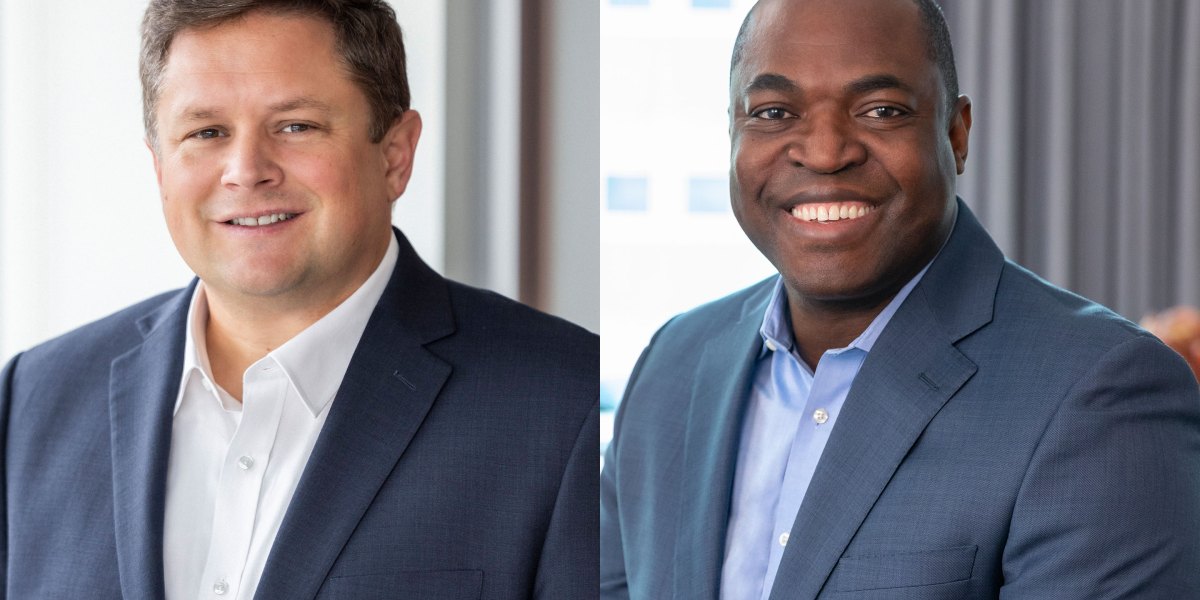
Amid all the buzzy attention on generative AI and the hunt to produce both top- and bottom-line gains from the deployment of these fast-developing tools, Workday wanted to be thoughtful about how it would budget the business software company’s AI investments. A close partnership was forged between IT and finance, the latter led by Chief Financial Officer Zane Rowe, who joined Workday just three months after Johnson.

“We created a framework for the governance to ensure that any material AI investments had a review process,” says Johnson.

This process includes a monthly IT-finance meeting where the teams discuss the various AI tools in the marketplace, which use cases have the highest feasibility for success, and which can produce the greatest impact to the business. Each month, Workday evaluates every generative AI use case that’s been in production for six months or longer to determine if these investments are delivering on key performance indicators, which may include productivity or revenue generation.

On a bimonthly basis, the company’s broader executive leadership team meets to align on Workday’s overall AI strategy. In those sessions, Johnson shares updates on the future generative AI roadmap and what benefits are expected to be achieved when making those investments. That transparency ensures accountability for all AI bets.

Business leaders say it is critical for IT and finance to nurture a close partnership as AI becomes more expansive across their operations, especially as some studies have shown that a vast majority of AI pilots fail. Most organizations that are using generative AI today are seeing a limited return on their investments, according to research from management consulting firm McKinsey.

Workday pilots every new AI feature it may want to deploy, frequently with a very short contract.

“We do believe there’s going to be some enterprise-level consolidation over time,” explains Johnson. When looking back and assessing AI investments, the company may swap out vendors when a new tool proves to be easier to deploy at a lower cost. In one example, Workday swapped in Salesforce Agentforce to replace some third-party agents that the company had deployed from another, unnamed vendor.

“I think the finance-IT partnership is terrific in enabling us to still drive value, while we recognize that there’s not only opportunity, but the cost of not changing is significantly high as well,” says Rowe.

At Akamai Technologies, CIO Kate Prouty and CFO Ed McGowan joined the cybersecurity and cloud computing company within a year of each other more than 25 years ago. After many years as colleagues, Prouty has reported to McGowan ever since she ascended to the top IT role in 2021.

“When you have the CFO behind you, it makes life a lot easier,” says Prouty.

IT and the finance department’s procurement team are “attached at the hip,” looking closely at vendor contracts to ensure that Akamai is getting the best rates possible. Akamai’s IT team fields all inbound requests for new technology solutions across the organization, committing to responding to submissions within a day.

McGowan says leadership needs to strike a delicate balance of encouraging the use of AI tools that can help engineers code faster or make it easier for lawyers to draft legal contracts. But the company doesn’t want to see costs exploding by saying “yes” to every AI request.

“We have to make sure that we don’t get in a situation where we’re either duplicating efforts, or signing bad contracts, or just having expenses run out of control,” says McGowan. 

The C-suite leaders at animal health company Zoetis have placed fewer, bigger AI bets focused on just two core parts of the business, research and development and commercialization. Six of the company’s seven AI use cases have been deemed a “success,” including one AI tool that helps sales representatives prepare more tailored business pitches for each individual livestock customer.

Zoetis acknowledges it is a bit behind on implementing more generic AI productivity tools, including those that can speed up recruitment. But the company says it’s shifting more financial resources in that direction. And it can shop around and explore off-the-shelf products sold by various AI vendors that don’t have as much differentiation as the tools that Zoetis developed for its core use cases.

“We started out being more disciplined and focused in terms of where we were pursuing gen AI and making our bets,” says Wetteny Joseph, CFO at Zoetis.

Like his peers at Workday and Akamai, Zoetis Chief Digital and Technology Officer Keith Sarbaugh says the high costs tied to compute and licensing are an ongoing concern. “In my 25 years in this type of work, I’ve never seen another technology carry post-implementation costs as high as AI,” says Sarbaugh.

He frequently fields pitches from vendors like Salesforce and SAP about their latest AI offerings, but firmly believes that the greatest value will come from tools that aren’t siloed.

“We’re always looking for those opportunities where we can integrate data and processes across platforms and sort of unlock new value that way,” says Sarbaugh.

John Kell

Send thoughts or suggestions to CIO Intelligence here.

NEWS PACKETS

Amazon Web Services stung by massive outage. Amazon’s cloud computing service experienced a major outage that disrupted an array of online services affecting major corporate clients including Starbucks, Robinhood, United Airlines, McDonald’s and even Amazon’s own services like Ring and Alexa. Amazon blamed the outage on issues related to the company’s domain name system and said the outage originated in Northern Virginia, which is the biggest and oldest cloud hub in the country, according to the Associated Press. The AWS outage began Monday morning, with all services returning to normal operations by 6 p.m. Eastern. DownDetector, which tracks disruptions to internet services, said in a Facebook post it had received over 11 million user reports of problems at more than 2,500 companies.

OpenAI hires ex-bankers to develop AI tools that can perform work now done by junior staff. Bloomberg reports that OpenAI has hired more than 100 former investment bankers from Morgan Stanley, Goldman Sachs, and other financial giants, staff that’s been brought on board to help train financial models that can replace entry-level tasks performed by younger bankers. The project, called Mercury, pays participants to write prompts and build financial models for transaction-related tasks, including initial public offerings and restructuring. Bloomberg reports that Mercury is an example of OpenAI CEO Sam Altman’s bid to make AI technology more useful to specific industries, like finance in this case, as well as legal and consulting.

Anthropic debuts Claude Life Sciences, brings Claude Code to the web. OpenAI’s rival Anthropic has formally announced new technology offerings including the debut of Claude Life Sciences, which is built around Anthropic’s AI models but will also support new connections to external scientific tools that are used for research and development. Anthropic says it intends for this AI integration to help researchers speed up the drug discovery process, including research, data analysis, and clinical and regulatory compliance. Separately on Monday, Anthropic announced it would bring its AI coding assistant Claude Code to the web, allowing developers to create and manage AI coding agents from their browser. Rivals like Cursor have similarly moved in this direction in recent months, with Anthropic telling TechCrunch it wants to put Claude Code everywhere to “meet developers where they are.”

ADOPTION CURVE

AI use surges among business leaders and chatbots are their go-to tool. A vast majority of business leaders (82%) report that they use generative AI tools “multiple times a day,” primarily for work-related tasks, but also for personal productivity and social media content creation, among other uses, according to a survey of 119 members of the Fortune AIQ Advisory Board.

Chatbots including ChatGPT and Gemini were by far the most-used generative AI tools (99% report regular usage), followed by image generators like Midjourney (42%), GitHub Copilot and other AI coding assistants (26%), and video generators (only 8%). The most popular work-related tasks were research (88%), drafting reports or emails (74%), and brainstorming ideas (71%).

While nine out of ten of the business leaders reported that they were either “very satisfied” or “satisfied” with these generative AI tools, there were some concerns when asked if they had encountered any output issues. The top issue was inaccurate or misleading results (39%), followed by a lack of context understanding (23%), and biased or inappropriate outputs (8%). Two out of ten reported no major issues with their generative AI usage.

Courtesy of Fortune AIQ Advisory Board

JOBS RADAR

Hiring:

Airrosti is seeking a CTO, based in San Antonio, Texas. Posted salary range: $200K-$230K/year.

AmeriSave Mortgage is seeking a chief AI officer, based in Colorado. Posted salary range: $300K-$1M/year.

The Information is seeking a head of engineering, a hybrid position that’s based in New York City or San Francisco. Posted salary range: $200K-$250K/year.

Corpay is seeking a VP of technology, based in Sacramento, California. Posted salary range: $222.6K-$260K/year.

Hired:

Whataburger named Rohit Kapoor as EVP and chief digital and technology transformation officer, joining the fast-food operator after serving as EVP and CIO at retailer Claire’s. Kapoor also previously held senior leadership roles at restaurant giants Starbucks and Yum Brands.

Cart.com announced the appointment of Arjun Sainath as CTO, where he will lead product and the engineering strategy for the logistics-focused e-commerce software provider. Most recently, Sainath served as VP of platform engineering at supply chain management company Blue Yonder. He also previously served as a senior director at Salesforce.

Kikoff announced Philippe Clavel as CTO, joining the fintech company to steer the advancement of its AI strategy. Clavel previously served as CTO and CEO at luxury travel-tech company Scenset and as a senior director of engineering at online game platform Roblox.

Mongoose appointed Scott Johnston as CTO, joining the software developer after most recently serving as chief product officer for the civic tech nonprofit Code for America. Prior to that, Johnston spent 16 years at Google, where he helped develop key products including Google Drive, Meet, Chat, and Voice. Johnston’s arrival at Mongoose coincides with the company’s planned deep investment in agentic AI.

Plainsight announced the appointment of Venky Renganathan as CTO, joining the startup that helps businesses convert images and videos into structured data. Renganathan previously served as VP of engineering at repair shop management software company Fullbay and held software development roles at Amazon and Amazon Web Services.

Accruent named Aron England as chief product and technology officer, joining the software provider after most recently serving as CPTO at speech technology software company Rev. England also has more than 20 years of product and software leadership at Dell, Vrbo, and Expedia.

AXS appointed Nikhil Bobde as CTO and named Alex Hazboun to the newly created role of chief innovation officer, reporting to Bobde. Bobde joins the sports and entertainment ticketing company from online marketplace Thumbtack and held prior roles at Microsoft and Meta. Hazboun had served as CTO of AXS for nine years and previously held roles at Ticketmaster and Live Nation.



Source link

Continue Reading

Business

Leaders in Congress outperform rank-and-file lawmakers on stock trades by up to 47% a year

Published

on


Stocks held by members of Congress have been beating the S&P 500 lately, but there’s a subset of lawmakers who crush their peers: leadership.

According to a recent working paper for the National Bureau of Economic Research, congressional leaders outperform back benchers by up to 47% a year.

Shang-Jin Wei from Columbia University and Columbia Business School along with Yifan Zhou from Xi’an Jiaotong-Liverpool University looked at lawmakers who ascended to leadership posts, such as Speaker of the House as well as House and Senate floor leaders, whips, and conference/caucus chairs.

Between 1995 and 2021, there were 20 such leaders who made stock trades before and after rising to their posts. Wei and Zhou observed that lawmakers underperformed benchmarks before becoming leaders, then everything suddenly changed.

“Importantly, whilst we observe a huge improvement in leaders’ trading performance as they ascend to leadership roles, the matched ‘regular’ members’ stock trading performance does not improve much,” they wrote.

Leadership’s stock market edge stems in part from their ability to set the regulatory or legislation agenda, such as deciding if and when a particular bill will be put to a vote. Setting the agenda also gives leaders advanced knowledge of when certain actions will take place.

In fact, Wei and Zhou found that leaders demonstrate much better returns on stock trades that are made when their party controls their chamber.

In addition, being a leader also increases access to non-public information. The researchers said that while companies are reluctant to share such insider knowledge, they may prioritize revealing it to leaders over rank-and-file lawmakers.

Leaders earn higher returns on companies that contribute to their campaigns or are headquartered in their states, which Wei and Zhou said could be attributable to “privileged access to firm-specific information.”

The upper echelon also influences how other members of Congress vote, and the paper found that a leader’s party is much more likely to vote for bills that help firms whose stocks the leader held, or vote against bills that harmed them. And stocks owned by leadership tend to see increases in federal contract awards, especially sole-source contracts, over the following one to two years.

“These results suggest that congressional leaders may not only trade on privileged knowledge, but also shape policy outcomes to enrich themselves,” Wei and Zhou wrote.

Stock trades by congressional leaders are even predictive, forecasting higher occurrences of positive or negative corporate news over the following year, they added. In particular, stock sales predict the number of hearings and regulatory actions over the coming year, though purchases don’t.

Investors have long suspected that Washington has a special advantage on Wall Street. That’s given rise to more ETFs with political themes, including funds that track portfolios belonging to Democrats and Republicans in Congress.

And Paul Pelosi, former House Speaker Nancy Pelosi’s husband, even has a cult following among some investors who mimic his stock moves.

Congress has tried to crack down on members’ stock holdings. The STOCK Act of 2012 requires more timely disclosures, but some lawmakers want to ban trading completely.

A bipartisan group of House members is pushing legislation that would prohibit members of Congress, their spouses, dependent children, and trustees from trading individual stocks, commodities, or futures.

And this past week, a discharge petition was put forth that would force a vote in the House if it gets enough signatures.

“If leadership wants to put forward a bill that would actually do that and end the corruption, we’re all for it,” said Rep. Anna Paulina Luna, R-Fla., on social media on Tuesday. “But we’re tired of the partisan games. This is the most bipartisan bipartisan thing in U.S. history, and it’s time that the House of Representatives listens to the American people.”


Source link

Continue Reading

Business

Macron warns EU may hit China with tariffs over trade surplus

Published

on


French President Emmanuel Macron warned that the European Union may be forced to take “strong measures” against China, including potential tariffs, if Beijing fails to address its widening trade imbalance with the bloc.

“I’m trying to explain to the Chinese that their trade surplus isn’t sustainable because they’re killing their own clients, notably by importing hardly anything from us any more,” Macron told Les Echos newspaper in an interview published on Sunday.

“If they don’t react, in the coming months we Europeans will be obliged to take strong measures and decouple, like the US, like for example tariffs on Chinese products,” he said, adding that he had discussed the matter with European Commission President Ursula von der Leyen.

Macron has just returned from a three-day state visit in China, where he pressed for more investment as Paris seeks to recalibrate its relationship with the world’s second-largest economy. France’s goods trade deficit with China reached around €47 billion ($54.7 billion) last year, according to the French Treasury. Meanwhile, China’s goods trade surplus with the EU swelled to almost $143 billion in the first half of 2025, a record for any six-month period, according to data released by China earlier this year.

Tensions between France and China escalated last year after Paris backed the EU’s decision to impose tariffs on Chinese electric vehicles. Beijing retaliated by imposing minimum price requirements on French cognac, sparking fears among pork and dairy producers that they could be targeted next.

‘Life or Death’

Macron said the US approach to China was “inappropriate” and had worsened Europe’s position by diverting Chinese goods toward the EU market.

“Today, we’re stuck between the two, and it’s a question of life or death for European industry,” Macron said, while noting that Germany — Europe’s biggest economy — doesn’t entirely share France’s stance.

In addition to Europe needing to become more competitive, the European Central Bank too has a role to play in strengthening the EU’s single market, Macron said, arguing that monetary policy should take growth and jobs into account, not just inflation, he said.

He also said the ECB’s decision to continue selling the government bonds it holds risks pushing up long-term interest rates and weighing on economic activity.

“Europe must — and wants to — remain a zone of monetary stability and credible investment,” Macron said.


Source link

Continue Reading

Business

What bubble? Asset managers in risk-on mode stick with stocks

Published

on


There’s a time when investments run their course and the prudent move is to cash out. For global asset managers who’ve ridden double-digit gains in equities for three straight years, that time is not now.

“Our expectation of solid growth and easier monetary and fiscal policies supports a risk-on tilt in our multi-asset portfolios. We remain overweight stocks and credit,” said Sylvia Sheng, global multi-asset strategist at JPMorgan Asset Management.

“We are playing the powerful trends in place and are bullish through the end of next year,” said David Bianco, Americas chief investment officer at DWS. “For now we are not contrarians.”

“Start the year with sufficient exposure, even over-exposure to equities, predominantly in emerging market equities,” said Nannette Hechler-Fayd’herbe, EMEA chief investment officer at Lombard Odier. “We don’t expect a recession in 2026 to unfold.”

Those assessments came from Bloomberg News interviews with 39 investment managers across the US, Asia and Europe, including at BlackRock Inc., Allianz Global Investors, Goldman Sachs Group Inc. and Franklin Templeton.

More than three-quarters of the allocators were positioning portfolios for a risk-on environment through 2026. The thrust of the bet is that resilient global growth, further developments in artificial intelligence, accommodative monetary policy and fiscal stimulus will deliver outsize returns in all fashion of global equity markets. 

The call is not without risks, including simply its pervasiveness among the respondents, along with their overall high degree of assuredness. The view among the institutional investors also aligns with that of sell-side strategists around the globe. 

Should the bullishness play out as expected, it would deliver a stunning fourth straight year of bumper returns for the MSCI All-Country World Index. That would extend a run that’s added $42 trillion in market capitalization since the end of 2022 — the most value created for equity investors in history. 

That’s not to say the optimism is without merit. The artificial intelligence trade has added trillions in market value to dozens of firms plying the industry, but just three years after ChatGPT broke into the public consciousness, AI remains in the early phase of development.

No Tech Panic

The buy-side managers largely rejected the idea that the technology has blown a bubble in equity markets. While many acknowledged some pockets of froth in unprofitable tech names, 85% of managers said valuations among the Magnificent Seven and other AI heavyweights are not overly inflated. Fundamentals back the trade, they said, which marks the beginning of a new industrial cycle. 

“You can’t call it a bubble when you’re seeing tech companies deliver a massive earnings beat. In fact, earnings from the sector have outstripped all other US stocks,” said Anwiti Bahuguna, global co-chief investment officer at Northern Trust Asset Management.

As such, investors expect the US to remain the engine of the rally. 

“American exceptionalism is far from dead,” said Jose Rasco, chief investment officer at HSBC Americas. “As artificial intelligence continues to spread around the globe, the US will be a key participant.” 

Most investors echoed the sentiment expressed by Helen Jewell, international chief investment officer of fundamental equities at BlackRock, who suggested also searching outside the US for meaningful upside.

“The US is where the high-return high-growth companies are, so we have to be realistic about that. But those are already reflected in valuations, and there are probably more interesting opportunities outside the US,” she said.

International Boom

Profits matter above all else for equity investors, and huge bumps in government spending from Europe to Asia have stoked estimates for strong gains in earnings.

“We have begun to see a meaningful broadening of earnings momentum, both across market capitalizations and across regions, including Japan, Taiwan, and South Korea,” said Wellington Management equity strategist Andrew Heiskell. “Looking into 2026, we see clear potential for a revival of earnings growth in Europe and a wider range of emerging markets.”

India is one of the most compelling opportunities for 2026, according to Goldman Sachs Asset Management’s Alexandra Wilson-Elizondo, global co-head and co-chief investment officer of multi-asset solutions.

“We see real potential for India to become the Korea-like re-rating story of 2026, a market that transitions from tactical allocation to strategic core exposure in global portfolios,” she said. 

Nelson Yu, head of equities at AllianceBernstein, said he sees improvements outside of the US that will mandate allocations. He noted governance reform in Japan, capital discipline in Europe and recovering profitability in some emerging markets.

Small Cap Optimism

At the sector level, the investors are looking for AI proxies, notably among clean energy providers that can help meet the technology’s ravenous demand for power. Smaller stocks are also finding favor.

“The earnings outlook has brightened for small-capitalization stocks, industrials and financials,” said Stephen Dover, chief market strategist and head of Franklin Templeton Institute. “Small-cap stocks and industrials, which are typically more highly leveraged than the rest of the market, will see profitability rise as the Federal Reserve trims interest rates and debt servicing costs fall.”

Over at Santander Asset Management, Francisco Simón sees earnings growth of more than 20% for US small caps after years of underperformance. Reflecting the optimism, the Russell 2000 Index of such equities recently hit a record high.

Meanwhile, the combination of low valuations and strong fundamentals makes health care one of the most compelling contrarian opportunities in a bullish cycle, a preponderance of managers said.  

“Health-care related sectors can surprise to the upside in the US markets,” said Jim Caron, chief investment officer of cross-asset solutions at Morgan Stanley Investment Management. “This is a mid-term election year and policy may at the margin support many companies. Valuations are still attractive and have a lot of catch up to do.”

Virtually every allocator struck at least a note of caution about what lies ahead. The top worry among them was a rekindling of inflation in the US. If the Fed is forced by rising prices to abruptly pause or even end its easing cycle, the potential for turbulence is high.

“A scenario — which is not our base case — whereby US inflation rebounds in 2026 would constitute a double whammy for multi-asset funds as it would penalize both stocks and bonds. In this sense it would be much worse than an economic slowdown,” said Amélie Derambure, senior multi-asset portfolio manager at Amundi SA. 

“The way investors are headed for 2026, they need to have the Fed on their side,” she added.

Trade Caution

Another worry is around President Donald Trump’s capriciousness, particularly when it comes to trade. Any flareup in his trade spats that fuels inflation through heightened tariffs would weigh on risk assets. 

Oil and gas producers remain unloved by the group, though that could change if a major geopolitical event upends supply lines. While such an outcome would bolster those sectors, the overall impact would likely be negative for risk assets, they said.

“Any geopolitical situation that can affect the price of oil is what will have the largest impact on the financial markets. Clearly both the Middle East and the Ukraine/Russia situations can impact oil prices,” said Scott Wren, senior global market strategist at Wells Fargo Investment Institute.

Multiple respondents flagged European autos as a “no-go” area for 2026, citing intense competitive pressure from Chinese carmakers, margin compression and structural challenges in the transition to electric vehicles. 

“Personally I don’t believe for a minute that there will be a rebound in the sector,” said Isabelle de Gavoty at Allianz GI. 

Outside of those worries, most asset managers simply believe that there’s little reason to fret about the upward momentum being interrupted — outside, of course, from the contrarian signal such near-uniform bullishness sends.

“Everyone seems to be risk-on at the moment, and that worries me a bit in the sense that the concentration of positions creates less tolerance for adverse surprises,” said Amundi’s Derambure.  


Source link

Continue Reading

Trending

Copyright © Miami Select.