Connect with us

Business

Why an ASEAN power grid is key to tapping Southeast Asia’s green potential

Published

on


The International Energy Agency reports that energy demand across Southeast Asia rose at twice the global average rate in 2024 and finds that consumption is set to double by 2050. To maintain rising living standards, economies across the region are pushing into higher-value and more energy-intense industries, data centres being one obvious example.

That creates a problem.

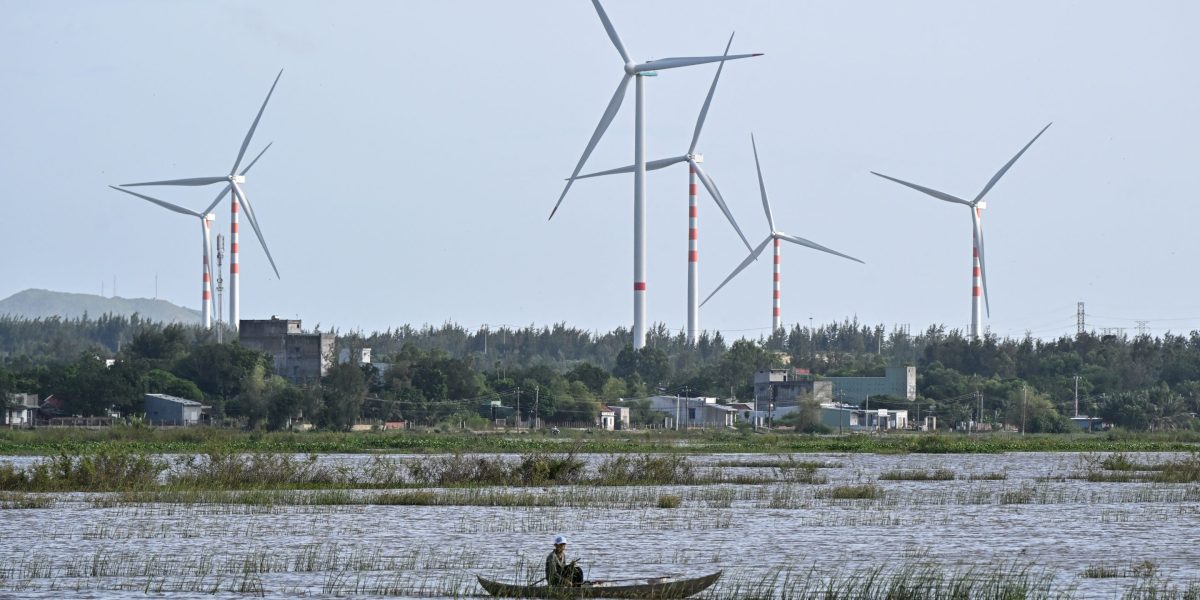
The ASEAN nations enjoy vast but as yet largely untapped potential for renewable energy, especially PV solar, and onshore and offshore wind. The IEA puts potential supply at 20 terawatts, roughly 55 times the region’s present generation capacity. And this energy would be cheap. But the increase in overall demand is for now far outpacing new supply from renewables. Until that changes, ASEAN nations remain dependent on rising fossil fuel imports that expose them to price risk, potential supply disruptions, and increasing greenhouse gas emissions.

Asian corporate executives have focused recently on coping with tariffs and trade restrictions, potential supply chain disruptions and geopolitical insecurity—rather than energy and power. In the latest EY-Parthenon Global CEO Outlook survey, Asia-Pacific CEOs expressed greater unease than their peers in Europe and the Americas about geopolitics, macroeconomics and trade. They must not lose sight of how investment in modernizing energy supply and transmission today will provide considerable benefits including, but not limited to, low-cost power. And they should mobilize all sources of finance, private and public, for projects to achieve this.

That is why the recent announcement from the Asian Development Bank, the World Bank and ASEAN of a new financing initiative to support a connected ASEAN power grid (APG) is so important. It comes ahead of an enhanced memorandum of understanding set to be signed later this year by the ASEAN nations to finally realize the vision for a connected grid that has tantalized since the 1990s.

Building it will be expensive, estimated at over $750 billion. But the returns—cheaper and more reliable electricity, enhanced energy security and regional co-operation, lower emissions—will justify the cost, as long as finance can be mobilized.

At the ASEAN ministers on energy meeting in October, the ADB committed up to $10 billion over the next ten years. The World Bank is providing an initial $2.5 billion. The multilaterals will also offer grants, guarantees, political risk insurance and other concessions to attract private capital, as well as technical assistance.

Why has this connected grid not been built already? Partly for technical reasons. ASEAN nations use different voltages in their transmission systems. Their national grids stand at varying levels of sophistication. They employ distinct operating standards and regulatory frameworks. Politics has also played a part. Countries have previously prioritized domestic industrial development and national energy policies.

Increasing urgency around energy transition has shifted those priorities and focused on how to transmit renewable energy from the widely distributed sources that provide it to the consumers that need it, even in other countries. The key now is to progress beyond simply connecting countries’ networks to a more widespread upgrading of national grids.

In May, leading energy companies from Malaysia, Singapore and Vietnam agreed a strategic partnership to explore the use of undersea cables to transmit electricity generated mainly from Vietnam’s offshore wind farms through the Peninsular Malaysia National Grid to homes and businesses in Malaysia and Singapore.

Vietnam is prioritizing investment in offshore wind as part of a strategy to become a regional renewable energy hub. Singapore, while lacking the natural resources for large-scale renewables, intends to be a key enabler of cross-border trade in clean energy. It has given conditional approval for ten projects to import it, including solar power from Australia; solar, hydropower and potentially wind power from Cambodia; and solar power from Indonesia; as well as offshore wind from Vietnam. Thailand could be another big importer.

High return on investment

The vision for an ASEAN power grid, connecting a population likely to hit 780 million by 2040 across a $10 trillion regional economy, triple the size in 2022, was laid out one year ago at COP29. Doubling the number of interconnections across the 10 ASEAN countries could boost connected capacity from 7.2 gigawatts in 2022, to 33.5 GW fifteen years from now.

This will take more than undersea cables and high voltage direct current lines capable of transmitting power over long distances with minimal leakage. To succeed at scale a resilient ASEAN grid must cope with the key challenge faced in all renewables—intermittency. This necessitates investments in industrial-scale battery and other storage and conversion technology to balance increasingly variable supply with rising demand. Managing that balance is essential to keep grids stable and prevent outages, including amid extreme weather events that coincide with peak power off-take.

Upgrading domestic networks should include integration of new digital technology, familiar from the internet of things, to monitor and measure systems continuously, spot potential weaknesses before they trip supply, and enable steady maintenance instead of expensive repairs.

An ASEAN power grid paves the way to lower cost manufacturing and enhances competitive advantages, as the region continues to move up the manufacturing value chain.

In the longer term, it can also improve climate-resilient food security and pitch the region into a positive feedback loop. Related investment in agritech might also boost production of biofuel, potentially making air travel greener and helping to decarbonize other sectors that are difficult to electrify.

A significant proportion of total employment across Asia Pacific is in sectors directly impacted by climate, like farming and fishing, putting populations at high risk from global warming and rising sea levels. With the ASEAN grid, governments, large utilities, energy companies and financers are coming together to address this risk, and build a project that promises huge benefits for generations to come.


Source link

Continue Reading

Business

AI is boosting productivity. Here’s why some workers feel a sense of loss

Published

on


Welcome to Eye on AI, with AI reporter Sharon Goldman. In this edition…Why some workers feel a sense of loss while AI boosts productivity…Anthropic raising fresh $10 Billion at $350 billion valuation…Musk’s xAI closed $20 billion funding with Nvidia backing…Can AI do your job? See the results from hundreds of tests.

For months, software developers have been giddy with excitement over “vibe coding”– prompting desired software functions or features in natural language—with the latest AI code generation tools. Anthropic’s Claude Code is the darling of the moment, but OpenAI’s Codex, Cursor and other tools have also led engineers to flood social media with examples of tasks that used to take days and are now finished in minutes. 

Even veteran software design leaders have marvelled at the shift. “In just a few months, Claude Code has pushed the state of the art in software engineering further than 75 years of academic research,” said Erik Meijer, a former senior engineering leader at Meta

Skills honed seem less essential

However, that same delight has turned disorienting for many developers, who are grappling with a sense of loss as skills honed over a lifetime suddenly seem less essential. The feeling of flow—of being “in the zone”—seems to have vanished as building software becomes an exercise in supervising AI tools rather than writing code. 

In a blog post this week titled “The Grief When AI Writes All the Code,” Gergely Orosz of The Pragmatic Engineer, wrote that he is “coming to terms with the high probability that AI will write most of my code which I ship to production.” It already does it faster, he explained, and for languages and frameworks he is less familiar with, it does a better job. 

“It feels like something valuable is being taken away, and suddenly,” he wrote. “It took a lot of effort to get good at coding and to learn how to write code that works, to read and understand complex code, and to debug and fix when code doesn’t work as it should.” 

Andrew Duca, founder of tax software Awaken Tax, wrote a similar post this week that went viral, saying that he was feeling “kinda depressed” even though he finds using Claude Code “incredible” and has “never found coding more fun.” 

He can now solve customer problems faster, and ship more features, but at the same time “the skill I spent 10,000s of hours getting good at…is becoming a full commodity extremely quickly,” he wrote. “There’s something disheartening about the thing you spent most of your life getting good at now being mostly useless.” 

Software development has long been on the front lines of the AI shift, partly because there are decades of code, documentation and public problem-solving (from sites like GitHub) available online for AI models to train on. Coding also has clear rules and fast feedback – it runs or it doesn’t – so AI systems can easily learn how to generate useful responses. That means programming has become one of the first white-collar professions to feel AI’s impact so directly.

These tensions will affect many professions

These tensions, however, won’t be confined to software developers. White-collar workers across industries will ultimately have to grapple with them in one way or another. Media headlines often focus on the possibility of mass layoffs driven by AI; the more immediate issue may be how AI reshapes how people feel about their work. AI tools can move us past the hardest parts of our jobs more quickly—but what if that struggle is part of what allows us to take pride in what we do? What if the most human elements of work—thinking, strategizing, working through problems—are quietly sidelined by tools that prize speed and efficiency over experience?

Of course, there are plenty of jobs and workflows where most people are very happy to use AI to say buh-bye to repetitive grunt work that they never wanted to do in the first place. And as Duca said, we can marvel at the incredible power of the latest AI models and leap to use the newest features even while we feel unmoored. 

Many white-collar workers will likely face a philosophical reckoning about what AI means for their profession—one that goes beyond fears of layoffs. It may resemble the familiar stages of grief: denial, anger, bargaining, depression, and, eventually, acceptance. That acceptance could mean learning how to be the best manager or steerer of AI possible. Or it could mean deliberately carving out space for work done without AI at all. After all, few people want to lose their thinking self entirely.

Or it could mean doing what Erik Meijer is doing. Now that coding increasingly feels like management, he said, he has turned back to making music—using real instruments—as a hobby, simply “to experience that flow.”

With that, here’s more AI news.

Sharon Goldman
sharon.goldman@fortune.com
@sharongoldman

FORTUNE ON AI

As Utah gives the AI power to prescribe some drugs, physicians warn of patient risks – by Beatrice Nolan

Google and Character.AI agree to settle lawsuits over teen suicides linked to AI chatbots – by Beatrice Nolan

OpenAI launches ChatGPT Health in a push to become a hub for personal health data – by Sharon Goldman

Google takes first steps toward an AI product that can actually tackle your email inbox – by Jacqueline Munis

Fusion power nearly ready for prime time as Commonwealth builds first pilot for limitless, clean energy with AI help from Siemens, Nvidia – by Jordan Blum

AI IN THE NEWS

Anthropic raising fresh $10 Billion at $350 billion valuation. According to the Wall Street Journal, OpenAI rival Anthropic is planning to raise $10 billion at a roughly $350 billion valuation, nearly doubling its worth from just four months ago. The round is expected to be led by GIC and Coatue Management, following a $13 billion raise in September that valued the company at $183 billion. The financing underscores the continued boom in AI funding—AI startups raised a record $222 billion in 2025, per PitchBook—and comes as Anthropic is also preparing for a potential IPO this year. Founded in 2021 by siblings Dario Amodei and Daniela Amodei, Anthropic has become a major OpenAI rival, buoyed by Claude’s popularity with business users, major backing from Nvidia and Microsoft, and expectations that it will reach break-even by 2028—potentially faster than OpenAI, which is itself reportedly seeking to raise up to $100 billion at a $750 billion valuation.

Musk’s xAI closed $20 billion funding with Nvidia backing. Bloomberg reported that xAI, the AI startup founded by Elon Musk, has completed a $20 billion funding round backed by investors including Nvidia, Valor Equity Partners, and the Qatar Investment Authority, underscoring the continued flood of capital into AI infrastructure. Other backers include Fidelity Management & Research, StepStone Group, MGX, Baron Capital Group, and Cisco’s investment arm. The financing—months in the making—will fund xAI’s rapid infrastructure buildout and product development, the company said, and includes a novel structure in which a large portion of the capital is tied to a special-purpose vehicle used to buy Nvidia GPUs that are then rented out, allowing investors to recoup returns over time. The deal comes as xAI has been under fire for its chatbot Grok producing non-consensual “undressing” images of real people.

Can AI do your job? See the results from hundreds of tests. I wanted to shout-out this fascinating new interactive feature in the Washington Post, which presented a new study that found that despite fears of mass job displacement, today’s AI systems are still far from being able to replace humans on real-world work. Researchers from Scale AI and the Center for AI Safety tested leading models from OpenAI, Google, and Anthropic on hundreds of actual freelance projects—from graphic design and creating dashboards to 3D modeling and games—and found that the best AI systems successfully completed just 2.5% of tasks on their own. While AI often produced outputs that looked plausible at first glance, closer inspection revealed missing details, visual errors, incomplete work, or basic technical failures, highlighting gaps in areas like visual reasoning, long-term memory, and the ability to evaluate subjective outcomes. The findings challenge predictions that AI is poised to automate large swaths of human labor anytime soon, even as newer models show incremental improvement and the economics of cheaper, semi-autonomous AI work continue to put pressure on remote and contract workers.

EYE ON AI NUMBERS

91.8%

That’s the percentage of Meta employees who admitted to not using the company’s AI chatbot, Meta AI, in their day-to-day work, according to new data from Blind, a popular anonymous professional social network. 


According to a survey of 400 Meta employees, only 8.2% said they use Meta AI. The most popular chatbot was Anthropic’s Claude, used by more than half (50.7%) of Meta employees surveyed. 17.7% said they use Google’s Gemini and 13.7% said they used OpenAI’s ChatGPT. 


When approached for comment, Meta spokesperson pointed out that the number (400 of 77,000+ employees) is “not even a half percent of our total employee population.”

AI CALENDAR

Jan. 19-23: World Economic Forum, Davos, Switzerland.

Jan. 20-27: AAAI Conference on Artificial Intelligence, Singapore.

Feb. 10-11: AI Action Summit, New Delhi, India.

March 2-5: Mobile World Congress, Barcelona, Spain.

March 16-19: Nvidia GTC, San Jose, Calif.

April 6-9: HumanX, San Francisco. 


Source link

Continue Reading

Business

Trust has become the crisis CEOs can’t ignore at Davos, as new data show 70% of people turning more ‘insular’

Published

on


Everywhere you turn in Davos this year, people are talking about trust. And there’s no one who knows trust better than Richard Edelman. Back in 1999, Edelman was on the cusp of taking  over the PR firm founded by his father Daniel. Spurred by the 1999 WTO protests in Seattle, he decided to try and measure the level of trust in NGOs compared with business, government and media, Edelman surveyed 1,300 thought leaders in the U.S., U.K., France, Germany and Australia, and the Edelman Trust Barometer was born. 

While the survey sample long ago expanded beyond elites to include about 34,000 respondents in 28 nations, its results are still unveiled and debated every year at the ultimate gathering of elites: the World Economic Forum. This year’s findings are grim: About 70% of respondents now have an “insular” mindset: they don’t want to talk to, work for, or even be in the same space with anyone who doesn’t share their world view. And “a sense of grievance” permeates the business world, Edelman finds. At Davos, debating such findings have spawned a series of dinners, panels, cocktails and media briefings on site. What better place to bring people together than the world’s most potent village green?

I moderated a CEO salon dinner with about three dozen leaders last night to discuss what they’re seeing and doing when it comes to building trust. Before the dinner, I asked Edelman what he’d like to see this year, after 26 winters of highlighting the erosion of trust. “Urgency,” he said. “A sense that time is running out.”

Because the gathering itself was held under the Chatham House rule, I won’t share names and direct quotes. But the focus was on how attendees are trying to address the problem through what Edelman calls “trust brokering,” or finding common ground through practices from nonjudgemental communications to “polynational’ business models that invest in long-term local relationships. (See the report for more information.) There were some success stories from the front lines of college campuses, politics and industries caught in a crossfire of misinformation.

Still, the mood was somewhat subdued, with a sense that there’s no easy fix to building trust. As one CEO pointed out, rarely have leaders faced such a confluence of geopolitical crises, tech shifts, economic divides, disinformation, job disruption and wicked problems. And as much as Davos is a great gathering ground to talk through all of these problems, the fact is the problems will all still be waiting once these CEOs return from the mountains.

This story was originally featured on Fortune.com


Source link

Continue Reading

Business

History says there’s a 90% chance that Trump’s party will lose seats in the midterm elections. It also says there’s a 100% chance

Published

on


Now that the 2026 midterm elections are less than a year away, public interest in where things stand is on the rise. Of course, in a democracy no one knows the outcome of an election before it takes place, despite what the pollsters may predict.

Nevertheless, it is common for commentators and citizens to revisit old elections to learn what might be coming in the ones that lie ahead.

The historical lessons from modern midterm congressional elections are not favorable for Republicans today.

Most of the students I taught in American government classes for over 40 years knew that the party in control of the White House was likely to encounter setbacks in midterms. They usually did not know just how settled and solid that pattern was.

Since 1946, there have been 20 midterm elections. In 18 of them, the president’s party lost seats in the House of Representatives. That’s 90% of the midterm elections in the past 80 years.

Measured against that pattern, the odds that the Republicans will hold their slim House majority in 2026 are small. Another factor makes them smaller. When the sitting president is “underwater” – below 50% – in job approval polls, the likelihood of a bad midterm election result becomes a certainty. All the presidents since Harry S. Truman whose job approval was below 50% in the month before a midterm election lost seats in the House. All of them.

Even popular presidents – Dwight D. Eisenhower, in both of his terms; John F. Kennedy; Richard Nixon; Gerald Ford; Ronald Reagan in 1986; and George H. W. Bush – lost seats in midterm elections.

The list of unpopular presidents who lost House seats is even longer – Truman in 1946 and 1950, Lyndon B. Johnson in 1966, Jimmy Carter in 1978, Reagan in 1982, Bill Clinton in 1994, George W. Bush in 2006, Barack Obama in both 2010 and 2014, Donald Trump in 2018 and Joe Biden in 2022.

Exceptions are rare

There are only two cases in the past 80 years where the party of a sitting president won midterm seats in the House. Both involved special circumstances.

In 1998, Clinton was in the sixth year of his presidency and had good numbers for economic growth, declining interest rates and low unemployment. His average approval rating, according to Gallup, in his second term was 60.6%, the highest average achieved by any second-term president from Truman to Biden.

Moreover, the 1998 midterm elections took place in the midst of Clinton’s impeachment, when most Americans were simultaneously critical of the president’s personal behavior and convinced that that behavior did not merit removal from office. Good economic metrics and widespread concern that Republican impeachers were going too far led to modest gains for the Democrats in the 1998 midterm elections. The Democrats picked up five House seats.

The other exception to the rule of thumb that presidents suffer midterm losses was George W. Bush in 2002. Bush, narrowly elected in 2000, had a dramatic rise in popularity after the Sept. 11 attacks on the World Trade Center and the Pentagon. The nation rallied around the flag and the president, and Republicans won eight House seats in the 2002 midterm elections.

Those were the rare cases when a popular sitting president got positive House results in a midterm election. And the positive results were small.

The final – and close – tally of the House of Representatives’ vote on President Donald Trump’s tax bill on July 3, 2025. Alex Wroblewski / AFP via Getty Images

Midterms matter

In the 20 midterm elections between 1946 and 2022, small changes in the House – a shift of less than 10 seats – occurred six times. Modest changes – between 11 and 39 seats – took place seven times. Big changes, so-called “wave elections” involving more than 40 seats, have happened seven times.

In every midterm election since 1946, at least five seats flipped from one party to the other. If the net result of the midterm elections in 2026 moved five seats from Republicans to Democrats, that would be enough to make Democrats the majority in the House.

In an era of close elections and narrow margins on Capitol Hill, midterms make a difference. The past five presidents – Clinton, Bush, Obama, Trump and Biden – entered office with their party in control of both houses of Congress. All five lost their party majority in the House or the Senate in their first two years in office.

Will that happen again in 2026?

The obvious prediction would be yes. But nothing in politics is set in stone. Between now and November 2026, redistricting will move the boundaries of a yet-to-be-determined number of congressional districts. That could make it harder to predict the likely results in 2026.

Unexpected events, or good performance in office, could move Trump’s job approval numbers above 50%. Republicans would still be likely to lose House seats in the 2026 midterms, but a popular president would raise the chances that they could hold their narrow majority.

And there are other possibilities. Perhaps 2026 will involve issues like those in recent presidential elections.

Close results could be followed by raucous recounts and court controversies of the kind that made Florida the focal point in the 2000 presidential election. Prominent public challenges to voting tallies and procedures, like those that followed Trump’s unsubstantiated claims of victory in 2020, would make matters worse.

The forthcoming midterms may not be like anything seen in recent congressional election cycles.

Democracy is never easy, and elections matter more than ever. Examining long-established patterns in midterm party performance makes citizens clear-eyed about what is likely to happen in the 2026 congressional elections. Thinking ahead about unusual challenges that might arise in close and consequential contests makes everyone better prepared for the hard work of maintaining a healthy democratic republic.

Robert A. Strong, Senior Fellow, Miller Center, University of Virginia

This article is republished from The Conversation under a Creative Commons license. Read the original article.

The Conversation


Source link

Continue Reading

Trending

Copyright © Miami Select.