Business
Who owns ideas in the AI age?
The publishers, music producers, and film directors who make up the creative economy would say yes — as would many of the artists and writers they work with. But some in Big Tech are beginning to push back, arguing that ideas—like information—should be free, accessible, and repurposeable for anyone. When it comes to ideas, they argue, even those which spring directly from our own heads are the product of every other idea, environment, and person we’ve come into contact with. As such, they are fair game for training the large language models (LLMs) behind the AI platforms many of us have become reliant upon.
The argument has become increasingly urgent as generative AI companies build powerful models—and attract huge investment—by ingesting vast amounts of online text, images, and video, including books, journalism, and art created by humans.
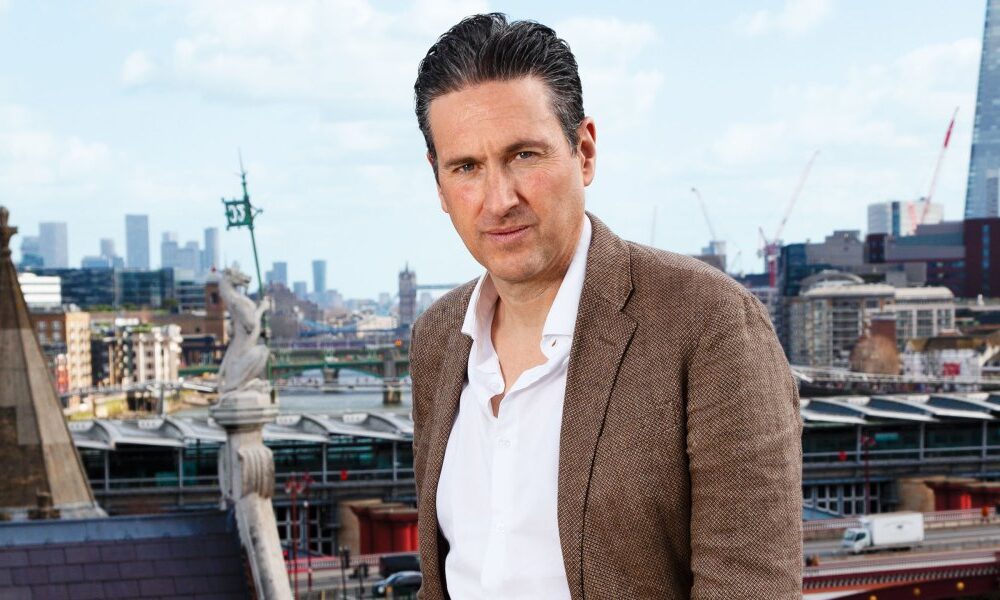
This is the existential issue facing, among others, the international publishing giant Hachette. David Shelley, the company’s U.K. chief who also became U.S. CEO in January 2024, is joining the fight on behalf of creatives everywhere.
Shelley is a publisher through and through. The son of antique booksellers, he grew up above a bookshop and got his first industry role fresh out of university. You would be hard-pressed to find someone more passionate about, and invested in, the future of publishing. “We’re at an absolutely pivotal moment,” he says. “We need to stand up for the rights of the authors we work with and for the whole of the creative industries.”
Hachette vs. Google
This is not mere lip service. This January, Hachette asked a U.S. federal court for permission to intervene in a proposed class action lawsuit against Google. Along with Cengage, an education technology provider, the publisher claims the tech giant copied content from Hachette books and Cengage textbooks to train its large language model, Gemini, without asking permission. Google argues that training LLMs on vast text-based datasets is a transformative process which analyzes patterns in language, rather than reproducing the original works and, as such, qualifies as fair use.
Shelley isn’t buying it. “It’s just another form of theft,” he says. “We know these LLMs basically stole our authors’ work.”
This isn’t the first time Hachette has taken legal action against those looking to steal from it. In 2023, the company took on Internet Archive, an online library which offers users a free, digitized archive of music, books, and other publications. Hachette, along with Penguin Random House, HarperCollins, and Wiley, claimed the platform allowed people to download copyrighted books for free, against the authors’ wishes. In March 2026, Hachette Book Group, the American arm of the business, took on what it alleges is a pirate site, Anna’s Archive, for the same reasons.
Hachette has an impressive portfolio to protect. As one of the Big Five major global publishing houses, it is the force behind bestsellers from Donna Tartt’s The Goldfinch to Stephenie Meyer’s Twilight saga, as well as nonfiction titles such as Malcolm Gladwell’s Outliers and Mitch Albom’s Tuesdays With Morrie. Parent company Hachette Livre’s 2025 revenues exceeded €3 billion ($3.44 billion), driven by the work of popular authors across the 13 regions it operates in.
The Google lawsuit is just one of many examples of creatives taking on Big Tech. Across the U.S. and Europe, dozens of lawsuits have now been filed by individuals and organizations seeking to stop AI companies from training their models on copyrighted material without permission.
62%
Revenue growth since Shelley took the helm
€3 billion
Total revenue for Hachette Livre in 2025
14%
Hachette’s share of the U.K. publishing market
Last year, three authors won a landmark victory against AI company Anthropic, resulting in a $1.5 billion settlement. It is worth noting, however, that they did not win on the grounds of breach of copyright. The judge ruled that Anthropic’s use of the authors’ work was “exceedingly transformative” and therefore allowed under U.S. law. Unfortunately for Anthropic, over 7 million of the books it had used to build its training library were pirated copies, each of which carried a potentially steep penalty.
For Shelley, this is really an issue of semantics. “Copyright and piracy often go hand in hand,” he says. He cites children’s writer Enid Blyton’s estate, which the publisher owns, as an example. “Blyton spent her whole life writing those books — that was her achievement. If you can then ingest those into an LLM and the model can use that to create copies, to me, it’s very clear that it’s her intellectual property that has been ingested and is being monetized.”
And here is the crux of the issue. Someone is making money from the use of these ideas—but it’s not the author, it’s the LLM companies. The commercial stakes are enormous: the global generative AI market was valued at $103.58 billion in 2025 and is projected to be $161 billion in 2026, according to Fortune Business Insights.
“Success in this lawsuit would be recognition that our creators’ work belongs to them, and they must be able to decide what is done with it,” says Shelley. “So, if they want to allow a platform to use it for the LLM, they should be remunerated for that. Or they should have the right to say, ‘I do not want my work to be used in that way.’”
And lawsuits such as this one are about far more than a single company or an individual artist. At stake is the economic model that underpins the entire creative industry.
The future of the creative economy
Shelley does not mince words when describing the current approach many AI companies are taking when it comes to intellectual property. “It’s basically parasitic,” he says. “The monetization happens from the tech platforms—the fans are still getting content, but that content is based on original creative work by humans who get nothing for it.”
And if it should be allowed to continue? “It would be completely devastating,” he says.
The current creative ecosystem is simple but effective. Creators use their imaginations to create things; organizations such as publishers partner with them to distribute those things. People pay to consume the creations, and both publisher and creator get a share of those sales. “[But] if the writers aren’t getting any money, frankly, then we aren’t getting any money—and then what is the point of publishing houses if there’s no income stream?” he says.
While few would feel compelled to pull out their tiny violins for the fate of multibillion-dollar businesses in this situation, the consequences could be far more serious, Shelley points out.
One logical conclusion is a return to the early days of publishing, when only the super-wealthy (or those lucky enough to have a rich patron) could afford to write for a living. Whether it is writing or music or illustration, “the fact you can make a good living in all of these fields is a really strong incentive,” says Shelley. Without the economic model, “the talent pool shrinks.”
Worse still, we face a future where the only art available is an iteration of an iteration on an iteration. “LLMs are just predictive text,” says Shelley. “If you starve the supply, then there will be no new stories. As humans, we need new stories, we need new art, we need new ideas, and to get that, the economics need to work for the people who make those things.”
What is most frustrating for Shelley is that there already exists a robust mechanism for ensuring this doesn’t happen: copyright law. “Copyright essentially exists to ensure creators are able to earn a living,” he says. “I don’t think it needs to change, but it does need to evolve.”
Our legal system often operates by looking at precedent, and it is here that Shelley sees some hope. He cites high-profile music cases, such as Pharrell Williams v. Bridgeport Music, in which the producer-songwriter and artist Robin Thicke had to pay millions of dollars in damages to the estate of Marvin Gaye for mimicking the “feel” of some of Gaye’s work in their 2013 hit “Blurred Lines.”
“It’s not an exact science,” says Shelley. “But there is enough case law now to say, ‘This is what’s right.’ Not everyone will agree with every judgment, but there is a framework in place.”
How Hachette is using AI
Shelley is also realistic about the need to work with Big Tech in order to achieve Hachette’s mission (“to make it easy for everyone to discover new worlds of ideas, learning, entertainment, and opportunity”).
“As business leaders, we need to be able to hold lots of contradictory ideas in our head at once, and we need to have nuanced relationships,” he says. For publishers, that tension is particularly acute: The technology platforms Hachette is challenging in court are also vital in shaping how readers discover books—from search engines to social media communities like TikTok’s BookTok.
David Buchan—Getty Images
He points out that no company in the digital age can afford not to work with the likes of Google, even if it disagrees with certain elements of the platforms’ operation. In an ideal world, the key is to work with the platforms to make systems more fair for everyone.
Neither can companies afford to shy away from the transformative potential of AI, however cynical they may be about the motives of the platform owners. For Shelley, the key is to have very clear boundaries from the start, about where the publisher will and will not use the technology.
“We will use it operationally, where we think it helps to get a writer’s work to more readers,” he says. At Hachette, that means implementing it for heavy-lift data entry, such as bibliographic metadata required for online shops; warehouse-demand planning; and simple customer service matters such as “When will my books arrive?” queries.
Where the company will not embrace AI’s usage is in creation. “We have literally no business without authors, translators, illustrators, and the wider creative economy,” says Shelley. “We are very clear about AI not competing with them.” I ask whether this means that Hachette would make the decision never to publish AI-written books, and his answer is clear: “Yes. I don’t see the value in that at all.”
Indeed, there is a growing trend on both sides of the Atlantic for using human creation as a badge of honor. In early 2025, the U.S.-based Authors Guild launched a “Human Authored” certification, with the U.K.’s Society of Authors following suit in March 2026. The certification allows for minor AI assistance—such as spell-checking or brainstorming—but the text itself must be human-written.
As with the hipster revival of the word “artisanal” in the mid-2000s, the AI age is beckoning in new terms to connote great value and desirability. Now, instead of coffee made from rare Southeast Asian beans or blankets knitted in little-known Nordic communities, the focus is on content. From books to marketing campaigns, experts suggest that, in a world flooded by AI-generated work, those who can will pay for what is being called the “human premium” by some thought leaders.
Protecting creativity, a call to arms
Of course, business leaders must play their part in protecting the economic ecosystem that makes this possible.
To these leaders, across industries, Shelley is using the Google lawsuit to issue a rallying cry: “Look, it would be totally disingenuous of me to pretend I wasn’t trying to preserve our business, but fundamentally I think it will be an enormous loss to society if copyright law were to be ignored.”
He explains that publishing can be something of a “quiet industry,” but for an issue of this magnitude, it’s crucial to get past the discomfort of speaking out. He is calling on leaders to lobby governments; do crucial public affairs work; talk to the press about issues that matter; and where necessary, pursue legal action.
“The nature of a changing world—particularly when it comes to one governed by technology—is that you have to keep litigating,” he says. “It’s a crucial way of updating case law. People take copyright for granted, but it came about through humans lobbying for it.”
This is, in some ways, easier to do in the States, where the culture of litigiousness means the process is more common. There are, however, some societal trends which make the battle seem more daunting. “One of the issues we’re experiencing in the U.S. is book banning,” says Shelley.
Here, again, is an issue which appears, on the surface, to be unique to the publishing industry, but which could have severe consequences for businesses of all sectors. For Shelley, freedom of expression is no longer merely a cultural issue—it is a leadership and governance one.
“A workplace is not a hermetically sealed environment,” he says. “All business is reflective of everything that’s going on in the wider world.” The real risk for leaders is a future workforce of people who cannot or will not challenge their own preconceptions; who cannot embrace new ideas or work well with those whose views differ from their own. The downside of the hyper-personalization of content that LLMs allow is the creation of echo chambers, where consumers are fed ideas which already mirror their own. In banning books or limiting the possibility of new stories from a diverse range of sources, society risks losing generations of free thinkers.
“There are some things where you feel you’re just doing your job and it’s just business, and some where you feel a sense of mission,” says Shelley. “For me this is both. I feel so strongly from a business point of view and a moral and societal point of view that there will be bad outcomes if we don’t step up.”
200 years of great ideas
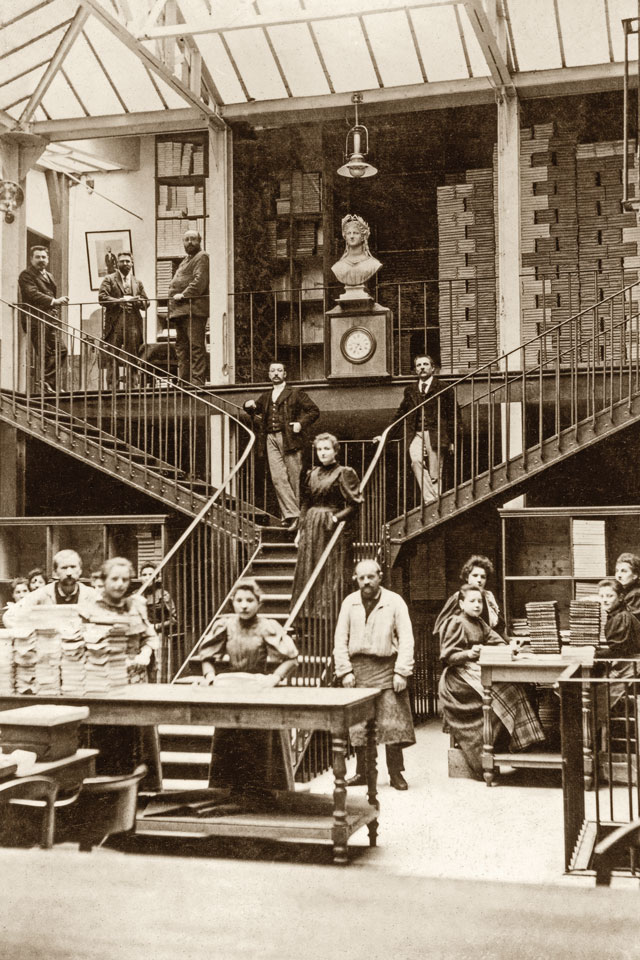
When Louis Hachette opened his titular bookshop in Paris in 1826, it is unlikely he could have foreseen how global his legacy would become. The publisher, which now exists as Hachette Livre in Europe and Hachette Book Group in the U.S., is owned by French multinational Lagardère, which is, in turn, owned by Fortune 500 Europe member, the Louis Hachette Group.
The business operates in 13 regions, from its native France to New Zealand, China, and sub-Saharan Africa. Its sub-brands include heritage publishers such as Hodder & Stoughton and John Murray (which published the first edition of Charles Darwin’s On the Origin of Species), and its titles, from Hamnet to The Queen’s Gambit, have been transformed into some of the most talked-about film and TV in recent years.

Courtesy of Hachette
Given Hachette’s French roots and global outlook, some might find it surprising that Shelley’s English-language section of the business is a major growth driver.
But Shelley has form when it comes to making publishers money. At age 23, he took the helm at Allison & Busby in 2000 and needed just five years to take the publisher from heavy losses to profitability. Now he is having a similar impact at Hachette. By the end of his first year as head of Hachette Book Group, sales were up 7% on 2023. And 2025 was another bumper year for Lagardère, with revenues growing by 3%, driven largely by the success of Shelley’s operation.
When I ask Shelley how he balances innovation with a 200-year-old legacy, his answer comes not in the lofty language of ideas and freedom of expression but in terms much more common to today’s business world. “I believe very strongly in being customer-obsessed,” he says. “It’s about giving consumers what they want, being where they are, and not being too protectionist or tastemaking about it.”
In practice, this does mean embracing all things digital. Shelley describes Hachette as being “forensic” about removing friction for readers, doubling down on ebooks and audiobooks across a range of platforms. But it also means the opposite: betting big on analog. Across the U.K. and the U.S. markets, Hachette is exploring a range of adjunct products, including jigsaw puzzles, tarot cards, and luxury stationery, as consumers increasingly seek out ways to log off from the online world. It is also investing in making books that are beautiful objects in and of themselves, such as special editions with sprayed edges and their own display boxes.
And true to Shelley’s ideal of serving customers rather than trying to shape their tastes, Hachette is also expanding its range of “romantasy” titles—the romance-fantasy genre which is a firm favorite of the BookTok community.
Whether such moves are enough to safeguard the company at a time when its lifeblood is increasingly under threat remains to be seen, but Shelley is optimistic.
When it comes to copyright law, “we have something that is so fit-for-purpose, that has served humanity so well for such a long time, all we need is a slight evolution,” he says.
“If our eventual aim is for creators to be able to benefit from their ideas then that’s the place we’ll end up.”
This article appears in the April/May 2026: Europe issue of Fortune with the headline “Meet the publisher taking on Google in the battle for ideas.”