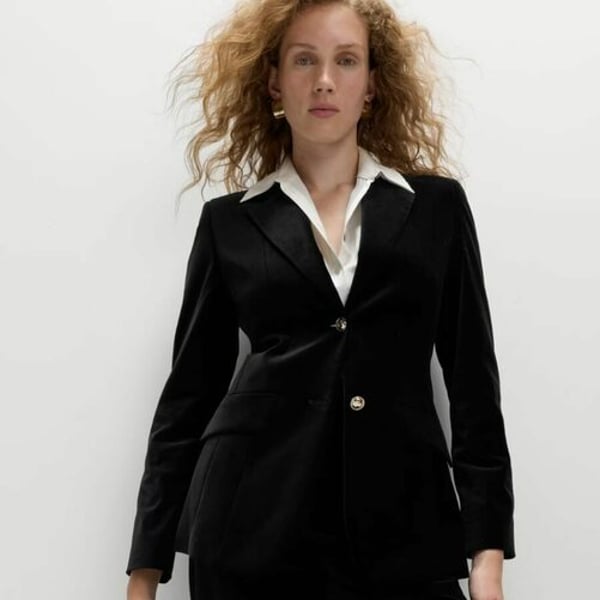
TFG London and its brands Hobbs and Phase Eight reported their results a few days ago and now its Whistles chain has done likewise. And just like Phase Eight, it’s obviously faced some challenges in the year to late March 2025.
Whistles
The TFG-owned trio are moving in the right direction on many fronts but that doesn’t mean everything in the garden is rosy for contemporary womenswear label Whistles.
The company said that turnover during the year dropped to £57.7 million from £65.7 million and adjusted EBITDA dipped to £4.7 million from £5 million. Operating profit was down to £1.8 million from £2.5 million and profit after tax fell to £0.5 million from £0.9 million.
The company sells through its own stores, online and through department store concessions and operates both in the UK and internationally.
TFG noted a “steady performance for the year despite the ongoing challenging economic backdrop in the UK”. It added that Whistles grew its direct channel mix to 54.6% from 50% and while there was growth in its own channels, it underperformed in concessions where sales dropped 15% year on year. That reflects the performance at its stablemates Hobbs and Phase Eight with concessions also something of an issue for them during the year.
That was the main cause of Whistles’ 12% turnover drop, along with the fact that the company closed 19 stores while only opening five new ones. In fact, by the end of the financial year in the UK the company had 109 stores/concessions, down from 123 a year earlier.
But there was good news in that the gross margin was up at 69.9% from 67% due to that higher direct channel mix. The company’s distribution costs edged up but that was mainly due to a one-off warehouse move in March, the results filing said. Also good news is that administrative expenses were lower as a result of the drive to control costs.
We’ve reported other positive developments for Whistles towards the end of the year covered here, as well as post-year-end.
In early March this year it joined the ‘Brands at M&S‘ platform. That’s a hugely important move that puts it in front of millions more consumers. OK, it probably wasn’t positive overall in the early months of the deal due to the well-publicised cyberattack that took M&S offline for quite a few months. But it should have an overall beneficial effect longer term.
In April, it also appointed its very first creative director as it aimed to elevate and redefine its design direction and its overall creative vision.
Jacqui Markham joined after a career in which she’d been design director at Topshop and Topman, ASOS and Urban Outfitters Europe. She’d also been a designer at Oasis and Karen Millen and more recently was a freelance design consultant.
Her immediate boss at Whistles, product director Camille Sullivan, said she would be “instrumental in driving both the brand and our product offering forward in our next stage of growth”.
It appears M&S can do little wrong in the popularity stakes. A week on from scoring top when it comes to providing AI-assisted Christmas gift inspiration, the high street giant has now been ranked as the UK’s most trusted retailer in 2025.
M&S
Even that summer cyberattack appears to have worked in its favour, proving one thing: “The difficulty shoppers faced in finding comparable alternatives elsewhere during the outage, reinforced perceptions that Marks & Spencer offers products that are genuinely hard to replace”, according to analytics company GlobalData, which surveyed 2,000 consumers.
By restoring service and offering customers discounts in the aftermath, “the retailer further strengthened its reliability and value proposition”, it added.
“To protect its lead, Marks & Spencer must continue investing in cyber resilience, while ensuring that its quality and value messaging remain a priority”, noted the report.
As a further endorsement for British brands, John Lewis & Partners was placed second while Tesco and Sainsbury’s completed the top five most trusted retailers, with Amazon the only non-UK brand.
Their inclusion suggests that heritage brands “benefit from familiarity and perceived accountability to UK shoppers”.
It was consistent quality and clear value for money that underpins consumer trust, with 84% and 81% of consumers, respectively, citing these factors as the leading drivers of trust in retailers.
“These factors reassure shoppers that a retailer is reliable, fair, and worth returning to. Trust is enhanced when retailers deliver consistently positive experiences across stores and channels, backed by reliable customer service”.
Aliyah Siddika, associate retail analyst at GlobalData, added: “Marks & Spencer’s narrow lead in consumer trust over John Lewis & Partners is not guaranteed to remain in 2026. John Lewis & Partners has the infrastructure to communicate its quality and value-for-money message more clearly with its revived ‘Never Knowingly Undersold’ promise, which could help it overtake Marks & Spencer in the future. Notably, John Lewis ranks second despite a smaller store footprint, indicating the strength of its proposition and the potential for further momentum. Marks & Spencer must ensure that it remains committed to its focus on security and promoting its unique, quality-focused own-brand to retain shoppers’ trust.”
Global luxury giant Richemont reported its UK results earlier this month and now one of its brands, Dunhill (actually, Alfred Dunhill Ltd) has done likewise and what did we find? Ongoing losses for the year to the end of March.
Dunhill
It’s worth pointing out that individual reports such as those filed for an owned company headquartered separately from its parent organisation don’t always tell the full picture for a brand that operates around the world. But with that caveat in mind, here are the figures.
The company reported revenue of £38.6 million, down from £43.8 million in the previous year. And the operating loss was bigger at £59.3 million compared to £47.1 million. The net loss for the financial year was £45.2 million, also a bigger deficit than the net loss of almost £38.5 million 12 months earlier.
While being owned by Richemont, the UK-registered company noted that it’s responsible for the overall maintenance of the brand including determining its global marketing brief and the design of its products.
It said that during the year it received an additional investment of £130 million by way of a share issue to its immediate holding company Richemont Holdings (UK) Ltd. It noted this was to “further invest and develop the Alfred Dunhill brand”.
Frustratingly, there wasn’t much more detail given in the report but it did say that the strategy of the company is to continue to “reinforce the positioning of Dunhill as a leading luxury brand for men”.
And other developments show that it’s been just doing that in the year in question and in the months since that year finished.
Back in September, it announced Matthew Ives as its new CEO. He’s a Dunhill veteran but has more recently been SVP chief commercial officer of a non-Richemont business, De Beers London.
He replaced Andrew Holmes, Dunhill COO and CFO, who’d been interim CEO since the beginning of last year. Previous Dunhill chief Laurent Malecaze had been moved to CEO’s chair at Richemont’s Chloé brand.
Dunhill may have been loss-making but it’s been receiving plenty of praise for its recent collections. In June, Harrods’ fashion buying director Simon Longland called it out as one of the strongest collections in that month’s men’s fashion month.
In fact, it has been widely praised since Simon Holloway took the design helm in spring 2023.
Australian bootmaker RMWilliams has opened its first store in Scotland, “marking a significant milestone in the brand’s UK journey” with the Edinburgh store deemed as its first opening of 2026.
RM Williams
Situated in the heart of the city centre, the new George Street store “brings nearly a century of Australian craftsmanship to one of Scotland’s most established and prestigious retail addresses… sitting among architecture defined by endurance, precision and longevity, which are values long shared by RM Williams”.
Designed by Melbourne-based design studio ACRD, the space “balances restraint, craftsmanship and timeless design, with a focus on quality and subtle references to both Australian and Scottish traditions of making”.
The Edinburgh store “presents a considered expression of the RM Williams world”, offering a range of key services including boot fitting, ongoing repair and restoration processes, complimentary boot polishing, plus embossing or debossing to personalise purchases.
Conceived as a “craft space”, the store offers insight into RM Williams’ approach to “making, highlighting materials, construction and finishing details, and reinforcing the brand’s belief in physical retail as a place for craftsmanship, service and storytelling”.
Karl Wederell , general manager of UK & Europe, said: “Customers from Scotland, and Edinburgh in particular, have supported RM Williams for many years so strategically, it feels right to be opening our first Scottish store.”