Connect with us

Business

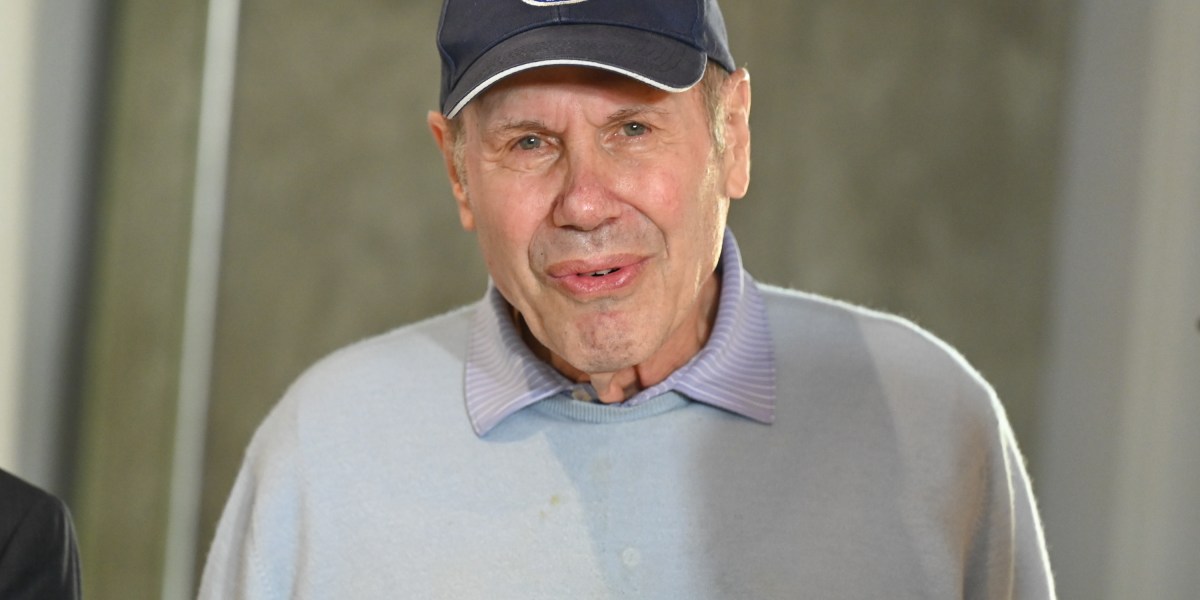
‘Where has all the leadership gone?’: Former Disney CEO Michael Eisner blasts Kimmel suspension

Published

on


The decision about whether to keep Jimmy Kimmel on his late-night ABC show depends on far more than his jokes. The choice is complicated by a web of business and regulatory considerations involving ABC’s parent company, other media companies and the Trump administration.

It’s the inevitable result of industry consolidation that over years has built giant corporations with wide-ranging interests.

ABC owner Walt Disney Co., a massive organization with far-flung operations, frequently seeks federal regulatory approval to expand, buy or sell businesses or acquire licenses. And the Trump administration has not spared the company from investigations, opening multiple inquiries in just the past few months to probe possible antitrust, programming and hiring violations.

Kimmel was suspended from his show this week following comments suggesting that fans of Charlie Kirk were trying to capitalize on the conservative activist’s assassination. Federal Communications Commission Chairman Brendan Carr called the remarks “truly sick” and suggested his agency would look into them.

Carr answers to President Donald Trump, who’s already on record as disliking Kimmel’s comedy.

Two companies that operate roughly a quarter of ABC affiliates nationwide, Nexstar Media Group and Sinclair Broadcasting, also said they would not air Kimmel’s show.

Disney took a step last December to avoid a confrontation with Trump by paying $15 million to settle the president’s defamation lawsuit against ABC News and George Stephanopoulos. It also made moves to dismantle some of its diversity, equity and inclusion practices, including removing references in its annual report to its Reimagine Tomorrow program aimed at “amplifying underrepresented voices.”

Apparently that wasn’t enough.

In April, the FCC sent a a blistering letter to Disney CEO Bob Iger saying it suspected the company was so thoroughly “infected” with “invidious” practices favoring minorities that it had no choice but to open an investigation.

Among other questions, the probe sought to determine whether Disney had really ended policies designed to ensure characters in its shows and its hiring practices favored “underrepresented groups.”

Meanwhile, a Disney deal struck in January to buy a stake in the streaming service FuboTV. That fell under scrutiny, too, with several reports that the Justice Department was investigating possible antitrust violations.

The Federal Trade Commission also launched a probe into whether Disney broke rules by gathering personal data from children watching its videos without permission from parents. Disney settled the case earlier this month by paying $10 million and agreeing to change its practices.

Disney also needs approval from the Trump administration for ESPN to complete its acquisition of the NFL Network.

It hasn’t helped that Disney was a target for many conservatives well before the current controversy. Florida Gov. Ron DeSantis battled with the company over its criticism of a DeSantis-backed law that restricted discussion of sexual orientation in schools.

Kirk wasn’t a fan, either, criticizing Disney when it closed Splash Mountain rides at theme parks three years ago because they were based on a 1946 film about the plantation life in the South. The move, his website posted, was “destructive to our cultural and societal fabric.”

The companies with ABC stations that put out statements disavowing Kimmel have their own business before the government. Nexstar needs the Trump administration’s approval to complete its $6.2 billion purchase of broadcast rival Tegna.

Sinclair has its own regulatory challenges. In June, it entered into an agreement with the FCC to fix problems with paperwork filed to the agency and to observe rules about advertising on children’s shows and closed captioning requirements. It has also petitioned the regulator to relax rules limiting broadcaster ownership of stations.

The companies are being asked by advocates and others to put aside their financial concerns to stand up strongly for free speech.

“Where has all the leadership gone?” ex-Disney CEO Michael Eisner wrote Friday on social media. “If not for university presidents, law firm managing partners and corporate chief executives standing up to bullies, then who will step up for the First Amendment?”

The administration’s attacks on Kimmel have also been attacked in some unexpected places, such as the Wall Street Journal and Bari Weiss’ website, the Free Press, both known for their conservative editorial voices.

The comedian’s comments don’t justify the right wing’s move toward regulatory censorship, the Journal wrote in an editorial. “As victims of cancel culture for so long, conservatives more than anyone should oppose it,” the Journal wrote. “They will surely be the targets again when the left returns to power.”

“When a network drops a high-profile talent hours after the FCC chairman makes a barely veiled threat, then it’s no longer just a business decision,” the Free Press wrote in an editorial. “It’s government coercion. Is it now Trump administration policy to punish broadcasters for comedy that doesn’t conform to its politics?”

Fortune Global Forum returns Oct. 26–27, 2025 in Riyadh. CEOs and global leaders will gather for a dynamic, invitation-only event shaping the future of business. Apply for an invitation.


Source link

Continue Reading

Business

Airbnb CEO Brian Chesky says he went to ‘night school’ for an hour every day with Barack Obama

Published

on


To build Airbnb into a billion-dollar business, Brian Chesky sometimes worked gruesome 100-hour weeks. However, on top of that, he would regularly carve out time to pick the brains of one of the most important people in the world: former President Barack Obama.

“At one point in 2018, we had a standing one-hour call every week, and I basically had my day job during the day, and then I had my night school with the former president, where I would get these assignments, but it changed my life,” Chesky has just revealed.

Speaking on Michelle Obama’s podcast IMO, he added: “I just was really shameless about reaching out to him, asking for advice, asking for mentorship, and he would meet with me, and he’d give me advice.” 

He recalled the 44th president of the United States advised him to avoid becoming like other leaders who are effectively “self-driving cars” without intention. Instead, he should always be thinking long and hard about relationships—with his friends, his success, and his company—and be more active with the impact he wants to make.

Fortune reached out to Chesky and former President Obama for comment. 

Finding a mentor in a president

After building Airbnb into a household name, Chesky faced a problem: He still wasn’t satisfied—nor necessarily happy. 

“The thing about being very successful in tech and making a lot of money and all this is no one ever told me how lonely it would become,” Chesky said to Michelle and Robinson. “And I started realizing, well, it’s weird, I had old friends that were middle-class, and I’ll be honest, a lot of them seemed happier than me at that point in my life.”

And he credits former President Obama with helping him realize that how he was feeling was completely normal: that “the more success you get, the more isolated you get.” 

“People dream of success, but what they don’t realize is a lot of with success comes disconnection to your past, to yourself, to your friends, and I think a lot of what I’ve tried to do the last handful of years is to reconnect, to not live a life of isolation,” Chesky said. 

Obama’s wisdom to Chesky was simple: He needed to be more hands-on with his relationships. That means instead of texting or calling a close friend once a year, stay constantly connected with them. Chesky said it’s a lesson he translated into his work as the leader of Airbnb.

“He told me something that I’ll never forget,” Chesky said. “He said you should institutionalize your intentions, so that even when you’re a public company, you can make sure not to compromise your vision. And what he meant by that, I think, was that you should be more thoughtful about what you’re making, why you’re making it, and the impact of what you’re making is on people.”

Chesky admitted Obama’s advice has made a “really, really big difference” at Airbnb. And while it may sound odd for a former President to effectively give a CEO homework, it’s something nothing new for Obama, who spent over a decade in the classroom teaching constitutional law at the University of Chicago before his jump into the political arena.

The ‘life hack’ to find success: Reach out to an old friend

The lessons learned from Chesky and President Obama’s relationship on finding success can be summarized into two simple steps: Seek out mentors and have friends outside of social media.

“For young people, the number one thing they need to learn how to do is how to learn,” Chesky said. “And some of the best ways to learn are from other people, and some of the best ways to learn from people are, again, in the real world.”

Moreover, rekindling old relationships is among what Chesky calls a “simple life hack” to make life happy.

“I think the vast majority of people, if they reach out to someone, someone will want to help them,” he added. “They reach out to an old friend, the old friend will want to reach back out to them, and that is the path for reconnection. It’s a path for relationships, and it’s a path for purpose.”

A version of this story originally published on Fortune.com on May 27, 2025.

More on career advice:

Join us at the Fortune Workplace Innovation Summit May 19–20, 2026, in Atlanta. The next era of workplace innovation is here—and the old playbook is being rewritten. At this exclusive, high-energy event, the world’s most innovative leaders will convene to explore how AI, humanity, and strategy converge to redefine, again, the future of work. Register now.


Source link

Continue Reading

Business

Why Birkin bags are a better investment than gold, according to an Hermès expert

Published

on


The value of a Birkin bag skyrockets from the moment it leaves the Hermès store.

That’s partly because not just any regular person can buy the bag. Only customers with a sizable purchase history at the brand are offered the opportunity to buy a “quota bag,” such as a Birkin or a Kelly.

But even Hermès’ most loyal shoppers don’t get to choose the exact Birkin model they want. The brand allows boutiques to purchase a select number of Birkins per season, and the style of the bags is rarely known ahead of time, according to Sotheby’s. The notoriously opaque process, nicknamed the Hermès Game, has only generated more desire for the bag—and even became the subject of a class-action lawsuit.

Looking to sidestep the Hermès Game and score the bag their heart desires, handbag enthusiasts shell out tens of thousands of dollars on the resale market. Thanks to its exclusivity and its status as an investment piece, a Birkin bag’s value is much higher than its sticker price of around $12,000.

“The resale value of particularly the Birkin and Kelly bags over the past 10 years has outpaced gold,” James Firestein, founder of luxury resale and authentication platform OpenLuxury, told Fortune.

Prior to starting his own company in 2022, Firestein spent a decade as a luxury authenticator, including two years as the director of authentication at Rebag. Over the course of his career, Firestein has seen a “perfect storm” of factors “bolster this wild ride upward.”

“I know several instances where people have doubled their money based on buying it 10 years ago, and reselling it today in pristine condition,” he said.

‘Like buying a Picasso’

For some buyers, a Birkin bag isn’t a high-end piece of arm candy, but a worthy investment. Of the Birkin owners he has worked with, Firestein estimates 75% actually use the bags, while the remaining 25% keep them in storage as investments. 

“It’s similar to buying a Piccaso and holding it in your home, because you can look at it, you can enjoy it,” Firestein said. “But then you ship it off in a couple of years and trade it for something else.”

The value of an Hermès bag can increase dramatically over time, Firestein said, depending on its color, material, and condition. Secondhand demand is so high partly because the resale market offers shoppers more options than the Hermès store, where customers are allowed one quota bag per year, and rarely get to choose the exact model they want. 

Firestein said the steepest price increase he has seen was a Black Togo 30 Birkin that doubled in value in five years. But price increases can be driven by trend cycles and changing demand—so it can be a “gamble,” he said.

“I wouldn’t say jump in with both feet at this point,” he said. “But if you got it in 2012, and you sold in 2019, that’s different.”

The Birkin legend

Before its handbags were spotted on the arms of Jane Birkin and Cardi B, Paris-based Hermès began in 1837 as a maker of horse harnesses. Over the course of six generations, it became a ready-to-wear and leather-goods powerhouse renowned for its craftsmanship.

As for the iconic Birkin bag, here’s how the legend goes: In 1984, the late actress Jane Birkin was seated next to Jean-Louis Dumas, executive chairman of Hermès at the time, on a flight from Paris to London. Birkin said she couldn’t find a bag that suited her needs as a young mother—so she sketched her dream design on a sick bag, according to CNN. Dumas infused the bag with equestrian elements, giving it the signature Hermès look.

“It was more of a subtle old-money brand,” Firestein said of Hermès’ status prior to the Birkin craze.

The Birkin slowly reached “it bag” status thanks to being spotted on the arm of many celebrities in the 1990s and 2000s—and on Sex and the City. But it wasn’t until the 2010s, when the online resale market reached the masses, that the hype went stratospheric.

Firestein credits e-commerce with enabling shoppers to buy a secondhand Hermès bag from any part of the world. Meanwhile, online forums allowed people to share the secrets of the Hermès Game once exclusive to the 1%. The Birkin became a collector’s item over time—and underground demand continues to fuel the resale market.

What’s in the bag?

Some people may desire Birkin bags because they’re so hard to get—but fans also celebrate the brand’s artisan manufacturing and 200-year legacy of craftsmanship.

Unlike brands owned by LVMH and Kering, which often share factories, Hermès only uses its own factories, says Firestein. Conglomerate-owned brands like Balenciaga, Gucci, and Saint Laurent also tend to use more mass-market materials that are cheaper and easier to get, Firestein explains.

“Their leather factories are only Hermès affiliates, and they only create Hermès leathers,” he said. “So you’re buying into part of that heritage, but then you’re also buying into a higher-quality material that they’ve been using for many, many years.”

Compared to other brands, Hermès’ quality is “top-tier,” Firestein said. And though he works with 43 different luxury brands, he admits to having an affinity for Hermès bags.

“They’re made to last for generations,” Firestein said. “And they’re just beautiful luxury objects at the end of the day—almost like sculptures.”

A version of this story published on Fortune.com on March 27, 2024.

Join us at the Fortune Workplace Innovation Summit May 19–20, 2026, in Atlanta. The next era of workplace innovation is here—and the old playbook is being rewritten. At this exclusive, high-energy event, the world’s most innovative leaders will convene to explore how AI, humanity, and strategy converge to redefine, again, the future of work. Register now.


Source link

Continue Reading

Business

Earnings calls citing ‘AI’ surge in 2025 as ‘uncertainty’ mentions fade

Published

on


Good morning. CEOs and CFOs are clearly focused on AI—it is the most-used term in S&P 500 earnings calls this year.

FactSet examined conference call transcripts for all S&P 500 companies that held earnings calls from September 15 through December 4 and found that the term “AI” was cited on 306 calls. This is the highest number of S&P 500 earnings calls on which “AI” has been cited over the past 10 years; the previous record was 292 in Q2 2025, according to John Butters, VP and senior earnings analyst at FactSet. In addition, the 306 figure is significantly above the five-year average of 136 and the 10-year average of 86.

At the sector level, information technology (95%) and communication services (95%) sectors have the highest percentages of earnings calls citing “AI” for Q3.

In addition, S&P 500 companies that cited “AI” on their Q3 earnings calls have seen a higher average price increase than those that did not—since Dec. 31, 2024 (13.9% vs. 5.7%), June 30, 2025 (8.1% vs. 3.9%), and Sept. 30, 2025 (1.0% vs. 0.3%).

Navigating uncertainty

Besides AI, another term I was curious about is “uncertainty,” so I asked Butters for his take. He analyzed S&P 500 earnings calls (per quarter) in which the term “uncertainty” was cited at least once, going back to 2020. He found that, similar to the pattern seen with “tariff” citations, mentions of “uncertainty” spiked in Q1 2025 but declined significantly over the following two quarters. In Q1 2025, there were 415 mentions of “uncertainty,” compared to 282 in Q2 and 201 in Q3.

Following President Donald Trump’s “Liberation Day” earlier this year, significant uncertainty emerged around the new administration’s economic and geopolitical agenda, Yuval Atsmon, CFO at McKinsey, recently told me. Atsmon explained that at the peak of uncertainty, his focus as a CFO was on identifying actions that would be helpful in any scenario. “The worst thing is inaction,” he added. Acting on what you can control builds resilience, he said.

Operating in uncertainty has seemingly become a constant, which may help explain why explicit mentions of the term have tapered off during earnings calls. While uncertainty often drives defensive moves, Atsmon emphasized the importance of revisiting long-standing strategies and seizing competitive opportunities.

Global AI spending is expected to climb in 2026, and it is likely that “AI” will remain a top term in Q4 earnings calls in January as companies discuss investment, margins, capex, and productivity.

SherylEstrada
sheryl.estrada@fortune.com

Leaderboard

Neil Berkley was promoted to CFO of Alector, Inc. (Nasdaq: ALEC), a clinical-stage biotechnology company. Berkley has served as Alector’s chief business officer (CBO) since March 2024, and CBO and interim CFO since June 2025. He is a biotech executive with more than two decades of experience leading corporate strategy, finance, business development, and operations across both early- and late-stage companies.

Caleb Noel was promoted to EVP and CFO of NFP, an Aon company, a property and casualty broker and benefits consultant. Noel has served in various corporate finance and operational roles during his 23-year career with NFP, most recently as SVP of finance and operations. He previously served as VP of finance for Scottish Holdings, a division of Scottish Re, and as an analyst in the investment banking division of Prudential Securities (now Wells Fargo & Company).

Big Deal

CFOs have a long-term focus when it comes to AI, according to research by RGP, a global professional services firm. The report, “The AI Foundational Divide: From Ambition to Readiness,” describes a finance landscape that is racing toward an AI-powered future yet constrained by issues such as fragile data foundations.

Although 66% of CFOs surveyed expect significant AI ROI within two years, only 14% report meaningful value today. However, optimism persists despite key obstacles to AI ROI, including deep structural barriers such as data trust issues (only 10% fully trust enterprise data), technical debt (86% say legacy systems limit AI readiness), and skills shortages that threaten to slow adoption.

The findings are based on insights from 200 U.S. CFOs at enterprises with more than $10 billion in annual revenue. Sectors include technology, health care, financial services, and CPG/retail.

Going deeper

A new episode of “This Week in Business,” a Wharton podcast, focuses on AI and technological evolution. Lynn Wu, a Wharton associate professor of operations, information and decisions, addresses the rise of transformative technologies and the cycles of tech bubbles throughout history. Wu discusses where AI fits within these cycles, describing it as a necessary phase of technological evolution that lays the groundwork for transformative advancements across industries.

Overheard

“In the end, consumers will win if courts and enforcers act based on evidence.”

—Satya Marar, a research fellow at the Mercatus Center at George Mason University, writes in a Fortune opinion piece titled “Netflix, Warner, Paramount and antitrust: Entertainment megadeal’s outcome must follow the evidence, not politics or fear of integration.” Marar specializes in competition, innovation, and governance, and is an AI and antitrust fellow at the Innovators Network.


Source link

Continue Reading

Trending

Copyright © Miami Select.